📘 Know-howBeds4 min read
How tall to build a raised bed: real board heights and the depths extension pages give
Quick answer
On open ground, two 2x6 boards (11 inches) is enough for most vegetables. UGA Extension says most garden crops need at least 10 inches of soil, and Utah State says a box at least 6 to 12 inches high. On concrete or paving, Maryland Extension wants 12 to 24 inches for peppers, tomatoes and squash. Above about 18 inches, Oregon State says to reinforce the sides.
Source: UGA Extension C 1027-4, raised garden bed dimensions, checked October 10, 2026; USU Extension, raised bed gardening, checked October 10, 2026; UMD Extension, growing vegetables in raised beds, checked October 10, 2026; OSU Extension FS 270, raised bed gardening, checked October 10, 2026.

What the extension pages say
Ten inches of soil covers most crops
Four extension pages give depths, and they are close together. What changes the answer is the ground under the bed. On open ground, roots can keep growing into the soil below, so a short box works. On a hard surface the box is all the soil there is.
Source: UGA Extension C 1027-4, raised garden bed dimensions, checked October 10, 2026; USU Extension, raised bed gardening, checked October 10, 2026; UMD Extension, growing vegetables in raised beds, checked October 10, 2026; OSU Extension FS 270, raised bed gardening, checked October 10, 2026.
| Source | Where | Depth |
|---|---|---|
| Utah State | Box on open ground | At least 6 to 12 in high |
| Oregon State | Soil and organic mix | About 8 in, enough for most vegetables |
| Maryland | Mix on top of existing soil | At least 8 in |
| UGA | Most garden crops | At least 10 in of soil |
| Maryland | Hard surface: greens, beans, cucumbers | At least 8 in |
| Maryland | Hard surface: peppers, tomatoes, squash | 12 to 24 in |
Wording from each page, checked October 10, 2026.
Source: USU Extension, raised bed gardening, checked October 10, 2026; OSU Extension FS 270, raised bed gardening, checked October 10, 2026; UMD Extension, growing vegetables in raised beds, checked October 10, 2026; UGA Extension C 1027-4, raised garden bed dimensions, checked October 10, 2026.
The board math
Boards stack shorter than their names
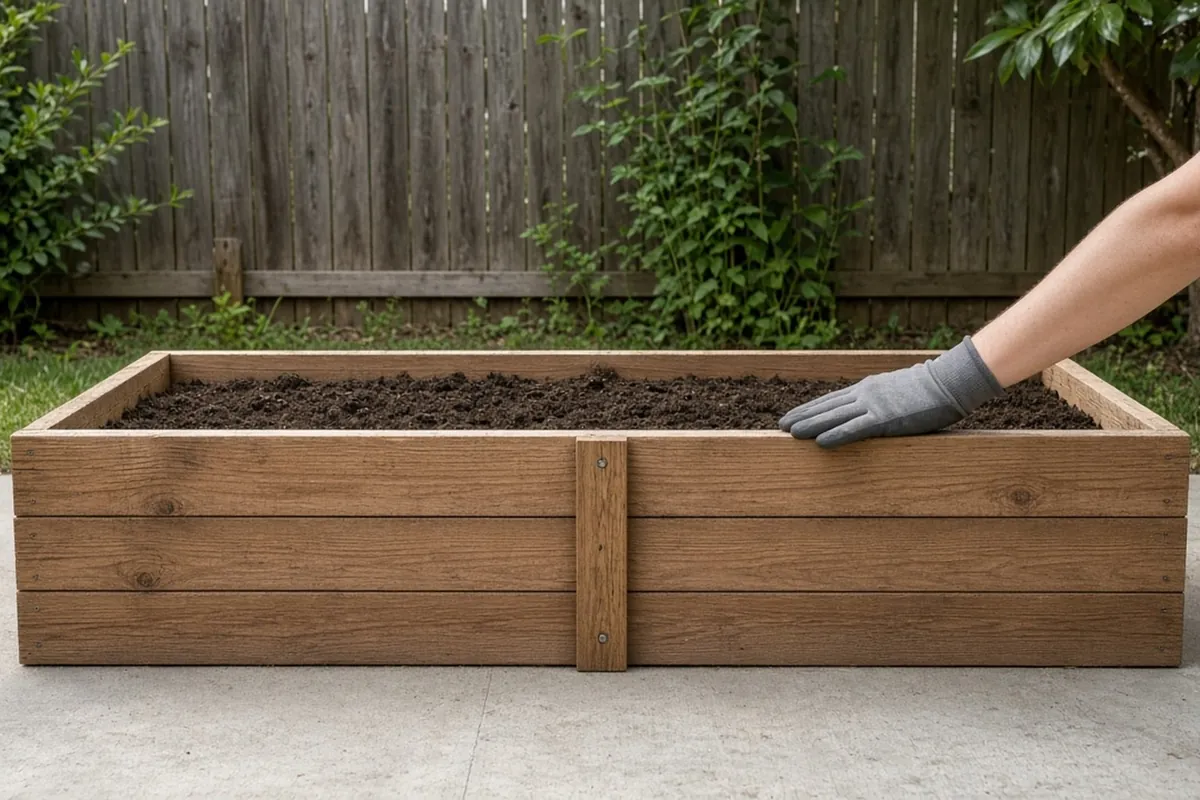
A 2x6 is 5 1/2 inches wide under the PS 20 lumber standard, a 2x8 is 7 1/4, a 2x10 is 9 1/4 and a 2x12 is 11 1/4. So two 2x6 boards make 11 inches, not 12, and three make 16 1/2. A single 2x12 gets you 11 1/4 inches with no seam in the middle.
Source: NIST, PS 20-20 American Softwood Lumber Standard, checked October 10, 2026.
- 11 intwo 2x6 boards stacked (PS 20)NIST, PS 20-20 American Softwood Lumber Standard, October 10, 2026
- 10 inof soil most crops need (UGA)UGA Extension C 1027-4, raised garden bed dimensions, October 10, 2026
- 18 inreinforce beds taller than this (OSU)OSU Extension FS 270, raised bed gardening, October 10, 2026
- +13.3 cu ftof soil per extra 2x6 on a 4 x 8 bedArithmetic
What each board adds
Every extra board costs lumber and soil
Each extra 2x6 on a 4 x 8 ft bed adds three 8 ft boards and 13.3 cubic feet of soil to fill the 93 by 45 inch inside. Going from two boards to three takes the bed from 6 boards and 14 bags of 2 cu ft to 9 boards and 20 bags.
Step by step
Picking a height for your bed
Check what's under it
Open ground or a lawn you'll strip: two 2x6 boards is enough for most crops. Concrete, paving or packed gravel: plan on 12 to 24 inches for big plants, as Maryland Extension does.
Source: UMD Extension, growing vegetables in raised beds, checked October 10, 2026.
Think about your back
UGA Extension gives 24 inches for wheelchair access and says a bed 36 inches off the ground saves bending. Those heights take far more soil, or a raised planter on legs.
Source: UGA Extension C 1027-4, raised garden bed dimensions, checked October 10, 2026.
Pick the boards
Use the real widths: two 2x6 boards for 11 inches, a 2x8 on a 2x6 for 12 3/4, three 2x6 boards for 16 1/2.
Source: NIST, PS 20-20 American Softwood Lumber Standard, checked October 10, 2026.
Plan the bracing
Oregon State says beds longer than 6 ft or taller than about 18 inches need reinforcing, such as cross cables or anchored stakes. A post halfway along each long side is one way.
Source: OSU Extension FS 270, raised bed gardening, checked October 10, 2026.
Run the numbers
Put the size, boards and height into the lumber calculator. It gives the cut list and the soil the bed will hold.
Print it, tick it off
Raised bed height checklist
Decide these before you buy boards or soil.
- What's under the bed: open ground or a hard surface
- Ground under a short bed loosened before filling
- Height picked from real board widths
- Boards per course and courses high written down
- Bracing planned if the bed is long or tall
- Soil worked out from the inside size and height
- Comfortable working height checked
What people learn the second year
Tips and tricks
- Start at two boards. A bed two 2x6 boards high is quick to build and fill. You can add a third board later if you want more depth. (NIST, PS 20-20 American Softwood Lumber Standard)
- Mix board widths. A 2x8 under a 2x6 gives 12 3/4 inches. Put the wider board at the bottom where the soil pushes hardest. (NIST, PS 20-20 American Softwood Lumber Standard)
- Fill tall beds in layers. Pour and water the soil a few inches at a time. Illinois Extension calls settling a fact of raised bed gardening, and watering as you go lets some of it happen before you plant. (Illinois Extension, refreshing raised bed soil)
- Mind the path between beds. UGA Extension gives 12 inch paths as the absolute minimum and 18 to 24 inches as ideal. Taller beds feel tighter, so leave room. (UGA Extension C 1027-4, raised garden bed dimensions)
Common questions
Questions
How tall should a raised bed be for vegetables?
On open ground, about 10 to 12 inches. UGA Extension says most crops need at least 10 inches of soil, and Utah State says at least 6 to 12 inches. Two 2x6 boards give 11.
Source: UGA Extension C 1027-4, raised garden bed dimensions, checked October 10, 2026; USU Extension, raised bed gardening, checked October 10, 2026; NIST, PS 20-20 American Softwood Lumber Standard, checked October 10, 2026.
Is a 6 inch raised bed deep enough?
Only on loosened open ground. A single 2x6 is 5 1/2 inches, under UGA's 10 inches, so UGA says to till the soil under a bed that low.
Source: NIST, PS 20-20 American Softwood Lumber Standard, checked October 10, 2026; UGA Extension C 1027-4, raised garden bed dimensions, checked October 10, 2026.
How deep should a raised bed on concrete be?
Maryland Extension says at least 8 inches for leafy greens, beans and cucumbers, and 12 to 24 inches for peppers, tomatoes and squash.
Source: UMD Extension, growing vegetables in raised beds, checked October 10, 2026.
Should I use 2x6 or 2x8 boards for a raised bed?
Either works. Two 2x6 boards make 11 inches; two 2x8 boards make 14 1/2. Pick the height first, then the boards that reach it.
Source: NIST, PS 20-20 American Softwood Lumber Standard, checked October 10, 2026.
Do tall raised beds need extra support?
Oregon State says beds taller than about 18 inches or longer than 6 feet should be reinforced with cross cables, anchored stakes or something similar, so the soil doesn't push the boards out.
Source: OSU Extension FS 270, raised bed gardening, checked October 10, 2026.
The arithmetic, done for you
Tools for this job
- 🪚 CalculatorRaised bed lumber calculatorHow many boards to buy for a wooden raised bed, and where to cut them: side lengths, a board-by-board cut plan, corner posts and the soil it will hold.Open the tool
- 🪴 CalculatorRaised bed soil calculatorHow much soil fills a raised bed: cubic feet, cubic yards and a bag count for 1.5 or 2 cu ft bags, from the bed's length, width and depth.Open the tool
Keep reading
More guides
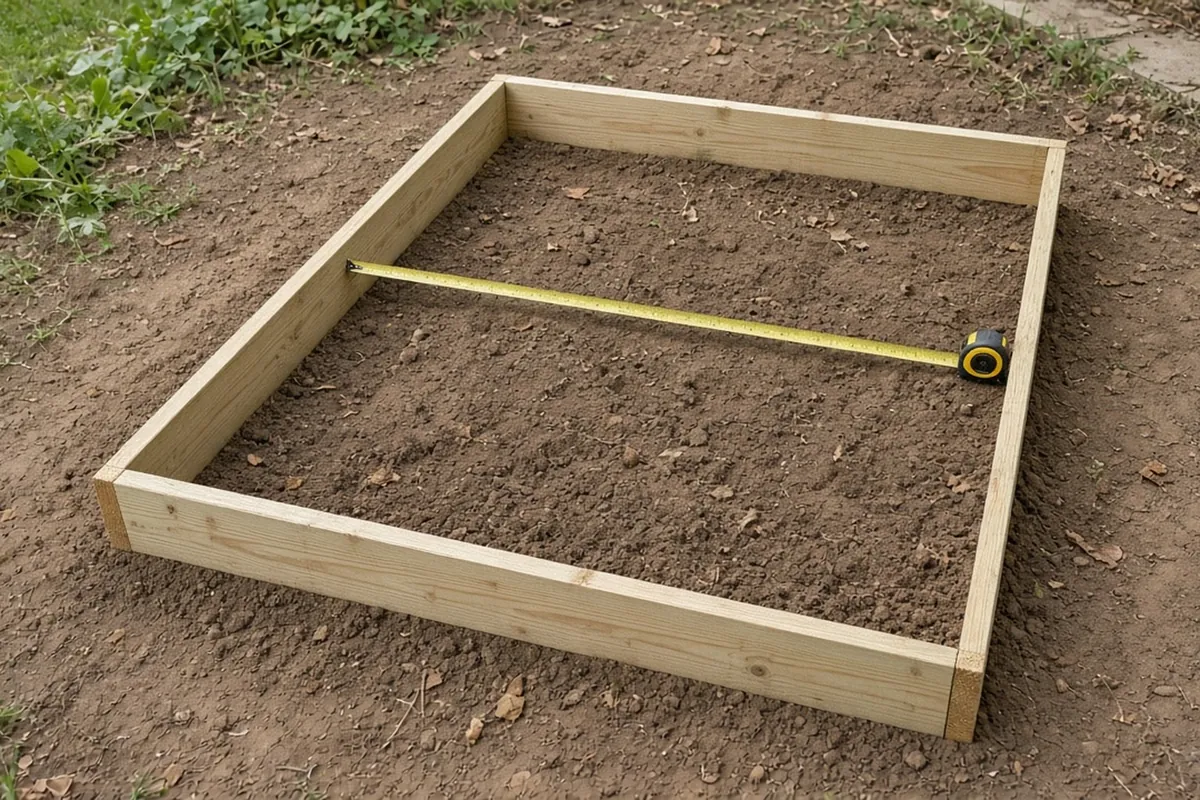 📘 Know-howInside vs outside: why a 4 x 8 raised bed holds less soil than you thinkA 4 x 8 ft frame of 2x lumber is 93 x 45 inches inside, about 29 square feet of soil. How to measure, what it does to your soil order and your cut list.Read the guide
  🧰 Problem solverBags or bulk: when a cubic yard delivery is cheaperHow to compare bagged soil, mulch or compost with a bulk cubic yard: price per cubic foot, the delivery fee, and the bag count where bulk wins.Read the guide
  🧰 Problem solverBury it, group it or garage it: a winter plan for every potPotted perennials die in winter when their roots freeze. Three extension-backed winter plans, how to pick one per pot, and a checklist.Read the guide
Sources
- Raised Garden Bed Dimensions (Circular 1027-4), University of Georgia Cooperative Extension, published December 14, 2022. Checked October 10, 2026.
- Raised Bed Gardening, Utah State University Extension, published February 1, 2012. Checked October 10, 2026.
- Growing Vegetables in Raised Beds, University of Maryland Extension, published March 26, 2026. Checked October 10, 2026.
- Raised bed gardening (FS 270), Oregon State University Extension Service, published September 1, 2020. Checked October 10, 2026.
- Voluntary Product Standard PS 20-20, American Softwood Lumber Standard, National Institute of Standards and Technology (US Department of Commerce), published January 1, 2020. Checked October 10, 2026.
- Refreshing raised bed soil generates exceptional results, University of Illinois Extension, published April 5, 2021. Checked October 6, 2026.
Planning guide, not a guarantee. See every source on the site on the sources page. Spotted an error? Tell us.