🪚 BedsFree toolPrintable record
Raised bed lumber calculator
Quick answer
A 4 by 8 ft bed built two boards high from 2x6 lumber takes 6 boards of 8 ft. A 2x6 is really 1 1/2 by 5 1/2 inches under the federal lumber standard, so the bed stands 11 inches tall. Four boards stay whole for the long sides. The other two give four short sides of 45 inches, the 48 inch width less two board thicknesses. Six posts 11 inches long all come out of one 8 ft 4x4.
Source: NIST, PS 20-20 American Softwood Lumber Standard, checked October 10, 2026.

Raised bed lumber calculator
Change any number and the answer updates as you type.
Side boards to buy 6 boards of 2x6, 8 ft long
| Buying | How many |
|---|---|
| 8 ft boards | 6 boards12 in left over |
| 10 ft boards | 6 boards156 in left over |
| 12 ft boards | 4 boards12 in left over |
| 14 ft boards | 4 boards108 in left over |
| 16 ft boards | 3 boards12 in left over |
- Long sides
- 4 at 96 in (243.8 cm)
- Short sides
- 4 at 45 in (114.3 cm)
- Bed height
- 11 in (27.9 cm), 2 boards of 5 1/2 in
- Posts (4x4)
- 6 at 11 in (27.9 cm), cut from one 8 ft post
- Inside the frame
- 93 in × 45 in
- Soil to fill it
- 26.64 cu ft
Cut plan, board by board (8 ft boards, no saw cut allowance):
- 96 in
- 96 in
- 96 in
- 96 in
- 45 in + 45 in (6 in left)
- 45 in + 45 in (6 in left)
Oregon State Extension says beds longer than 6 ft or taller than about 18 in should be reinforced with cross cable, anchored stakes or something similar, so the soil does not push the boards out. The extra posts along the long sides are one way to do it.
No garden math needed
How to use this, in plain words
Decide the bed size and whether you mean the outside of the frame or the soil inside it. Mark the corners on the ground with stakes or a garden hose if it helps.
Pick the board size and how many boards high. A 2x6 is really 5 1/2 inches wide, so two of them stack to 11 inches, not 12.
Type the board length you plan to buy, and the saw cut width if you know it. The table shows the count for every common length, so you can pick the one that fits your car and wastes least.
Cut the short sides first, using the board-by-board plan. Measure each cut from a square end and cut on the waste side of the pencil line.
Print the cut list sheet and tick off each piece as it is cut. Take the inside size and soil figure to the raised bed soil calculator next.
Source: NIST, PS 20-20 American Softwood Lumber Standard, checked October 10, 2026.
What the store won't tell you
Before you start
- Board names are nominal sizes. A 2x6 measures 1 1/2 by 5 1/2 inches, and the tool works with those real sizes.
- The standard trims a 2x board to at least its stated length and up to 3 inches over. Plan on the stated length, as the tool does, and treat any extra as a bonus.
- Measure the cargo space before the lumber run. Longer boards can mean fewer boards and fewer cuts, but only if you can get them home. If they won't fit, ask whether the yard cuts or delivers.
- Oregon State Extension calls 4 ft a good maximum width, so you can reach the middle from either side. Wider beds mean stepping on the soil.
Source: NIST, PS 20-20 American Softwood Lumber Standard, checked October 10, 2026; OSU Extension FS 270, raised bed gardening, checked October 10, 2026.
Go deeper: Inside vs outside: why a 4 x 8 raised bed holds less soil than you think · How tall to build a raised bed: real board heights and the depths extension pages give · Bags or bulk: when a cubic yard delivery is cheaper · How many tomato plants fit in a 4 x 8 raised bed · How to fill a tall raised bed without buying 2 yards of soil
The formula, in words
How it works
- Real board sizes from the federal lumber standard, PS 20: every 2x board is 1 1/2 inches thick, and a 2x4 is 3 1/2 inches wide, a 2x6 5 1/2, a 2x8 7 1/4, a 2x10 9 1/4 and a 2x12 11 1/4. A 4x4 post is 3 1/2 inches square.
- Long sides run the full outside length. Short sides fit between them: outside width minus 2 board thicknesses. If you measured the soil inside instead, the long side is the inside length plus 2 thicknesses and the short side is the inside width.
- Pieces: 2 long and 2 short for every board of height, times the number of beds. Height: boards high × the real board width.
- Boards to buy: the pieces go onto boards of the length you buy, longest first, each onto the first board with room. Every cut takes the saw cut width you enter. A piece as long as the board needs no cut.
- Soil it will hold: inside length × inside width × height ÷ 1,728, in cubic feet.
Source: NIST, PS 20-20 American Softwood Lumber Standard, checked October 10, 2026.
Printable sheet
What to record
Write the cut list down before the lumber run and tape it to the first board. The printable sheet has one row per piece:
- Piece: long side, short side or post
- How many
- Cut length
- Board size and length it comes from
- Cut and checked
- Notes: knots, splits, which side faces in
Checked by hand
Worked example
One bed 8 ft long and 4 ft wide, measured on the outside, two 2x6 boards high, built from 8 ft boards, with a 4x4 post in each corner and one more halfway along each long side.
- Long sides run the full 8 ft = 96 in. Short sides fit between them: 48 in − 2 × 1.5 in = 45 in.
- 2 boards high: 4 long pieces and 4 short pieces. Height: 2 × 5.5 in = 11 in.
- On 8 ft (96 in) boards: 96; 96; 96; 96; 45 + 45; 45 + 45. That's 6 boards, 12 in left over.
- Posts: 6 × 11 in = 66 in, cut from one 8 ft (96 in) 4x4.
- Soil inside: 93 × 45 × 11 = 46,035 cu in ÷ 1,728 = 26.64 cu ft.
Why it may not match the bag or the store
If the answer surprises you
❓
The bed came out shorter than 12 inches
Two 2x6 boards stack to 11 inches, because each is 5 1/2 inches wide. For a full foot of height, use a 2x6 on top of a 2x8 or go to three boards.
Source: NIST, PS 20-20 American Softwood Lumber Standard, checked October 10, 2026.
❓
A 16 ft board didn't make two 8 ft sides
With no saw cut it does: 96 + 96 = 192 inches. Add a 1/8 inch saw cut and the second side is 1/8 inch short. The tool shows this as soon as you enter your blade's cut width.
❓
An inside size of 4 by 8 ft won't fit 8 ft boards
The long sides cover the ends of the short ones, so they are 3 inches longer than the inside: 99 inches. Buy 10 ft boards or plan the bed 3 inches smaller.
Source: NIST, PS 20-20 American Softwood Lumber Standard, checked October 10, 2026.
Other cases
Variants
🟫
Taller beds
Three 2x6 boards make a bed 16 1/2 inches tall. The same 4 by 8 ft bed then takes 9 boards of 8 ft, or 6 of 12 ft. Oregon State Extension says beds taller than about 18 inches should be reinforced.
Source: NIST, PS 20-20 American Softwood Lumber Standard, checked October 10, 2026; OSU Extension FS 270, raised bed gardening, checked October 10, 2026.
⭕
One wide board instead of two narrow ones
A single 2x12 gives 11 1/4 inches of height with half the joints. A 4 by 8 ft frame in 2x12 takes 3 boards of 8 ft: two whole long sides and one board cut into two 45 inch ends.
Source: NIST, PS 20-20 American Softwood Lumber Standard, checked October 10, 2026.
🔁
Several beds the same size
Enter how many beds you are building. The tool packs every piece across all the boards at once, so offcuts from one bed can become short sides on the next.
📏
Beds sold by inside size
Some plans and kits give the soil area, such as 4 by 8 ft inside. Pick the inside option: the frame comes out 3 inches bigger each way, and the long sides grow to 99 inches, longer than an 8 ft board.
Source: NIST, PS 20-20 American Softwood Lumber Standard, checked October 10, 2026.
Where each figure comes from
Numbers this tool uses
- 1 1/2 in2x board thickness, dry (PS 20)NIST, PS 20-20 American Softwood Lumber Standard, October 10, 2026
- 2x4: 3 1/2 in; 2x6: 5 1/2; 2x8: 7 1/4; 2x10: 9 1/4; 2x12: 11 1/4Real widths, dry (PS 20)NIST, PS 20-20 American Softwood Lumber Standard, October 10, 2026
- Multiples of 1 or 2 ft, set by the grading rulesStandard lumber lengths (PS 20)NIST, PS 20-20 American Softwood Lumber Standard, October 10, 2026
- 4 ft at most is a good choice for adultsBed width (Oregon State Extension)OSU Extension FS 270, raised bed gardening, October 10, 2026
- Longer than 6 ft or taller than about 18 inWhen to reinforce (Oregon State Extension)OSU Extension FS 270, raised bed gardening, October 10, 2026
Limitations
- Planning estimate, not a guarantee; check each board's length and straightness at the store before you load it.
- The board plan is a quick first-fit packing, longest pieces first. A plan worked out by hand can sometimes save a board.
- This page covers lengths and counts only. It doesn't cover which wood to use near food crops; your county extension office can answer that.
- Posts sit inside the corners and take up a little soil space. The soil figure ignores them.
What people learn the second year
Tips and tricks
- Buy one spare board. A board with a big knot or a split end at the cut line is easier to swap than to work around. Return the spare if you don't use it.
- Sight down every board. Hold each board up and look along its edge before it goes on the cart. A bowed board makes a bed that rocks and leaves gaps.
- Cut the short sides first. If a cut goes wrong, a ruined short side can still come out of a long board. A ruined long side can't.
- Screw into the posts. Penn State Extension's build video screws the boards into corner posts rather than into the end grain, so the wood doesn't split. (Penn State Extension, how to build a raised bed)
- Label the pieces. Pencil L or S and the course number on each piece as you cut it. Assembly goes faster when nothing gets mixed up.
Read before the store run
Guides that go deeper
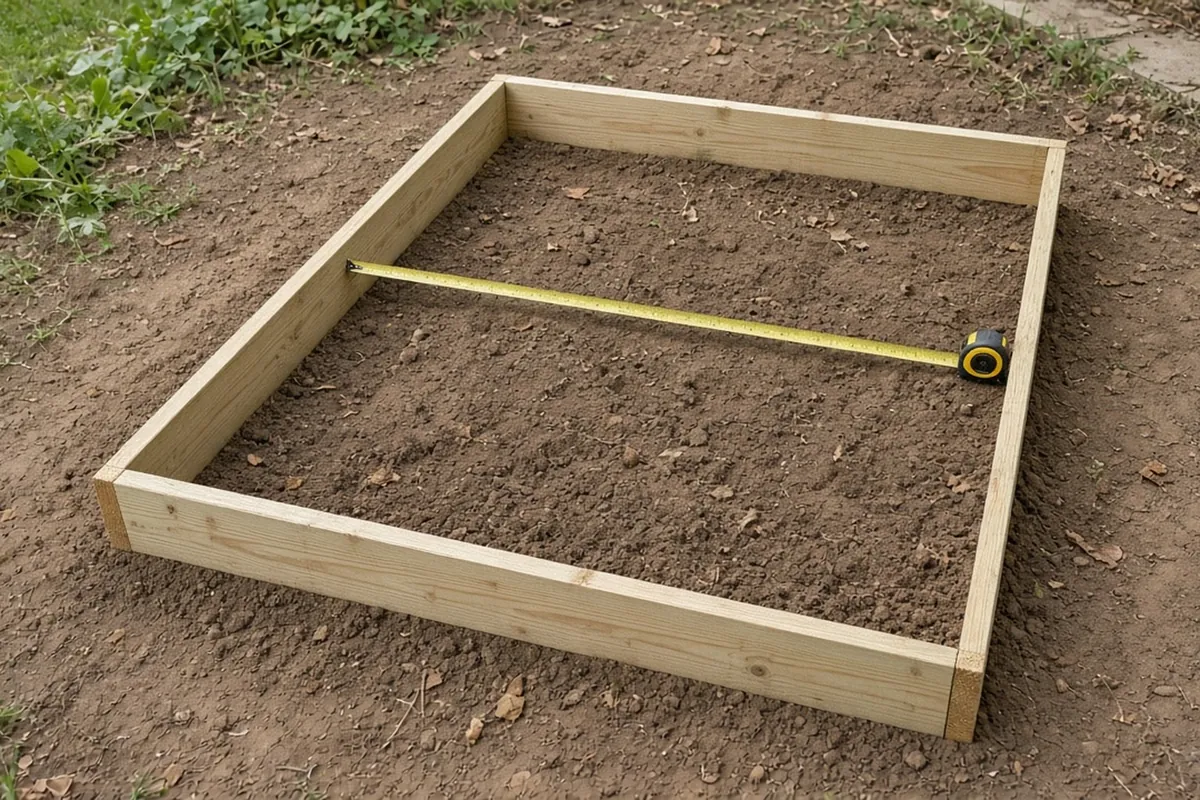 📘 Know-howInside vs outside: why a 4 x 8 raised bed holds less soil than you thinkA 4 x 8 ft frame of 2x lumber is 93 x 45 inches inside, about 29 square feet of soil. How to measure, what it does to your soil order and your cut list.Read the guide
 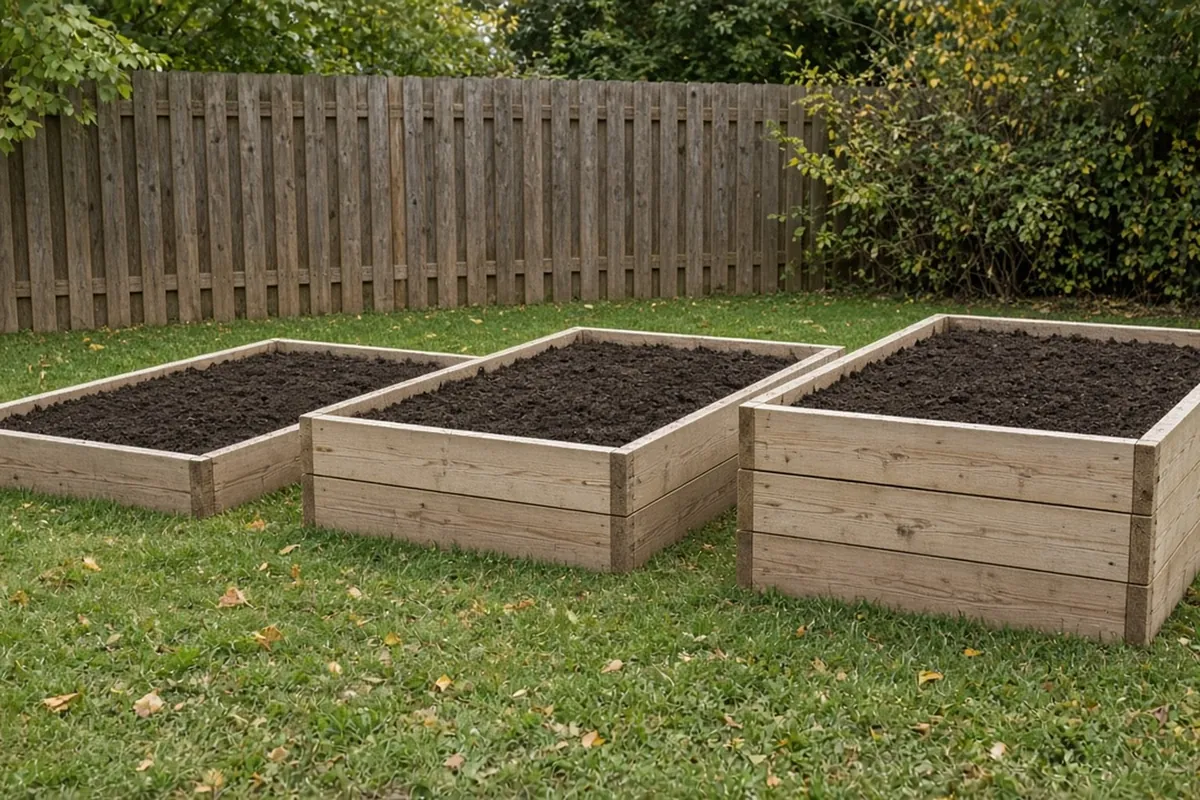 📘 Know-howHow tall to build a raised bed: real board heights and the depths extension pages giveTwo 2x6 boards make an 11 inch bed, enough on open ground for most crops. When to go to 16 1/2 or 24 inches, and what each extra board costs in lumber and soil.Read the guide
 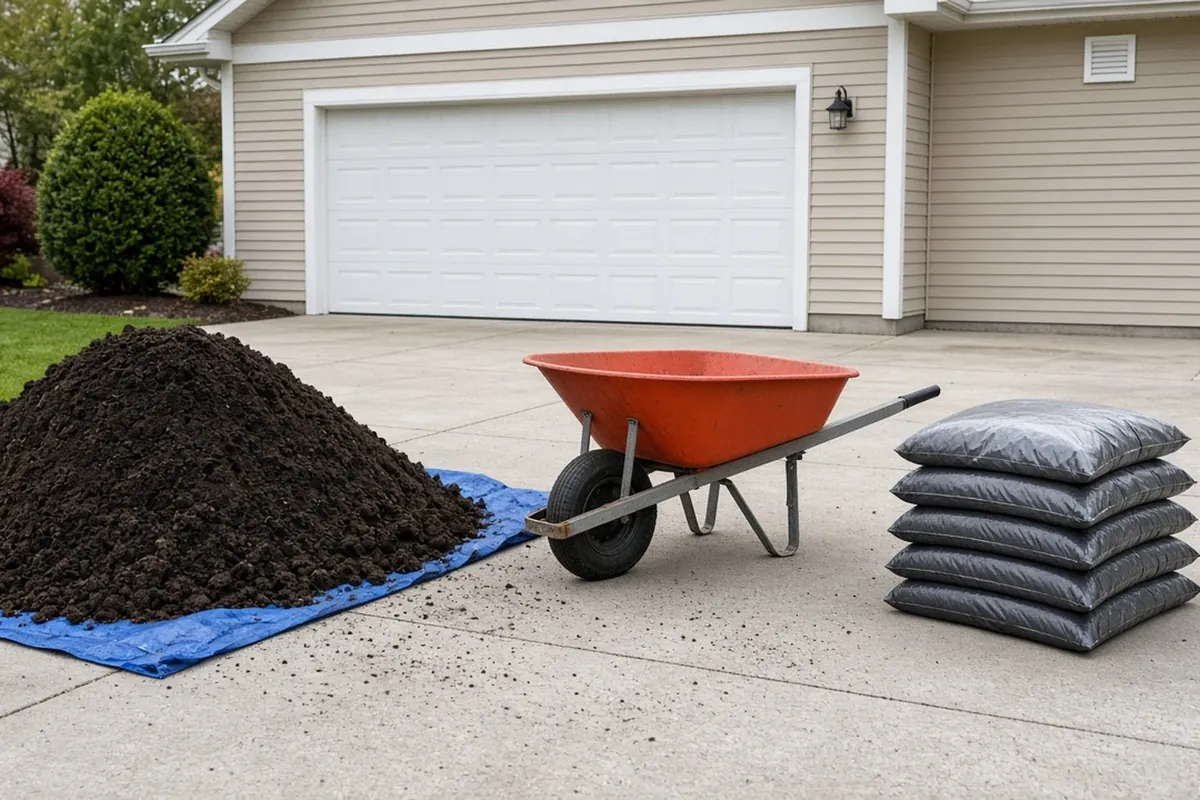 🧰 Problem solverBags or bulk: when a cubic yard delivery is cheaperHow to compare bagged soil, mulch or compost with a bulk cubic yard: price per cubic foot, the delivery fee, and the bag count where bulk wins.Read the guide
 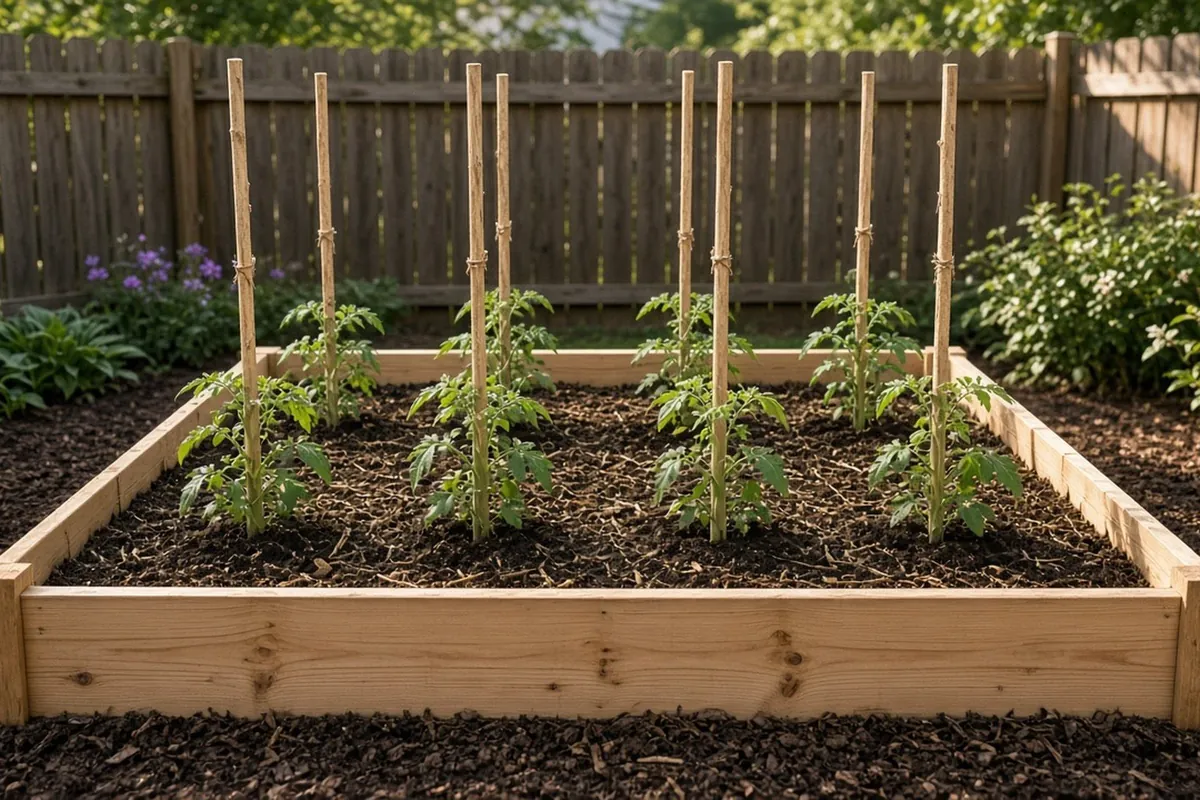 📘 Know-howHow many tomato plants fit in a 4 x 8 raised bedAt the extension spacing of 18 to 24 inches, a 4 x 8 ft bed takes 8 to 10 staked tomatoes in two rows, or 4 in wide cages. See the layouts and the math.Read the guide
 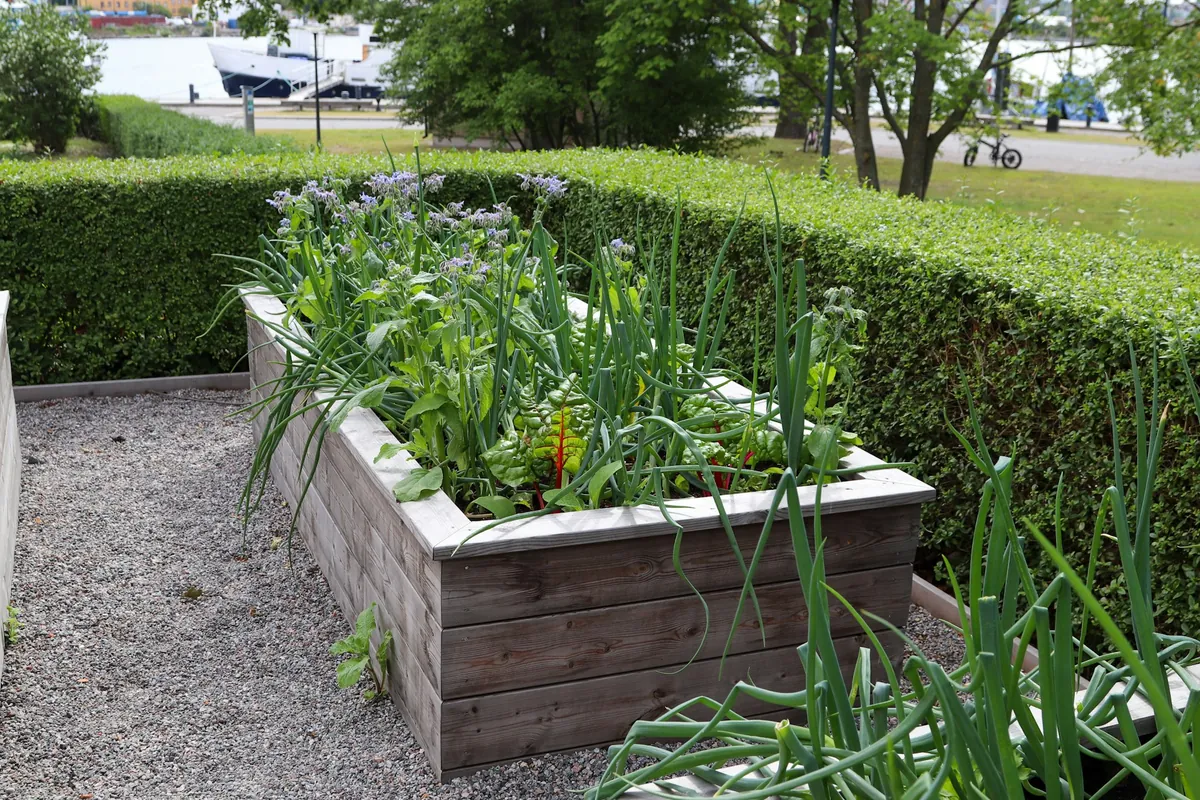 🧰 Problem solverHow to fill a tall raised bed without buying 2 yards of soilA 4 x 8 bed 24 inches tall holds 64 cu ft. Put logs, branches and leaves in the lower half and you buy 32 cu ft of soil instead. What goes in, what stays out.Read the guide
Common questions
Questions
How many 2x6 boards do I need for a 4x8 raised bed?
Six boards of 8 ft for a bed two boards (11 inches) high, measured on the outside: four whole boards for the long sides and two boards cut into four 45 inch short sides. Three boards high takes nine.
Source: NIST, PS 20-20 American Softwood Lumber Standard, checked October 10, 2026.
How tall is a raised bed made from two 2x6 boards?
11 inches. A 2x6 is 5 1/2 inches wide under the federal lumber standard, so two stacked boards are 11 inches and three are 16 1/2.
Source: NIST, PS 20-20 American Softwood Lumber Standard, checked October 10, 2026.
How long should the short sides of a raised bed be?
With the long sides running the full length, each short side is the outside width minus two board thicknesses. For a 4 ft wide bed in 2x lumber that is 48 minus 3, or 45 inches.
Source: NIST, PS 20-20 American Softwood Lumber Standard, checked October 10, 2026.
Does an 8 foot raised bed need extra support?
Oregon State Extension says beds longer than 6 feet or taller than about 18 inches should be reinforced, for example with cross cable or anchored stakes, so the soil doesn't push the boards out. A post halfway along each long side is one common way.
Source: OSU Extension FS 270, raised bed gardening, checked October 10, 2026.
More for the same garden
Related tools
- 🪴 CalculatorRaised bed soil calculatorHow much soil fills a raised bed: cubic feet, cubic yards and a bag count for 1.5 or 2 cu ft bags, from the bed's length, width and depth.Open the tool
- 🪱 CalculatorCompost and topsoil calculatorHow much compost or topsoil to buy for a garden bed or lawn: cubic feet, cubic yards and bag counts, plus the mix you get when you dig it in.Open the tool
- 🍂 CalculatorMulch calculatorHow much mulch a bed takes in cubic feet, cubic yards and 1.5 or 2 cu ft bags, at the depth you pick, with the 2 to 3 inch band worked out too.Open the tool
- 🪨 CalculatorGravel and paver base calculatorHow much gravel and sand to buy for a paver patio, walkway or gravel path: cubic feet, cubic yards, bag counts and how deep to dig.Open the tool
- 🧺 SectionAll beds toolsPlan a wooden raised bed: how many boards to buy, where to cut them, how tall the bed ends up and how much soil it will hold.See the section
Sources
- Voluntary Product Standard PS 20-20, American Softwood Lumber Standard, National Institute of Standards and Technology (US Department of Commerce). Checked October 10, 2026.
- Raised bed gardening (FS 270), Oregon State University Extension Service. Checked October 10, 2026.
- How to Build a Raised Bed, Penn State Extension. Checked October 10, 2026.
See every source on the site on the sources page. Spotted an error? Tell us.