🪱 Soil and mulchFree toolPrintable record
Compost and topsoil calculator
Quick answer
Cubic feet = area in square feet × layer depth in inches ÷ 12. Virginia Cooperative Extension suggests spreading about 2 inches of compost over a garden and working it 6 to 8 inches into the soil. For a 10 x 20 ft garden that comes to 33.33 cubic feet, or 1.23 cubic yards. In bags, that's 23 of the 1.5 cu ft compost size or 45 of the 0.75 cu ft topsoil size.
Source: Virginia Cooperative Extension, Using Compost in Your Landscape, checked October 6, 2026; Kellogg Garden compost product page, checked October 6, 2026; Scotts Premium Topsoil product page, checked October 6, 2026.

Compost and topsoil calculator
Change any number and the answer updates as you type.
Compost or topsoil needed 33.33 cu ft (1.23 cu yd, 944 liters)
| Buying by | How many |
|---|---|
| Compost, 1.5 cu ft bag | 23 bags |
| Topsoil, 0.75 cu ft bag | 45 bags |
| Bulk, by the cubic yard | 1.23 cu yd |
If you spread 2 in and work it into the top 8 in, about 25% of the mixed layer is compost or topsoil by volume, before it settles.
- Area to cover
- 200 sq ft (18.6 m²)
- Depth
- 2 in (5.1 cm)
No garden math needed
How to use this, in plain words
Measure the garden or lawn area in feet. For a lawn, pace it out or use the lot plan and take off the house and drive.
Pick the layer depth. Virginia Cooperative Extension suggests about 2 inches over a garden, up to 1/4 inch on an existing lawn and about 1 inch around shrubs.
Type the area and layer in. If you plan to dig it in, add the digging depth to see what share of the mixed layer is compost.
Read the bag count for 1.5 cu ft compost or 0.75 cu ft topsoil, or type the size from your own bag.
Source: Virginia Cooperative Extension, Using Compost in Your Landscape, checked October 6, 2026; Kellogg Garden compost product page, checked October 6, 2026; Scotts Premium Topsoil product page, checked October 6, 2026.
What the store won't tell you
Before you start
- Topsoil bags are often small. Scotts' is 0.75 cu ft, half a 1.5 cu ft compost bag, so the counts look high.
- Compost and topsoil aren't the same thing. Compost is broken-down organic matter you spread thin; topsoil is soil you fill or level with.
- A quarter inch on a lawn is very little per square foot but adds up over a big lawn: 1,000 sq ft takes 20.83 cubic feet.
- For anything over a cubic yard, price bulk too. A cubic yard of compost covers about 324 square feet at 1 inch, per NC State Extension.
Source: Scotts Premium Topsoil product page, checked October 6, 2026; Kellogg Garden compost product page, checked October 6, 2026; NC State Extension, compost coverage, checked October 6, 2026.
Go deeper: Raised bed soil sank after a month: why, and how much to top up · Bags or bulk: when a cubic yard delivery is cheaper · Fall compost bin reset: empty the finished compost, then rebuild with leaves · How much compost should you add each year? · Turning a patch of lawn into a garden bed this fall
The formula, in words
How it works
- Area: length × width in feet. For a round bed: π × radius × radius.
- Volume: area × layer depth in inches ÷ 12, times the number of beds.
- Cubic yards: cubic feet ÷ 27.
- Bags: cubic feet ÷ bag size, rounded up. The table shows a 1.5 cu ft compost bag and a 0.75 cu ft topsoil bag, both sizes printed on the makers' product pages, and you can add your own.
- Mix: layer depth ÷ the depth you dig it into. Spread 2 inches and work it into the top 8 inches, and about a quarter of that layer is compost before it settles.
Source: Kellogg Garden compost product page, checked October 6, 2026; Scotts Premium Topsoil product page, checked October 6, 2026.
Printable sheet
What to record
The extension guide suggests adding compost every year, so keep this year's numbers for next spring. The printable compost and topsoil record has one row per bed or lawn area:
- Bed or lawn area
- Square feet
- Compost or topsoil, and the bag size
- Layer spread, in inches
- Depth worked in
- Bags or yards bought
- Date spread
Checked by hand
Worked example
A new 10 x 20 ft vegetable garden. You spread 2 inches of compost and dig it into the top 8 inches.
- Area: 20 × 10 = 200 sq ft.
- Depth: 2 in ÷ 12 = 0.167 ft. Volume: 200 × 0.167 = 33.33 cu ft.
- Cubic yards: 33.33 ÷ 27 = 1.23 cu yd.
- Mix: 2 in ÷ 8 in = 25% of the worked layer.
- Bags: 33.33 ÷ 1.5 = 22.22, so 23 bags of compost at 1.5 cu ft; 33.33 ÷ 0.75 = 44.44, so 45 bags of topsoil at 0.75 cu ft.
Why it may not match the bag or the store
If the answer surprises you
❓
The bag's coverage line leaves some over
Scotts prints that one 0.75 cu ft bag covers 4 sq ft at 2 inches. That area takes 0.67 cubic feet, so the line has a little spare built in.
Source: Scotts Premium Topsoil product page, checked October 6, 2026.
❓
The bed sank after you dug it in
Compost keeps breaking down, and Oregon State Extension says beds with compost in the mix sink over time. That's expected; measure and top up next season.
Source: OSU Extension EM 9308, using compost, checked October 6, 2026.
❓
Extension figures differ by state
Oregon State suggests a quarter inch to 1 inch of compost a year on an existing bed; Virginia's guide suggests about 2 inches on a garden. Use the figure from your own state's extension office if it has one.
Source: OSU Extension EM 9308, using compost, checked October 6, 2026; Virginia Cooperative Extension, Using Compost in Your Landscape, checked October 6, 2026.
Other cases
Variants
🟫
Topdressing a lawn
Virginia Cooperative Extension suggests up to 1/4 inch of compost on an existing lawn, once or twice a year. Enter 0.25 as the layer and leave the mixing field blank. A 1,000 sq ft lawn takes 20.83 cubic feet, about 14 bags of 1.5 cu ft.
Source: Virginia Cooperative Extension, Using Compost in Your Landscape, checked October 6, 2026.
⭕
Before seeding a new lawn
The same guide suggests about 2 inches of compost over the planned lawn area. On 1,000 sq ft that is 166.67 cubic feet, or 6.17 cubic yards. At that size, compare a bulk delivery with 112 bags.
Source: Virginia Cooperative Extension, Using Compost in Your Landscape, checked October 6, 2026.
🔁
Around shrubs and trees
The guide suggests about 1 inch of compost around shrubs and trees, with mulch on top. Measure the ring, pick Circle and enter 1 as the layer. The mulch calculator handles the layer above it.
Source: Virginia Cooperative Extension, Using Compost in Your Landscape, checked October 6, 2026.
📏
Checking a bag's coverage line
Scotts prints that one 0.75 cu ft topsoil bag covers 4 sq ft at 2 inches. Four square feet at 2 inches is 0.67 cubic feet, so that line leaves a little spare in the bag.
Source: Scotts Premium Topsoil product page, checked October 6, 2026.
Where each figure comes from
Numbers this tool uses
- About 2 in, worked 6 to 8 in into the soilCompost on a garden (Virginia Cooperative Extension)Virginia Cooperative Extension, Using Compost in Your Landscape, October 6, 2026
- Up to 1/4 in, 1 to 2 times a yearTopdressing an existing lawn (Virginia Cooperative Extension)Virginia Cooperative Extension, Using Compost in Your Landscape, October 6, 2026
- About 1 inCompost around shrubs and trees (Virginia Cooperative Extension)Virginia Cooperative Extension, Using Compost in Your Landscape, October 6, 2026
- 1.5 cu ftCompost bag (Kellogg product page)Kellogg Garden compost product page, October 6, 2026
- 0.75 cu ft, covers 4 sq ft at 2 inTopsoil bag (Scotts product page)Scotts Premium Topsoil product page, October 6, 2026
Limitations
- Planning estimate, not a guarantee; check the cubic feet printed on your bag before you buy.
- Compost and topsoil settle once dug in and watered. The result is the volume of the layer you enter, with nothing added.
- The layer and digging depths come from one extension guide, by Virginia Cooperative Extension. Your state's extension office may suggest different depths for your soil.
What people learn the second year
Tips and tricks
- Measure the depth after you rake, not before. Spread a few bags, rake level, then push a ruler in at three spots. A pile looks deeper than the layer it rakes out to.
- Work compost in while the bed is empty. Virginia's guide mixes 2 inches of compost into the top 6 to 8 inches of soil. That's far easier in an empty bed than around plants, so do it in fall or before spring planting. (Virginia Cooperative Extension, Using Compost in Your Landscape)
- Keep lawn topdressing thin. Virginia's figure for an existing lawn is up to a quarter inch. Rake it into the grass until the blades show through. (Virginia Cooperative Extension, Using Compost in Your Landscape)
- Check the bag size on every bag. Topsoil and compost bags come in different sizes. Type the cubic feet printed on the bag you're buying, not the size from last year's bag.
- Save a bag for next season. Oregon State says beds with compost in the mix sink over time. One spare bag tops up the low corners next spring. (OSU Extension EM 9308, using compost)
Read before the store run
Guides that go deeper
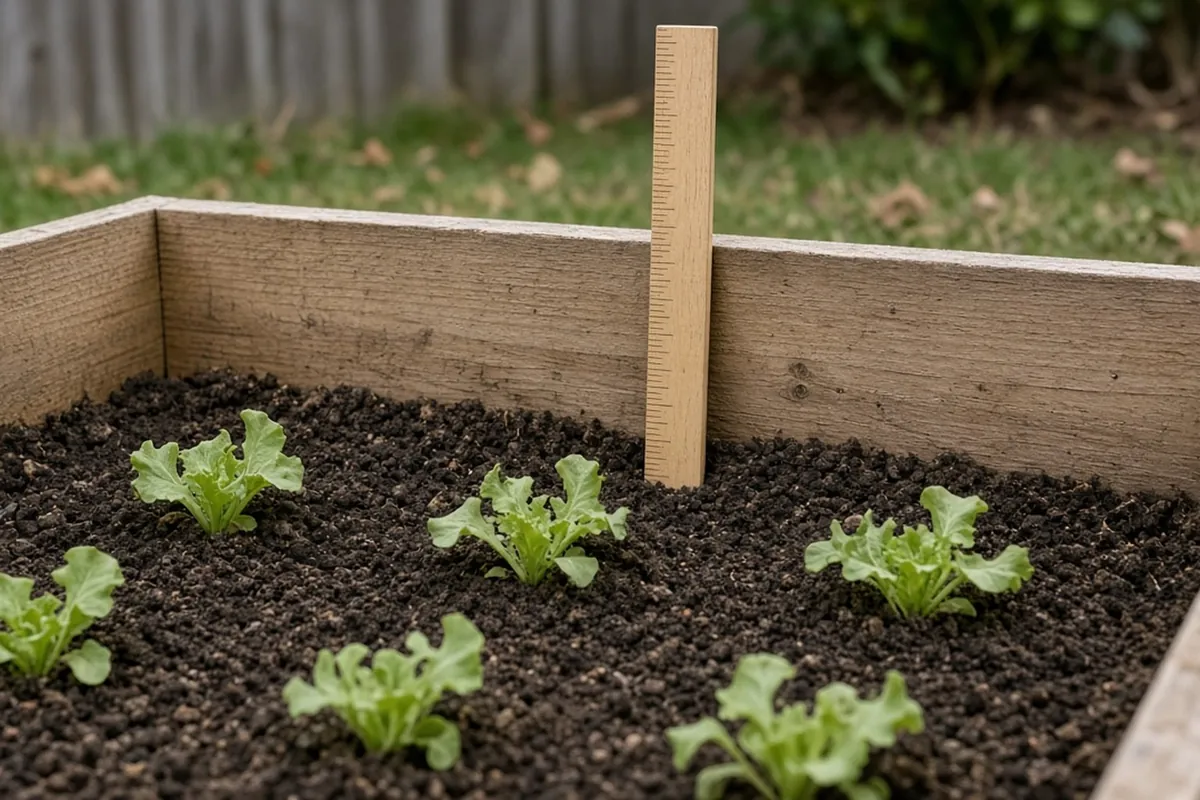 🧰 Problem solverRaised bed soil sank after a month: why, and how much to top upWhy raised bed soil settles after filling, what extension services say to add each year, and how to turn the gap into cubic feet and bags.Read the guide
 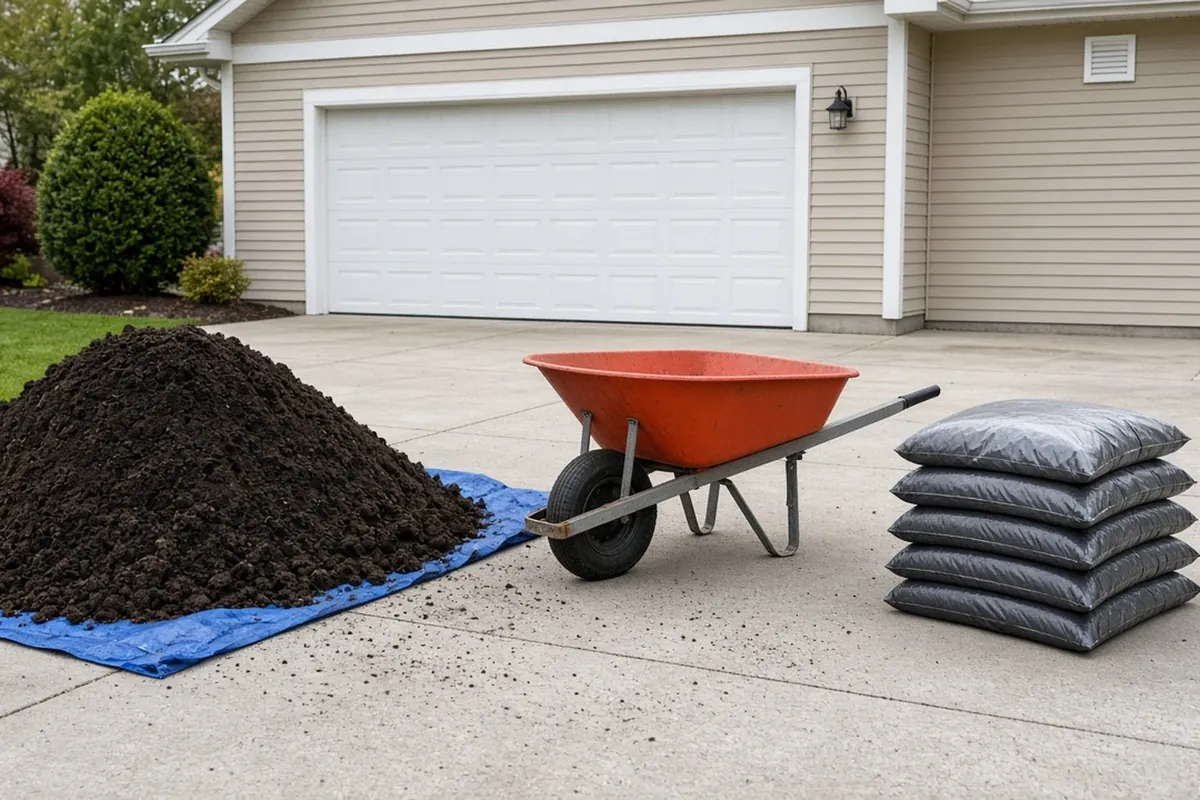 🧰 Problem solverBags or bulk: when a cubic yard delivery is cheaperHow to compare bagged soil, mulch or compost with a bulk cubic yard: price per cubic foot, the delivery fee, and the bag count where bulk wins.Read the guide
 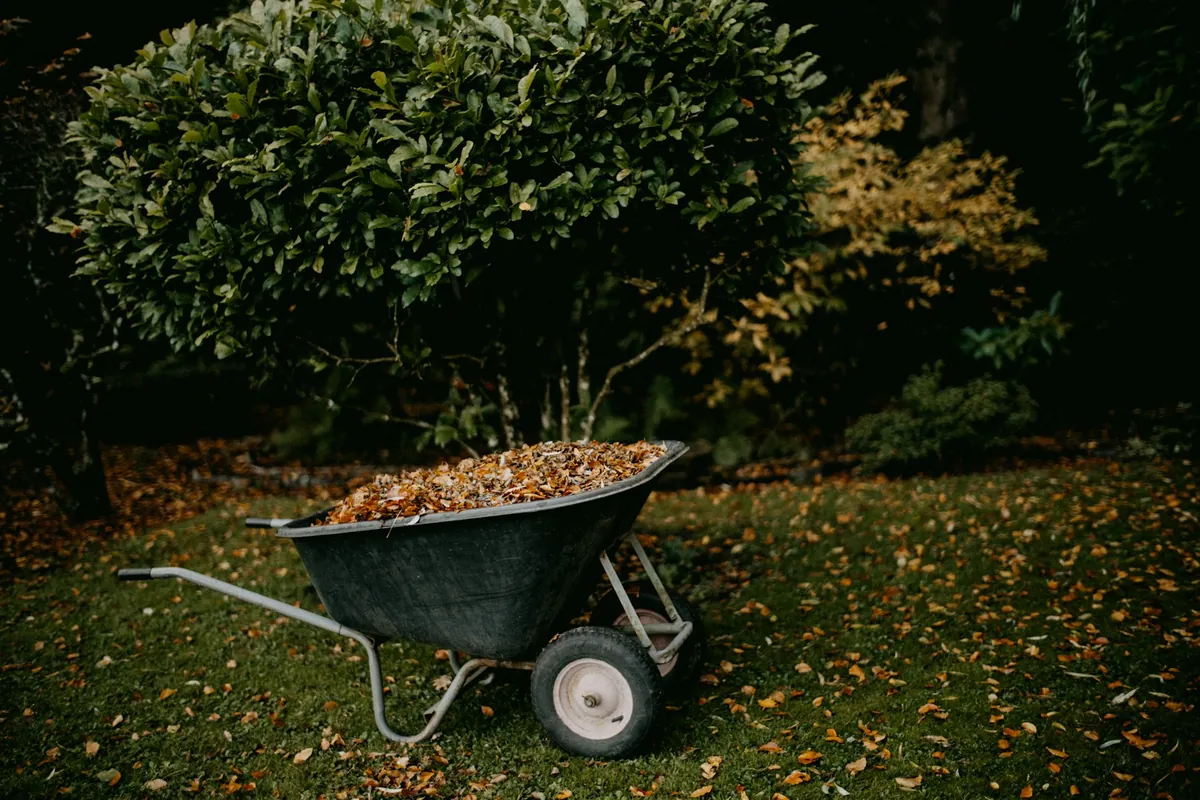 ✅ ChecklistFall compost bin reset: empty the finished compost, then rebuild with leavesPull out the finished compost, spread it on your beds, then rebuild the bin 3 ft each way with fall leaves and greens, damp as a wrung-out sponge.Read the guide
 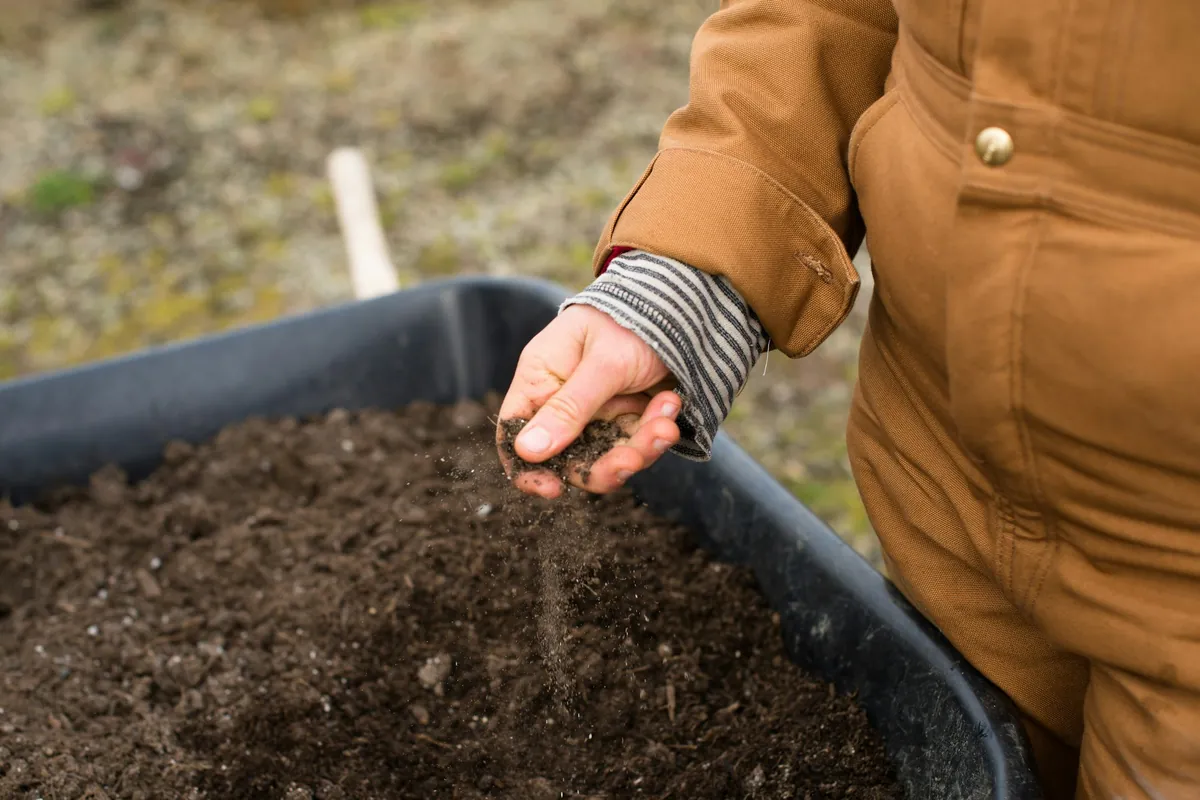 📘 Know-howHow much compost should you add each year?A quarter inch to 1 inch a year on an established bed, about 2 inches dug into a new or tired garden. The extension figures side by side, in bags.Read the guide
  🧰 Problem solverTurning a patch of lawn into a garden bed this fallSmother the grass with soaked newspaper and layers of leaves and clippings in fall, plant in spring. Layer depths, settling and amounts for a 4 x 10 bed.Read the guide
Common questions
Questions
How many bags of compost for a 4 x 8 raised bed?
A 2 inch layer on a 4 x 8 ft bed is 5.33 cubic feet. That's 4 bags of 1.5 cu ft compost, or 8 bags of 0.75 cu ft topsoil.
Source: Kellogg Garden compost product page, checked October 6, 2026; Scotts Premium Topsoil product page, checked October 6, 2026.
How much compost should I add to a garden?
Virginia Cooperative Extension suggests about 2 inches over the whole garden each year, worked 6 to 8 inches into the soil. On an existing lawn it suggests no more than 1/4 inch at a time.
Source: Virginia Cooperative Extension, Using Compost in Your Landscape, checked October 6, 2026.
How many square feet does a cubic yard of compost cover?
A cubic yard is 27 cubic feet. At 2 inches it covers 27 ÷ (2 ÷ 12) = 162 sq ft. At 1 inch it covers 324 sq ft, and at 1/4 inch, 1,296 sq ft.
Is compost the same as topsoil?
No. Bagged topsoil is mostly soil, sometimes with organic matter added; compost is broken-down organic material. The volume math is the same for both, so the tool gives one cubic-foot figure and a bag count for each bag size.
More for the same garden
Related tools
- 🪴 CalculatorRaised bed soil calculatorHow much soil fills a raised bed: cubic feet, cubic yards and a bag count for 1.5 or 2 cu ft bags, from the bed's length, width and depth.Open the tool
- 🍂 CalculatorMulch calculatorHow much mulch a bed takes in cubic feet, cubic yards and 1.5 or 2 cu ft bags, at the depth you pick, with the 2 to 3 inch band worked out too.Open the tool
- 🌡️ LookupUSDA zone finder by zip codeFind your 2023 USDA plant hardiness zone by zip code, see its winter low band in °F and °C, and check a plant tag's zone range against it.Open the tool
- 🪨 CalculatorGravel and paver base calculatorHow much gravel and sand to buy for a paver patio, walkway or gravel path: cubic feet, cubic yards, bag counts and how deep to dig.Open the tool
- 🏺 CalculatorContainer soil calculatorHow much potting mix to buy for round pots, square planters and window boxes: quarts, cubic feet and bag counts, filled an inch below the rim.Open the tool
- 🪚 CalculatorRaised bed lumber calculatorHow many boards to buy for a wooden raised bed, and where to cut them: side lengths, a board-by-board cut plan, corner posts and the soil it will hold.Open the tool
- 🧺 SectionAll soil and mulch toolsRaised-bed soil, mulch, compost and topsoil calculators that give cubic feet, cubic yards and bag counts, using bag sizes printed by the makers.See the section
Sources
- Using Compost in Your Landscape (SPES-304), Virginia Cooperative Extension, Virginia Tech. Checked October 6, 2026.
- Gardner & Bloome Organics Purely Compost, Kellogg Garden Products. Checked October 6, 2026.
- Scotts Premium Topsoil Lawn & Garden Soil Conditioner, ScottsMiracle-Gro. Checked October 6, 2026.
- Organic Lawn Care, appendices: composting and spreaders, NC State Extension. Checked October 6, 2026.
- How to use compost in gardens and landscapes (EM 9308), Oregon State University Extension Service. Checked October 6, 2026.
See every source on the site on the sources page. Spotted an error? Tell us.