📘 Know-howSoil and mulch4 min read
How much compost should you add each year?
Quick answer
On a bed that's already growing well, Oregon State Extension suggests a quarter inch to 1 inch of compost on the surface each year. Virginia Cooperative Extension suggests about 2 inches over the whole garden each year, worked 6 to 8 inches into the soil. That suits a new bed or one you're digging anyway. On a 4 x 8 ft bed, 1 inch is 2.67 cu ft, or 2 bags of 1.5 cu ft. Two inches is 4 bags.
Source: OSU Extension EM 9308, using compost, checked October 6, 2026; Virginia Cooperative Extension, Using Compost in Your Landscape, checked October 6, 2026; Kellogg Garden compost product page, checked October 6, 2026.

Why the answers differ
Two extension offices, two yearly figures
Answers online run anywhere between a dusting and several inches. Both of the extension figures below are yearly amounts. They differ because they describe different jobs.
Oregon State's guide on using compost covers beds that are already built: put a layer a quarter inch to 1 inch deep on the surface each year. Virginia's guide covers the whole garden: about 2 inches a year, worked 6 to 8 inches into the soil. That's a digging job, and it's easiest when the bed is empty in fall or before spring planting.
Source: OSU Extension EM 9308, using compost, checked October 6, 2026; Virginia Cooperative Extension, Using Compost in Your Landscape, checked October 6, 2026.
- 1/4 to 1 ina year on an existing bed (Oregon State)OSU Extension EM 9308, using compost, October 6, 2026
- 2 ina year, worked 6 to 8 in deep (Virginia)Virginia Cooperative Extension, Using Compost in Your Landscape, October 6, 2026
- 324 sq ftone cubic yard covers at 1 in (NC State)NC State Extension, compost coverage, October 6, 2026
- 2 bagsof 1.5 cu ft for a 4 x 8 bed at 1 inArithmetic
Pick your figure
Which one fits your bed this year
Name the job
A bed that's planted and doing fine gets a surface layer. A new bed, or one you're turning over anyway, gets the dug-in amount.
Established bed: a quarter inch to 1 inch
Spread it on top in fall or early spring. Oregon State's range is a quarter inch to 1 inch, so start low on a bed you fed last year.
Source: OSU Extension EM 9308, using compost, checked October 6, 2026.
New or tired bed: about 2 inches, dug in
Virginia's figure is about 2 inches worked 6 to 8 inches into the soil. Spread it, then turn it in with a fork while nothing is planted.
Source: Virginia Cooperative Extension, Using Compost in Your Landscape, checked October 6, 2026.
Measure the bed in feet
Length times width gives square feet. A 4 x 8 bed is 32 sq ft and a 10 x 20 garden is 200.
Turn inches into bags
Square feet times inches, divided by 12, gives cubic feet. Divide by the bag size and round up. For a 1.5 cu ft bag, 200 sq ft at 1 inch is 16.67 cu ft, or 12 bags.
Source: Kellogg Garden compost product page, checked October 6, 2026.
| Layer | 4 x 8 bed (32 sq ft) | 10 x 20 garden (200 sq ft) |
|---|---|---|
| 1/4 in | 0.67 cu ft, 1 bag | 4.17 cu ft, 3 bags |
| 1/2 in | 1.33 cu ft, 1 bag | 8.33 cu ft, 6 bags |
| 1 in | 2.67 cu ft, 2 bags | 16.67 cu ft, 12 bags |
| 2 in | 5.33 cu ft, 4 bags | 33.33 cu ft, 23 bags |
Cubic feet = square feet x inches / 12. Bags of 1.5 cu ft, rounded up.
Bigger gardens
When a yard of bulk compost makes sense
NC State Extension says one cubic yard of compost covers about 324 sq ft at 1 inch. At 2 inches the same yard covers 27 / (2 / 12) = 162 sq ft. A 200 sq ft garden at 2 inches takes 33.33 cu ft, about 1.23 cubic yards. That's 23 bags, so it's worth asking a supplier for a bulk price.
Source: NC State Extension, compost coverage, checked October 6, 2026.
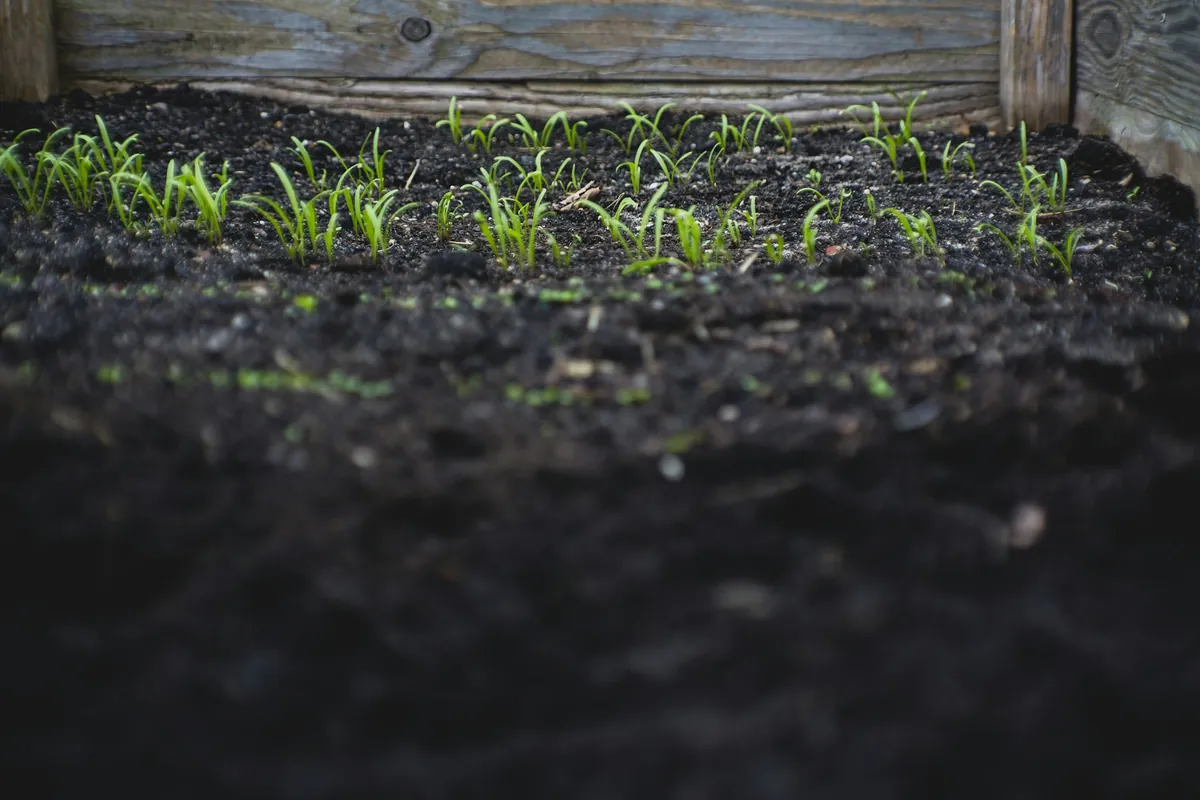
Print it, tick it off
Yearly compost checklist
Fill this in once and reuse it each fall or spring.
- Each bed's length and width in feet
- Job named: surface layer or dug in
- Layer depth picked, in inches
- Cubic feet worked out (square feet x inches / 12)
- Bag size read off the bag, in cubic feet
- Bag count rounded up, or a bulk quote for a yard or more
- Date spread and inches added written down
What people learn the second year
Tips and tricks
- Spread it when the bed is bare. Fall cleanup and the weeks before spring planting are the easy windows. You can rake a layer flat without working around plants.
- Measure the layer after raking. A heap from the bag looks deeper than it rakes out. Push a ruler in at three spots once it's level.
- Do the big beds first. On a mixed yard, work out the large beds first. Small ones round up to a whole bag each, so a spare bag often covers them.
- Keep one record per bed. Write down the inches and the date. After two seasons you'll know whether a bed needs the high or low end of the range.
Common questions
Questions
How much compost should I add to my garden each year?
Oregon State suggests a quarter inch to 1 inch a year on an existing bed. Virginia suggests about 2 inches a year over the whole garden, worked 6 to 8 inches into the soil.
Source: OSU Extension EM 9308, using compost, checked October 6, 2026; Virginia Cooperative Extension, Using Compost in Your Landscape, checked October 6, 2026.
How many bags of compost for a 4 x 8 raised bed?
At 1 inch, 2.67 cu ft, which is 2 bags of 1.5 cu ft. At 2 inches, 5.33 cu ft, or 4 bags.
Source: Kellogg Garden compost product page, checked October 6, 2026.
How often should I add compost to raised beds?
Both extension guides give yearly amounts. Oregon State also says beds with compost in the mix sink over time, so check the level each year and top up as needed.
Source: OSU Extension EM 9308, using compost, checked October 6, 2026.
How much does a cubic yard of compost cover?
NC State Extension says about 324 sq ft at 1 inch and 108 sq ft at 3 inches. At 2 inches it's 27 / (2 / 12) = 162 sq ft.
Source: NC State Extension, compost coverage, checked October 6, 2026.
Should compost go on top or be dug in?
On an established bed, a thin layer on top is fine. When you're starting a bed or turning it over, Virginia's guide works 2 inches into the top 6 to 8 inches.
Source: Virginia Cooperative Extension, Using Compost in Your Landscape, checked October 6, 2026.
The arithmetic, done for you
Tools for this job
- 🪱 CalculatorCompost and topsoil calculatorHow much compost or topsoil to buy for a garden bed or lawn: cubic feet, cubic yards and bag counts, plus the mix you get when you dig it in.Open the tool
- 🪴 CalculatorRaised bed soil calculatorHow much soil fills a raised bed: cubic feet, cubic yards and a bag count for 1.5 or 2 cu ft bags, from the bed's length, width and depth.Open the tool
Keep reading
More guides
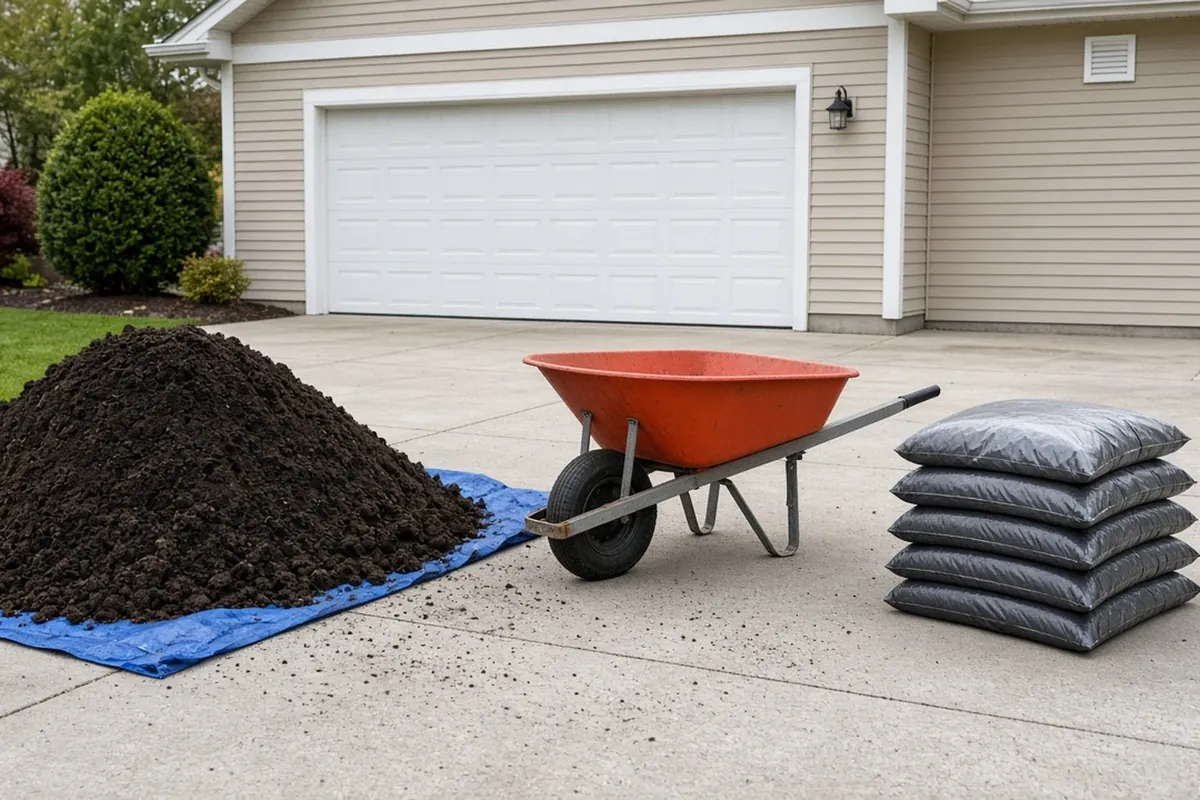 🧰 Problem solverBags or bulk: when a cubic yard delivery is cheaperHow to compare bagged soil, mulch or compost with a bulk cubic yard: price per cubic foot, the delivery fee, and the bag count where bulk wins.Read the guide
 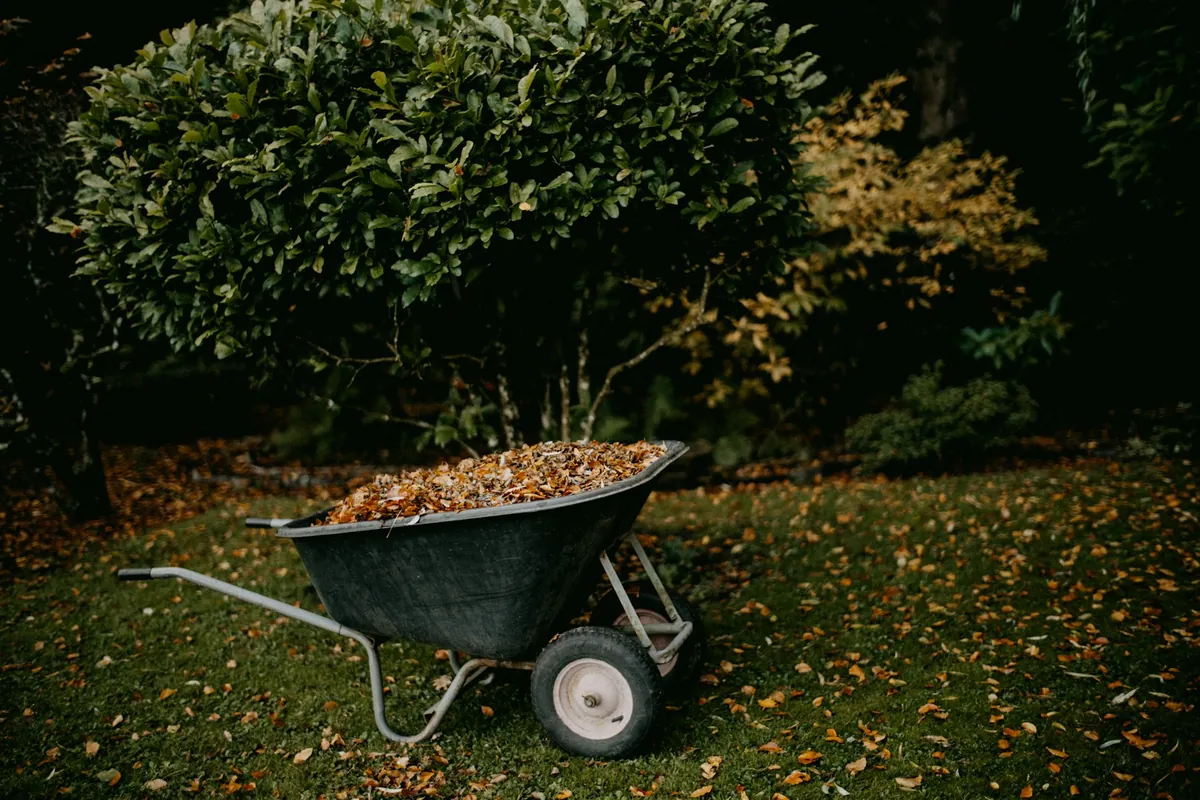 ✅ ChecklistFall compost bin reset: empty the finished compost, then rebuild with leavesPull out the finished compost, spread it on your beds, then rebuild the bin 3 ft each way with fall leaves and greens, damp as a wrung-out sponge.Read the guide
 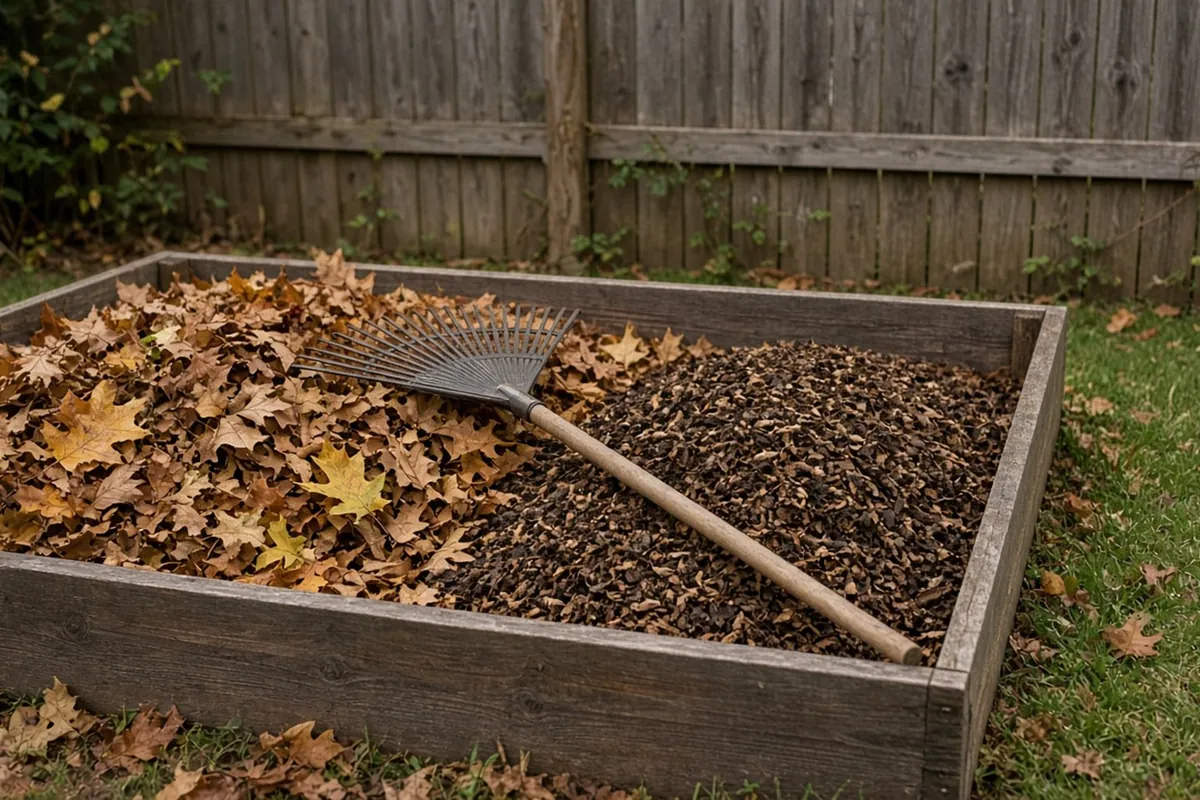 🧰 Problem solverWhat to do with fall leaves in the garden: shred them into mulchShred the leaves, then spread 2 to 3 inches on beds and 3 to 4 around shrubs. How to shred without a shredder, and how many bags a bed takes.Read the guide
 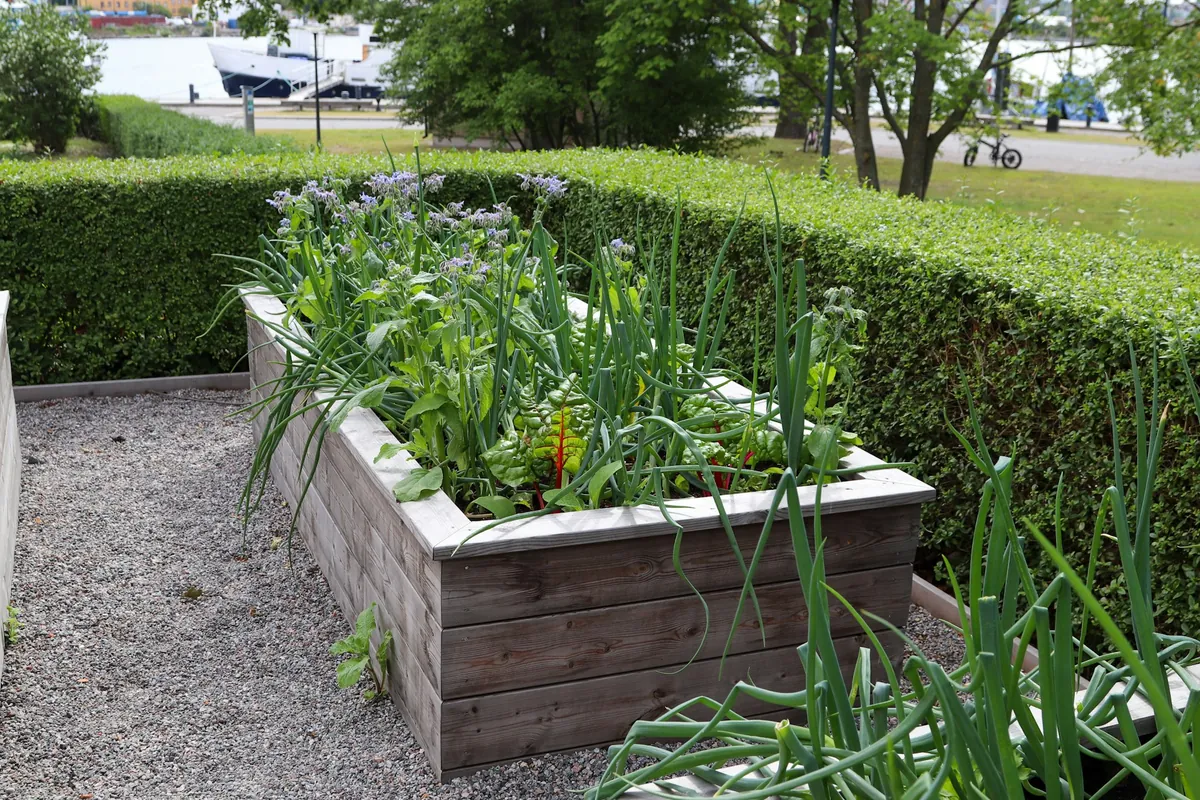 🧰 Problem solverHow to fill a tall raised bed without buying 2 yards of soilA 4 x 8 bed 24 inches tall holds 64 cu ft. Put logs, branches and leaves in the lower half and you buy 32 cu ft of soil instead. What goes in, what stays out.Read the guide
Sources
- How to use compost in gardens and landscapes (EM 9308), Oregon State University Extension Service, published February 1, 2021. Checked October 6, 2026.
- Using Compost in Your Landscape (SPES-304), Virginia Cooperative Extension, Virginia Tech. Checked October 6, 2026.
- Gardner & Bloome Organics Purely Compost, Kellogg Garden Products. Checked October 6, 2026.
- Organic Lawn Care, appendices: composting and spreaders, NC State Extension, published February 2, 2026. Checked October 6, 2026.
Planning guide, not a guarantee. See every source on the site on the sources page. Spotted an error? Tell us.