🧭 Garden systemSoil and mulch7 stepsFree working copy
Start a new in-ground bed this fall: dig in compost or build on the lawn
Quick answer
To dig it in, lift the sod about 1 inch deep, as Iowa State Extension describes, then spread about 2 inches of compost and work it 6 to 8 inches in (Virginia Cooperative Extension). A 4 x 10 ft bed takes 5 bags of 1.5 cu ft. To skip the digging, sheet mulch on the grass with soaked paper and 3 inch layers of leaves and clippings. Oregon State says a bed finished in fall is ready for spring planting. Then you need 3 to 5 bags of compost for the seed layer.
Source: Iowa State Extension, new garden bed from lawn, checked October 11, 2026; Virginia Cooperative Extension, Using Compost in Your Landscape, checked October 6, 2026; OSU Extension EM 9480, sheet mulch, checked October 11, 2026; Kellogg Garden compost product page, checked October 6, 2026.

Decide first
Dig it in, build on the lawn, or get help?
Do it yourself
Dig it in this fall
Choose this if you want to plant soon, the bed is small and you don't mind lifting sod. Slice under the grass about 1 inch deep with a sharp spade (Iowa State), then fork in about 2 inches of compost, 6 to 8 inches deep (Virginia).
Source: Iowa State Extension, new garden bed from lawn, checked October 11, 2026; Virginia Cooperative Extension, Using Compost in Your Landscape, checked October 6, 2026.
Skip it
Skip the digging: sheet mulch
Go this way if spring is soon enough and you have leaves. Lay soaked newspaper over the mowed grass and stack green and brown layers on it. Oregon State says a bed finished in fall is ready for spring planting.
Source: OSU Extension EM 9480, sheet mulch, checked October 11, 2026.
Get help
Rent a cutter or hire it out
For a big patch, Iowa State Extension suggests renting a sod cutter, which saves a lot of time and effort. A landscaper can also lift the sod for you. If you aren't sure what's in your soil, your county extension office can tell you about soil testing.
Source: Iowa State Extension, new garden bed from lawn, checked October 11, 2026.
- 1 inabout how deep to cut under the sod (Iowa State)Iowa State Extension, new garden bed from lawn, October 11, 2026
- 2 inof compost worked 6 to 8 in deep (Virginia)Virginia Cooperative Extension, Using Compost in Your Landscape, October 6, 2026
- Halfof a sheet mulch bed's height gone in year one (Oregon State)OSU Extension EM 9480, sheet mulch, October 11, 2026
- 5 bagsof 1.5 cu ft to dig in a 4 x 10 bedArithmetic
One fall weekend, then a check in spring
The steps, in order
Mark the bed and measure it
Put in stakes and string, then measure the length and width in feet. A 4 x 10 ft bed is 40 sq ft. Write it on the working copy; every amount below comes from it.
Have ready: Stakes, string, a tape measure and the working copy.
Water a few days ahead
Iowa State says to remove sod a couple of days after a soaking rain, or water two or three days before you dig. Damp soil also helps the paper settle on the sheet mulch route.
Have ready: A hose, or a look at the forecast.
Source: Iowa State Extension, new garden bed from lawn, checked October 11, 2026.
Pick your route and write it down
Dig if you want the bed this fall and it's small. Sheet mulch if you can wait for spring and you have leaves. Circle one on the working copy so what you buy matches the route.
Have ready: The decision box above.
Dig route: lift the sod
Slide a sharp spade under the grass roots, about 1 inch deep, and roll or lift it in pieces you can carry. Iowa State warns that sod is heavy. A 40 sq ft bed at 1 inch is about 3.33 cu ft to haul away.
Have ready: A sharp spade, a garden fork and a wheelbarrow.
Source: Iowa State Extension, new garden bed from lawn, checked October 11, 2026.
Dig route: add 2 inches of compost and fork it in
Virginia's figure is about 2 inches worked 6 to 8 inches into the soil. On 40 sq ft that's 40 × 2 ÷ 12 = 6.67 cu ft, or 5 bags of 1.5 cu ft.
Have ready: The compost and a garden fork.
Compost and topsoil calculator
Source: Virginia Cooperative Extension, Using Compost in Your Landscape, checked October 6, 2026; Kellogg Garden compost product page, checked October 6, 2026.
Sheet route: paper, then layers
Mow short and lay 3 to 4 sheets of soaked newspaper, overlapped 3 to 4 inches. Add green and brown layers 3 inches deep or less each, and end with brown. Twelve inches on 40 sq ft is 40 cu ft of leaves and clippings.
Have ready: Newspaper, a hose, clippings, dry leaves and a rake.
Source: OSU Extension EM 9480, sheet mulch, checked October 11, 2026.
Spring: plant and log the height
On the sheet route, sow seeds into 1 to 2 inches of screened compost, per Oregon State: 3 to 5 bags on 40 sq ft. For transplants, make a hole twice the size of the root ball. Write the bed's height on the log so you know how much it has sunk.
Have ready: Compost, seeds or plants, and the working copy.
Source: OSU Extension EM 9480, sheet mulch, checked October 11, 2026; Kellogg Garden compost product page, checked October 6, 2026.
Free, one page, black and white
Print the working copy
New bed log: the steps above as a checklist with a date box for each, on one US Letter page.
If a step gets skipped
What goes wrong
⚠️
Lifting the sod too thick
Cut deep and you carry off good topsoil with the grass, and every piece weighs more. Iowa State puts the cut just under the grass roots, about 1 inch down.
Source: Iowa State Extension, new garden bed from lawn, checked October 11, 2026.
⚠️
Dry paper, or gaps between sheets
Oregon State says the paper must be soaked and the edges overlapped 3 to 4 inches so no light gets through. Dry sheets blow around, and gaps let the grass grow back up.
Source: OSU Extension EM 9480, sheet mulch, checked October 11, 2026.
⚠️
Building it to the height you want next year
Oregon State says a sheet mulch bed likely loses half its height in the first year. Build 6 inches in fall and you'll have about 3 by next fall.
Source: OSU Extension EM 9480, sheet mulch, checked October 11, 2026.
⚠️
Leaving the compost on top
Virginia's 2 inches is meant to be worked 6 to 8 inches into the soil. On the dig route, fork it in instead of leaving it as a top layer.
Source: Virginia Cooperative Extension, Using Compost in Your Landscape, checked October 6, 2026.
⚠️
Buying compost for both routes
The dig route needs its compost now. The sheet route needs almost none until spring, and then only a thin layer for seeds. Decide first, then buy.
When the steps change
Variants
🪴
Cardboard instead of newspaper
Iowa State Extension lists 1 to 2 layers of cardboard instead of newspaper, and says thicker isn't better because it can block water and air. Soak it, as Oregon State says for paper or cardboard.
Source: Iowa State Extension, new garden bed from lawn, checked October 11, 2026; OSU Extension EM 9480, sheet mulch, checked October 11, 2026.
🏙️
Wood chips instead of layers
Iowa State's heavy mulching method uses at least 8 inches of wood chip mulch, with 12 to 18 inches even better, so it settles to at least 6 to 8 inches. On 40 sq ft, 12 inches is 40 cu ft.
Source: Iowa State Extension, new garden bed from lawn, checked October 11, 2026.
❄️
A bigger bed: bags or bulk
A 10 x 20 ft bed dug in at 2 inches takes 33.33 cu ft, which is 23 bags. NC State says one cubic yard covers about 324 sq ft at 1 inch, so that bed needs about 1.23 cubic yards. Ask a supplier for a bulk price.
Source: NC State Extension, compost coverage, checked October 6, 2026; Kellogg Garden compost product page, checked October 6, 2026.
☀️
Shrubs or perennials inside the bed
If you're keeping a plant inside the new bed, Oregon State says to leave 2 to 3 inches of space around its stems when you lay the layers.
Source: OSU Extension EM 9480, sheet mulch, checked October 11, 2026.
What people learn the second year
Tips and tricks
- Cut sod in strips you can lift. Sod is heavy. Cut it into strips about a spade wide before you slide under it, and you can roll each one up and carry it.
- Use the lifted sod. Turn the strips grass side down in a low spot or a corner of the compost area. They break down there instead of going to the curb.
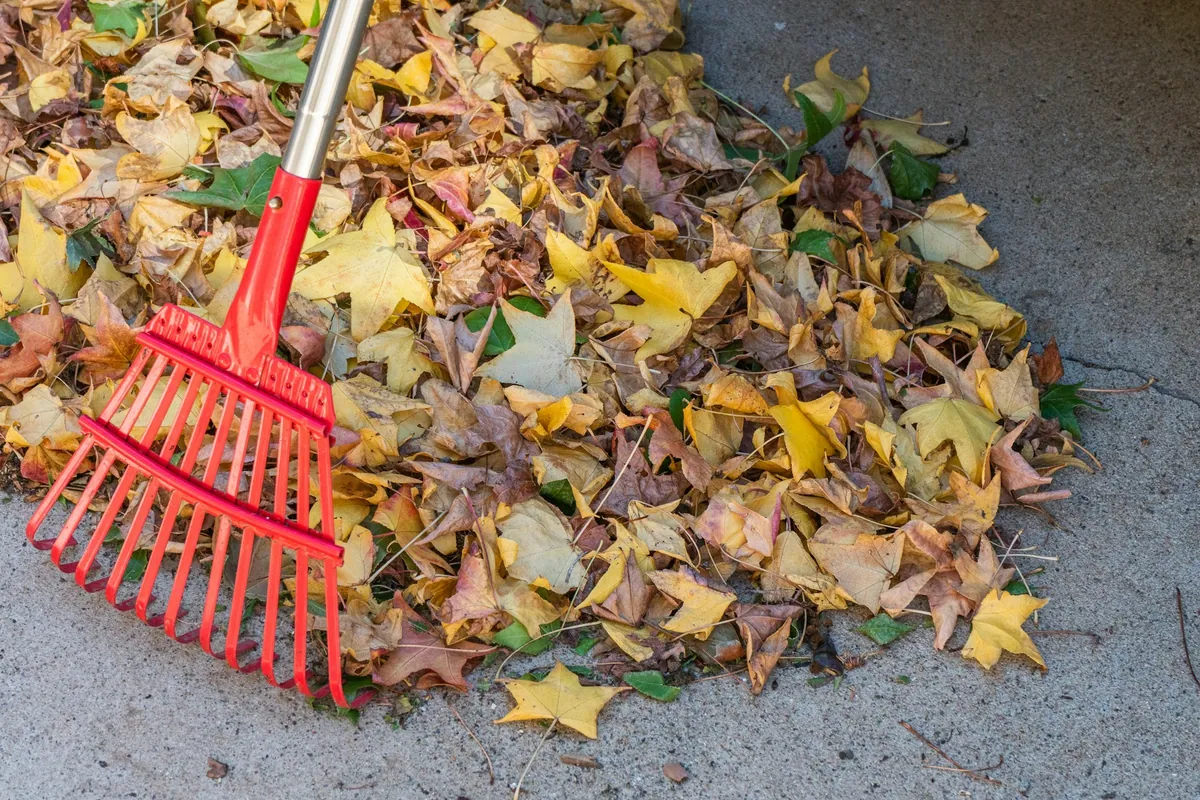
- Save leaves before you start. A sheet mulch bed takes more leaves than you'd guess. Bag them as they fall, and keep clippings from the last mows for the green layers.
- Mark the edge for spring. Leave the stakes in, or cut an edge line with a spade. By spring a low sheet mulch mound can be hard to tell from the lawn.
- Measure the height twice. Write down the height on the day you build it and again in spring. The difference tells you how much compost to keep on hand for topping up.
The one we checked the steps against
Primary source
Three methods for no-turn cold composting (EM 9480), Oregon State University Extension Service, published October 1, 2024. Checked October 11, 2026.
Oregon State University Extension's EM 9480 gives every number the no-dig route turns on: 3 to 4 sheets of soaked newspaper overlapped 3 to 4 inches, green and brown layers 3 inches or less each, ending brown, a bed finished in fall ready for spring, a height loss of about half in the first year, and a 1 to 2 inch layer of screened compost for seeds. The dig route takes its figures from Virginia Cooperative Extension (2 inches worked 6 to 8 inches in) and Iowa State Extension (sod lifted about 1 inch deep).
The arithmetic and the background reading
Tools and guides in this system
- 🪱 CalculatorCompost and topsoil calculatorHow much compost or topsoil to buy for a garden bed or lawn: cubic feet, cubic yards and bag counts, plus the mix you get when you dig it in.Open the tool
- 🧺 SectionAll soil and mulch toolsRaised-bed soil, mulch, compost and topsoil calculators that give cubic feet, cubic yards and bag counts, using bag sizes printed by the makers.See the section
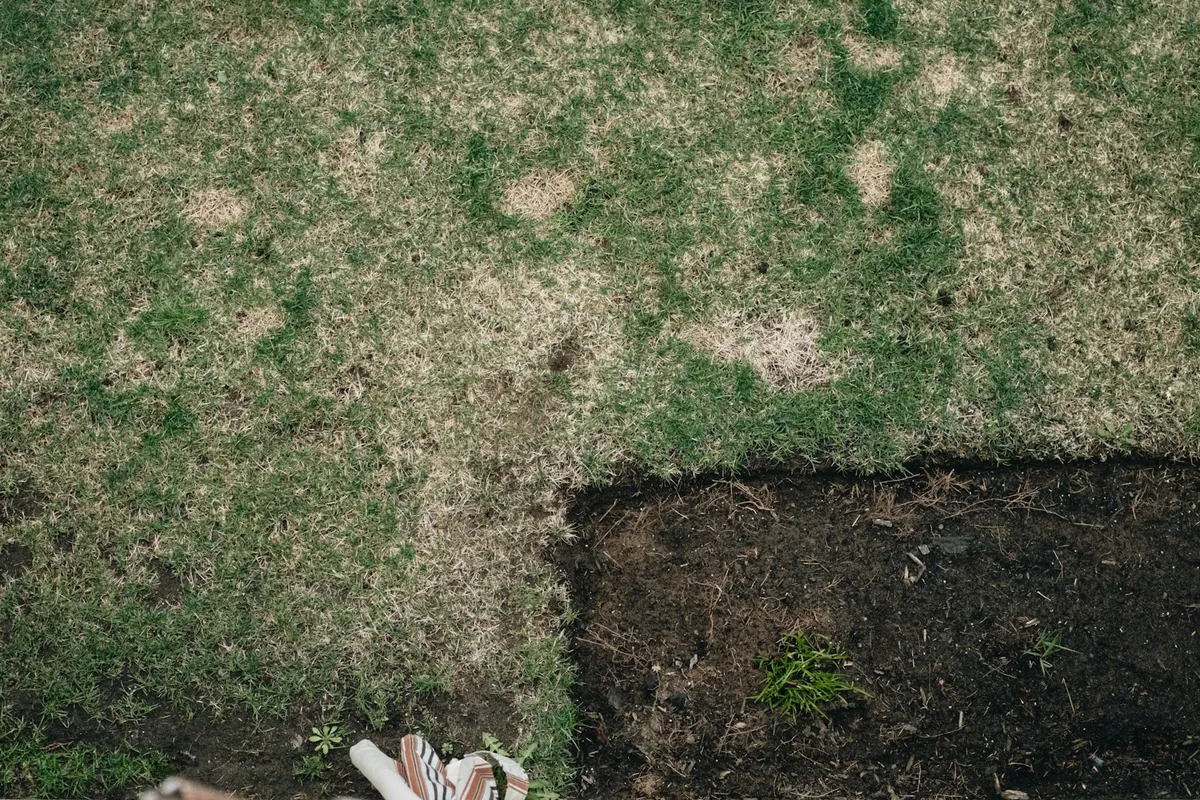 🧰 Problem solverTurning a patch of lawn into a garden bed this fallSmother the grass with soaked newspaper and layers of leaves and clippings in fall, plant in spring. Layer depths, settling and amounts for a 4 x 10 bed.Read the guide
 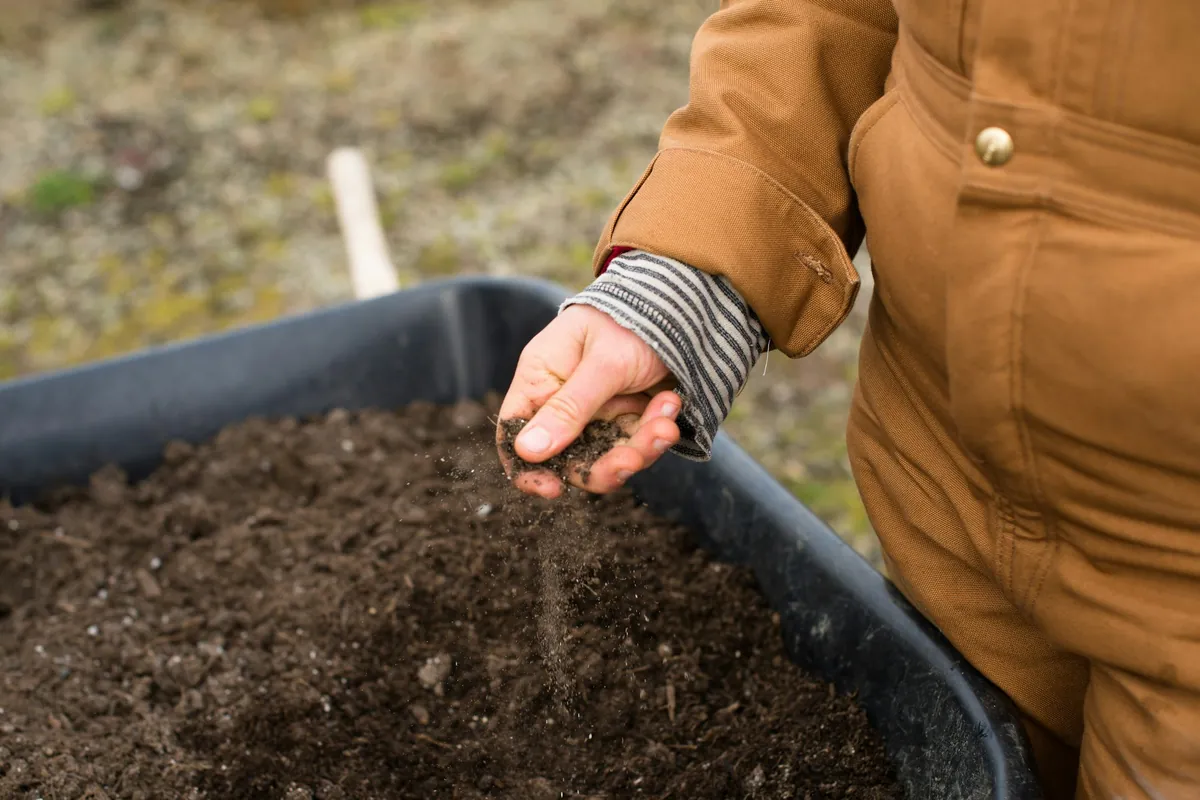 📘 Know-howHow much compost should you add each year?A quarter inch to 1 inch a year on an established bed, about 2 inches dug into a new or tired garden. The extension figures side by side, in bags.Read the guide
Common questions
Questions
Should I remove sod or put a bed on top of it?
Either works. Lifting sod about 1 inch deep, as Iowa State describes, lets you plant right away. Building on top with soaked paper and layers saves the digging, and Oregon State says a bed finished in fall is ready for spring.
Source: Iowa State Extension, new garden bed from lawn, checked October 11, 2026; OSU Extension EM 9480, sheet mulch, checked October 11, 2026.
How much compost does a new garden bed need?
Virginia Cooperative Extension suggests about 2 inches worked 6 to 8 inches into the soil. A 4 x 10 ft bed at 2 inches is 6.67 cu ft, or 5 bags of 1.5 cu ft.
Source: Virginia Cooperative Extension, Using Compost in Your Landscape, checked October 6, 2026; Kellogg Garden compost product page, checked October 6, 2026.
Is fall a good time to start a new garden bed?
Yes. Iowa State says smothering grass takes several months, so a fall start suits spring planting, and Oregon State says a sheet mulch finished in fall is ready by spring.
Source: Iowa State Extension, new garden bed from lawn, checked October 11, 2026; OSU Extension EM 9480, sheet mulch, checked October 11, 2026.
How deep do I cut when removing sod?
Iowa State Extension says to slide a sharp spade just under the grass roots, about 1 inch deep. For a large patch it suggests renting a sod cutter.
Source: Iowa State Extension, new garden bed from lawn, checked October 11, 2026.
How many sheets of newspaper go over the grass?
Oregon State says 3 to 4 sheets, soaked, with the edges overlapped 3 to 4 inches. Iowa State's smothering method uses 6 to 8 sheets or 1 to 2 layers of cardboard and warns that thicker isn't better.
Source: OSU Extension EM 9480, sheet mulch, checked October 11, 2026; Iowa State Extension, new garden bed from lawn, checked October 11, 2026.
The next job on the shelf
More garden systems
 7 steps🧭 SystemRefresh border mulch: measure each bed, then buy only the gapMeasure the old layer in every bed before you order. One example yard needs 23 bags of 2 cu ft, not 45. The steps, the 3 inch limit and a free mulch record.Open the system
 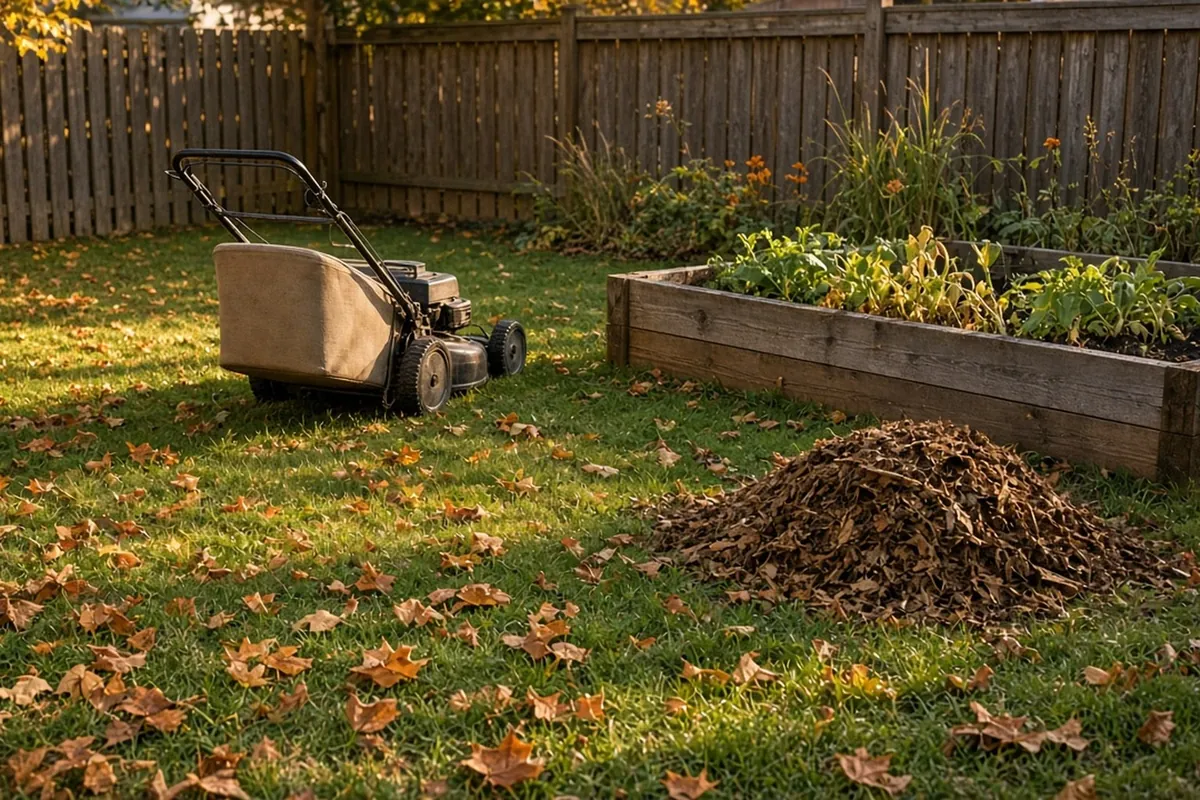 7 steps🧭 SystemTurn fall leaves into bed cover and mulch, and keep a tally of the bagsWhat to do with fall leaves: mow a thin layer into the lawn, shred the rest and spread 2 to 3 inches on beds. Free leaf haul tally to print.Open the system
 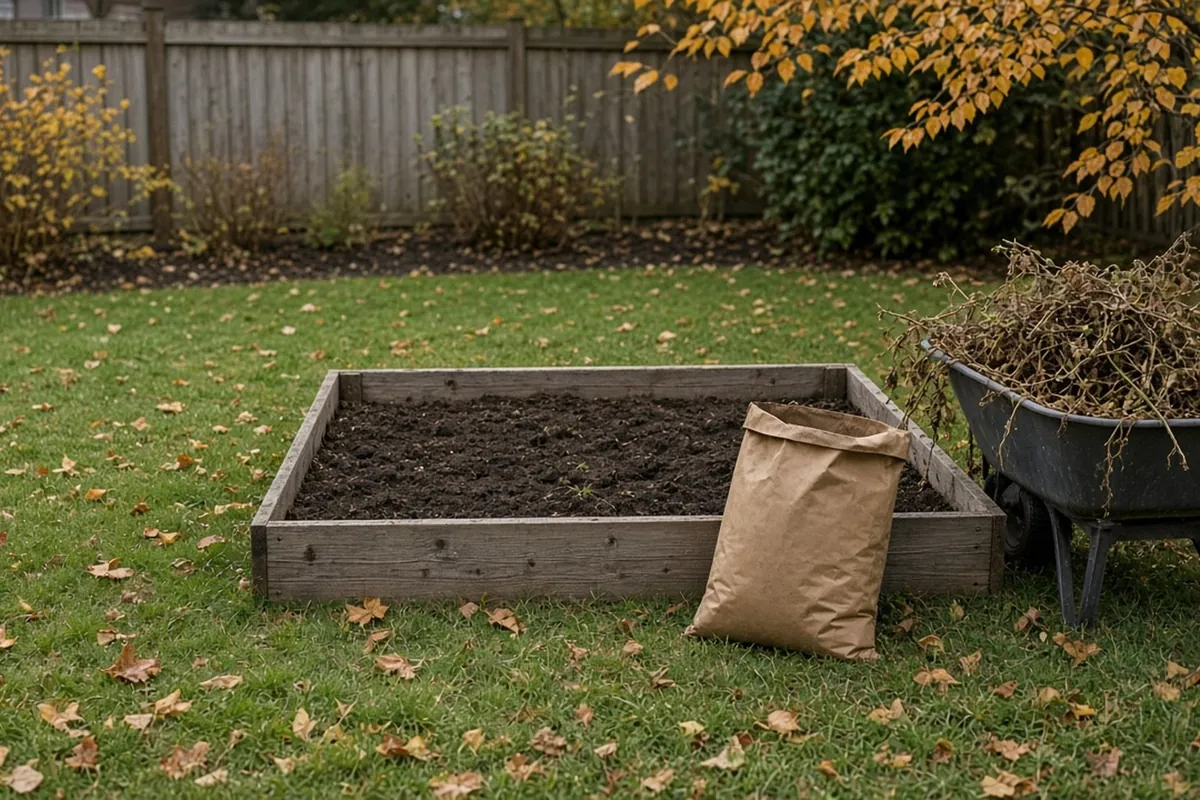 6 steps🧭 SystemFall raised bed reset: clear, top up and cover for winterPut a raised bed to bed in fall: clear finished plants, measure how far the soil sank, top it up with compost and cover it with leaves. Free checklist.Open the system
Sources
- How to Kill Grass to Create a New Garden Bed, Iowa State University Extension and Outreach, published June 1, 2026. Checked October 11, 2026.
- Using Compost in Your Landscape (SPES-304), Virginia Cooperative Extension, Virginia Tech. Checked October 6, 2026.
- Three methods for no-turn cold composting (EM 9480), Oregon State University Extension Service, published October 1, 2024. Checked October 11, 2026.
- Gardner & Bloome Organics Purely Compost, Kellogg Garden Products. Checked October 6, 2026.
- Organic Lawn Care, appendices: composting and spreaders, NC State Extension, published February 2, 2026. Checked October 6, 2026.
Planning guide, not a guarantee. See every source on the site on the sources page. Spotted an error? Tell us.