🧭 Garden systemSoil and mulch7 stepsFree working copy
Refresh border mulch: measure each bed, then buy only the gap
Quick answer
Work bed by bed. Push a ruler through the old mulch to the soil, rake the layer loose and pull it back from stems. Then buy only what each bed is short of 3 inches, Maryland Extension's limit for organic mulch, or 1 inch around boxwood. If a bed already has enough, add nothing; that's the Missouri Department of Conservation's rule. One example yard with five areas needs 23 bags of 2 cu ft this way, not 45.
Source: Maryland Extension, Excess Mulch Problems, checked October 9, 2026; Missouri Dept. of Conservation, Mulch: Your Tree's Best Friend, checked October 10, 2026; Scotts Nature Scapes mulch product page, checked October 6, 2026.

Decide first
Buy mulch, rake only, or ask for help?
Do it yourself
Top it up yourself
Do it if the ruler reads under 2 inches in some beds. You need a ruler, a rake, a tape measure and the working copy. Buy for the thin beds only, up to the 3 inch total Maryland Extension gives.
Source: Maryland Extension, Excess Mulch Problems, checked October 9, 2026.
Skip it
Rake it and buy nothing
Skip the store if 2 to 3 inches are still there everywhere. NC State Extension says you don't need new mulch every year, and the Missouri Department of Conservation says to rake matted mulch loose instead of piling more on.
Source: NC State Extension Henderson County, excessive mulch, checked October 10, 2026; Missouri Dept. of Conservation, Mulch: Your Tree's Best Friend, checked October 10, 2026.
Get help
Ask about the plants or a big load
If a tree or shrub itself looks unwell, ask your county extension office or a certified arborist. This page covers depth and bag counts, not plant health. If your total runs to several cubic yards, ask a landscape supplier to quote a bulk delivery.
- 3 inmost organic mulch should total, old and new togetherMaryland Extension, Excess Mulch Problems, October 9, 2026
- 1 inat most around boxwood and other shallow rootsMaryland Extension, Excess Mulch Problems, October 9, 2026
- 3 inbare gap between mulch and each trunkMaryland Extension, Excess Mulch Problems, October 9, 2026
- 23 bagsfor the example yard after measuring, not 45Arithmetic
One afternoon with a ruler and a rake
The steps, in order
List every area and measure it
Walk the yard and write down each border, bed and tree ring. Measure length and width in feet, or the width across for a ring. Give each one its own line, because the old layer won't be the same depth everywhere.
Have ready: A tape measure and the working copy.
Pull mulch back from stems
Move mulch away from trunks and stems before you read the depth. Maryland Extension says to keep organic mulch 3 inches from the base of a trunk.
Have ready: Gloves and a hand rake.
Source: Maryland Extension, Excess Mulch Problems, checked October 9, 2026.
Read the old layer
Push a ruler down through the mulch until it hits soil, in three or four spots per area, and average them. The Missouri Department of Conservation says to check the depth first and not to add more when there's already enough.
Have ready: A ruler or a stake marked in inches.
Source: Missouri Dept. of Conservation, Mulch: Your Tree's Best Friend, checked October 10, 2026.
Rake it loose, thin what's too deep
Rake matted mulch to break the crust. Where a bed reads over 3 inches, take some out before anything new goes on. Maryland says old mulch that's breaking down can be worked gently into the bed.
Have ready: A leaf rake, a shovel and a wheelbarrow.
Source: Missouri Dept. of Conservation, Mulch: Your Tree's Best Friend, checked October 10, 2026; Maryland Extension, Excess Mulch Problems, checked October 9, 2026.
Work out bags per area
Inches to buy = target minus the reading. Enter each area with only those inches. A 10 x 20 ft border reading 1 inch needs 2 more: 200 × 2 ÷ 12 = 33.33 cubic feet, or 17 bags of 2 cu ft.
Have ready: The readings and the bag size you plan to buy.
Spread and check again
Spread the new mulch evenly and push the ruler in once more. NC State Extension's figure is 2 to 3 inches around plants over the root zone, so stop when you reach it.
Have ready: The bags, a rake and the ruler.
Source: NC State Extension Henderson County, excessive mulch, checked October 10, 2026.
Log it for next year
Write down each area's reading, what you added and the date. Next spring the gap between this year's reading and next year's tells you how fast your mulch breaks down, and whether you can skip a year.
Have ready: The working copy and a pen.
Free, one page, black and white
Print the working copy
Mulch record: the steps above as a checklist with a date box for each, on one US Letter page.
If a step gets skipped
What goes wrong
⚠️
A full layer on top of the old one
Add 3 inches every year without taking any out and the layer gets deeper every year. NC State's Henderson County office says to remove the old mulch first if you want fresh mulch every year.
Source: NC State Extension Henderson County, excessive mulch, checked October 10, 2026.
⚠️
Ordering from the bag's coverage line
The coverage chart on the bag assumes bare ground at one depth. It knows nothing about last year's layer, so it nearly always overcounts on a refresh.
⚠️
One depth for every area
Maryland Extension caps organic mulch at 3 inches and wants no more than 1 inch around shallow-rooted plants like boxwood. A tree ring and a boxwood hedge need different numbers on the same day.
Source: Maryland Extension, Excess Mulch Problems, checked October 9, 2026.
⚠️
Mulch piled against trunks
Mulch heaped up a trunk or stem looks like a volcano. The Missouri Department of Conservation wants a doughnut instead, and Maryland gives the gap: 3 inches from the base.
Source: Missouri Dept. of Conservation, Mulch: Your Tree's Best Friend, checked October 10, 2026; Maryland Extension, Excess Mulch Problems, checked October 9, 2026.
⚠️
A reading from one spot
Edges thin out first and low spots collect mulch. One reading can be off by an inch either way. Take three or four per area and average them.

When the steps change
Variants
🪴
Tree rings in the lawn
K-State Research and Extension says a ring should be at least 3 to 6 feet across, 2 to 4 inches deep, with a bare circle 4 to 6 inches wide at the trunk. A 6 ft ring reading 1 inch takes 3 bags of 2 cu ft to reach 3 inches.
Source: K-State Research and Extension, mulch rings for trees, checked October 10, 2026.
🏙️
Boxwood and other shallow roots
Maryland Extension says shallow-rooted plants like boxwood should have no more than 1 inch of mulch over their roots. Set that area's target to 1 inch on the working copy. A 2 x 16 ft boxwood strip reading half an inch needs 1 bag.
Source: Maryland Extension, Excess Mulch Problems, checked October 9, 2026.
❄️
Heavy or poorly drained soil
The Missouri flyer says to use a thinner layer on poorly drained soils, and Iowa State Extension suggests 2 to 3 inches on heavy soils. Use 2 inches as the target there.
Source: Missouri Dept. of Conservation, Mulch: Your Tree's Best Friend, checked October 10, 2026; Iowa State Extension FAQ, mulch depth around trees and shrubs, checked October 9, 2026.
☀️
A big yard: bags or bulk
Add up the cubic feet from every area and divide by 27 for cubic yards. Mississippi State Extension says to compare the bulk price with bags before you order. The example yard needs 41.74 cubic feet in all, about 1.55 cubic yards.
Source: MSU Extension P2301, mulches, checked October 9, 2026.
What people learn the second year
Tips and tricks
- Measure after a rain. Dry mulch fluffs up and reads deeper than it is. A reading taken once the bed has been wet and settled is closer to what's really there.
- Keep a marked stake in the shed. Tape a stake at your target depth. Next year's readings take a minute per bed, and anyone in the house can do them.
- Buy for the edges on their own. Edges along the lawn and paths wear thin before the middle of a bed. Measure them as their own line so you don't top up the whole bed for a thin strip.
- Spread the extra from deep beds. Mulch you thin out of an over-deep bed can go straight onto a thin one. Do the deep beds first and you may need fewer bags.
- Round up once for bulk. Rounding every area up adds a bag here and there. If you buy bulk, add the cubic feet first and round the total once.
The one we checked the steps against
Primary source
Excess Mulch Problems, University of Maryland Extension, published March 14, 2023. Checked October 9, 2026.
University of Maryland Extension's Excess Mulch Problems page gives the three numbers a refresh turns on: organic mulch no deeper than 3 inches in total, no more than 1 inch around shallow-rooted plants like boxwood, and a 3 inch gap at the base of each trunk. It also says to freshen the existing layer now and then without going past 3 inches, and that breaking-down mulch can be worked gently into the bed.
The arithmetic and the background reading
Tools and guides in this system
- 🍂 CalculatorMulch calculatorHow much mulch a bed takes in cubic feet, cubic yards and 1.5 or 2 cu ft bags, at the depth you pick, with the 2 to 3 inch band worked out too.Open the tool
- 🧺 SectionAll soil and mulch toolsRaised-bed soil, mulch, compost and topsoil calculators that give cubic feet, cubic yards and bag counts, using bag sizes printed by the makers.See the section
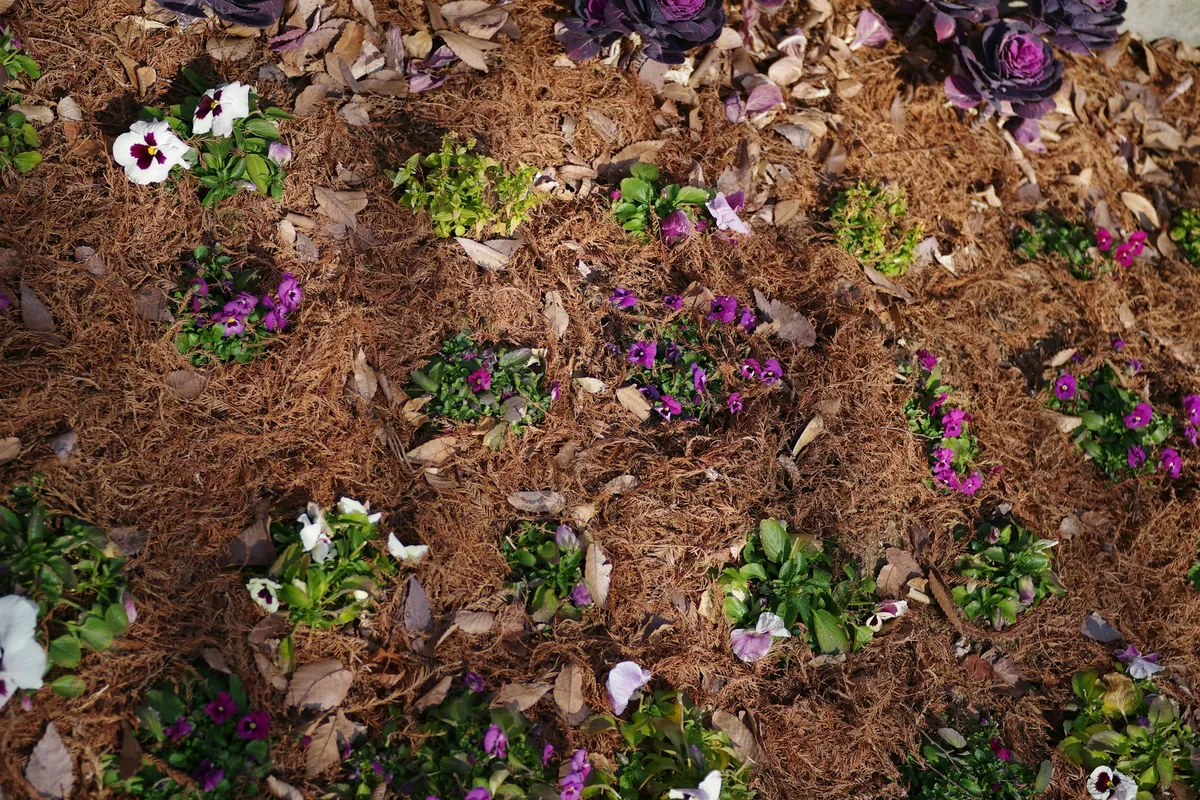 🧰 Problem solverDo you need new mulch this year? Measure the old layer firstMost borders don't need a whole new layer. Push a ruler in, rake what's left and buy only the inches you're short. One 200 sq ft border, worked out.Read the guide
  📘 Know-howHow much mulch for a tree ring? Width, depth and the bag countA 6 ft ring 3 inches deep takes 4 bags of 2 cu ft; a 12 ft ring takes 15. How wide to go, how deep, the bare gap at the trunk, and the circle math.Read the guide
 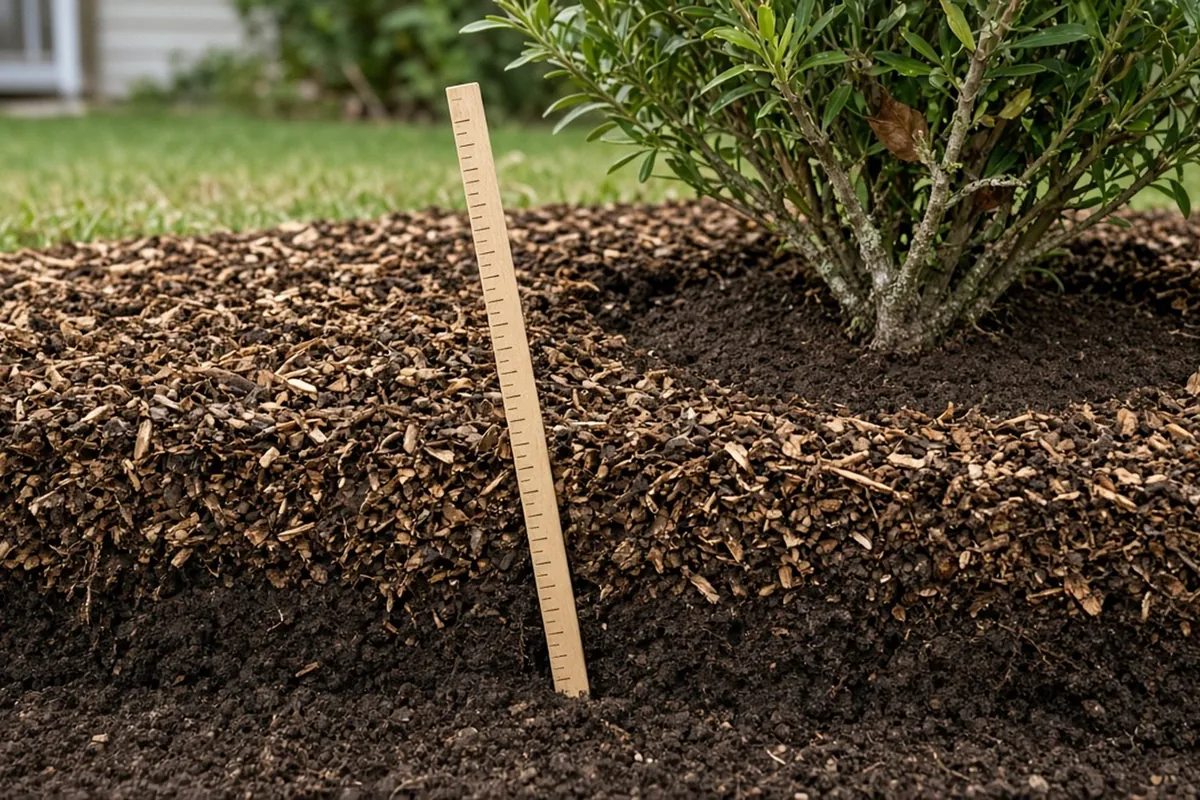 📘 Know-howHow deep should mulch be? The extension depths, material by materialTwo to 3 inches on most beds, deeper for whole leaves and straw, and never piled on a trunk. Extension depths side by side, plus the math for a top-up.Read the guide
Common questions
Questions
How do I refresh mulch in my flower beds?
Pull the old mulch back from stems, push a ruler through it in a few spots, and rake it loose. Then add only what each bed is short of 3 inches, which is Maryland Extension's limit. If a bed is already at 2 to 3 inches, rake it and leave it.
Source: Maryland Extension, Excess Mulch Problems, checked October 9, 2026.
How much mulch should I add each year?
Only the gap between what's left and your target. With a 3 inch target, a bed reading 1 inch gets 2 more and a bed reading 3 gets none. NC State Extension says you don't need new mulch every year.
Source: NC State Extension Henderson County, excessive mulch, checked October 10, 2026.
Should I remove old mulch before adding new?
Only where the total would go past 3 inches. Maryland Extension says you can freshen the existing layer now and then as long as it stays at 3 inches or less, and that breaking-down mulch can be worked gently into the bed.
Source: Maryland Extension, Excess Mulch Problems, checked October 9, 2026.
How many bags of mulch do I need for a 10 x 20 bed?
On bare ground at 3 inches, 50 cubic feet, which is 25 bags of 2 cu ft. If 1 inch of old mulch is left, you need 2 more inches: 33.33 cubic feet, or 17 bags.
Is the same depth right around trees?
K-State Research and Extension gives 2 to 4 inches for a tree ring, with 4 to 6 inches of bare soil at the trunk. Maryland's 3 inch total still applies to the old and new layers together.
Source: K-State Research and Extension, mulch rings for trees, checked October 10, 2026; Maryland Extension, Excess Mulch Problems, checked October 9, 2026.
The next job on the shelf
More garden systems
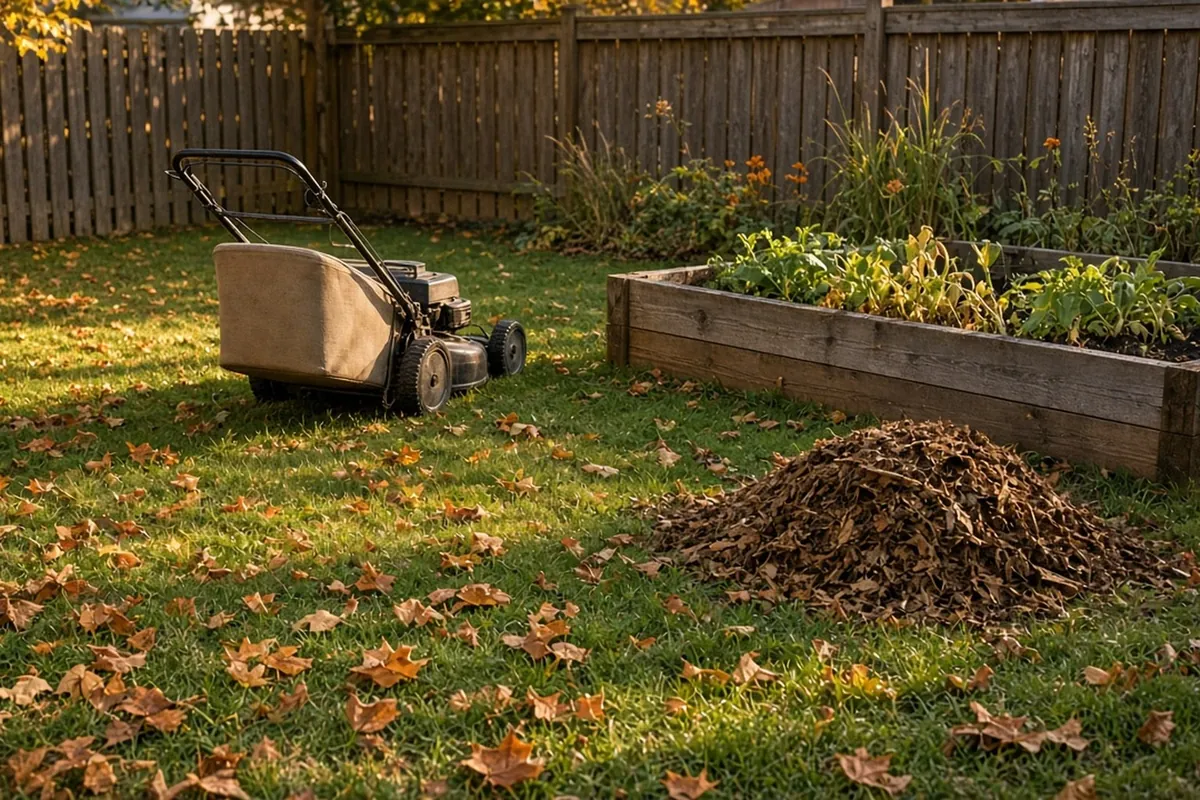 7 steps🧭 SystemTurn fall leaves into bed cover and mulch, and keep a tally of the bagsWhat to do with fall leaves: mow a thin layer into the lawn, shred the rest and spread 2 to 3 inches on beds. Free leaf haul tally to print.Open the system
 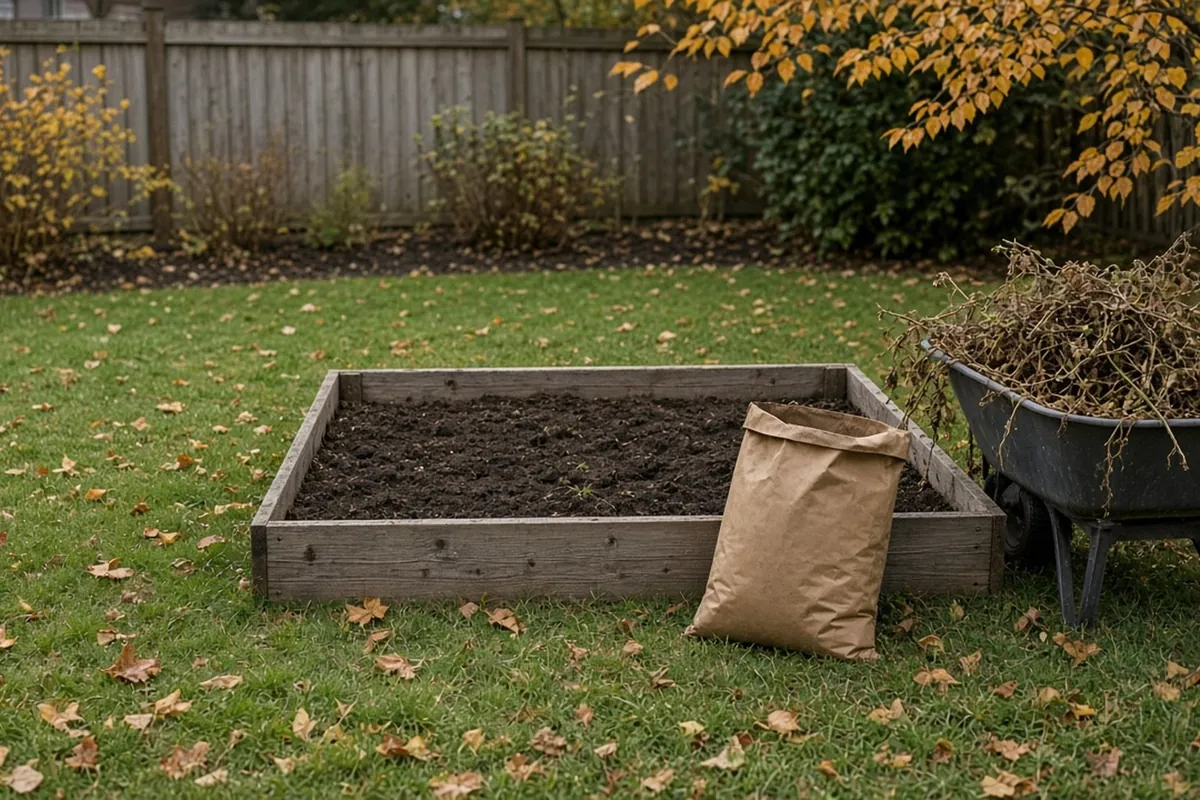 6 steps🧭 SystemFall raised bed reset: clear, top up and cover for winterPut a raised bed to bed in fall: clear finished plants, measure how far the soil sank, top it up with compost and cover it with leaves. Free checklist.Open the system
 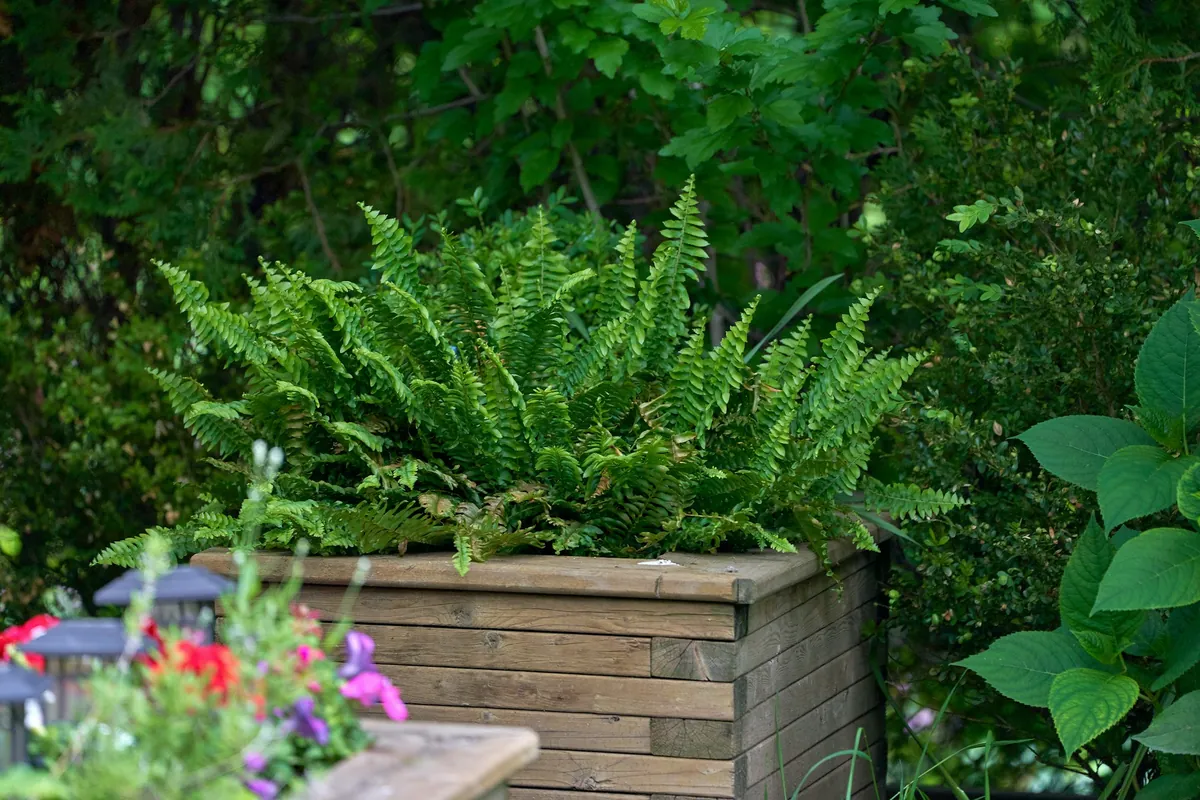 7 steps🧭 SystemFill a tall raised bed for less: wood below, soil on topUnder 17 inches, fill with soil. Taller, put logs and leaves in the lower half: a 4 x 8 bed 24 in tall takes 16 bags of soil, not 32. Free layer fill plan.Open the system
Sources
- Excess Mulch Problems, University of Maryland Extension, published March 14, 2023. Checked October 9, 2026.
- Mulch: Your Tree's Best Friend (F00111), Missouri Department of Conservation (flyer hosted by UC Agriculture and Natural Resources), published January 1, 2010. Checked October 10, 2026.
- Scotts Nature Scapes Color Enhanced Mulch 2 cu. ft., ScottsMiracle-Gro. Checked October 6, 2026.
- Plant Health Alert: Excessive Mulch, N.C. Cooperative Extension, Henderson County Center (NC State Extension), published August 7, 2025. Checked October 10, 2026.
- Mulch rings help to promote healthy trees, Kansas State University Research and Extension, published August 8, 2025. Checked October 10, 2026.
- How deep should the mulch layer be around trees and shrubs?, Iowa State University Extension and Outreach, published March 3, 2022. Checked October 9, 2026.
- Mulches for the Landscape (P2301), Mississippi State University Extension. Checked October 9, 2026.
Planning guide, not a guarantee. See every source on the site on the sources page. Spotted an error? Tell us.