🍂 Soil and mulchFree toolPrintable record
Mulch calculator
Quick answer
Cubic feet of mulch = area in square feet × depth in inches ÷ 12. UF/IFAS Extension says to keep 2 to 3 inches on plant beds. A 10 x 20 ft bed at 3 inches takes 50 cubic feet, which is 1.85 cubic yards or 25 bags of 2 cu ft. At 2 inches it takes 33.33 cubic feet, or 17 of those bags.
Source: UF/IFAS Florida-Friendly Landscaping, Principle 4: Mulch, checked October 6, 2026; Scotts Nature Scapes mulch product page, checked October 6, 2026.

Mulch calculator
Change any number and the answer updates as you type.
Mulch needed 50 cu ft (1.85 cu yd, 1416 liters)
| Buying by | How many |
|---|---|
| 1.5 cu ft bag | 34 bags |
| 2 cu ft bag | 25 bags |
| Bulk, by the cubic yard | 1.85 cu yd |
At 2 to 3 inches, the depth UF/IFAS gives for plant beds: 33.33 to 50 cu ft, or 17 to 25 bags of 2 cu ft.
- Area to cover
- 200 sq ft (18.6 m²)
- Depth
- 3 in (7.6 cm)
No garden math needed
How to use this, in plain words
Measure the bed's length and width in feet after you've edged it. For an odd shape, split it into rectangles and run each one.
Pick a depth. UF/IFAS Extension suggests 2 to 3 inches on plant beds. If old mulch is still there, enter only the difference.
Type the numbers in. Pick Circle for a tree ring and enter the ring's full width across, not the radius.
Read the bag count for your bag size and the cubic yards for bulk, then compare the two prices before you buy.
Source: UF/IFAS Florida-Friendly Landscaping, Principle 4: Mulch, checked October 6, 2026.
What the store won't tell you
Before you start
- Bagged mulch comes in more than one size. Scotts lists 1.5 and 2 cu ft bags, so read the bag before counting.
- Leave at least 2 inches of bare ground around tree trunks, and keep the layer over a tree's rootball to 1 inch or less, per UF/IFAS.
- Measure old mulch before topping up. Push a finger or ruler down to the soil and subtract that from the depth you want.
- Past a cubic yard or so, get a bulk price. Mississippi State Extension says to compare the cost before buying in bulk.
Source: Scotts Nature Scapes mulch product page, checked October 6, 2026; UF/IFAS Florida-Friendly Landscaping, Principle 4: Mulch, checked October 6, 2026; MSU Extension P2301, mulches, checked October 9, 2026.
Go deeper: How deep should mulch be? The extension depths, material by material · What to do with fall leaves in the garden: shred them into mulch · Bags or bulk: when a cubic yard delivery is cheaper · How deep to mulch garlic in cold zones, and when to pull the mulch back · Square feet vs cubic feet: how to turn a garden bed into a bag count · Do you need new mulch this year? Measure the old layer first · How much mulch for a tree ring? Width, depth and the bag count · Quarts, liters and cubic feet on a soil bag: turning any label into cubic feet
The formula, in words
How it works
- Area: length × width in feet. For a round bed or tree ring: π × radius × radius.
- Volume: area × depth in inches ÷ 12, times the number of beds.
- Cubic yards: cubic feet ÷ 27.
- Bags: cubic feet ÷ bag size, rounded up. Bagged mulch is sold in 1.5 and 2 cu ft bags; Scotts lists both sizes.
- The tool also works your area at 2 and 3 inches, the range UF/IFAS gives for plant beds.
Source: Scotts Nature Scapes mulch product page, checked October 6, 2026; UF/IFAS Florida-Friendly Landscaping, Principle 4: Mulch, checked October 6, 2026.
Printable sheet
What to record
Mulch breaks down, so most beds get topped up. Keep this year's numbers and next year's order is a quick copy. The printable mulch record has one row per bed:
- Bed or area
- Square feet
- Depth put down
- Type of mulch
- Bags or yards bought
- Date put down
- Depth left before the next top-up
Checked by hand
Worked example
A 10 x 20 ft front border, mulched 3 inches deep.
- Area: 20 × 10 = 200 sq ft.
- Depth: 3 in ÷ 12 = 0.25 ft. Volume: 200 × 0.25 = 50 cu ft.
- Cubic yards: 50 ÷ 27 = 1.85 cu yd.
- Bags: 50 ÷ 1.5 = 33.33, so 34 bags of 1.5 cu ft; 50 ÷ 2 = 25, so 25 bags of 2 cu ft.
Why it may not match the bag or the store
If the answer surprises you
❓
The bag's coverage line is different
Bag coverage lines are written for one depth. A 2 cu ft bag covers 12 square feet at 2 inches but only 8 at 3 inches. Check which depth the bag assumes.
❓
You ran short on the day
Beds measured before edging, curved edges and fluffy bark that packs down all eat into the count. Re-measure the edged bed and enter the depth you actually spread.
❓
A yard of mulch covered less than expected
One cubic yard is 27 cubic feet, which covers 108 square feet at 3 inches.
Source: MSU Extension P2301, mulches, checked October 9, 2026.
Other cases
Variants
🟫
Tree rings
Pick Circle and enter the ring's diameter. UF/IFAS says to leave at least 2 inches of space around tree trunks and to put no more than a thin layer, 1 inch or less, over the rootball of a tree. The tool counts the whole circle at the depth you enter.
Source: UF/IFAS Florida-Friendly Landscaping, Principle 4: Mulch, checked October 6, 2026.
⭕
Topping up old mulch
Measure how much is still there and enter only the difference between that and the depth you want.
🔁
Several beds
Enter the count for beds of the same size, or run the tool once per bed and add up the cubic feet. Round up to whole bags once, on the total.
Where each figure comes from
Numbers this tool uses
- 2 to 3 inchesMulch depth on plant beds (UF/IFAS)UF/IFAS Florida-Friendly Landscaping, Principle 4: Mulch, October 6, 2026
- At least 2 inchesSpace around tree trunks (UF/IFAS)UF/IFAS Florida-Friendly Landscaping, Principle 4: Mulch, October 6, 2026
- A thin layer, 1 inch or lessOver a tree's rootball (UF/IFAS)UF/IFAS Florida-Friendly Landscaping, Principle 4: Mulch, October 6, 2026
- 1.5 and 2 cu ftBagged mulch sizes (Scotts product page)Scotts Nature Scapes mulch product page, October 6, 2026
Limitations
- Planning estimate, not a guarantee; check the cubic feet printed on your bag, and measure the bed after edging.
- Bark and wood mulch settle. The result is the volume at the depth you enter, with nothing added.
- The depth guidance here comes from one extension program, UF/IFAS. Your state's extension office may give its own figure.
What people learn the second year
Tips and tricks
- Lay the bags out before you open one. Spread the closed bags across the bed where they will be emptied. A bare patch shows you are short before the first bag is cut.
- Mark the depth on a stick. Wrap tape around a garden stake at the depth you want and poke it in as you rake. It is faster than guessing by eye.
- Split odd beds into simple shapes. Measure a curved or L-shaped bed as rectangles and triangles, then add the areas together before you run the tool.
- Buy one product for one bed. Color and texture change between brands and batches, so a bed spread from two kinds can look patchy.
- Write down the bag count. Note on the printable record how many bags this year's bed took. Next year's top-up starts from that number.
Read before the store run
Guides that go deeper
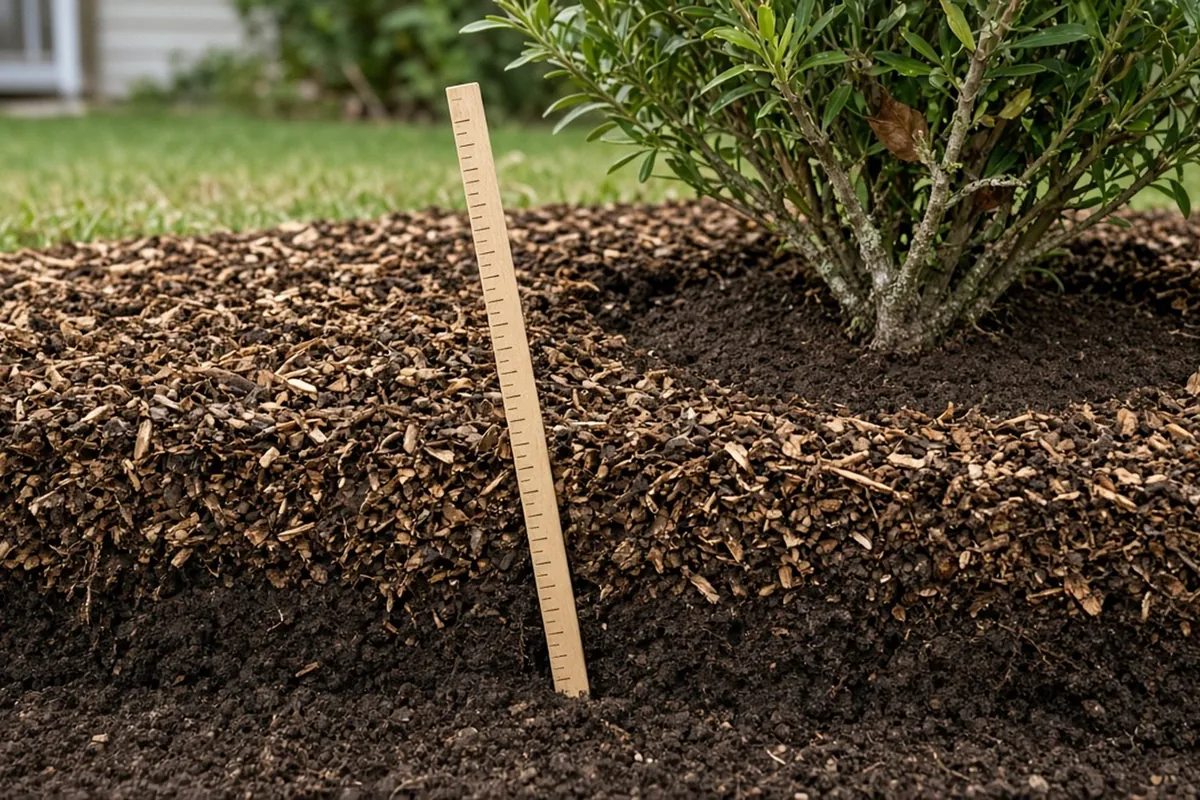 📘 Know-howHow deep should mulch be? The extension depths, material by materialTwo to 3 inches on most beds, deeper for whole leaves and straw, and never piled on a trunk. Extension depths side by side, plus the math for a top-up.Read the guide
 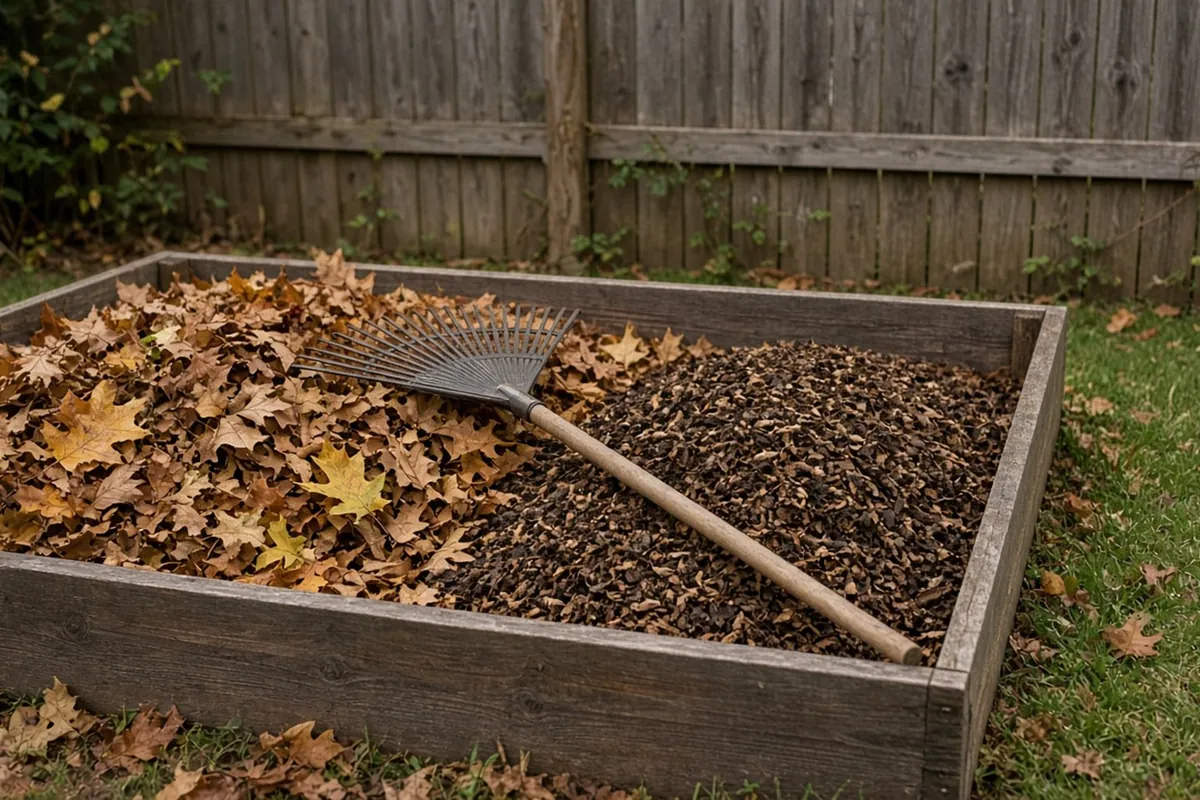 🧰 Problem solverWhat to do with fall leaves in the garden: shred them into mulchShred the leaves, then spread 2 to 3 inches on beds and 3 to 4 around shrubs. How to shred without a shredder, and how many bags a bed takes.Read the guide
 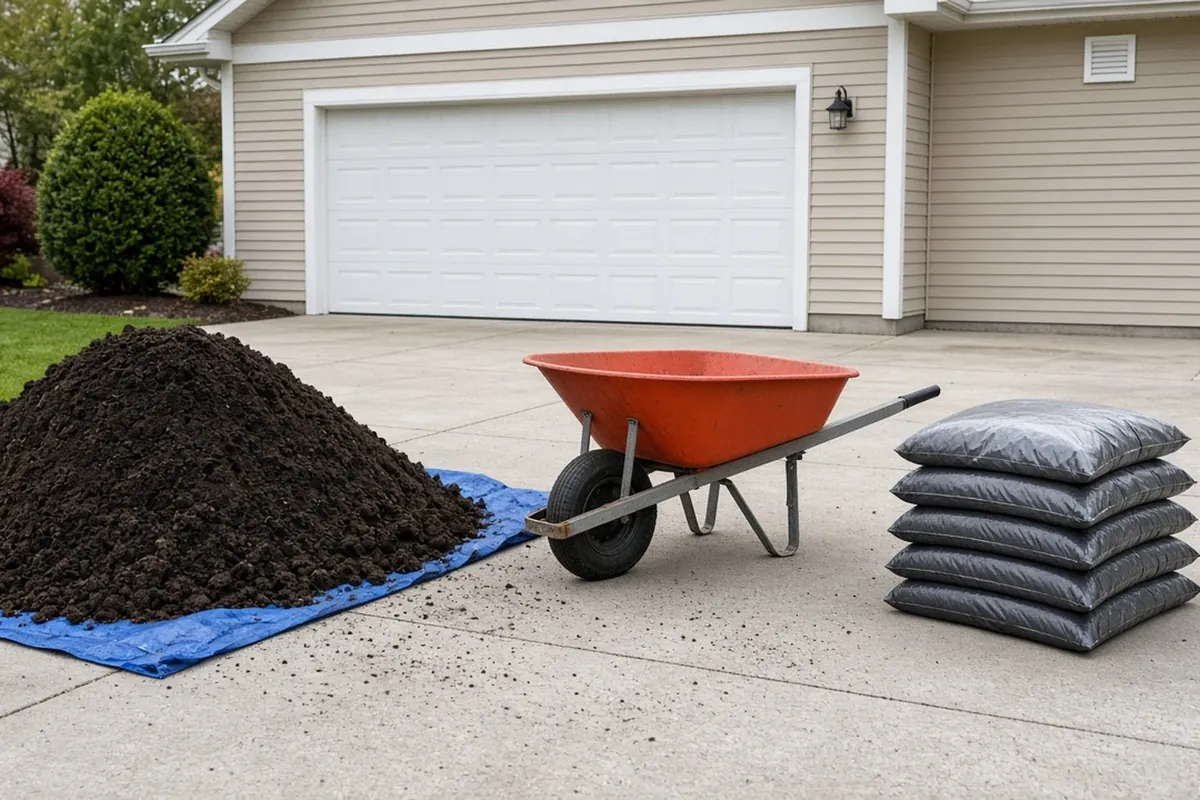 🧰 Problem solverBags or bulk: when a cubic yard delivery is cheaperHow to compare bagged soil, mulch or compost with a bulk cubic yard: price per cubic foot, the delivery fee, and the bag count where bulk wins.Read the guide
 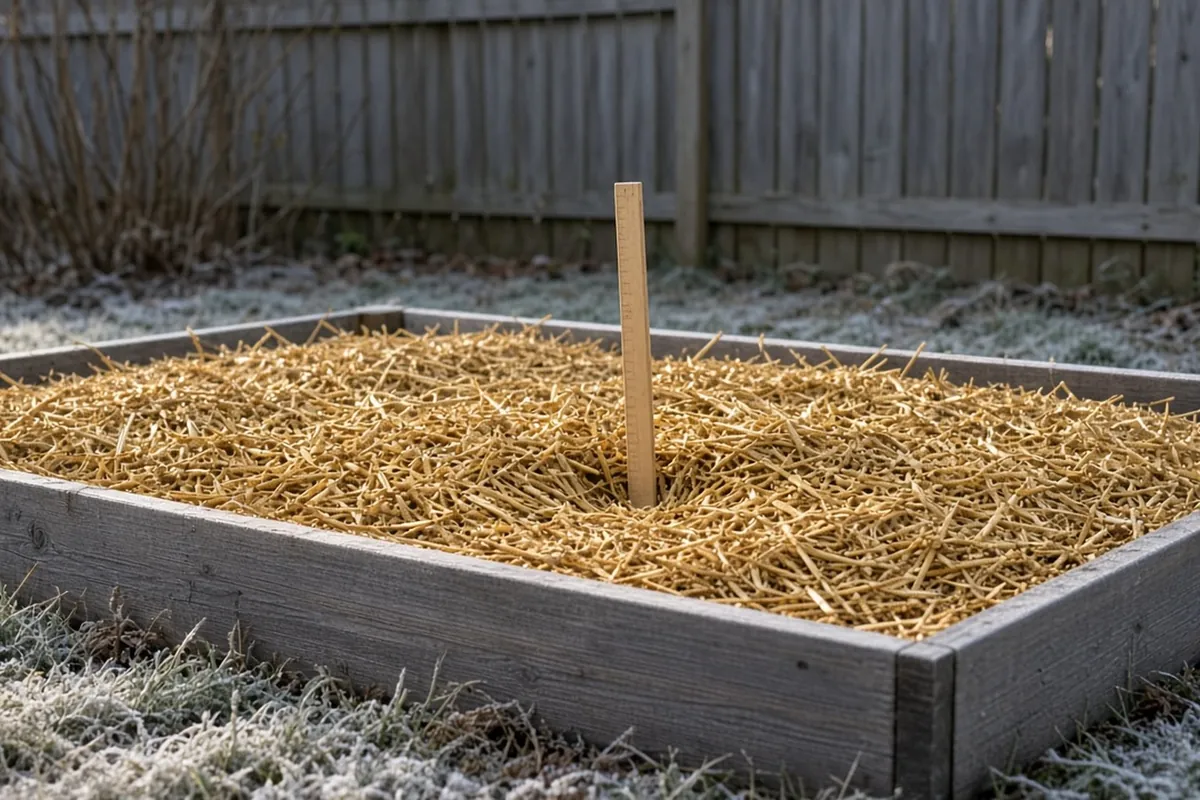 📘 Know-howHow deep to mulch garlic in cold zones, and when to pull the mulch backExtension pages put 3 to 4 inches of straw or leaves on fall garlic. See how much a bed takes, and when to pull it back, move it or leave it in spring.Read the guide
 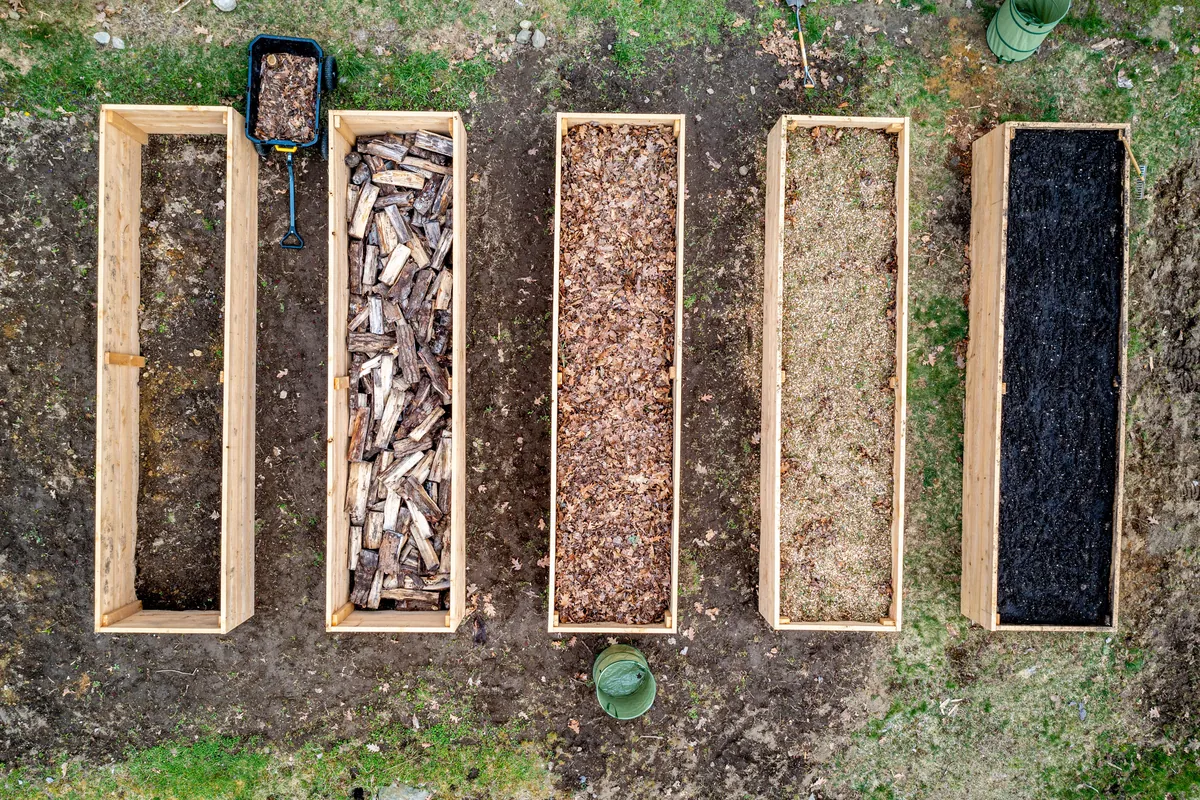 📘 Know-howSquare feet vs cubic feet: how to turn a garden bed into a bag countSquare feet is the bed's footprint; cubic feet adds the depth. Multiply area by depth in feet, divide by the bag size, round up. Worked for a 4 x 8 bed.Read the guide
 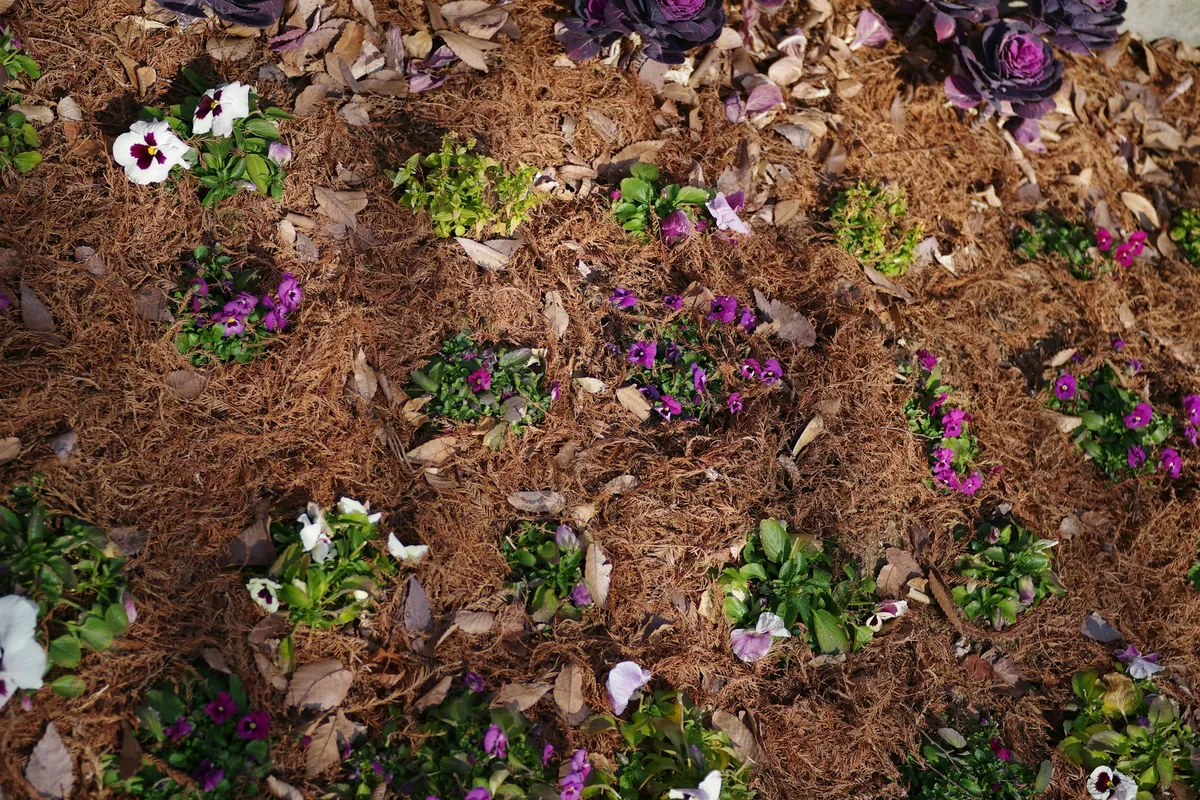 🧰 Problem solverDo you need new mulch this year? Measure the old layer firstMost borders don't need a whole new layer. Push a ruler in, rake what's left and buy only the inches you're short. One 200 sq ft border, worked out.Read the guide
 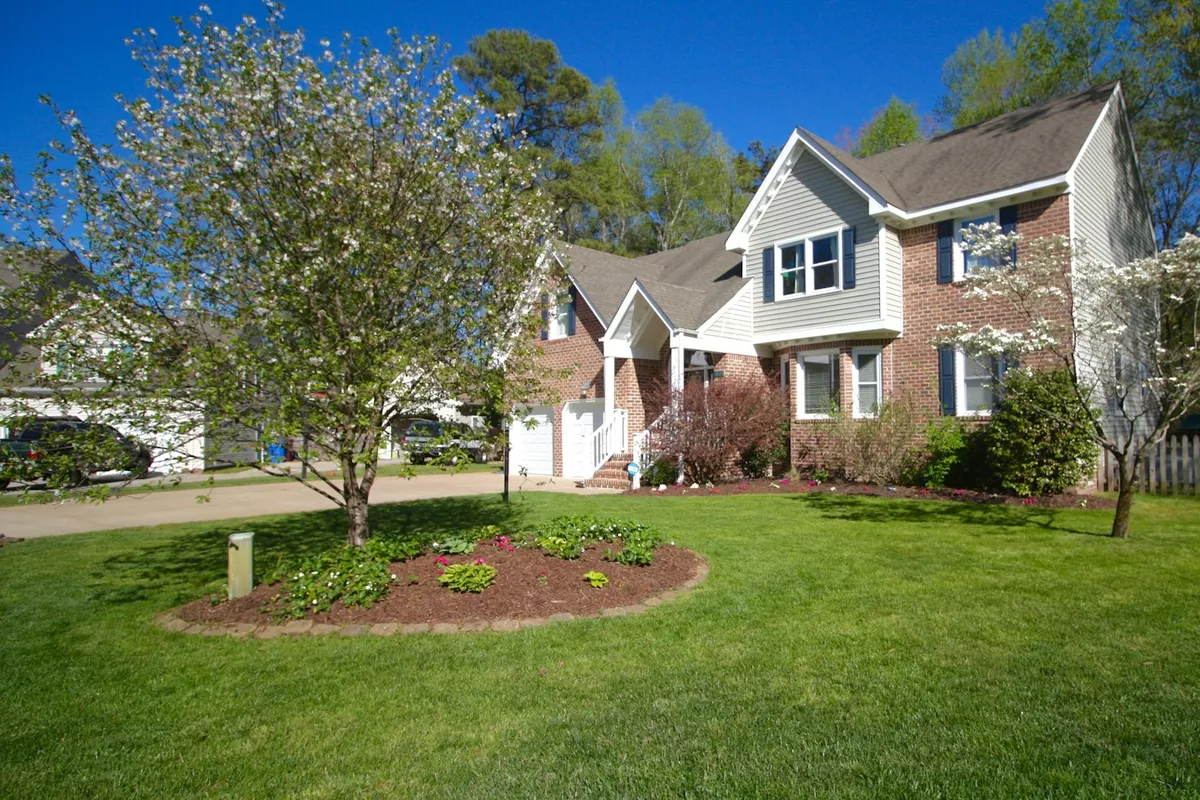 📘 Know-howHow much mulch for a tree ring? Width, depth and the bag countA 6 ft ring 3 inches deep takes 4 bags of 2 cu ft; a 12 ft ring takes 15. How wide to go, how deep, the bare gap at the trunk, and the circle math.Read the guide
  📘 Know-howQuarts, liters and cubic feet on a soil bag: turning any label into cubic feetPotting mix comes in quarts, mulch in cubic feet, some bags in liters. How to turn any bag label into cubic feet so you can count bags and compare prices.Read the guide
Common questions
Questions
How many bags of mulch for 100 square feet?
At 3 inches, 100 sq ft takes 25 cubic feet: 13 bags of 2 cu ft or 17 bags of 1.5 cu ft. At 2 inches it takes 16.67 cubic feet: 9 bags of 2 cu ft or 12 bags of 1.5 cu ft.
Source: Scotts Nature Scapes mulch product page, checked October 6, 2026; UF/IFAS Florida-Friendly Landscaping, Principle 4: Mulch, checked October 6, 2026.
How much area does a cubic yard of mulch cover?
A cubic yard is 27 cubic feet. At 3 inches (0.25 ft) it covers 27 ÷ 0.25 = 108 sq ft. At 2 inches it covers 162 sq ft.
How deep should mulch be?
UF/IFAS Extension says to keep a 2 to 3 inch layer on plant beds, and to leave at least 2 inches of space around tree trunks.
Source: UF/IFAS Florida-Friendly Landscaping, Principle 4: Mulch, checked October 6, 2026.
Can I put new mulch over old mulch?
Yes, if you count the old layer. Push a ruler down to the soil, subtract that depth from the 2 to 3 inches UF/IFAS Extension suggests, and buy only for the difference. If the old layer is already that deep, you may not need any this year.
Source: UF/IFAS Florida-Friendly Landscaping, Principle 4: Mulch, checked October 6, 2026.
More for the same garden
Related tools
- 🪴 CalculatorRaised bed soil calculatorHow much soil fills a raised bed: cubic feet, cubic yards and a bag count for 1.5 or 2 cu ft bags, from the bed's length, width and depth.Open the tool
- 🌡️ LookupUSDA zone finder by zip codeFind your 2023 USDA plant hardiness zone by zip code, see its winter low band in °F and °C, and check a plant tag's zone range against it.Open the tool
- 🪱 CalculatorCompost and topsoil calculatorHow much compost or topsoil to buy for a garden bed or lawn: cubic feet, cubic yards and bag counts, plus the mix you get when you dig it in.Open the tool
- 🪨 CalculatorGravel and paver base calculatorHow much gravel and sand to buy for a paver patio, walkway or gravel path: cubic feet, cubic yards, bag counts and how deep to dig.Open the tool
- 🧄 CalculatorGarlic and bulb planting calculatorHow many garlic cloves or spring bulbs fit a bed or a row, how many heads to buy, and how deep to plant them, from extension spacing figures.Open the tool
- 🪚 CalculatorRaised bed lumber calculatorHow many boards to buy for a wooden raised bed, and where to cut them: side lengths, a board-by-board cut plan, corner posts and the soil it will hold.Open the tool
- 🧺 SectionAll soil and mulch toolsRaised-bed soil, mulch, compost and topsoil calculators that give cubic feet, cubic yards and bag counts, using bag sizes printed by the makers.See the section
Sources
- Principle 4: Mulch, University of Florida IFAS Extension, Florida-Friendly Landscaping Program. Checked October 6, 2026.
- Scotts Nature Scapes Color Enhanced Mulch 2 cu. ft., ScottsMiracle-Gro. Checked October 6, 2026.
- Mulches for the Landscape (P2301), Mississippi State University Extension. Checked October 9, 2026.
See every source on the site on the sources page. Spotted an error? Tell us.