📘 Know-howSoil and mulch4 min read
Quarts, liters and cubic feet on a soil bag: turning any label into cubic feet
Quick answer
One cubic foot is 25.7 dry quarts or 28.3 liters, from NIST's conversion tables. So a 25 quart bag of potting mix holds about 0.97 cubic feet, and a 2 cu ft bag holds 51.4 dry quarts or 56.6 liters. Quarts on soil bags are dry quarts, which are bigger than the liquid quarts on a milk jug. Turn every label into cubic feet, then divide the price by it to compare bags.
Source: NIST Guide to the SI (SP 811), Appendix B.8 conversion factors, checked October 11, 2026.

Three units
Why the bags don't match
Walk down the soil aisle and the labels change units from bag to bag. Small bags of potting mix are often sold in quarts, mulch and raised bed mix in cubic feet, and some bags add liters. The units come from the rules on how goods are sold. NIST Handbook 130, the model rule most states build on, says mulch must be sold by the cubic foot or cubic yard, or by the liter or cubic meter. Peat moss is sold by weight or by liters and cubic feet.
Source: NIST Handbook 130 (2026), Uniform Regulation for the Method of Sale of Commodities, checked October 11, 2026.
The calculators on this site give cubic feet for a bed or a pot, and bulk soil is priced by the cubic yard, which is 27 cubic feet. So the first job with any bag is to turn its label into cubic feet.
Source: MSU Extension P2301, mulches, checked October 9, 2026.
The numbers
The three conversions to keep
- 25.7 dry qtin one cubic footNIST Guide to the SI (SP 811), Appendix B.8 conversion factors, October 11, 2026
- 28.3 Lin one cubic footNIST Guide to the SI (SP 811), Appendix B.8 conversion factors, October 11, 2026
- 27 cu ftin one cubic yardMSU Extension P2301, mulches, October 9, 2026
- 16%more in a dry quart than a liquid quartNIST Guide to the SI (SP 811), Appendix B.8 conversion factors, October 11, 2026
To get cubic feet from quarts, divide by 25.7. From liters, divide by 28.3. To go the other way, multiply. NIST lists a dry quart as 1.101 liters and a liquid quart as 0.946 liters, so the quart on a potting mix bag is about a sixth bigger than the quart you know from the kitchen. If you read a bag as liquid quarts you'll undercount what's in it.
Source: NIST Guide to the SI (SP 811), Appendix B.8 conversion factors, checked October 11, 2026.
| Bag label | Cubic feet | Dry quarts | Liters |
|---|---|---|---|
| 8 qt | 0.31 | 8 | 8.8 |
| 16 qt | 0.62 | 16 | 17.6 |
| 25 qt | 0.97 | 25 | 27.5 |
| 1 cu ft | 1 | 25.7 | 28.3 |
| 1.5 cu ft | 1.5 | 38.6 | 42.5 |
| 50 qt | 1.94 | 50 | 55.1 |
| 2 cu ft | 2 | 51.4 | 56.6 |
Worked with NIST's factors and rounded. Bag sizes are ones seen on maker pages, not product picks.
Source: NIST Guide to the SI (SP 811), Appendix B.8 conversion factors, checked October 11, 2026; Miracle-Gro Potting Mix product page, checked October 7, 2026; Kellogg Garden raised bed mix product page, checked October 6, 2026.
Labels round. One maker's raised bed soil page lists a 1.5 cubic foot bag as 40 quarts, which works out to 1.56 cubic feet. Another lists a 2 cu ft bag as 56.6 liters, which matches the factor exactly. When a bag shows two units, use the cubic feet.
Source: Miracle-Gro raised bed soil product page, checked October 6, 2026; Kellogg Garden raised bed mix product page, checked October 6, 2026; NIST Guide to the SI (SP 811), Appendix B.8 conversion factors, checked October 11, 2026.
In the aisle
Compare two bags in four steps
Find the volume line
Look for the net contents on the front of the bag, often near the bottom. Ignore the bag weight if it's printed too.
Turn it into cubic feet
Quarts divided by 25.7, liters divided by 28.3. A 16 quart bag is 0.62 cubic feet.
Source: NIST Guide to the SI (SP 811), Appendix B.8 conversion factors, checked October 11, 2026.
Price each cubic foot
Divide the shelf price by the cubic feet. With made-up prices of $8 for 25 quarts and $12 for 2 cu ft, that's $8.23 and $6 a cubic foot.
Count the bags
Divide the cubic feet your job needs by the bag's cubic feet and round up.
Bigger jobs
When the job outgrows bags
Past a certain size, bags stop being the cheap way. A cubic yard is 27 cubic feet, which is 13.5 bags of 2 cu ft or about 28 bags of 25 quarts. Handbook 130 says bulk topsoil, sand and rock are sold by the cubic yard or by weight, so a quote from a landscape yard will be in yards or tons. The bags or bulk guide walks through that comparison.
Source: MSU Extension P2301, mulches, checked October 9, 2026; NIST Handbook 130 (2026), Uniform Regulation for the Method of Sale of Commodities, checked October 11, 2026; NIST Guide to the SI (SP 811), Appendix B.8 conversion factors, checked October 11, 2026.
Print it, tick it off
Bag label check
Fill in one line for each bag you are thinking of buying.
- What's in the bag, as named on the label
- Volume on the label, with its unit (quarts, liters or cubic feet)
- Volume in cubic feet (quarts ÷ 25.7, liters ÷ 28.3)
- Shelf price
- Price per cubic foot (price ÷ cubic feet)
- Bags needed (cubic feet for the job ÷ cubic feet per bag, rounded up)
- Compressed bale? Yes or no
What people learn the second year
Tips and tricks
- Use the phone calculator in the aisle. Price divided by cubic feet is one tap on a phone. Shelf tags sometimes show a unit price, but not always in the unit you need.
- Don't trust the bag weight. A wet bag weighs more than a dry one of the same size. Count by the volume on the label, never by pounds, unless the product is sold by weight.
- Write the cubic feet on the receipt. Next season you'll want to know how much went where. A note of cubic feet per bag and bags bought turns the receipt into a record.
- Round the bag count up. A bag short means another trip. A spare bag of potting mix keeps for next spring's pots.
Common questions
Questions
How many quarts are in a cubic foot of potting soil?
About 25.7 dry quarts. NIST lists a cubic foot as 28.32 liters and a dry quart as 1.101 liters; 28.32 divided by 1.101 is 25.7.
Source: NIST Guide to the SI (SP 811), Appendix B.8 conversion factors, checked October 11, 2026.
Are quarts on a soil bag dry or liquid quarts?
Bagged potting mix is measured in dry quarts. A dry quart is 1.101 liters and a liquid quart is 0.946 liters, so reading the bag as liquid quarts undercounts it by about a sixth.
Source: NIST Guide to the SI (SP 811), Appendix B.8 conversion factors, checked October 11, 2026.
How many cubic feet is a 25 quart bag?
About 0.97 cubic feet: 25 divided by 25.7. Two of them hold about the same as one 2 cu ft bag.
Source: NIST Guide to the SI (SP 811), Appendix B.8 conversion factors, checked October 11, 2026.
How many liters are in a cubic foot of soil?
28.3 liters. A 2 cu ft bag holds about 56.6 liters, and a 50 liter bag holds about 1.77 cubic feet.
Source: NIST Guide to the SI (SP 811), Appendix B.8 conversion factors, checked October 11, 2026.
Why is mulch sold in cubic feet but potting mix in quarts?
The rule NIST publishes for states says mulch is sold by the cubic foot or cubic yard, or the metric equivalents. Small bags of potting mix are often labeled in quarts. Either way you can convert the label to cubic feet.
Source: NIST Handbook 130 (2026), Uniform Regulation for the Method of Sale of Commodities, checked October 11, 2026.
The arithmetic, done for you
Tools for this job
- 🏺 CalculatorContainer soil calculatorHow much potting mix to buy for round pots, square planters and window boxes: quarts, cubic feet and bag counts, filled an inch below the rim.Open the tool
- 🪴 CalculatorRaised bed soil calculatorHow much soil fills a raised bed: cubic feet, cubic yards and a bag count for 1.5 or 2 cu ft bags, from the bed's length, width and depth.Open the tool
- 🍂 CalculatorMulch calculatorHow much mulch a bed takes in cubic feet, cubic yards and 1.5 or 2 cu ft bags, at the depth you pick, with the 2 to 3 inch band worked out too.Open the tool
Keep reading
More guides
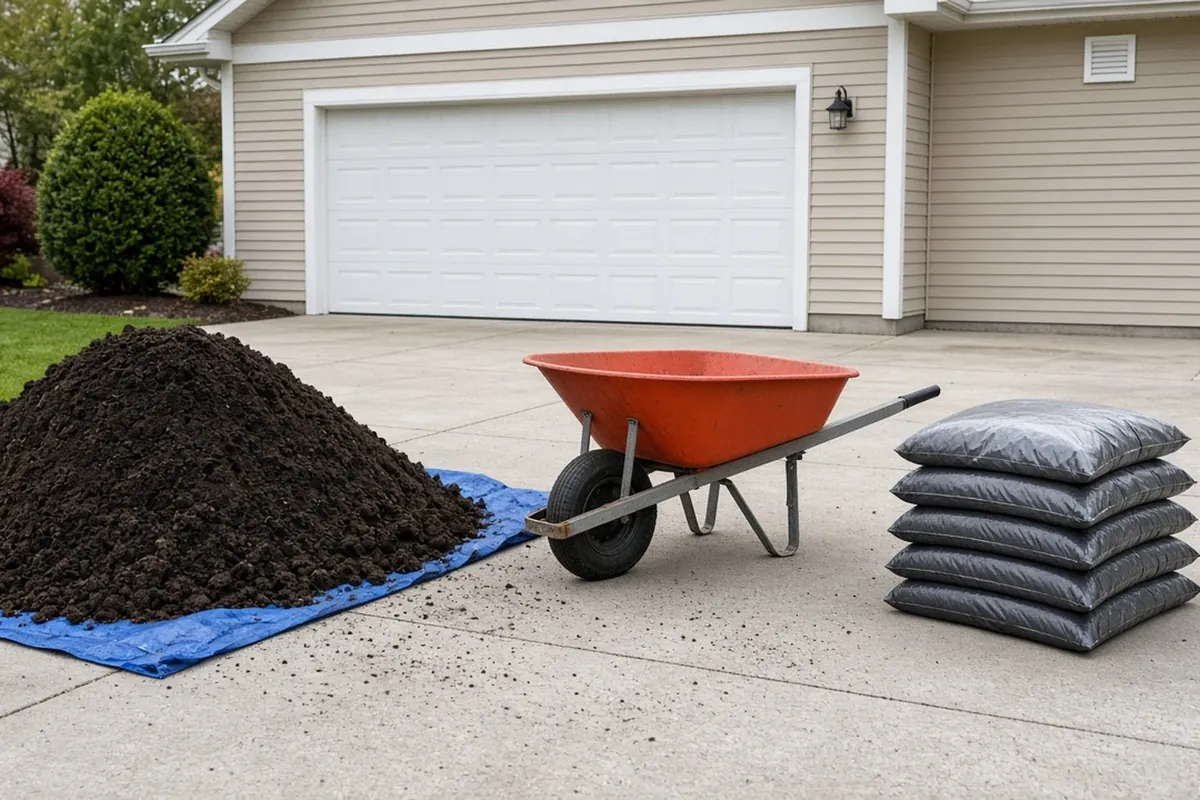 🧰 Problem solverBags or bulk: when a cubic yard delivery is cheaperHow to compare bagged soil, mulch or compost with a bulk cubic yard: price per cubic foot, the delivery fee, and the bag count where bulk wins.Read the guide
  ✅ ChecklistFall compost bin reset: empty the finished compost, then rebuild with leavesPull out the finished compost, spread it on your beds, then rebuild the bin 3 ft each way with fall leaves and greens, damp as a wrung-out sponge.Read the guide
 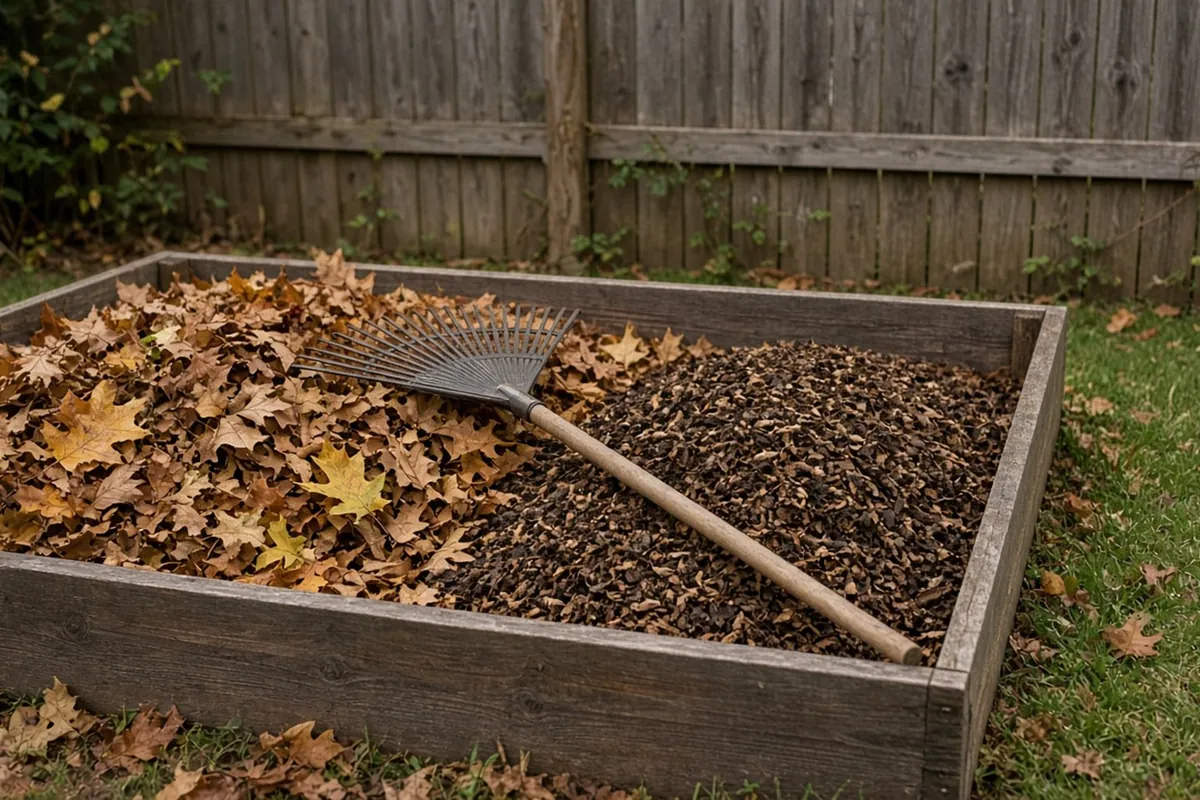 🧰 Problem solverWhat to do with fall leaves in the garden: shred them into mulchShred the leaves, then spread 2 to 3 inches on beds and 3 to 4 around shrubs. How to shred without a shredder, and how many bags a bed takes.Read the guide
 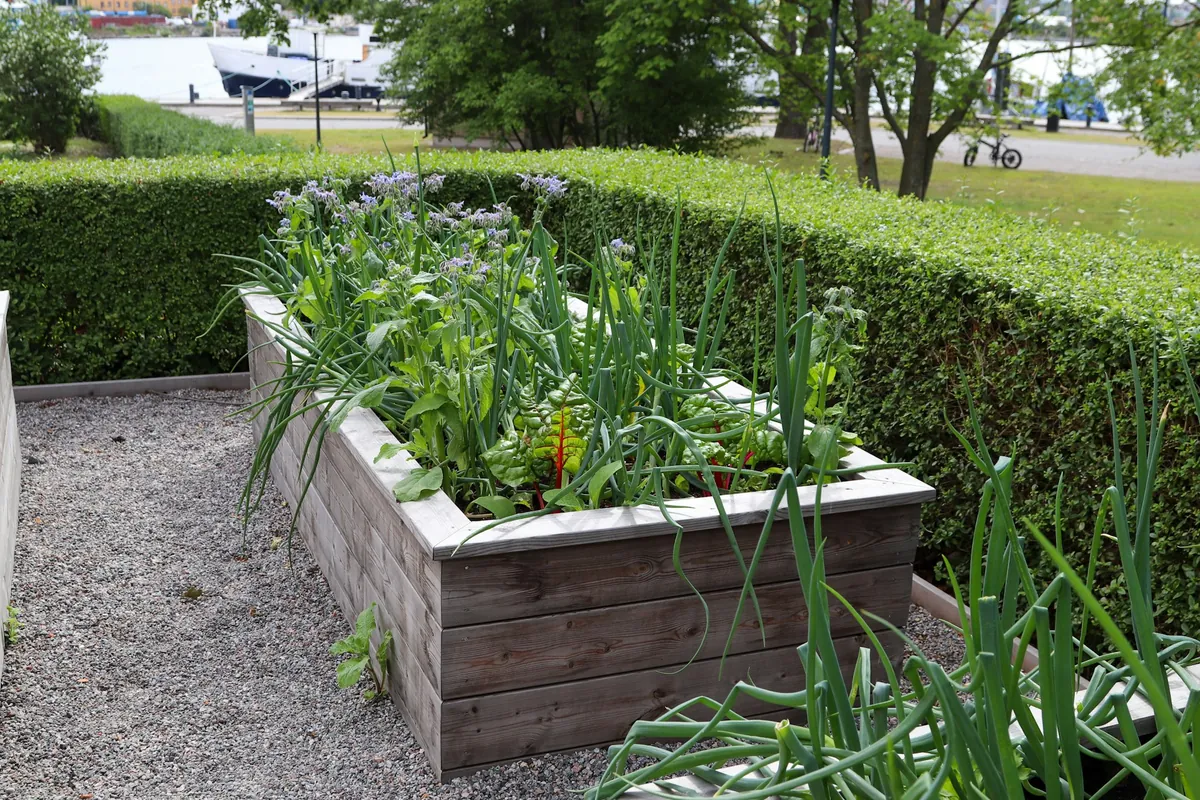 🧰 Problem solverHow to fill a tall raised bed without buying 2 yards of soilA 4 x 8 bed 24 inches tall holds 64 cu ft. Put logs, branches and leaves in the lower half and you buy 32 cu ft of soil instead. What goes in, what stays out.Read the guide
Sources
- NIST Guide to the SI, Appendix B.8: Factors for Units Listed Alphabetically, National Institute of Standards and Technology (NIST), published August 18, 2025. Checked October 11, 2026.
- Handbook 130 (2026), IV. Uniform Regulations, B. Uniform Regulation for the Method of Sale of Commodities, National Institute of Standards and Technology (NIST), Office of Weights and Measures, published December 22, 2025. Checked October 11, 2026.
- Mulches for the Landscape (P2301), Mississippi State University Extension. Checked October 9, 2026.
- Miracle-Gro Potting Mix, ScottsMiracle-Gro. Checked October 7, 2026.
- Raised Bed & Potting Mix, Kellogg Garden Products. Checked October 6, 2026.
- Miracle-Gro Organic Raised Bed & Garden Soil, ScottsMiracle-Gro. Checked October 6, 2026.
Planning guide, not a guarantee. See every source on the site on the sources page. Spotted an error? Tell us.