✅ ChecklistSoil and mulch5 min read
Fall compost bin reset: empty the finished compost, then rebuild with leaves
Quick answer
Empty the bin, spread what's finished, then refill it with fall leaves. Compost is done when you can't tell what went in, it crumbles and it smells earthy (Wisconsin Extension). Spread 1/4 to 1 inch on the bed surface (Oregon State); on a 4 x 8 ft bed, 1 inch is 2.67 cubic feet. Rebuild at least 3 x 3 x 3 ft with leaves and green material, about as damp as a wrung-out sponge.
Source: Wisconsin Extension, backyard composting (2025), checked October 10, 2026; OSU Extension EM 9308, using compost, checked October 6, 2026; Virginia Cooperative Extension 426-703, compost from yard waste, checked October 10, 2026.

Step 1
Check what's finished and what isn't
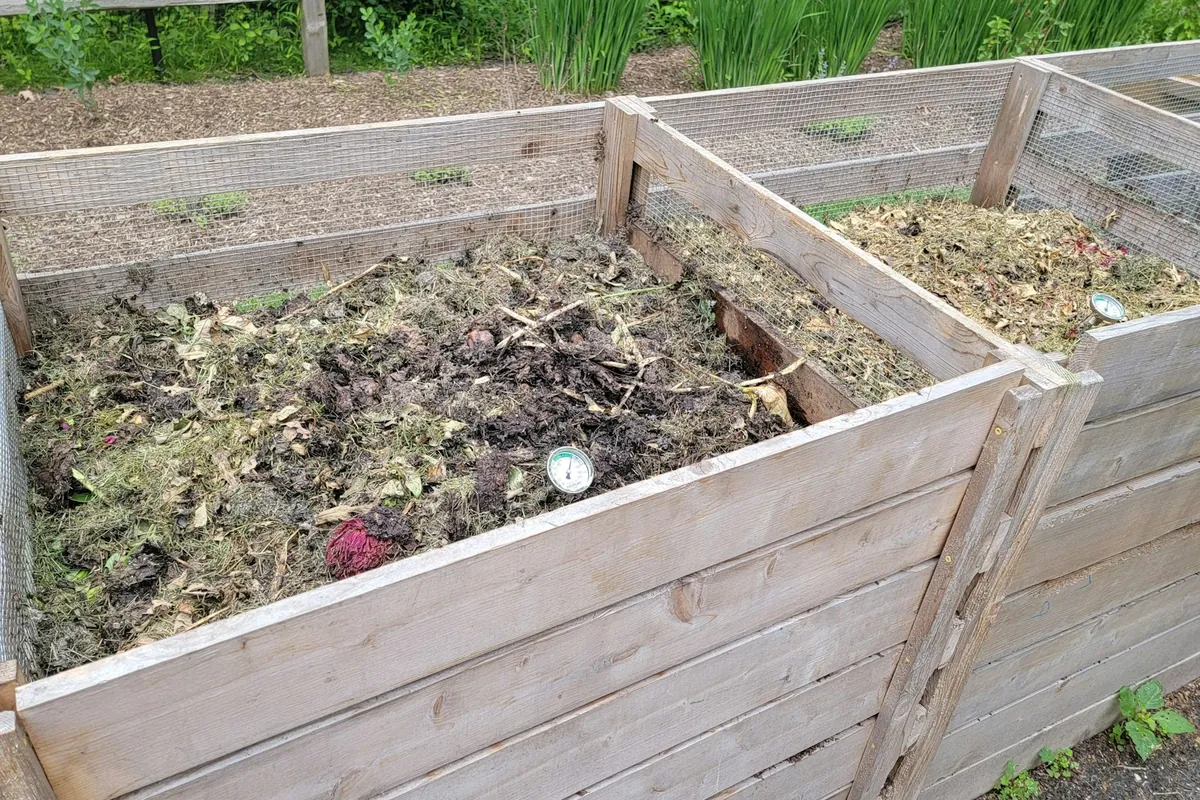
Dig to the bottom of the bin first. That's where the oldest material is. Wisconsin Extension says finished compost crumbles easily, smells earthy, and you can no longer tell the leaves from the grass clippings. Virginia Cooperative Extension calls it dark with a pleasant smell. Anything that still looks like leaves or stems isn't done. Set it aside on a tarp, because it goes back in the new pile.
Source: Wisconsin Extension, backyard composting (2025), checked October 10, 2026; Virginia Cooperative Extension 426-703, compost from yard waste, checked October 10, 2026.
- 27 cu ftsmallest pile that holds heat: 3 x 3 x 3 ft (Virginia)Virginia Cooperative Extension 426-703, compost from yard waste, October 10, 2026
- 1 to 1green to brown material (Illinois, Wisconsin)Illinois Extension, composting: how it works, October 10, 2026
- 2.67 cu ftof compost covers a 4 x 8 ft bed 1 inch deepArithmetic
- 4 to 5 moto finish in warm weather, longer in cool (Virginia)Virginia Cooperative Extension 426-703, compost from yard waste, October 10, 2026
Empty it to the bottom
Fork the top layers onto a tarp, then dig out the dark, crumbly compost underneath.
Spread what's finished
Put 1/4 to 1 inch on the bed surface, the Oregon State range, and write down how much each bed took.
Source: OSU Extension EM 9308, using compost, checked October 6, 2026.
Layer leaves and greens
Rebuild the bin at least 3 x 3 x 3 ft with about equal amounts of brown and green material.
Source: Wisconsin Extension, backyard composting (2025), checked October 10, 2026; Illinois Extension, composting: how it works, checked October 10, 2026.
Wet it, turn once, then wait
Water each dry layer to a wrung-out sponge, turn it as the weather cools, and stop turning after November.
Source: Virginia Cooperative Extension 426-703, compost from yard waste, checked October 10, 2026; Illinois Extension, composting: how it works, checked October 10, 2026.
Step 2
Spread the finished compost on the beds
Oregon State's EM 9308 puts 1/4 inch to 1 inch of compost on the surface of a bed each year. Virginia's SPES-304 goes heavier for garden beds: about 2 inches, worked 6 to 8 inches into the soil. To find the amount, multiply square feet by depth in inches and divide by 12. A 4 x 8 ft bed is 32 square feet, so 1 inch takes 2.67 cubic feet, or three 1 cubic foot bags if you're short and need to buy some.
Source: OSU Extension EM 9308, using compost, checked October 6, 2026; Virginia Cooperative Extension, Using Compost in Your Landscape, checked October 6, 2026.
Step 3
Rebuild the bin with fall leaves
Fallen leaves are the brown half of the pile. Wisconsin Extension calls fall the perfect time to start composting and says the bin should be at least 3 feet high, wide and deep. Virginia says a pile under 27 cubic feet won't hold enough heat, and one over 5 x 5 x 5 ft is usually too big. Its layers: a 3-inch base of coarse stems, about 9 inches of dry leaves, then 3 to 9 inches of fresh green material. Repeat until the bin is full.
Source: Wisconsin Extension, backyard composting (2025), checked October 10, 2026; Virginia Cooperative Extension 426-703, compost from yard waste, checked October 10, 2026.
| Source | Bin size | Browns and greens | Moisture |
|---|---|---|---|
| Virginia 426-703 | 27 to 125 cu ft | 9 in dry leaves, then 3 to 9 in fresh | Wrung-out sponge |
| Wisconsin (2025) | At least 3 x 3 x 3 ft | Equal amounts | Wrung-out sponge |
| Illinois | 27 to 125 cu ft | 1 part green to 1 part brown | Wrung-out sponge |
Each page's own wording, checked October 10, 2026.
Source: Virginia Cooperative Extension 426-703, compost from yard waste, checked October 10, 2026; Wisconsin Extension, backyard composting (2025), checked October 10, 2026; Illinois Extension, composting: how it works, checked October 10, 2026.
To fill a 27 cubic foot bin half and half, you need about 13.5 cubic feet of leaves. A 30-gallon bag holds 4.01 cubic feet, so that's 4 bags of leaves. Shredded leaves pack tighter and break down faster. Virginia says shredded material can finish in one to two months.
Source: Virginia Cooperative Extension 426-703, compost from yard waste, checked October 10, 2026.
Step 4
Turn it once more, then leave it for winter
Wisconsin says to turn the pile as the weather cools, which mixes it and lets air back in. Illinois says the average home composter turns every 4 to 5 weeks, and recommends you stop turning after November so the heat stays in the middle. Illinois also notes that the bacteria slow down in winter, so expect the pile to sit until it warms up.
Source: Wisconsin Extension, backyard composting (2025), checked October 10, 2026; Illinois Extension, composting: how it works, checked October 10, 2026.
Print it, tick it off
Fall compost bin reset checklist
One dry afternoon. A tarp, a fork, a bucket and a hose.
- Bin emptied to the bottom
- Finished compost sorted out: dark, crumbly, earthy
- Unfinished material set aside on a tarp
- Buckets of finished compost counted
- Each bed measured, depth picked: 1/4 to 1 in on top
- Compost spread and cubic feet per bed written down
- Coarse stems laid as a 3 in base
- Leaves and greens layered, about equal amounts
- Each dry layer wetted to a wrung-out sponge
- Bin filled to about 3 ft
- Two bags of dry leaves saved for summer
- Date of the last turn written down (stop after November)
What people learn the second year
Tips and tricks
- Start from the bottom. The oldest compost sits at the bottom of the bin. Fork the top layers onto a tarp first, then dig out the finished part underneath.
- Unfinished goes back in. Put any leaves and stems you can still recognize back in the new pile, mixed in with the fresh leaves.
- Squeeze test. Grab a handful from the middle. It should feel like a wrung-out sponge, as Virginia, Wisconsin and Illinois all put it. If it's dry, water the layer. If water runs out, add dry leaves. (Virginia Cooperative Extension 426-703, compost from yard waste; Wisconsin Extension, backyard composting (2025); Illinois Extension, composting: how it works)
- Shred first if you can. Run the mower over the leaves before they go in. Virginia says shredded material can finish in one to two months instead of four or five. (Virginia Cooperative Extension 426-703, compost from yard waste)
- Write down the bucket count. Next fall you'll know how much one full bin gives you and how many beds it covers.
Common questions
Questions
How do I know my compost is finished?
Wisconsin Extension says you can't tell what the materials were, it smells earthy and it crumbles easily. Virginia says finished compost is dark and smells pleasant.
Source: Wisconsin Extension, backyard composting (2025), checked October 10, 2026; Virginia Cooperative Extension 426-703, compost from yard waste, checked October 10, 2026.
How much compost should I put on my beds in fall?
Oregon State says 1/4 to 1 inch on the bed surface each year. Virginia says about 2 inches worked 6 to 8 inches into a garden bed. On a 4 x 8 ft bed, 1 inch is 2.67 cubic feet.
Source: OSU Extension EM 9308, using compost, checked October 6, 2026; Virginia Cooperative Extension, Using Compost in Your Landscape, checked October 6, 2026.
Is fall a good time to start a compost pile?
Yes. Wisconsin Extension says fall is perfect for it, and fallen leaves give you plenty of brown material.
Source: Wisconsin Extension, backyard composting (2025), checked October 10, 2026.
How big should a compost bin be?
At least 3 feet high, wide and deep, which is 27 cubic feet. Virginia and Illinois both give 27 to 125 cubic feet, so no bigger than 5 x 5 x 5 ft.
Source: Virginia Cooperative Extension 426-703, compost from yard waste, checked October 10, 2026; Illinois Extension, composting: how it works, checked October 10, 2026.
Should I turn my compost in winter?
Illinois recommends you stop turning after November so the heat stays in the center of the pile.
Source: Illinois Extension, composting: how it works, checked October 10, 2026.
The arithmetic, done for you
Tools for this job
- 🪱 CalculatorCompost and topsoil calculatorHow much compost or topsoil to buy for a garden bed or lawn: cubic feet, cubic yards and bag counts, plus the mix you get when you dig it in.Open the tool
- 🍂 CalculatorMulch calculatorHow much mulch a bed takes in cubic feet, cubic yards and 1.5 or 2 cu ft bags, at the depth you pick, with the 2 to 3 inch band worked out too.Open the tool
Keep reading
More guides
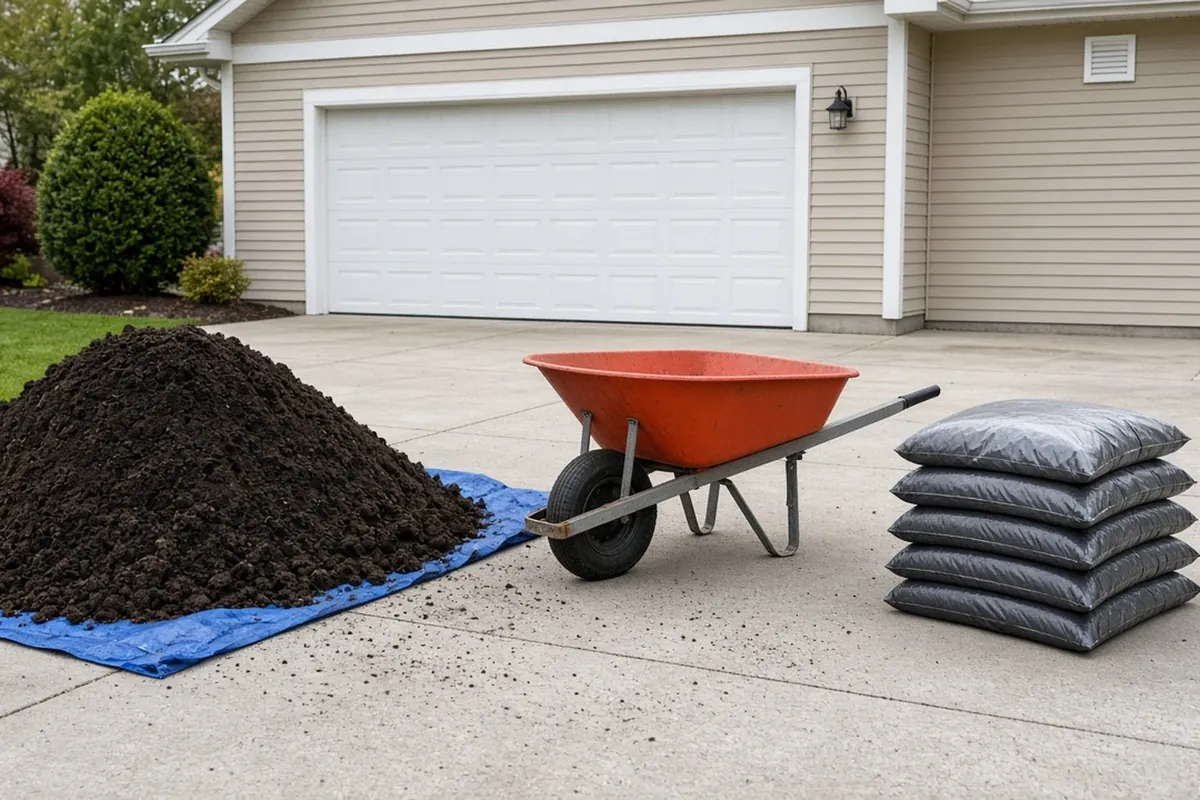 🧰 Problem solverBags or bulk: when a cubic yard delivery is cheaperHow to compare bagged soil, mulch or compost with a bulk cubic yard: price per cubic foot, the delivery fee, and the bag count where bulk wins.Read the guide
 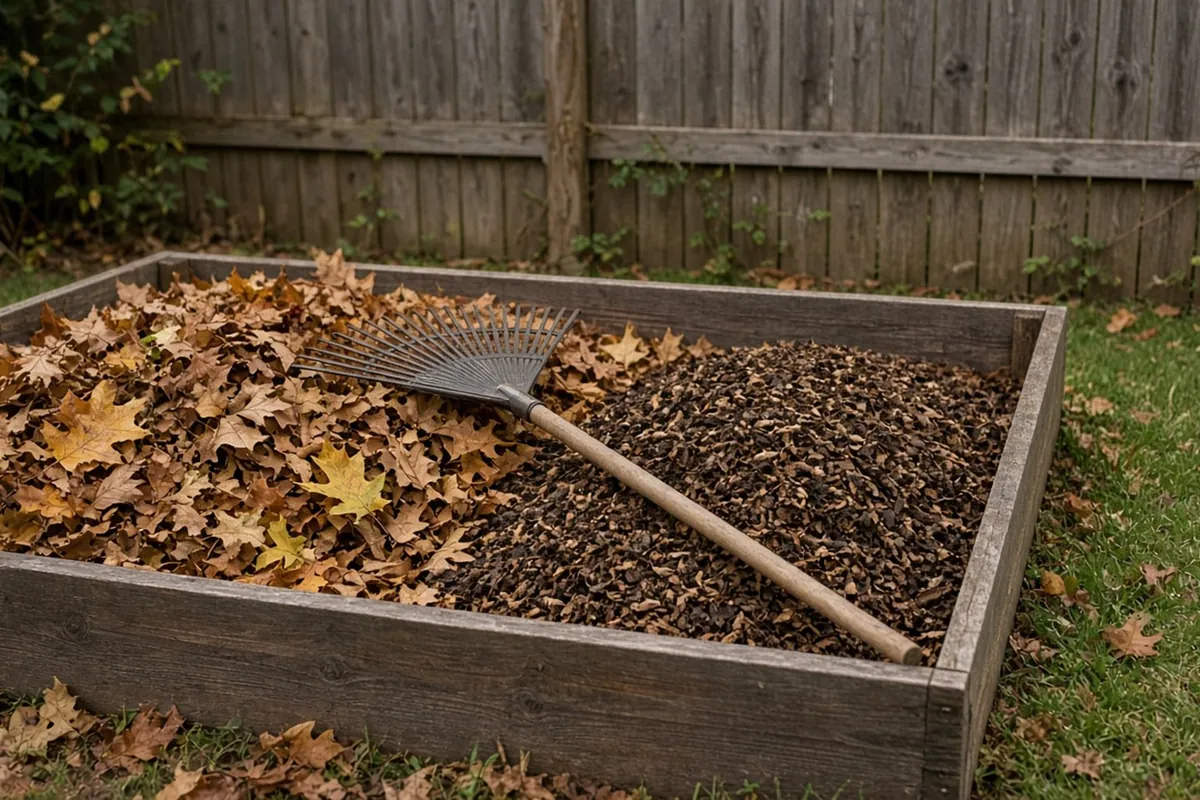 🧰 Problem solverWhat to do with fall leaves in the garden: shred them into mulchShred the leaves, then spread 2 to 3 inches on beds and 3 to 4 around shrubs. How to shred without a shredder, and how many bags a bed takes.Read the guide
 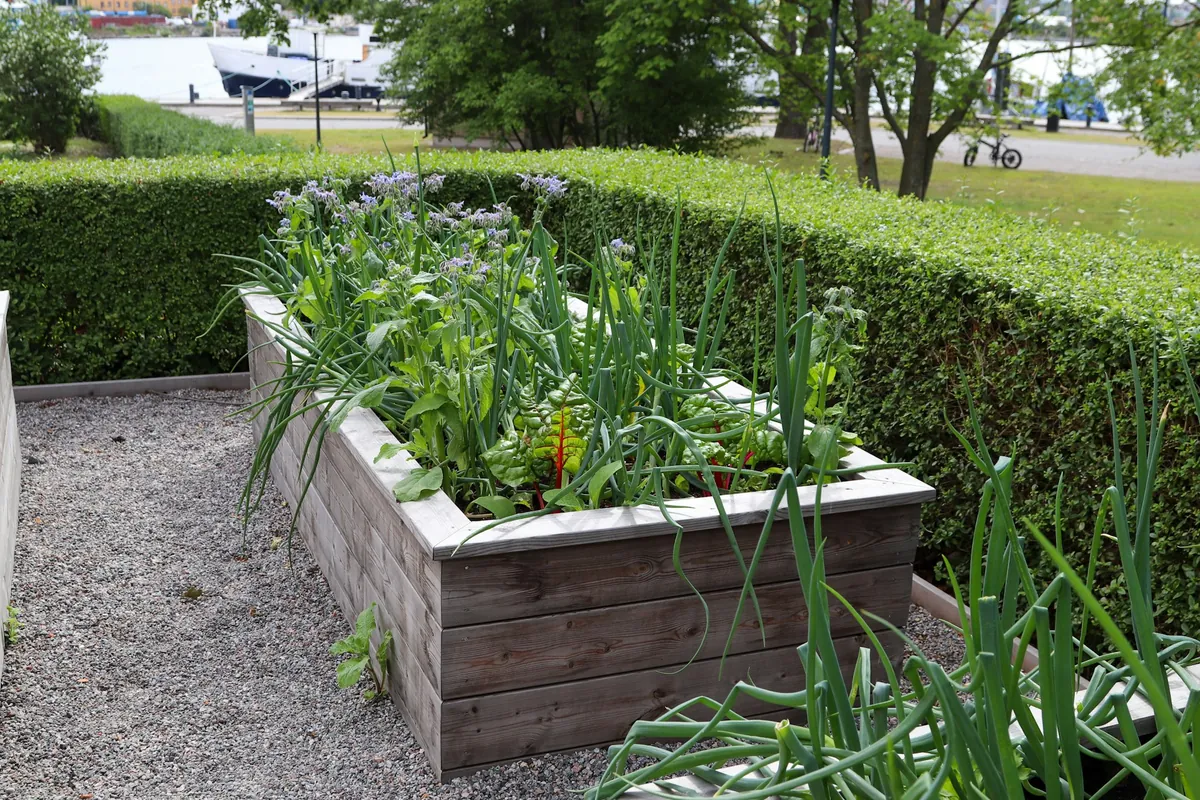 🧰 Problem solverHow to fill a tall raised bed without buying 2 yards of soilA 4 x 8 bed 24 inches tall holds 64 cu ft. Put logs, branches and leaves in the lower half and you buy 32 cu ft of soil instead. What goes in, what stays out.Read the guide
Sources
- Recycle Yard Waste & Rejuvenate Soils, University of Wisconsin-Madison Division of Extension, published September 18, 2025. Checked October 10, 2026.
- How to use compost in gardens and landscapes (EM 9308), Oregon State University Extension Service, published February 1, 2021. Checked October 6, 2026.
- Making Compost from Yard Waste (426-703, SPES-393P), Virginia Cooperative Extension, Virginia Tech, published September 2, 2022. Checked October 10, 2026.
- Composting for the Homeowner: How It Works, University of Illinois Extension. Checked October 10, 2026.
- Using Compost in Your Landscape (SPES-304), Virginia Cooperative Extension, Virginia Tech. Checked October 6, 2026.
Planning guide, not a guarantee. See every source on the site on the sources page. Spotted an error? Tell us.