🧰 Problem solverSoil and mulch5 min read
How to fill a tall raised bed without buying 2 yards of soil
Quick answer
If the bed is at least 17 inches tall, fill the lower half with logs, then branches, then twigs and leaves, and put soil and compost only in the upper half. That is Oklahoma State Extension's method. A 4 x 8 ft bed 24 inches deep then takes 32 cubic feet of soil (16 bags of 2 cu ft) instead of 64. Water and tamp each layer, and top the bed up every year as the wood breaks down.
Source: Oklahoma State Extension HLA-6478, hugelkultur, checked October 10, 2026.

Why it costs so much
Tall beds hold a lot more soil than they look
Volume goes up with every inch of height. A 4 x 8 ft bed measured inside holds 32 cubic feet at 12 inches deep, 48 at 18 and 64 at 24. That last one is 2.37 cubic yards, or 32 bags of 2 cu ft, for a single bed.
Oklahoma State Extension published a fix in February 2026: put logs, branches, twigs and leaves in the bottom of the bed and keep the purchased soil for the top. Its fact sheet says this cuts the soil you have to buy by a lot. It's the raised-bed version of a hugelkultur mound, an old way of burying wood under soil.
Source: Oklahoma State Extension HLA-6478, hugelkultur, checked October 10, 2026.
- 17 inminimum bed height for a wood layer (Oklahoma State)Oklahoma State Extension HLA-6478, hugelkultur, October 10, 2026
- Lower halfof the bed for logs, branches and leavesOklahoma State Extension HLA-6478, hugelkultur, October 10, 2026
- 32 cu ftof soil saved in a 4 x 8 bed, 24 in deepArithmetic
- 16 bagsof 2 cu ft instead of 32Arithmetic
What goes in
Big wood at the bottom, small on top
Lay the largest logs on the bottom, then branches, then small twigs, and pack leaves into the gaps. Oklahoma State lists hardwoods as the best choice: alder, aspen, birch, cottonwood, maple, oak, poplar and willow. Fall is a good time to gather all of it. Storm limbs, pruned branches and the leaves you'd otherwise bag are free.
Source: Oklahoma State Extension HLA-6478, hugelkultur, checked October 10, 2026.
Step by step
Filling the bed
Check the height
Measure inside the boards. Oklahoma State says the wood layer works in beds at least 17 inches tall. Three 2x6 boards stack to 16 1/2, so a bed that size gets soil all the way.
Source: Oklahoma State Extension HLA-6478, hugelkultur, checked October 10, 2026; NIST, PS 20-20 American Softwood Lumber Standard, checked October 10, 2026.
Work out the top half
Put the inside length and width into the raised bed soil calculator with half the height as the depth. That's the soil and compost to buy. Keep a few extra bags for the soil that runs down into the gaps.
Lay the wood
Logs first, then branches, then twigs, until the pile reaches about half the bed's height. Fill the spaces with leaves.
Source: Oklahoma State Extension HLA-6478, hugelkultur, checked October 10, 2026.
Water and tamp each layer
Soak each layer before the next one goes on, and press it down with a tamper. Oklahoma State says this helps the wood break down and closes up air pockets.
Source: Oklahoma State Extension HLA-6478, hugelkultur, checked October 10, 2026.
Add soil and compost on top
Fill the upper half with planting soil and compost, water it in, and add more where it sinks. Plant roots should sit in this layer, not in the wood.
Source: Oklahoma State Extension HLA-6478, hugelkultur, checked October 10, 2026.
The numbers
How much you save at each height
| Bed height (inside) | All soil | Top half only | Bags of 2 cu ft |
|---|---|---|---|
| 17 in | 45.33 cu ft | 22.67 cu ft | 23 vs 12 |
| 18 in | 48 cu ft | 24 cu ft | 24 vs 12 |
| 24 in | 64 cu ft | 32 cu ft | 32 vs 16 |
| 30 in | 80 cu ft | 40 cu ft | 40 vs 20 |
One 4 x 8 ft bed measured inside. Cubic feet = 32 x height in inches / 12; bags rounded up.
On open ground, the half-and-half split leaves plenty of soil for most crops once a bed reaches 24 inches. A 17 or 18 inch bed has only 8 1/2 to 9 inches of soil on top. That matches the 8 inches Oregon State and Maryland Extension give, but falls just short of the 10 inches UGA Extension says most garden crops need. On concrete or paving, Maryland wants 12 to 24 inches of mix for peppers, tomatoes and squash, so a bed there should be tall enough to keep at least 12 inches of soil above the wood.
Source: OSU Extension FS 270, raised bed gardening, checked October 10, 2026; UMD Extension, growing vegetables in raised beds, checked October 10, 2026; UGA Extension C 1027-4, raised garden bed dimensions, checked October 10, 2026.
After the first season
Expect it to sink, and plan the top-up
The wood rots, so the bed settles more than an all-soil bed does. Oklahoma State says to top it up with soil or compost each year until most of the wood has broken down. Illinois Extension calls settling a fact of raised bed gardening even without wood, and says a few inches of compost a year usually keeps up. The fact sheet also notes that wood can tie up nitrogen while it breaks down. That's one more reason to keep the roots up in the soil layer.
Source: Oklahoma State Extension HLA-6478, hugelkultur, checked October 10, 2026; Illinois Extension, refreshing raised bed soil, checked October 6, 2026.
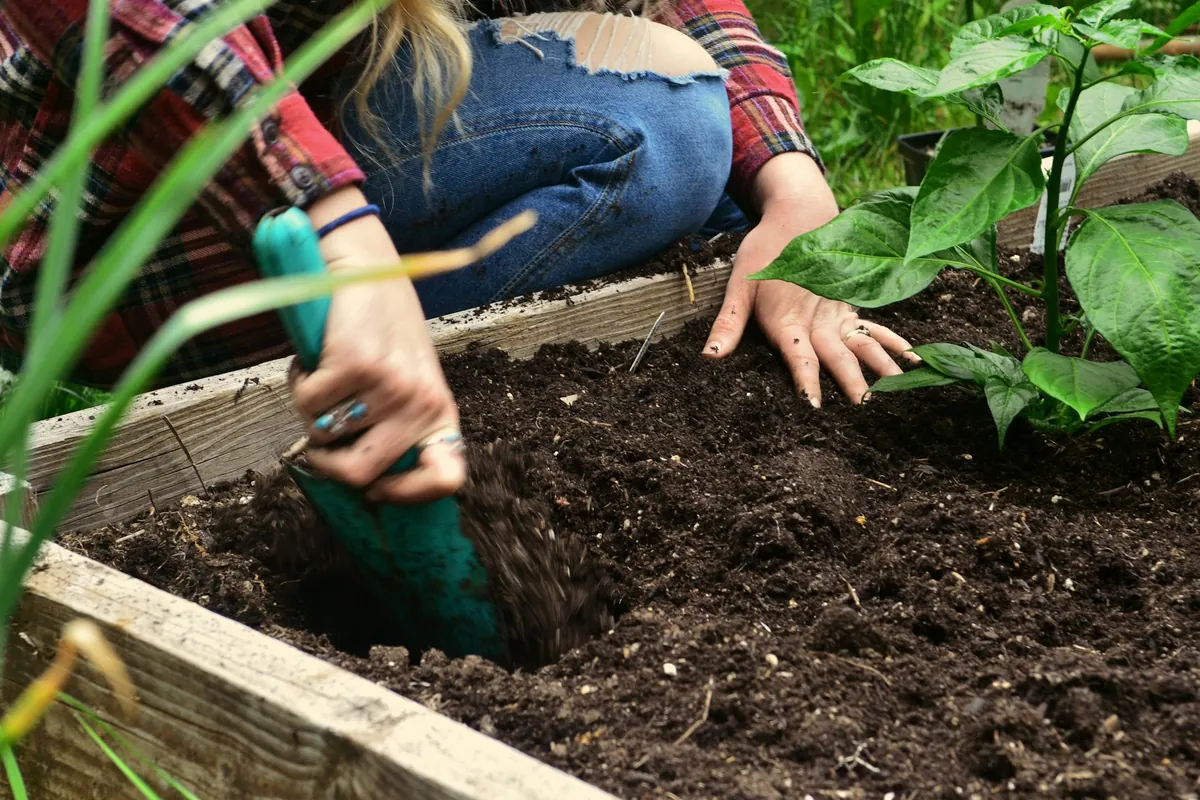
Print it, tick it off
Tall bed fill checklist
Tick these off before the soil is delivered.
- Inside height measured: at least 17 inches for a wood layer
- Top-half soil worked out from the inside size
- A few extra bags for soil that settles into the gaps
- Logs, branches, twigs and leaves gathered
- No black walnut, cedar, green willow, treated or painted wood
- Each layer watered and tamped
- Top half filled with soil and compost, watered in
- Date written down for next year's top-up
What people learn the second year
Tips and tricks
- Save the fall leaves. Leaves fill the gaps between logs and branches. Keep a few bags of them back when you rake. (Oklahoma State Extension HLA-6478, hugelkultur)
- Ask for storm wood. Ask neighbors or a tree crew for logs and limbs. Check the wood type before you take it. (Oklahoma State Extension HLA-6478, hugelkultur)
- Measure inside the boards. Boards and corner posts take up room. Measure the inside length, width and height, or the soil count will run high.
- Keep a top-up bag on hand. Oklahoma State expects the bed to sink each year until the wood is mostly gone. A bag or two of compost each spring brings the level back up. (Oklahoma State Extension HLA-6478, hugelkultur)
Common questions
Questions
What can I put in the bottom of a tall raised bed?
Oklahoma State Extension uses logs on the bottom, then branches, then twigs, with leaves packed into the gaps, filling about the lower half. Hardwoods such as oak, maple and birch work best.
Source: Oklahoma State Extension HLA-6478, hugelkultur, checked October 10, 2026.
How much soil does a 24 inch raised bed need?
A 4 x 8 ft bed 24 inches deep inside holds 64 cubic feet, or 32 bags of 2 cu ft. With wood in the lower half, the soil drops to 32 cubic feet, or 16 bags.
Can I put logs in a 12 inch raised bed?
Oklahoma State says the method works best in beds at least 17 inches tall. A shorter bed doesn't have room for the wood and enough soil above it.
Source: Oklahoma State Extension HLA-6478, hugelkultur, checked October 10, 2026.
Will a raised bed with logs in it sink?
Yes. As the wood breaks down the soil settles, and Oklahoma State says to top the bed up each year until most of the wood is gone.
Source: Oklahoma State Extension HLA-6478, hugelkultur, checked October 10, 2026.
What wood should not go in a raised bed?
Oklahoma State lists black walnut, cedar and other rot-resistant wood, freshly cut willow that can sprout, and treated or painted wood such as railroad ties.
Source: Oklahoma State Extension HLA-6478, hugelkultur, checked October 10, 2026.
The arithmetic, done for you
Tools for this job
- 🪴 CalculatorRaised bed soil calculatorHow much soil fills a raised bed: cubic feet, cubic yards and a bag count for 1.5 or 2 cu ft bags, from the bed's length, width and depth.Open the tool
- 🪚 CalculatorRaised bed lumber calculatorHow many boards to buy for a wooden raised bed, and where to cut them: side lengths, a board-by-board cut plan, corner posts and the soil it will hold.Open the tool
Keep reading
More guides
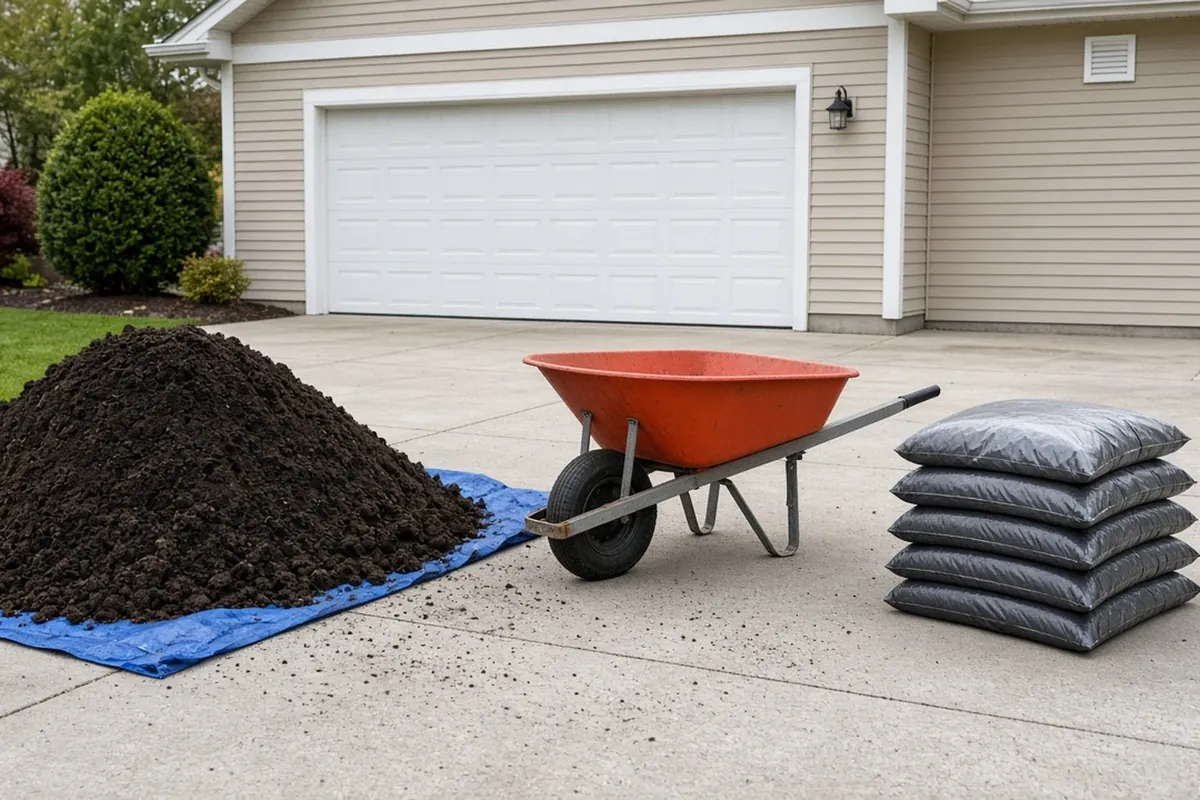 🧰 Problem solverBags or bulk: when a cubic yard delivery is cheaperHow to compare bagged soil, mulch or compost with a bulk cubic yard: price per cubic foot, the delivery fee, and the bag count where bulk wins.Read the guide
 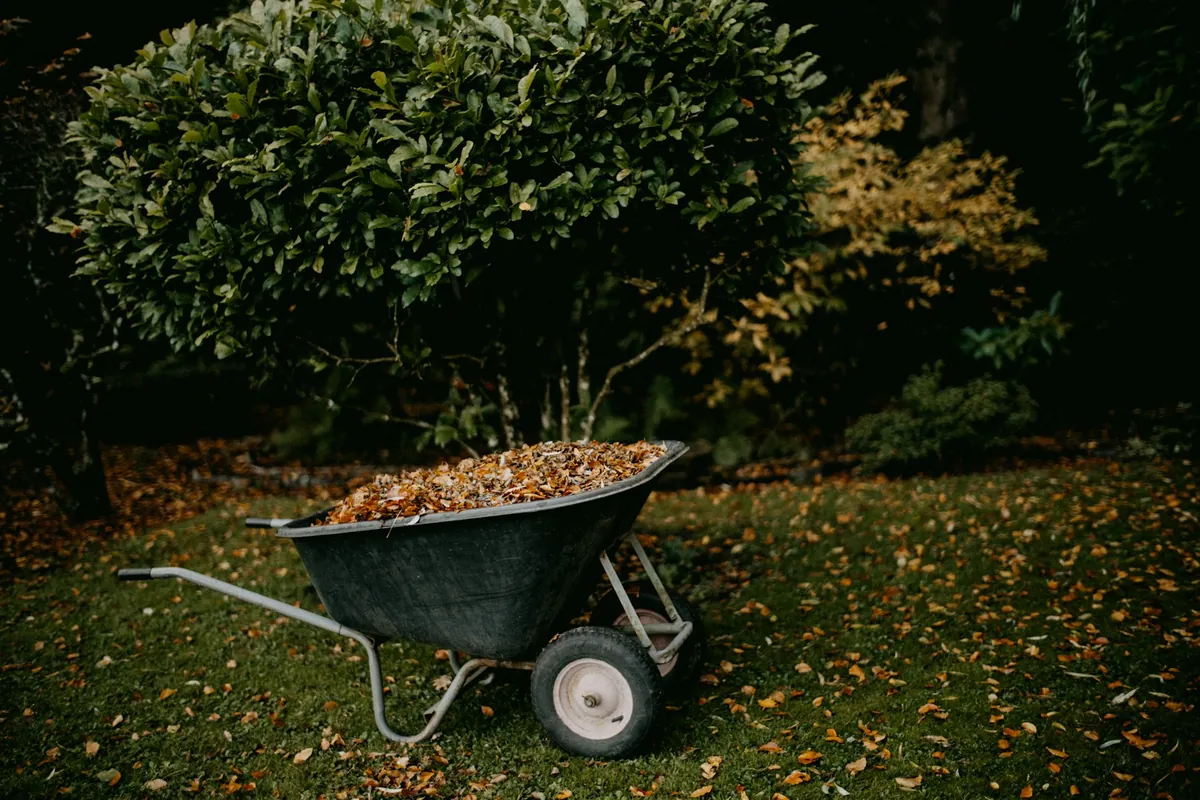 ✅ ChecklistFall compost bin reset: empty the finished compost, then rebuild with leavesPull out the finished compost, spread it on your beds, then rebuild the bin 3 ft each way with fall leaves and greens, damp as a wrung-out sponge.Read the guide
 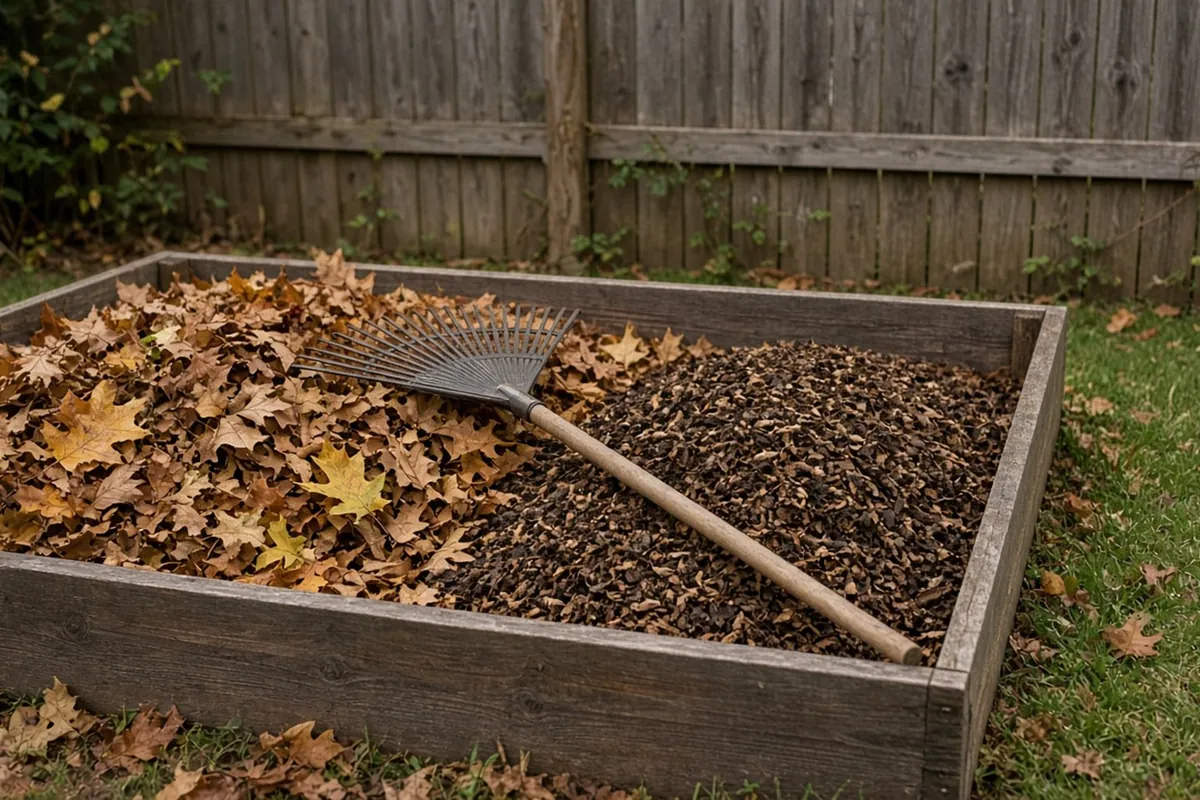 🧰 Problem solverWhat to do with fall leaves in the garden: shred them into mulchShred the leaves, then spread 2 to 3 inches on beds and 3 to 4 around shrubs. How to shred without a shredder, and how many bags a bed takes.Read the guide
Sources
- Sustainable Landscapes: Creating A Hügelkultur For Gardening with Stormwater Management Benefits (HLA-6478), Oklahoma State University Extension, published February 1, 2026. Checked October 10, 2026.
- Voluntary Product Standard PS 20-20, American Softwood Lumber Standard, National Institute of Standards and Technology (US Department of Commerce), published January 1, 2020. Checked October 10, 2026.
- Raised bed gardening (FS 270), Oregon State University Extension Service, published September 1, 2020. Checked October 10, 2026.
- Growing Vegetables in Raised Beds, University of Maryland Extension, published March 26, 2026. Checked October 10, 2026.
- Raised Garden Bed Dimensions (Circular 1027-4), University of Georgia Cooperative Extension, published December 14, 2022. Checked October 10, 2026.
- Refreshing raised bed soil generates exceptional results, University of Illinois Extension, published April 5, 2021. Checked October 6, 2026.
Planning guide, not a guarantee. See every source on the site on the sources page. Spotted an error? Tell us.