🧭 Garden systemSoil and mulch7 stepsFree working copy
Fill a tall raised bed for less: wood below, soil on top
Quick answer
Measure the bed's height inside the boards. Under 17 inches, fill it with soil all the way. At 17 inches or more, Oklahoma State Extension's method puts logs, branches, twigs and leaves in the lower half and soil and compost in the upper half. A 4 x 8 ft bed 24 inches tall then needs 32 cubic feet of soil, 16 bags of 2 cu ft, instead of 64. On concrete or paving, keep at least 12 inches of soil above the wood.
Source: Oklahoma State Extension HLA-6478, hugelkultur, checked October 10, 2026; UMD Extension, growing vegetables in raised beds, checked October 10, 2026; Kellogg Garden raised bed mix product page, checked October 6, 2026.

Decide first
Wood layer or all soil?
Do it yourself
Use a wood layer
Do it if the bed is at least 17 inches tall inside and you can get untreated hardwood: storm limbs, pruned branches, a neighbor's log pile. Oklahoma State Extension says that's the minimum height for the method, and fall is the time to build it.
Source: Oklahoma State Extension HLA-6478, hugelkultur, checked October 10, 2026.
Skip it
Fill it all with soil
Skip the wood if the bed is under 17 inches tall, or if all you can find is cedar, black walnut, green willow or treated lumber. A short bed needs every inch for roots. Three 2x6 boards stack to 16 1/2 inches, so that bed gets soil all the way.
Source: Oklahoma State Extension HLA-6478, hugelkultur, checked October 10, 2026; NIST, PS 20-20 American Softwood Lumber Standard, checked October 10, 2026.
Get help
Get help with the frame
Wet logs and soil are heavy. Oregon State University Extension says beds taller than about 18 inches, or longer than 6 feet, should be reinforced so the sides don't bow out. Ask a carpenter about that part. This page covers the fill, not the frame.
Source: OSU Extension FS 270, raised bed gardening, checked October 10, 2026.
- 17 inminimum bed height for a wood layerOklahoma State Extension HLA-6478, hugelkultur, October 10, 2026
- Lower halfof the bed for logs, branches and leavesOklahoma State Extension HLA-6478, hugelkultur, October 10, 2026
- 12 inof soil to keep above the wood on pavingUMD Extension, growing vegetables in raised beds, October 10, 2026
- 16 bagsof 2 cu ft for a 4 x 8 ft bed 24 in tall, not 32Arithmetic
Gather in fall, fill in one weekend
The steps, in order
Measure the inside height
Stand a tape inside the bed and measure from the ground to the top of the boards. Use the inside length and width too. Oklahoma State Extension says the wood layer works in beds at least 17 inches tall.
Have ready: A tape measure and the working copy.
Source: Oklahoma State Extension HLA-6478, hugelkultur, checked October 10, 2026.
Pick the split
Under 17 inches: all soil. On open ground at 17 inches or more: wood in the lower half, soil in the upper half. On concrete or paving, Maryland Extension wants 12 to 24 inches of mix for tomatoes, peppers and squash, so keep at least 12 inches of soil and give the wood what's left of the lower half.
Have ready: The height you measured.
Source: Oklahoma State Extension HLA-6478, hugelkultur, checked October 10, 2026; UMD Extension, growing vegetables in raised beds, checked October 10, 2026.
Work out the soil
Enter the inside length and width and the soil depth only. A 4 x 8 ft bed with 12 inches of soil: 8 × 4 × 12 ÷ 12 = 32 cubic feet, or 16 bags of 2 cu ft. Buy a couple more for soil that settles into the gaps.
Have ready: The inside size and the bag size you plan to buy.
Gather the wood
Collect logs, branches, twigs and a pile of leaves. Oklahoma State names hardwoods as best: alder, aspen, birch, cottonwood, maple, oak, poplar and willow. Leave out black walnut, cedar and other rot-resistant wood, freshly cut willow that can sprout, and anything treated or painted.
Have ready: A wheelbarrow, gloves and a saw for logs longer than the bed.
Source: Oklahoma State Extension HLA-6478, hugelkultur, checked October 10, 2026.
Lay, water and tamp each layer
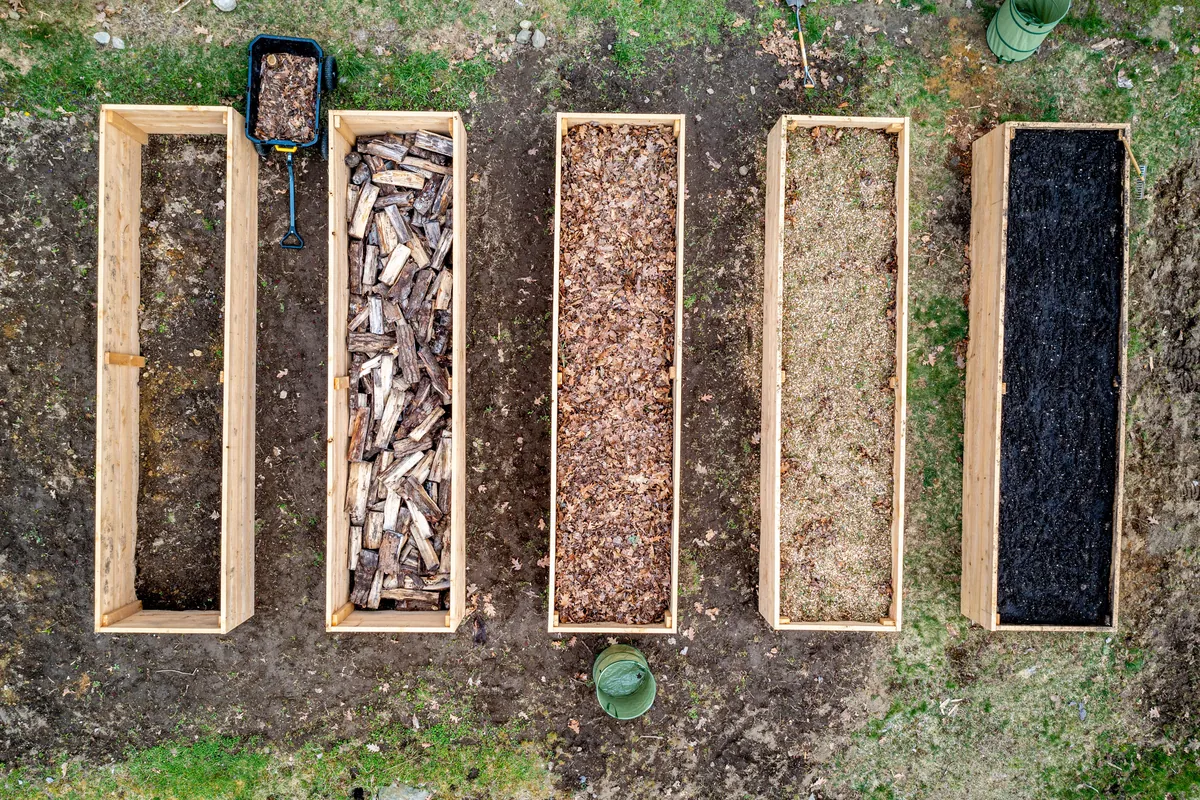
Biggest logs on the bottom, then branches, then twigs, with leaves packed into the gaps. Soak each layer and press it down with a tamper before the next one goes on. Oklahoma State says this closes air pockets and helps the wood break down.
Have ready: A hose and a hand tamper (or a flat board to stand on).
Source: Oklahoma State Extension HLA-6478, hugelkultur, checked October 10, 2026.
Fill the top with soil and compost
Add the soil and compost to the rim, water it in, and add more wherever it sinks. Roots should grow in this layer, not in the wood below.
Have ready: The bags or a bulk load and a rake.
Source: Oklahoma State Extension HLA-6478, hugelkultur, checked October 10, 2026.
Write it down and top up each year
Note the date and how much soil went in. Oklahoma State says the bed will settle as the wood breaks down, so top it up every year until most of the wood is gone. Measure the gap each fall and buy only for that.
Have ready: The working copy and a pen.
Source: Oklahoma State Extension HLA-6478, hugelkultur, checked October 10, 2026.
Free, one page, black and white
Print the working copy
Layer fill plan: the steps above as a checklist with a date box for each, on one US Letter page.
If a step gets skipped
What goes wrong
⚠️
Wood in a short bed
Put logs in a 12 inch bed and the roots end up in 6 inches of soil. Oklahoma State says to use the method only in beds at least 17 inches tall.
Source: Oklahoma State Extension HLA-6478, hugelkultur, checked October 10, 2026.
⚠️
The wrong wood
Oklahoma State's list of wood to leave out: black walnut, cedar and other rot-resistant wood, freshly cut willow that can sprout, and treated or painted wood such as railroad ties.
Source: Oklahoma State Extension HLA-6478, hugelkultur, checked October 10, 2026.
⚠️
Dry, loose layers
Branches dropped in dry leave air pockets, and the soil on top falls into them as the bed gets wet. Oklahoma State says to water and tamp every layer as it goes in.
Source: Oklahoma State Extension HLA-6478, hugelkultur, checked October 10, 2026.
⚠️
Buying for the outside size
Boards and corner posts take up room. A 4 x 8 ft bed built from 1 1/2 inch boards is 3.75 x 7.75 ft inside, so outside numbers buy about 9% too much soil.
⚠️
A thin soil layer on paving
With no ground below, the soil layer is all the roots get. Maryland Extension's figure for tomatoes, peppers and squash on hard surfaces is 12 to 24 inches, so an 18 inch bed on a patio gets 6 inches of wood at most.
Source: UMD Extension, growing vegetables in raised beds, checked October 10, 2026.
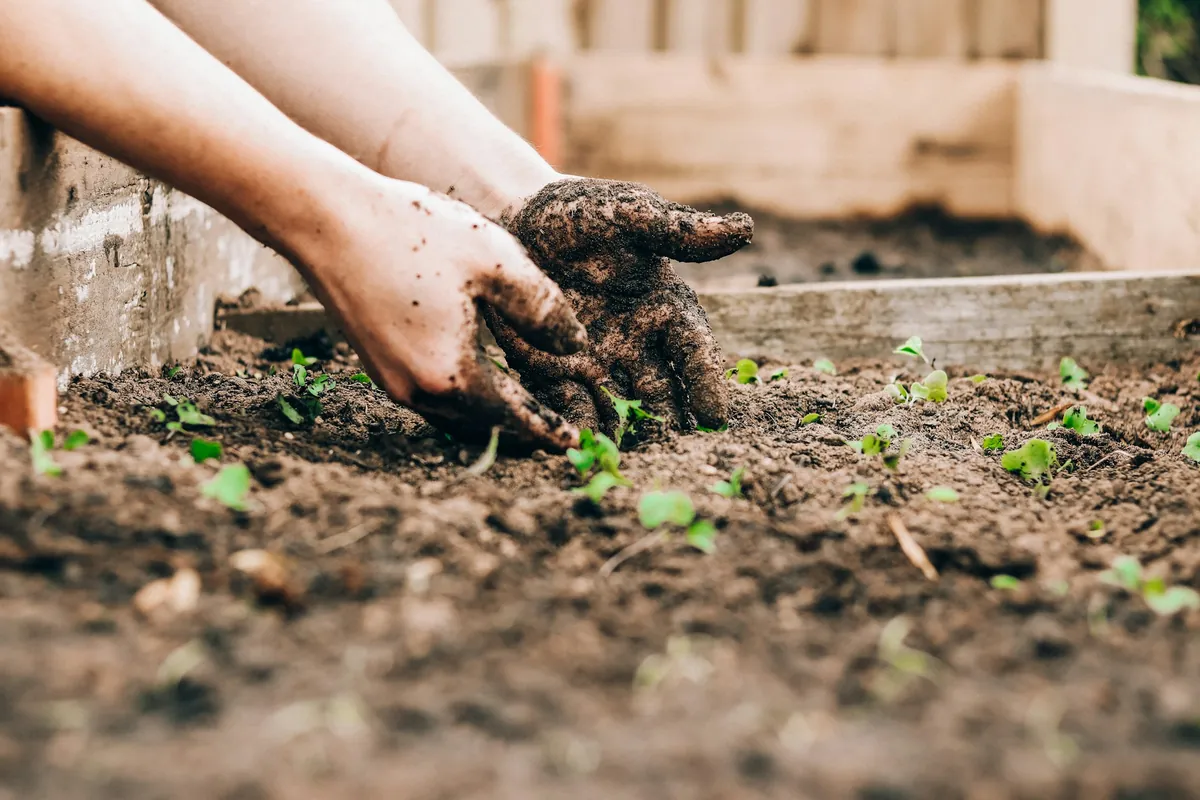
When the steps change
Variants
🪴
A round metal stock-tank bed
The same rule goes by inside height. For volume, use the inside diameter: area = 3.14 × radius × radius. A tank 6 ft across inside is 28.27 square feet, so 12 inches of soil on top is 28.27 cubic feet, or 15 bags of 2 cu ft.
🏙️
Three 2x6 boards high
Three courses of 2x6 stack to 16 1/2 inches, just under Oklahoma State's 17 inch minimum. Fill it with soil: a bed 4 x 8 ft inside takes 44 cubic feet, 22 bags of 2 cu ft.
Source: NIST, PS 20-20 American Softwood Lumber Standard, checked October 10, 2026; Oklahoma State Extension HLA-6478, hugelkultur, checked October 10, 2026.
❄️
A bed on a patio or driveway
Keep at least 12 inches of soil on top, per Maryland Extension's 12 to 24 inch range for fruiting crops on hard surfaces. A 24 inch bed still splits in half. An 18 inch bed gets 6 inches of wood and 12 of soil.
Source: UMD Extension, growing vegetables in raised beds, checked October 10, 2026.
☀️
Planting this week
Oklahoma State prefers a fall build for spring planting, but you can plant right away. Expect the top to drop faster in the first months and keep a few bags on hand for top-ups.
Source: Oklahoma State Extension HLA-6478, hugelkultur, checked October 10, 2026.
What people learn the second year
Tips and tricks
- Start a wood pile now. Stack storm limbs and pruned branches beside the bed through fall. By the time you fill it, you'll have enough for the bottom layer.
- Ask a tree crew. A tree crew working nearby may let you take some rounds. Ask what species they are before you load any. (Oklahoma State Extension HLA-6478, hugelkultur)
- Cut logs to fit flat. Logs that lie flat on the bottom leave fewer gaps than ones wedged in at an angle, and they don't poke up into the soil layer.
- Keep bags back for the gaps. Soil runs down between branches as you fill. Hold two extra bags so you aren't short at the rim.
- Mark the rim. Put a dab of paint inside the frame at the soil line on fill day. Next fall, the drop from that mark is your top-up.
The one we checked the steps against
Primary source
Sustainable Landscapes: Creating A Hügelkultur For Gardening with Stormwater Management Benefits (HLA-6478), Oklahoma State University Extension, published February 1, 2026. Checked October 10, 2026.
Oklahoma State University Extension fact sheet HLA-6478 (February 2026) describes the raised-bed version of a hugelkultur: logs, branches, twigs and leaf litter in about the lower half of a bed at least 17 inches tall, planting soil and compost in the upper half, each layer watered and tamped, built in fall for spring planting and topped up each year as it settles. It says the method cuts the soil you have to buy by a lot.
The arithmetic and the background reading
Tools and guides in this system
- 🪴 CalculatorRaised bed soil calculatorHow much soil fills a raised bed: cubic feet, cubic yards and a bag count for 1.5 or 2 cu ft bags, from the bed's length, width and depth.Open the tool
- 🪚 CalculatorRaised bed lumber calculatorHow many boards to buy for a wooden raised bed, and where to cut them: side lengths, a board-by-board cut plan, corner posts and the soil it will hold.Open the tool
- 🪱 CalculatorCompost and topsoil calculatorHow much compost or topsoil to buy for a garden bed or lawn: cubic feet, cubic yards and bag counts, plus the mix you get when you dig it in.Open the tool
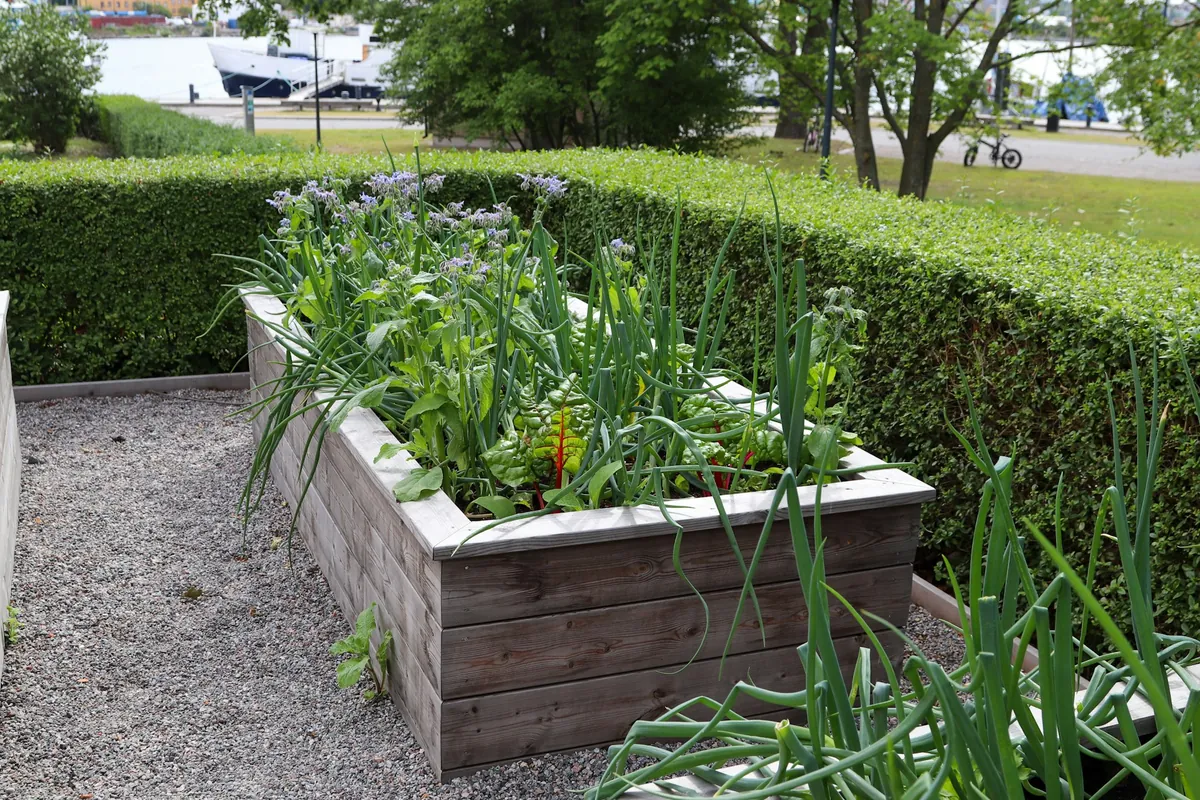 🧰 Problem solverHow to fill a tall raised bed without buying 2 yards of soilA 4 x 8 bed 24 inches tall holds 64 cu ft. Put logs, branches and leaves in the lower half and you buy 32 cu ft of soil instead. What goes in, what stays out.Read the guide
  📘 Know-howSquare feet vs cubic feet: how to turn a garden bed into a bag countSquare feet is the bed's footprint; cubic feet adds the depth. Multiply area by depth in feet, divide by the bag size, round up. Worked for a 4 x 8 bed.Read the guide
Common questions
Questions
What is the cheapest way to fill a tall raised bed?
If it's at least 17 inches tall inside, fill the lower half with logs, branches, twigs and leaves and buy soil only for the upper half. Oklahoma State Extension says this cuts the soil you have to buy by a lot. In a 4 x 8 ft bed 24 inches tall, that's 16 bags of 2 cu ft instead of 32.
Source: Oklahoma State Extension HLA-6478, hugelkultur, checked October 10, 2026; Kellogg Garden raised bed mix product page, checked October 6, 2026.
How deep should the soil be on top of the logs?
Oklahoma State reserves the upper half of the bed for soil and compost, which is 12 inches in a 24 inch bed. UGA Extension says most garden crops need at least 10 inches of soil. On paving, Maryland Extension wants 12 to 24 inches for tomatoes, peppers and squash.
Source: Oklahoma State Extension HLA-6478, hugelkultur, checked October 10, 2026; UGA Extension C 1027-4, raised garden bed dimensions, checked October 10, 2026; UMD Extension, growing vegetables in raised beds, checked October 10, 2026.
Can I put logs in a raised bed on concrete?
Yes, if the bed is tall enough to keep at least 12 inches of soil above the wood. Maryland Extension gives 12 to 24 inches of mix for fruiting crops on hard surfaces. A 24 inch bed splits in half; an 18 inch bed takes only 6 inches of wood.
Source: UMD Extension, growing vegetables in raised beds, checked October 10, 2026.
When should I fill a raised bed with wood?
Oklahoma State says fall is best, for spring planting. The layers have the winter to settle, and fall is also when branches and leaves are easy to find.
Source: Oklahoma State Extension HLA-6478, hugelkultur, checked October 10, 2026.
How much soil does a 4 x 8 raised bed 24 inches tall need?
64 cubic feet filled with soil all the way, which is 32 bags of 2 cu ft or 2.37 cubic yards. With wood in the lower half, 32 cubic feet, 16 bags.
The next job on the shelf
More garden systems
 7 steps🧭 SystemRefresh border mulch: measure each bed, then buy only the gapMeasure the old layer in every bed before you order. One example yard needs 23 bags of 2 cu ft, not 45. The steps, the 3 inch limit and a free mulch record.Open the system
 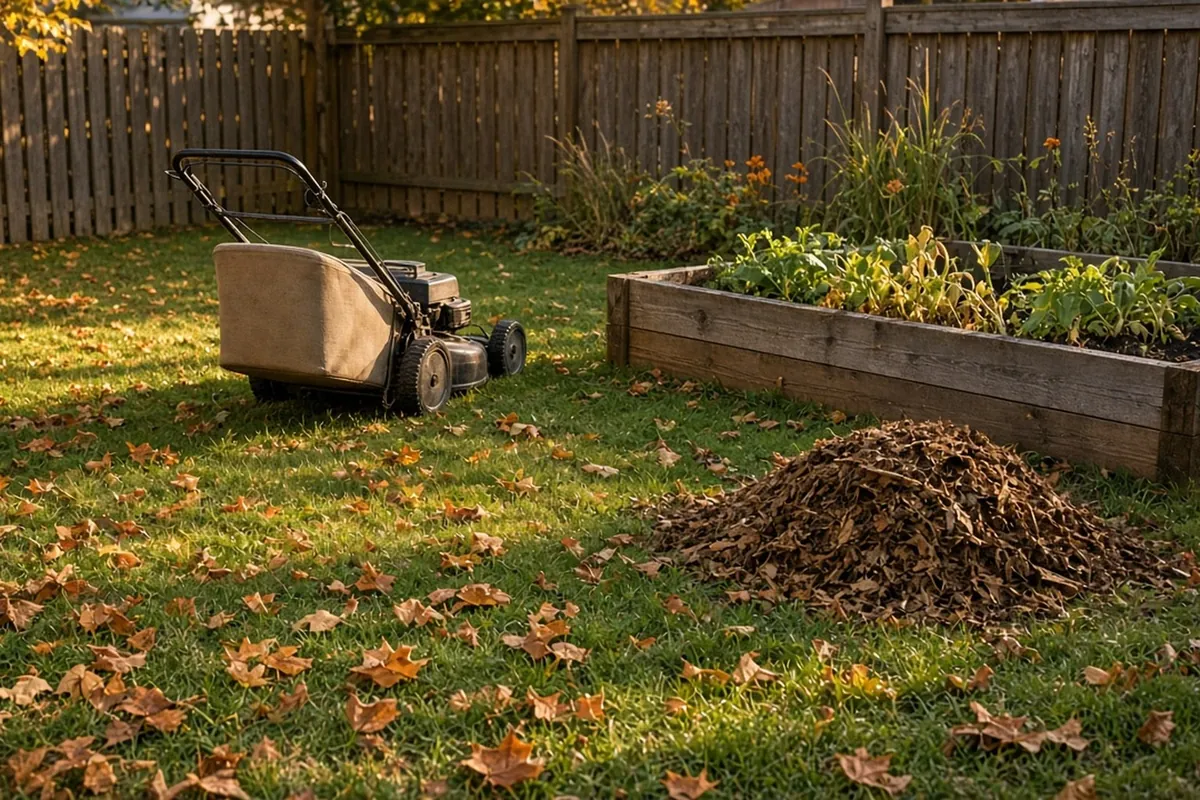 7 steps🧭 SystemTurn fall leaves into bed cover and mulch, and keep a tally of the bagsWhat to do with fall leaves: mow a thin layer into the lawn, shred the rest and spread 2 to 3 inches on beds. Free leaf haul tally to print.Open the system
 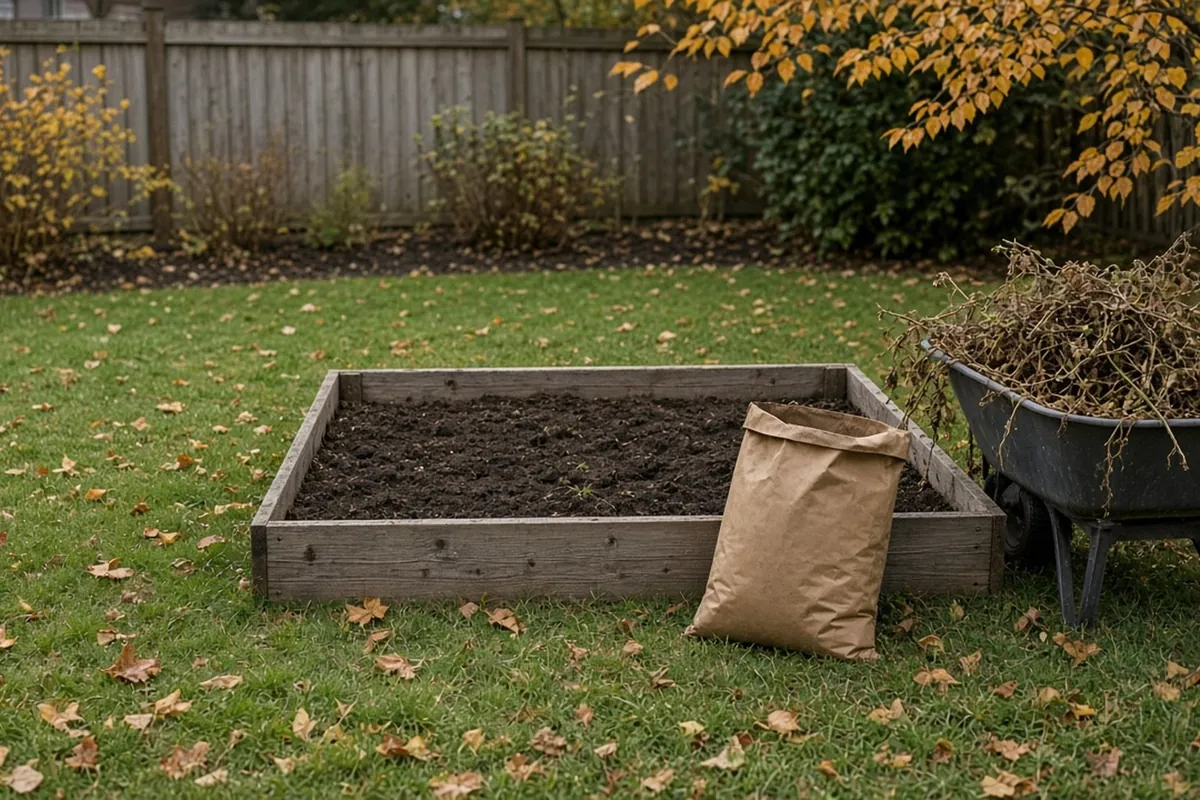 6 steps🧭 SystemFall raised bed reset: clear, top up and cover for winterPut a raised bed to bed in fall: clear finished plants, measure how far the soil sank, top it up with compost and cover it with leaves. Free checklist.Open the system
Sources
- Sustainable Landscapes: Creating A Hügelkultur For Gardening with Stormwater Management Benefits (HLA-6478), Oklahoma State University Extension, published February 1, 2026. Checked October 10, 2026.
- Growing Vegetables in Raised Beds, University of Maryland Extension, published March 26, 2026. Checked October 10, 2026.
- Raised Bed & Potting Mix, Kellogg Garden Products. Checked October 6, 2026.
- Voluntary Product Standard PS 20-20, American Softwood Lumber Standard, National Institute of Standards and Technology (US Department of Commerce), published January 1, 2020. Checked October 10, 2026.
- Raised bed gardening (FS 270), Oregon State University Extension Service, published September 1, 2020. Checked October 10, 2026.
- Raised Garden Bed Dimensions (Circular 1027-4), University of Georgia Cooperative Extension, published December 14, 2022. Checked October 10, 2026.
Planning guide, not a guarantee. See every source on the site on the sources page. Spotted an error? Tell us.