🧭 Garden systemSoil and mulch6 stepsFree working copy
Fall raised bed reset: clear, top up and cover for winter
Quick answer
Once the bed has finished for the year, pull the spent plants, measure how far the soil sits below the frame, and fill that gap with compost or good topsoil. Then cover the bed with about 2 inches of leaves or other organic material for the winter, as Oregon State University Extension advises. A 4 x 8 ft bed that sank 2 inches needs 5.33 cubic feet, or 4 bags of 1.5 cu ft.
Source: OSU Extension FS 270, raised bed gardening, checked October 10, 2026; Illinois Extension, refreshing raised bed soil, checked October 6, 2026; Miracle-Gro raised bed soil product page, checked October 6, 2026.

Decide first
Should you reset the bed this fall?
Do it yourself
Do it this weekend
Do it yourself if the bed has finished for the year and the soil sits below the top of the frame. You need a ruler, a rake, a few bags of compost and a pile of leaves. Most backyard beds take an afternoon.
Skip it
Skip the top-up for now
Leave the top-up until you replant if cool-season crops are still growing, or if you plan to move or rebuild the bed in spring. Still pull whatever has finished and cover the bare patches between plants.
Get help
Get help with the frame
If boards are rotted, split or bowing outward, have a carpenter or landscaper look at the frame before you add more weight. This page covers soil, cover and records only, not frame repairs.
- 2 inof leaves or other organic cover each winterOSU Extension FS 270, raised bed gardening, October 10, 2026
- A few inchesof compost or topsoil a year keeps up with settlingIllinois Extension, refreshing raised bed soil, October 6, 2026
- 5.33 cu fttops up a 4 x 8 ft bed that sank 2 inchesArithmetic
- 4 bagsof 1.5 cu ft for that top-upMiracle-Gro raised bed soil product page, October 6, 2026
One afternoon, start to finish
The steps, in order
Pull what has finished
Pull the annual vegetables and flowers that are done, roots and all, and pull weeds while the soil is soft. Leave perennial herbs where they are. Knock the loose soil off the roots back into the bed.
Have ready: Gloves, a trowel, and a bucket or bag for what comes out.
Let it settle, then measure the gap
Water the bed if it's dry and let it drain. Stand a ruler on the soil and read the distance up to the top of the frame near each end and twice in the middle. Average the four readings: 1.5, 2, 2.5 and 2 inches average out to 2 inches.
Have ready: A ruler or tape, a pencil and the working copy.
Work out the top-up
Inside length × inside width in feet × the gap in inches ÷ 12 gives cubic feet. For a 4 x 8 ft bed with a 2 inch gap: 8 × 4 × 2 ÷ 12 = 5.33 cubic feet. Divide by the cubic feet printed on the bag and round up.
Have ready: The bed's inside measurements and the bag size you plan to buy.
Top up with compost or topsoil
Spread the top-up over the surface and rake it level with the frame. Illinois Extension says a few inches of compost or good topsoil a year should keep up with settling. Oregon State University Extension puts the yearly compost layer at a quarter inch to 1 inch, and says to refill sunken beds as needed.
Have ready: The bags or a bulk load, a rake and a wheelbarrow.
Source: Illinois Extension, refreshing raised bed soil, checked October 6, 2026; OSU Extension EM 9308, using compost, checked October 6, 2026.
Cover the bed for winter
Lay about 2 inches of leaves or other organic material over the whole bed. Oregon State University Extension says this cover is well broken down by spring, so planting goes ahead on schedule. On a 4 x 8 ft bed, 2 inches is another 5.33 cubic feet, this time of leaves.
Have ready: Fallen leaves (shredded if you can), straw, or another loose organic cover.
Source: OSU Extension FS 270, raised bed gardening, checked October 10, 2026.
Write it down
On the working copy, note the date, the gap you measured, what you added and how many bags. Next fall you'll know whether the bed is still sinking or has settled, and how many bags to buy.
Have ready: The working copy and a pen.
Free, one page, black and white
Print the working copy
Fall bed reset kit: the steps above as a checklist with a date box for each, on one US Letter page.
If a step gets skipped
What goes wrong
⚠️
Topping up too soon
Fill a dry, fluffy bed to the brim and the first soaking can pull the level down again. Water first, let it drain, then measure.
⚠️
Leaving the soil bare
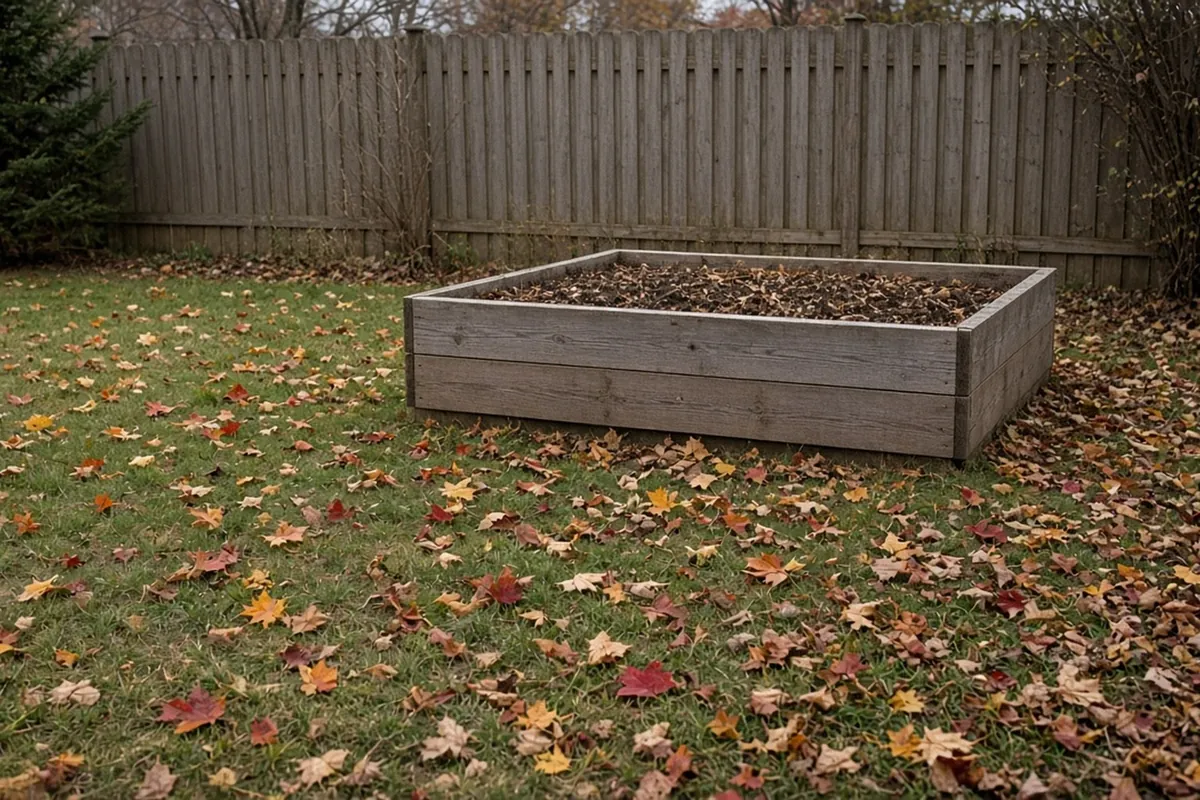
Bare soil sits exposed to rain and wind all winter. Oregon State University Extension's answer is a cover of 2 inches of leaves or other organic material on raised beds each winter.
Source: OSU Extension FS 270, raised bed gardening, checked October 10, 2026.
⚠️
Measuring the outside of the frame
Outside measurements include the boards, so you buy soil the bed can't hold. A 4 x 8 ft bed built from 1.5 inch boards is 3.75 x 7.75 ft inside, about 9% less.
⚠️
Not keeping a note
Without a record, next fall starts from zero. You can't tell whether a 2 inch drop is new settling or the same gap you left last year.
When the steps change
Variants
🪴
Cool-season crops still growing
Clear only the finished plants, top up the empty patches, and tuck the leaf cover around the plants that stay rather than over them. Finish the reset when the last crop comes out.
🏙️
Ground that freezes hard
Do the reset before the soil freezes, because frozen soil can't be raked level. If wind strips the leaves, weigh them down with a few branches or a piece of netting.
❄️
Mild winters you garden through
Where you keep planting through winter, the reset is a top-up before the next crop instead of a winter cover. Add the compost, rake it in, plant, and use the leaves as mulch between plants.
☀️
A bed you filled this year
A bed filled this year usually drops the most, because the compost in the mix keeps breaking down. Oregon State University Extension says to expect newly filled beds to sink and to refill them as needed.
Source: OSU Extension EM 9308, using compost, checked October 6, 2026.
What people learn the second year
Tips and tricks
- Measure at the same spots every year. Mark them with a small notch or a dab of paint on the frame, so each year's readings compare like with like.
- Shred leaves with the mower. Run the mower over a pile of dry leaves a couple of times. Shredded leaves lie flat, stay put in wind and break down faster than whole ones.
- Leave the top-up a little high. Rake the fresh layer slightly above the frame in the middle. It drops a little over winter, and spring starts level.
- Buy only for the gap. Get the bags for the top-up now and leave spring's planting mix for spring. Bags left outside all winter can split and turn soggy.
The one we checked the steps against
Primary source
Raised bed gardening (FS 270), Oregon State University Extension Service, published September 1, 2020. Checked October 10, 2026.
Oregon State University Extension's raised bed fact sheet, FS 270 (revised September 2020, reviewed 2024), gives the winter step this system is built on: cover the beds with 2 inches of leaves or other organic material each winter, and it will be well broken down by spring. It also says organic matter decomposes and disappears, so you add more of it often.
The arithmetic and the background reading
Tools and guides in this system
- 🪴 CalculatorRaised bed soil calculatorHow much soil fills a raised bed: cubic feet, cubic yards and a bag count for 1.5 or 2 cu ft bags, from the bed's length, width and depth.Open the tool
- 🪱 CalculatorCompost and topsoil calculatorHow much compost or topsoil to buy for a garden bed or lawn: cubic feet, cubic yards and bag counts, plus the mix you get when you dig it in.Open the tool
- 🍂 CalculatorMulch calculatorHow much mulch a bed takes in cubic feet, cubic yards and 1.5 or 2 cu ft bags, at the depth you pick, with the 2 to 3 inch band worked out too.Open the tool
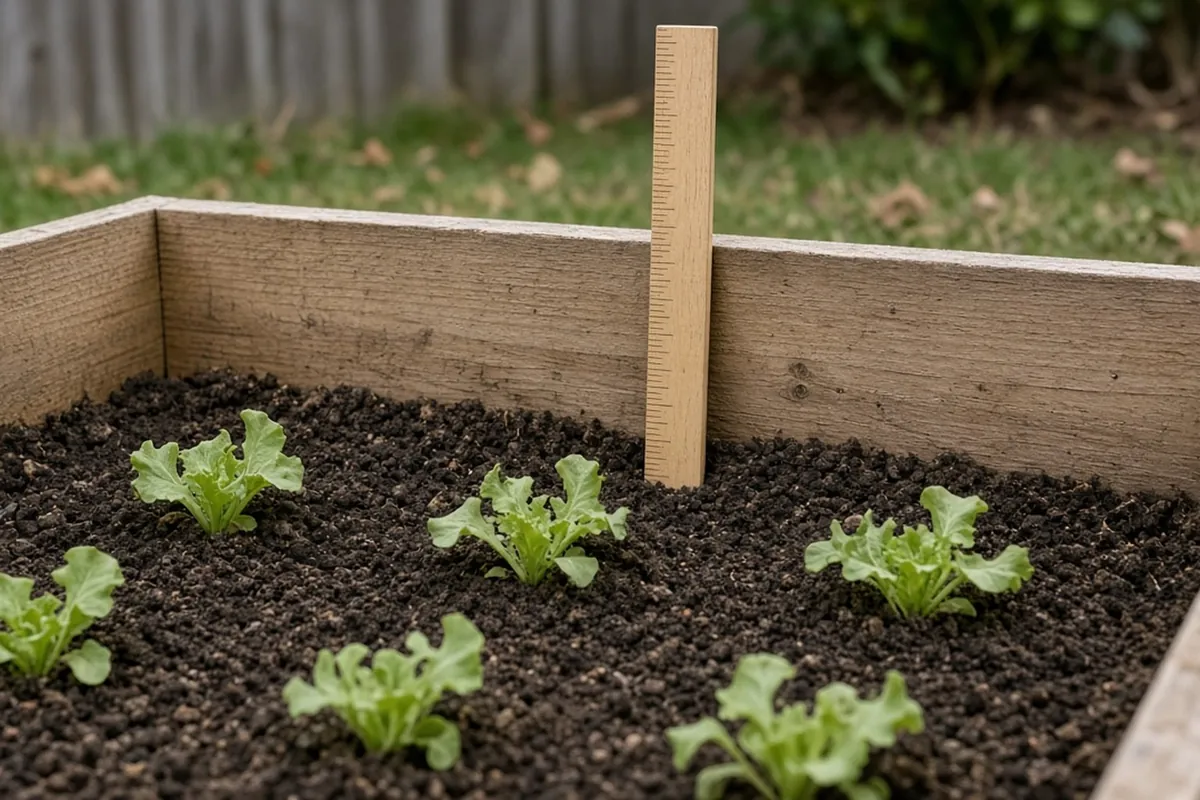 🧰 Problem solverRaised bed soil sank after a month: why, and how much to top upWhy raised bed soil settles after filling, what extension services say to add each year, and how to turn the gap into cubic feet and bags.Read the guide
 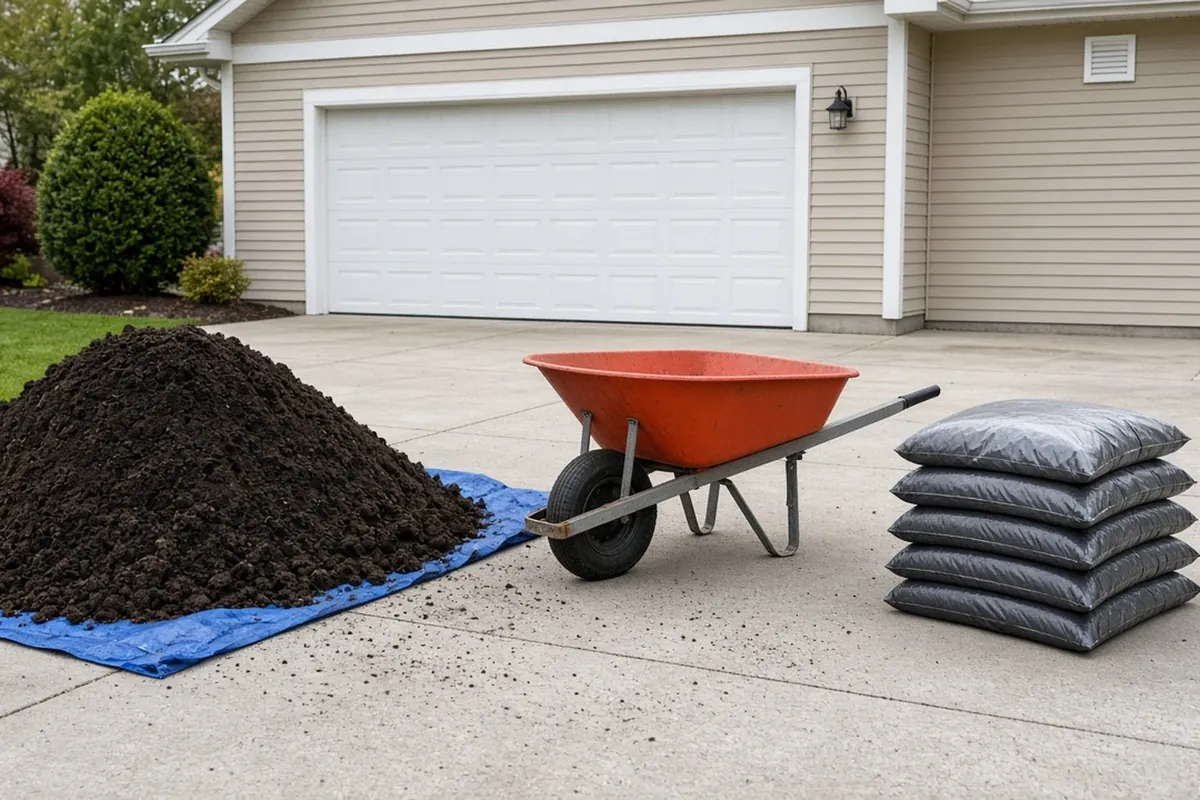 🧰 Problem solverBags or bulk: when a cubic yard delivery is cheaperHow to compare bagged soil, mulch or compost with a bulk cubic yard: price per cubic foot, the delivery fee, and the bag count where bulk wins.Read the guide
Common questions
Questions
Should I add compost to raised beds in fall or spring?
Either works. Fall has two things going for it: the beds are empty, and a winter cover has time to break down. Oregon State University Extension says the 2 inch winter cover of leaves is well decomposed by spring. If you only get to it once, a fall top-up leaves spring for planting.
Source: OSU Extension FS 270, raised bed gardening, checked October 10, 2026.
Do I need to replace the old soil in a raised bed?
No. Illinois Extension describes refreshing a bed by topdressing it with a few inches of compost or good topsoil each year, not by replacing it. Keep the old soil and add on top.
Source: Illinois Extension, refreshing raised bed soil, checked October 6, 2026.
How much soil do I need to top up a raised bed?
Measure the gap between the soil and the top of the frame. Multiply inside length by inside width in feet by the gap in inches, then divide by 12. A 4 x 8 ft bed that sank 2 inches needs 5.33 cubic feet: 4 bags of 1.5 cu ft or 3 bags of 2 cu ft.
Source: Miracle-Gro raised bed soil product page, checked October 6, 2026; Kellogg Garden raised bed mix product page, checked October 6, 2026.
Can I leave fallen leaves on my raised bed over winter?
Yes. That's the winter cover. Oregon State University Extension suggests 2 inches of leaves or other organic material on raised beds each winter. Spread them evenly, then rake aside or dig in whatever is left when you plant in spring.
Source: OSU Extension FS 270, raised bed gardening, checked October 10, 2026.
When should I put a raised bed to bed for winter?
After the last crop comes out and, where the ground freezes, before it does. In many yards that means the weeks after the first hard frost finishes off the summer crops.
The next job on the shelf
More garden systems
 7 steps🧭 SystemRefresh border mulch: measure each bed, then buy only the gapMeasure the old layer in every bed before you order. One example yard needs 23 bags of 2 cu ft, not 45. The steps, the 3 inch limit and a free mulch record.Open the system
 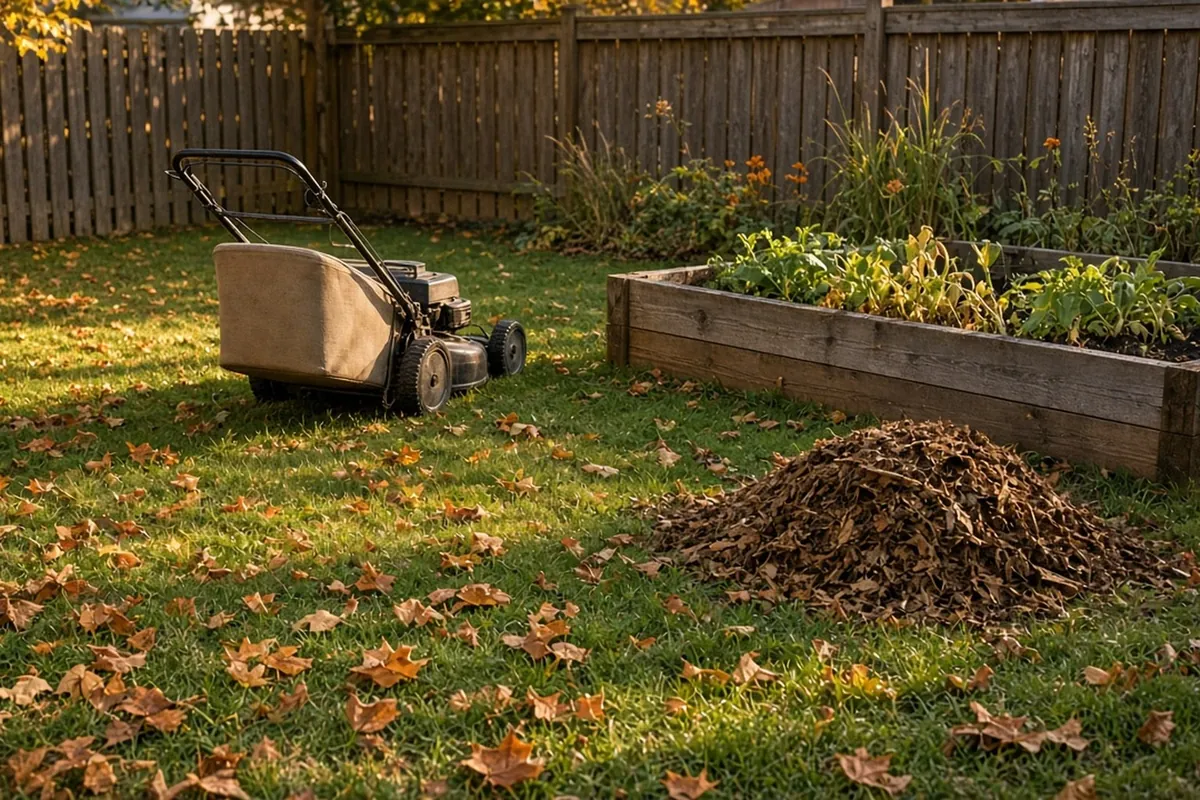 7 steps🧭 SystemTurn fall leaves into bed cover and mulch, and keep a tally of the bagsWhat to do with fall leaves: mow a thin layer into the lawn, shred the rest and spread 2 to 3 inches on beds. Free leaf haul tally to print.Open the system
  7 steps🧭 SystemFill a tall raised bed for less: wood below, soil on topUnder 17 inches, fill with soil. Taller, put logs and leaves in the lower half: a 4 x 8 bed 24 in tall takes 16 bags of soil, not 32. Free layer fill plan.Open the system
Sources
- Raised bed gardening (FS 270), Oregon State University Extension Service, published September 1, 2020. Checked October 10, 2026.
- Refreshing raised bed soil generates exceptional results, University of Illinois Extension, published April 5, 2021. Checked October 6, 2026.
- Miracle-Gro Organic Raised Bed & Garden Soil, ScottsMiracle-Gro. Checked October 6, 2026.
- How to use compost in gardens and landscapes (EM 9308), Oregon State University Extension Service, published February 1, 2021. Checked October 6, 2026.
- Raised Bed & Potting Mix, Kellogg Garden Products. Checked October 6, 2026.
Planning guide, not a guarantee. See every source on the site on the sources page. Spotted an error? Tell us.