🧰 Problem solverSoil and mulch5 min read
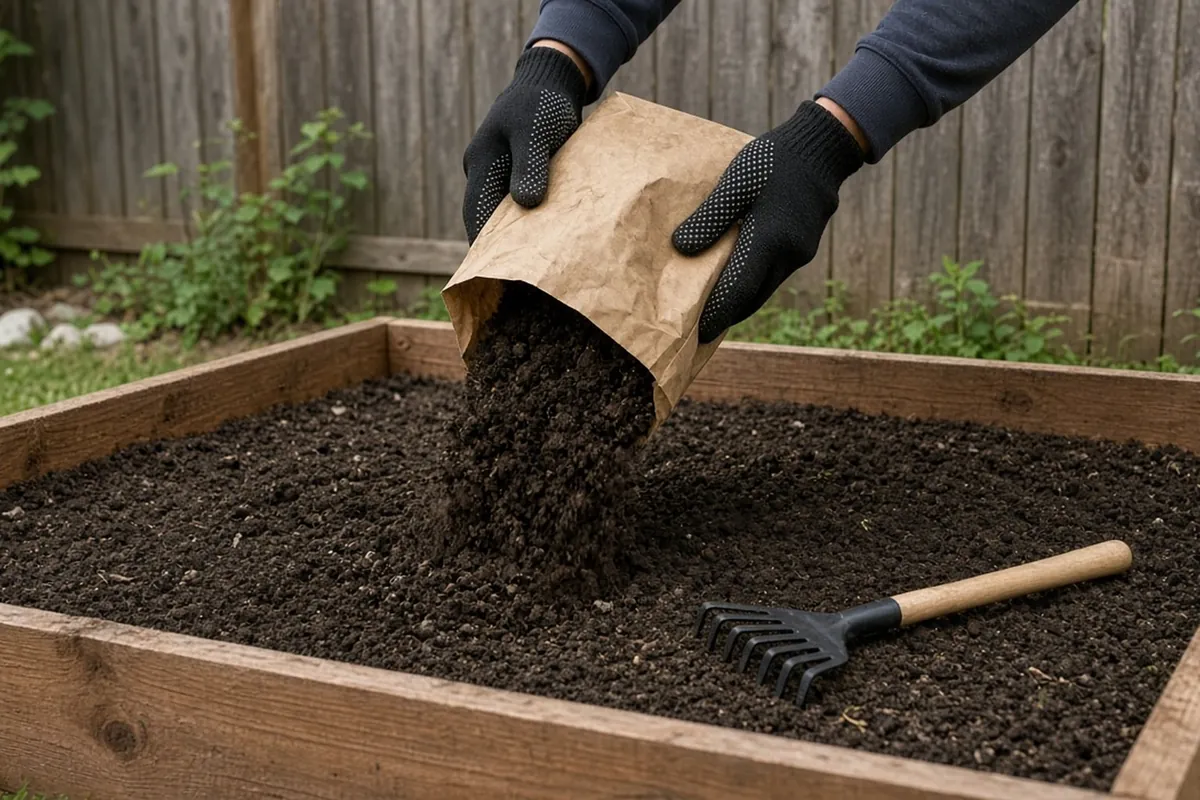
Raised bed soil sank after a month: why, and how much to top up
Quick answer
It's normal. Illinois Extension calls settling "simply a fact of raised bed gardening": new fill has little structure, and the compost in the mix keeps breaking down. To top up, measure the gap between the soil and the top of the frame in a few spots and average it. Cubic feet = length × width in feet × gap in inches ÷ 12. A 4 x 8 ft bed that dropped 2 inches needs 5.33 cubic feet, which is 4 bags of 1.5 cu ft or 3 bags of 2 cu ft.
Source: Illinois Extension, refreshing raised bed soil, checked October 6, 2026; OSU Extension EM 9308, using compost, checked October 6, 2026; Miracle-Gro raised bed soil product page, checked October 6, 2026; Kellogg Garden raised bed mix product page, checked October 6, 2026.

Nothing went wrong
Why the soil sinks
Illinois Extension says it plainly: "Settling soil is simply a fact of raised bed gardening." A freshly filled bed has very little soil structure. Every time you dig, plant or pull a weed, you knock it about a bit more, and the mix packs down.
Source: Illinois Extension, refreshing raised bed soil, checked October 6, 2026.
The second reason is the compost. Most bed mixes are heavy on it, and Oregon State University Extension warns that newly filled beds sink as the compost in the mix keeps decomposing. Its raised bed fact sheet adds that organic matter decomposes and disappears, so you need to add more of it often.
Source: OSU Extension EM 9308, using compost, checked October 6, 2026; OSU Extension FS 270, raised bed gardening, checked October 10, 2026.
Water does the rest. Bagged mix comes out of the bag loose and full of air. The first few soakings close those air pockets and wash fine bits into the gaps, so the level can drop quickly at first.
- A few inchesof compost or good topsoil each year keeps up with settlingIllinois Extension, refreshing raised bed soil, October 6, 2026
- 1/4 to 1 inof compost a year on an existing bed surfaceOSU Extension EM 9308, using compost, October 6, 2026
- About 8 inof soil-and-organic mix roots most vegetables wellOSU Extension FS 270, raised bed gardening, October 10, 2026
- 5.33 cu ftraises a 4 x 8 ft bed by 2 inchesArithmetic
Ten minutes and a ruler
How to top it up, step by step
Let it settle first
Water the bed well a few times and wait a week or two before you measure. Top up too early and you'll be doing it again next month.
Measure the gap in four spots
Stand a ruler on the soil and read the distance up to the top of the frame. Do it near each end and twice in the middle, then average. Readings of 1.5, 2, 2.5 and 2 inches average out to 2 inches.
Work out the cubic feet
Inside length × inside width in feet × the gap in inches ÷ 12. For a 4 x 8 ft bed and a 2 inch gap: 8 × 4 × 2 ÷ 12 = 5.33 cubic feet.
Turn it into bags
Divide by the cubic feet printed on the bag and round up. Miracle-Gro's raised bed soil comes in 1.5 cu ft bags and Kellogg's mix in 2 cu ft bags, so 5.33 cubic feet is 4 of the first or 3 of the second.
Source: Miracle-Gro raised bed soil product page, checked October 6, 2026; Kellogg Garden raised bed mix product page, checked October 6, 2026.
Pick what goes on top
Illinois Extension suggests compost or high-quality topsoil. Oregon State suggests a quarter inch to 1 inch of compost a year on an existing bed. If your gap is deeper than that, fill the rest with the same mix you used to fill the bed.
Source: Illinois Extension, refreshing raised bed soil, checked October 6, 2026; OSU Extension EM 9308, using compost, checked October 6, 2026.
Write it down
Note the date, the gap and the bags on the raised bed soil record. Next year you'll know roughly what to buy before you measure.
Common bed sizes
Top-up volumes at a glance
| Bed (inside) | 1 inch gap | 2 inch gap | 3 inch gap |
|---|---|---|---|
| 3 x 6 ft | 1.5 cu ft | 3 cu ft | 4.5 cu ft |
| 4 x 4 ft | 1.33 cu ft | 2.67 cu ft | 4 cu ft |
| 4 x 8 ft | 2.67 cu ft | 5.33 cu ft | 8 cu ft |
| 4 x 12 ft | 4 cu ft | 8 cu ft | 12 cu ft |
Length × width × gap ÷ 12. Divide by the cubic feet on your bag and round up.
Plan for it
What to expect next year
Plan on topping up again next year, because the organic matter keeps breaking down. The two extension figures differ: Illinois says a few inches, Oregon State a quarter inch to 1 inch of compost. Your own record is the better guide, so measure each spring and write the gap down.
Source: Illinois Extension, refreshing raised bed soil, checked October 6, 2026; OSU Extension EM 9308, using compost, checked October 6, 2026.
A bed that has dropped a little still works. Oregon State's fact sheet says a soil-and-organic mix about 8 inches deep is enough for most vegetable roots, so a 12 inch bed that now sits at 10 inches of soil has room to spare. The top-up keeps the level where you want it.
Source: OSU Extension FS 270, raised bed gardening, checked October 10, 2026.
Print it, tick it off
Top-up checklist
Take this to the bed, then to the store.
- Watered the bed a few times and waited a week or two
- Measured the gap near each end and twice in the middle
- Averaged the four readings
- Worked out length × width × gap ÷ 12 for each bed
- Checked the cubic feet printed on the bag before buying
- Rounded up to whole bags on the total, not bed by bed
- Wrote the date, gap and bags on the soil record
What people learn the second year
Tips and tricks
- Measure the gap in several spots. Corners and the middle often settle by different amounts. Average them, or the top-up comes out short in the low spots.
- Top up before you plant. New mix is easier to rake level across a bare bed than around young plants.
- Loosen the surface first. Scratch up the old top with a rake so the new layer mixes in and does not sit as a separate crust.
- Match what is already in the bed. Topping up with the same kind of mix or compost you filled with keeps the bed even.
- Log the gap each spring. Write the measured drop on your garden record. Comparing years shows you how much to plan for next time.
Common questions
Questions
Is it normal for raised bed soil to sink?
Yes. Illinois Extension calls settling a fact of raised bed gardening, and Oregon State Extension says newly filled beds sink as the compost in the mix decomposes.
Source: Illinois Extension, refreshing raised bed soil, checked October 6, 2026; OSU Extension EM 9308, using compost, checked October 6, 2026.
How much soil should I add to a raised bed every year?
Illinois Extension says a few inches of compost or good topsoil each year should keep up with settling. Oregon State suggests a quarter inch to 1 inch of compost on the bed surface each year. Measure your gap and fill that.
Source: Illinois Extension, refreshing raised bed soil, checked October 6, 2026; OSU Extension EM 9308, using compost, checked October 6, 2026.
How many bags does it take to top up a 4 x 8 raised bed?
For a 2 inch gap, 8 × 4 × 2 ÷ 12 = 5.33 cubic feet. That's 4 bags of 1.5 cu ft or 3 bags of 2 cu ft. For a 1 inch gap, halve it: 2.67 cubic feet, or 2 bags of either size.
Source: Miracle-Gro raised bed soil product page, checked October 6, 2026; Kellogg Garden raised bed mix product page, checked October 6, 2026.
Should I overfill a new raised bed to allow for settling?
The makers don't agree. Miracle-Gro's fill guide uses 3 cubic feet of soil for a space that measures 2 cubic feet, while Kellogg's works out to the plain volume with nothing extra. A small mound that settles level is fine; topping up later works just as well.
Source: Miracle-Gro raised bed soil product page, checked October 6, 2026; Kellogg Garden raised bed mix product page, checked October 6, 2026.
The arithmetic, done for you
Tools for this job
- 🪴 CalculatorRaised bed soil calculatorHow much soil fills a raised bed: cubic feet, cubic yards and a bag count for 1.5 or 2 cu ft bags, from the bed's length, width and depth.Open the tool
- 🪱 CalculatorCompost and topsoil calculatorHow much compost or topsoil to buy for a garden bed or lawn: cubic feet, cubic yards and bag counts, plus the mix you get when you dig it in.Open the tool
Keep reading
More guides
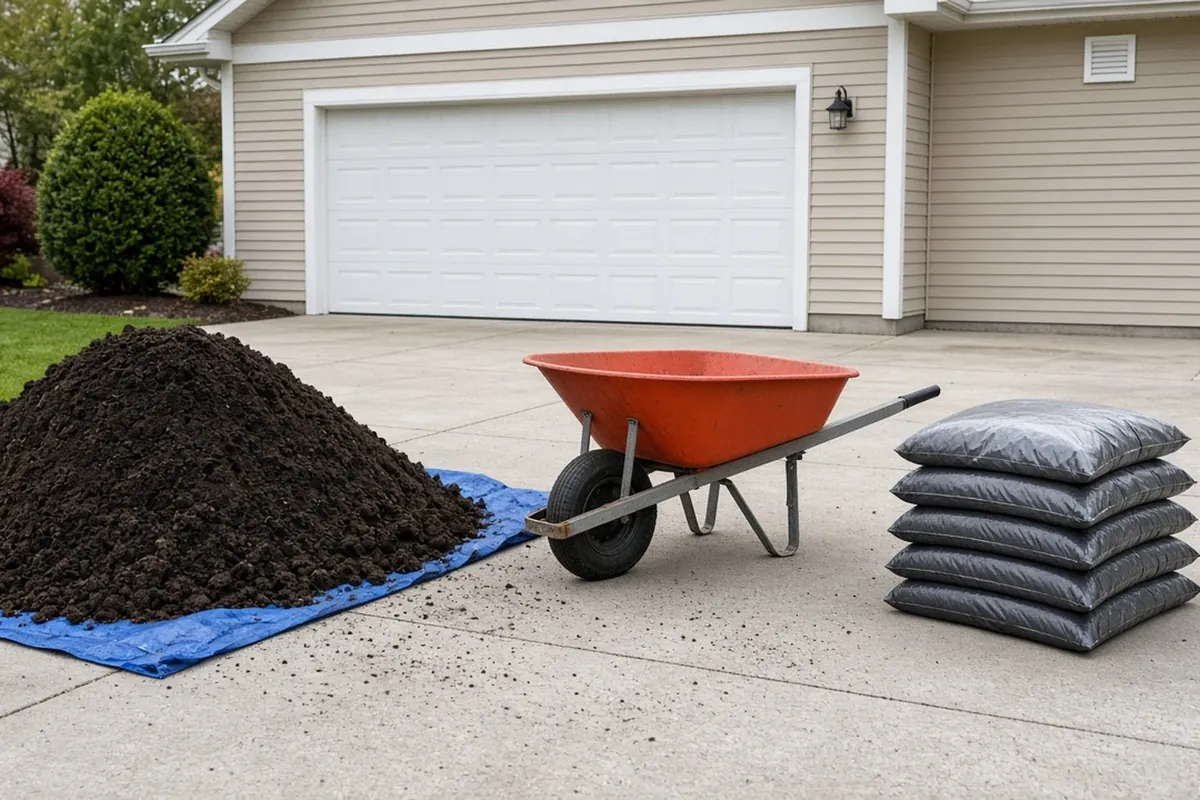 🧰 Problem solverBags or bulk: when a cubic yard delivery is cheaperHow to compare bagged soil, mulch or compost with a bulk cubic yard: price per cubic foot, the delivery fee, and the bag count where bulk wins.Read the guide
  ✅ ChecklistFall compost bin reset: empty the finished compost, then rebuild with leavesPull out the finished compost, spread it on your beds, then rebuild the bin 3 ft each way with fall leaves and greens, damp as a wrung-out sponge.Read the guide
 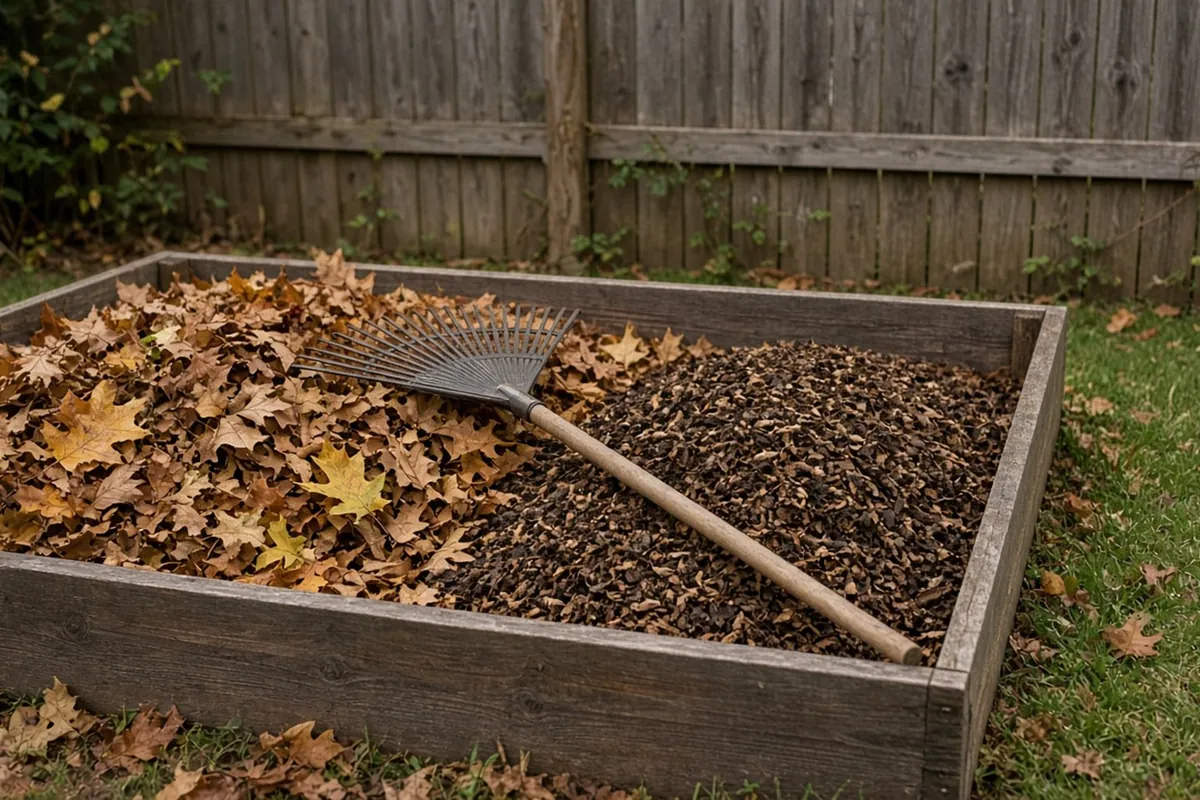 🧰 Problem solverWhat to do with fall leaves in the garden: shred them into mulchShred the leaves, then spread 2 to 3 inches on beds and 3 to 4 around shrubs. How to shred without a shredder, and how many bags a bed takes.Read the guide
 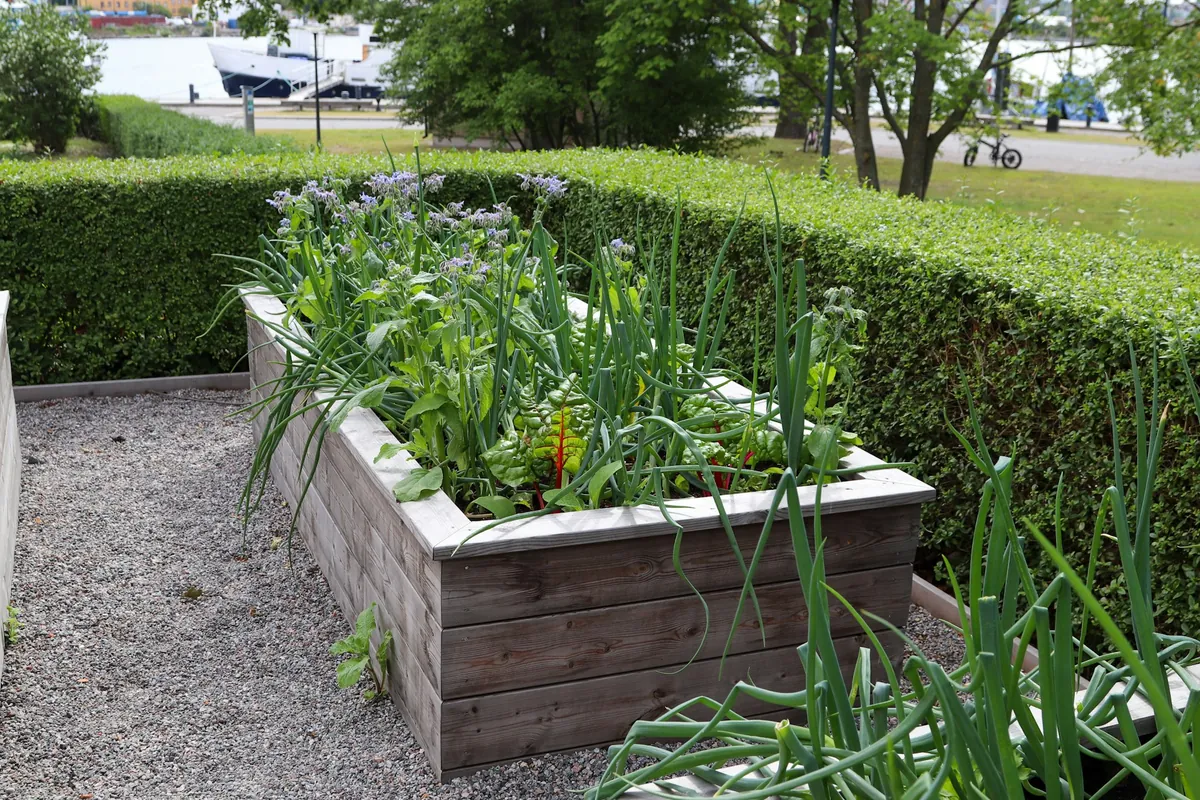 🧰 Problem solverHow to fill a tall raised bed without buying 2 yards of soilA 4 x 8 bed 24 inches tall holds 64 cu ft. Put logs, branches and leaves in the lower half and you buy 32 cu ft of soil instead. What goes in, what stays out.Read the guide
Sources
- Refreshing raised bed soil generates exceptional results, University of Illinois Extension, published April 5, 2021. Checked October 6, 2026.
- How to use compost in gardens and landscapes (EM 9308), Oregon State University Extension Service, published February 1, 2021. Checked October 6, 2026.
- Miracle-Gro Organic Raised Bed & Garden Soil, ScottsMiracle-Gro. Checked October 6, 2026.
- Raised Bed & Potting Mix, Kellogg Garden Products. Checked October 6, 2026.
- Raised bed gardening (FS 270), Oregon State University Extension Service, published September 1, 2020. Checked October 10, 2026.
Planning guide, not a guarantee. See every source on the site on the sources page. Spotted an error? Tell us.