🧰 Problem solverSoil and mulch4 min read
Bags or bulk: when a cubic yard delivery is cheaper
Quick answer
One cubic yard is 27 cubic feet, so it equals 18 bags of 1.5 cu ft or 13.5 bags of 2 cu ft. Compare the price per cubic foot both ways: bag price ÷ the bag's cubic feet, and (bulk price + delivery fee) ÷ (yards × 27). The delivery fee is often flat, so bags win on small jobs and bulk wins once the bag count passes the break-even point for your local prices.
Source: MSU Extension P2301, mulches, checked October 9, 2026; OSU Extension EM 9308, using compost, checked October 6, 2026.

The size of the job decides
Why there's no single answer
Mississippi State University Extension advises comparing the cost of bulk mulch, sold by the cubic yard, with the cost of smaller units before you buy. The same goes for soil and compost.
Source: MSU Extension P2301, mulches, checked October 9, 2026.
The two are priced differently. Every bag costs the same, so ten bags cost ten times one. Bulk is priced per yard plus delivery, and Oregon State University Extension notes that the delivery charge is often a flat fee, not tied to how much you order. That fee makes a small bulk order expensive per cubic foot and a large one cheap.
Source: OSU Extension EM 9308, using compost, checked October 6, 2026.
- 27 cu ftin one cubic yardMSU Extension P2301, mulches, October 9, 2026
- 18 bagsof 1.5 cu ft make a cubic yardArithmetic
- 324 sq ftcovered by a cubic yard of compost 1 inch deepNC State Extension, compost coverage, October 6, 2026
- 108 sq ftcovered by that same yard at 3 inchesNC State Extension, compost coverage, October 6, 2026
Five minutes with a phone
How to compare, step by step
Work out how much you need
Get the cubic feet from the calculator for your job: soil, mulch, compost or gravel. The bag count and the cubic yards appear side by side.
Price a bag per cubic foot
Divide the shelf price by the cubic feet printed on the bag. With a made-up $10 for a 1.5 cu ft bag, that's $6.67 per cubic foot.
Price bulk per cubic foot, delivery in
Ask the landscape yard for the price per yard and the delivery fee. Add them, then divide by the yards × 27. With made-up figures of $40 a yard and $60 delivery, one yard costs $100, or $3.70 per cubic foot.
Ask about part yards and minimums
Some yards sell half yards and some have a minimum order. If you need 1.2 yards and they only sell whole yards, price 2 yards, or 1 yard plus a few bags.
Add the costs that aren't on the receipt
Bags mean store trips and carrying, but they keep. Bulk needs a spot for the pile, a tarp and a wheelbarrow, and someone to move it. Write both totals on the soil record before you order.
Read the bag
How many bags make a cubic yard
| Bag size | Bags per cubic yard | Seen on |
|---|---|---|
| 0.75 cu ft | 36 | Scotts topsoil |
| 1.25 cu ft | 21.6 (buy 22) | Mississippi State mulch example |
| 1.5 cu ft | 18 | Miracle-Gro raised bed soil |
| 2 cu ft | 13.5 (buy 14) | Kellogg raised bed mix |
27 ÷ the bag's cubic feet. Bag sizes are cited from the makers' pages and an extension example, not product picks.
Source: Scotts Premium Topsoil product page, checked October 6, 2026; MSU Extension P2301, mulches, checked October 9, 2026; Miracle-Gro raised bed soil product page, checked October 6, 2026; Kellogg Garden raised bed mix product page, checked October 6, 2026.
Spread it out
What one yard covers
NC State Extension gives the coverage for compost: one cubic yard covers about 324 square feet at 1 inch, 216 at 2 inches and 108 at 3 inches. Mulch and soil work the same way, since it's only arithmetic: 27 × 12 ÷ the depth in inches gives the square feet one yard covers.
Source: NC State Extension, compost coverage, checked October 6, 2026.
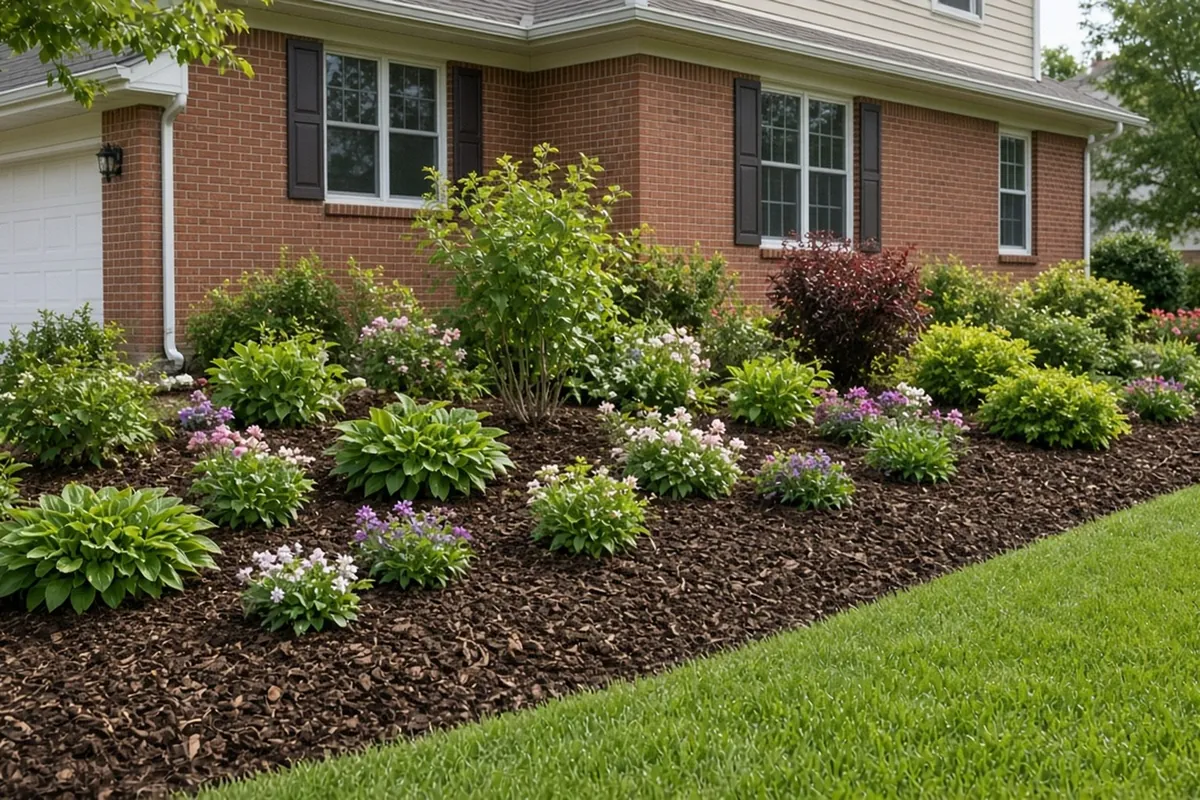
A 10 x 20 ft border mulched 3 inches deep takes 50 cubic feet. That's 1.85 cubic yards or 25 bags of 2 cu ft, well past the break-even in the example prices above. A single 4 x 4 ft bed topped with 1 inch of compost takes 1.33 cubic feet, which is one bag.
Print it, tick it off
Bags or bulk checklist
Fill in the numbers before you call the yard.
- Cubic feet needed (from the calculator)
- Bag size in cubic feet, read off the bag
- Bag price ÷ cubic feet = price per cubic foot
- Bulk price per yard and the delivery fee
- Whether part yards are sold, and any minimum order
- (Bulk total + delivery) ÷ (yards × 27) = price per cubic foot
- Where the pile goes, and who moves it
- What's in the bulk mix compared with the bag
What people learn the second year
Tips and tricks
- Ask about the minimum and the fee first. Some yards have a minimum order or charge a flat delivery fee. Get both numbers before you compare prices.
- Pick the dump spot before the truck comes. Put a tarp down on the driveway where the pile will land. Cleanup is faster and the pile stays out of the lawn.
- Count the wheelbarrow trips. Bulk can cost less, but every load has to be moved by hand. Check the route from the pile to the beds for steps and gates.
- Cover the pile if rain is coming. A wet pile is heavier to shovel and harder to spread. A second tarp over the top helps.
Common questions
Questions
How many bags of soil make a cubic yard?
A cubic yard is 27 cubic feet. That's 18 bags of 1.5 cu ft, 13.5 bags of 2 cu ft or 36 bags of 0.75 cu ft.
Source: MSU Extension P2301, mulches, checked October 9, 2026.
Is bulk mulch cheaper than bags?
Per cubic foot it often is once the order is big enough, because the delivery fee is spread over more material. On a small job the fee can make bulk dearer. Mississippi State Extension says to compare the cost before buying in bulk.
Source: MSU Extension P2301, mulches, checked October 9, 2026; OSU Extension EM 9308, using compost, checked October 6, 2026.
How much area does a cubic yard cover?
NC State Extension gives about 324 square feet at 1 inch, 216 at 2 inches and 108 at 3 inches for compost. The same arithmetic applies to mulch and soil.
Source: NC State Extension, compost coverage, checked October 6, 2026.
What if I need 1.2 yards?
Ask whether the yard sells part yards. If not, compare 2 yards of bulk with 1 yard plus bags for the last 0.2 yards, which is 5.4 cubic feet, or 4 bags of 1.5 cu ft.
The arithmetic, done for you
Tools for this job
- 🪴 CalculatorRaised bed soil calculatorHow much soil fills a raised bed: cubic feet, cubic yards and a bag count for 1.5 or 2 cu ft bags, from the bed's length, width and depth.Open the tool
- 🍂 CalculatorMulch calculatorHow much mulch a bed takes in cubic feet, cubic yards and 1.5 or 2 cu ft bags, at the depth you pick, with the 2 to 3 inch band worked out too.Open the tool
- 🪱 CalculatorCompost and topsoil calculatorHow much compost or topsoil to buy for a garden bed or lawn: cubic feet, cubic yards and bag counts, plus the mix you get when you dig it in.Open the tool
- 🪨 CalculatorGravel and paver base calculatorHow much gravel and sand to buy for a paver patio, walkway or gravel path: cubic feet, cubic yards, bag counts and how deep to dig.Open the tool
Keep reading
More guides
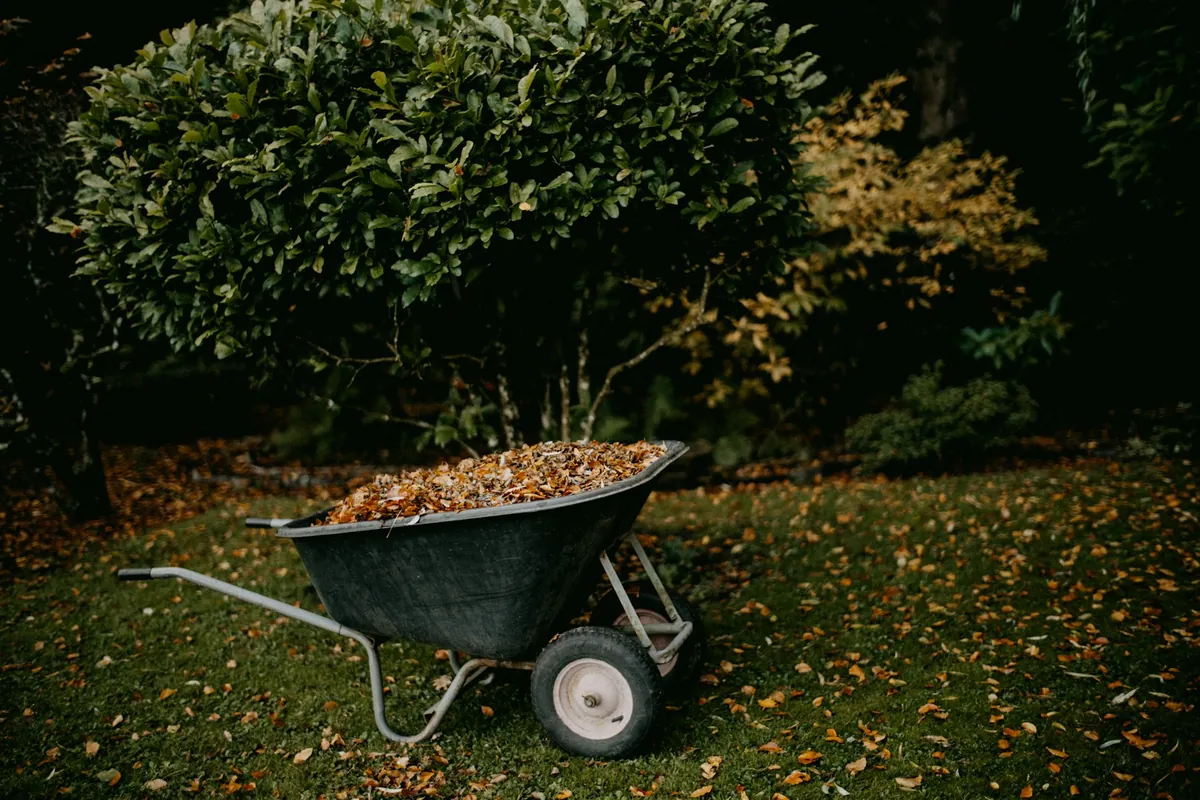 ✅ ChecklistFall compost bin reset: empty the finished compost, then rebuild with leavesPull out the finished compost, spread it on your beds, then rebuild the bin 3 ft each way with fall leaves and greens, damp as a wrung-out sponge.Read the guide
 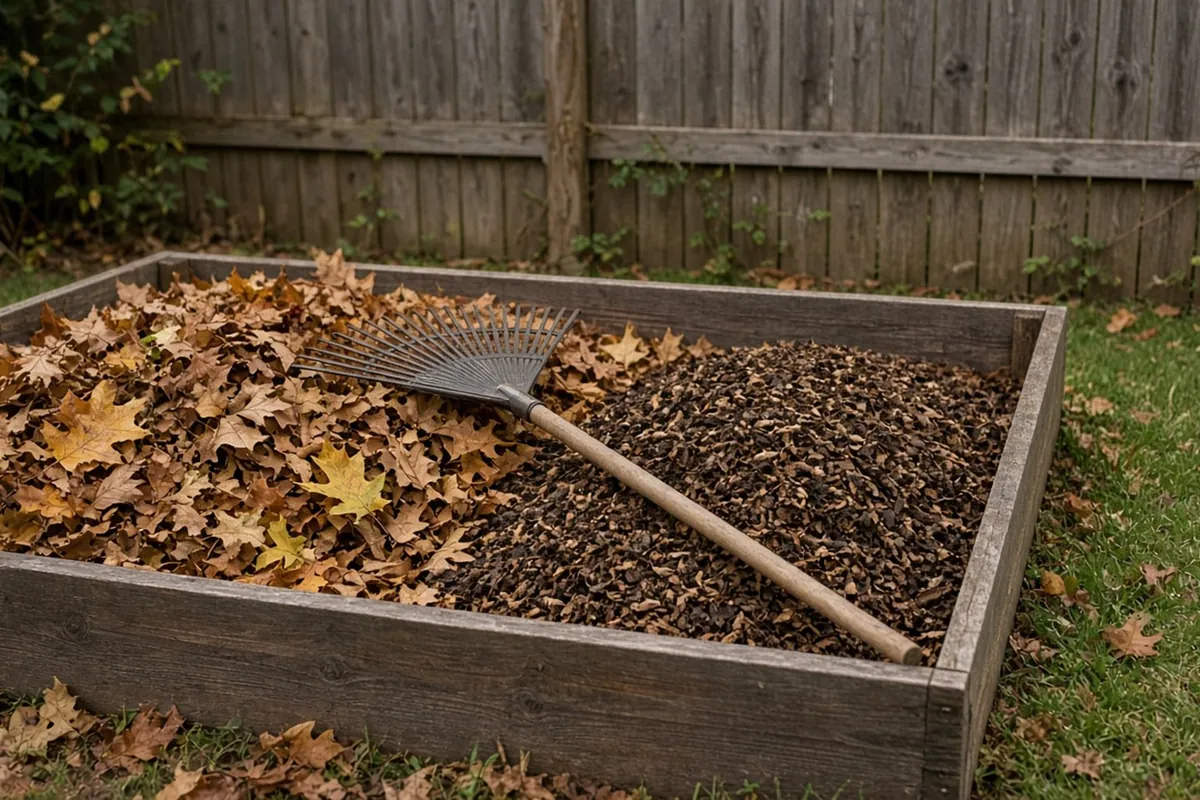 🧰 Problem solverWhat to do with fall leaves in the garden: shred them into mulchShred the leaves, then spread 2 to 3 inches on beds and 3 to 4 around shrubs. How to shred without a shredder, and how many bags a bed takes.Read the guide
 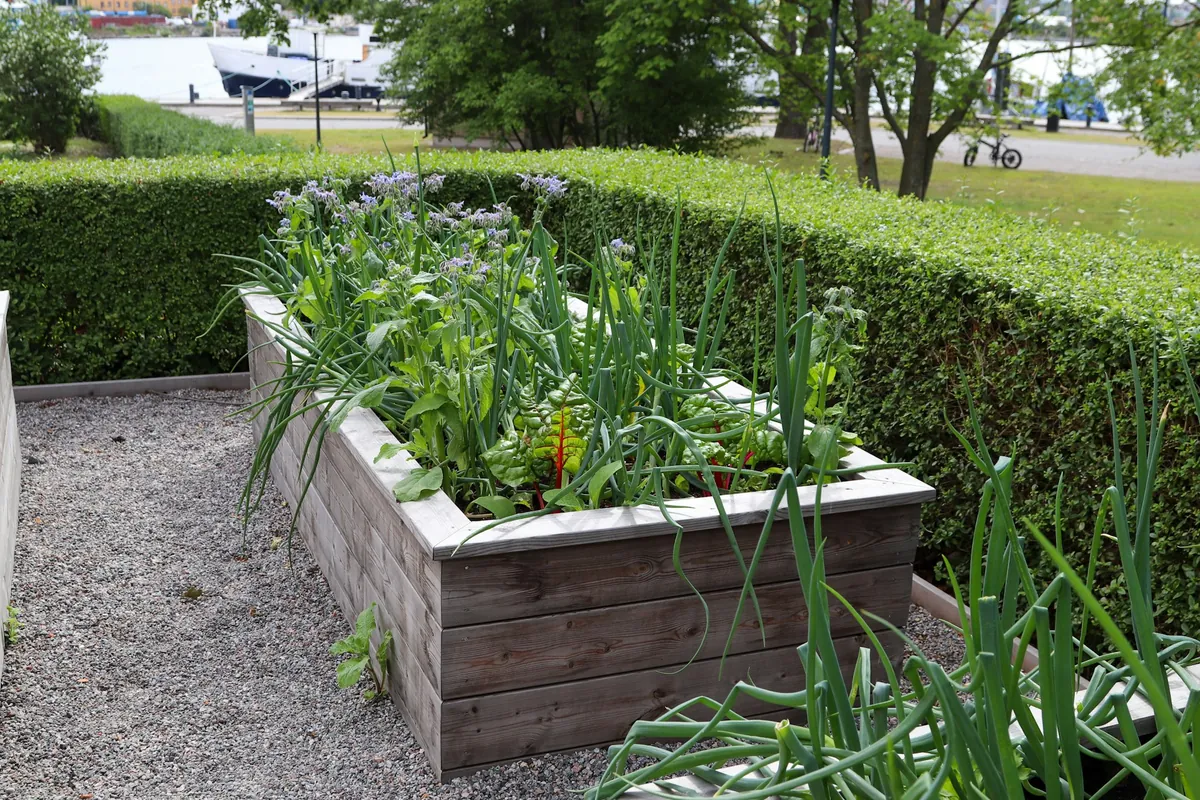 🧰 Problem solverHow to fill a tall raised bed without buying 2 yards of soilA 4 x 8 bed 24 inches tall holds 64 cu ft. Put logs, branches and leaves in the lower half and you buy 32 cu ft of soil instead. What goes in, what stays out.Read the guide
Sources
- Mulches for the Landscape (P2301), Mississippi State University Extension. Checked October 9, 2026.
- How to use compost in gardens and landscapes (EM 9308), Oregon State University Extension Service, published February 1, 2021. Checked October 6, 2026.
- Organic Lawn Care, appendices: composting and spreaders, NC State Extension, published February 2, 2026. Checked October 6, 2026.
- Scotts Premium Topsoil Lawn & Garden Soil Conditioner, ScottsMiracle-Gro. Checked October 6, 2026.
- Miracle-Gro Organic Raised Bed & Garden Soil, ScottsMiracle-Gro. Checked October 6, 2026.
- Raised Bed & Potting Mix, Kellogg Garden Products. Checked October 6, 2026.
Planning guide, not a guarantee. See every source on the site on the sources page. Spotted an error? Tell us.