🧭 Garden systemBeds7 stepsFree working copy
Your first raised bed: size it, build it, fill it, plant it
Quick answer
Make it 4 ft wide at most so you can reach the middle, and as long as you like. Two 2x6 boards stacked give 11 inches, more than the 10 inches of soil UGA Extension says most crops need. A 4 x 8 ft bed (outside) at that height takes 6 boards of 8 ft and one 8 ft 4x4 for the posts. It holds 26.64 cubic feet of soil: 14 bags of 2 cu ft, or about 1 cubic yard.
Source: OSU Extension FS 270, raised bed gardening, checked October 10, 2026; UGA Extension C 1027-4, raised garden bed dimensions, checked October 10, 2026; NIST, PS 20-20 American Softwood Lumber Standard, checked October 10, 2026; Kellogg Garden raised bed mix product page, checked October 6, 2026.

Decide first
Is a framed raised bed right for your first one?
Do it yourself
Build it yourself
Build it yourself if you have a level, sunny patch of ground, a drill and a way to cut boards (most lumber yards will make the cuts for you). A 4 x 8 ft bed two boards high is a one-day job, and the filling is most of the work.
Skip it
Skip the frame for now
If you rent, or you aren't sure the spot gets enough sun, start without lumber. Utah State University Extension describes beds with no frame, mounded 8 to 12 inches above the soil around them. Grow one season there, then build where it worked.
Source: USU Extension, raised bed gardening, checked October 10, 2026.
Get help
Get help with the structure
Ask a carpenter or landscaper for a bed on a slope, on a deck or roof, or one taller than about 18 inches. Oregon State University Extension says tall or long beds need reinforcing so the soil doesn't push the sides out. This page covers sizes, counts and soil, not structural work.
Source: OSU Extension FS 270, raised bed gardening, checked October 10, 2026.
- 4 ftwidest bed most adults can reach acrossOSU Extension FS 270, raised bed gardening, October 10, 2026
- 10 inof soil most garden crops needUGA Extension C 1027-4, raised garden bed dimensions, October 10, 2026
- 6 + 18 ft 2x6 boards plus one 4x4 for a 4 x 8 bedArithmetic
- 26.64 cu ftof soil fills it: 14 bags of 2 cu ftKellogg Garden raised bed mix product page, October 6, 2026
Plan on paper, then two shopping trips
The steps, in order
Pick the spot and the size
Pick the sunniest level spot you have, close to a hose. Keep the bed 4 ft wide or less so you can reach the middle from each side; UGA Extension suggests 3 ft for children. Lumber comes in 8, 10 and 12 ft lengths, so a length in multiples of 2 or 3 ft wastes the least wood. Leave paths 18 to 24 inches wide if you can, 12 at the least.
Have ready: A tape measure, four stakes or bricks to mark the corners, and the working copy.
Source: OSU Extension FS 270, raised bed gardening, checked October 10, 2026; UGA Extension C 1027-4, raised garden bed dimensions, checked October 10, 2026.
Pick the height
On open ground, two 2x6 boards stacked are 11 inches tall, since a 2x6 really measures 5 1/2 inches wide. UGA Extension says most crops need at least 10 inches of soil, and to loosen the soil below when the bed is shallower than that. On concrete or paving, go deeper: see the variants below.
Have ready: Your answer to one question: open ground or a hard surface?
Source: NIST, PS 20-20 American Softwood Lumber Standard, checked October 10, 2026; UGA Extension C 1027-4, raised garden bed dimensions, checked October 10, 2026.
Count the boards and the cuts
Type the size and height into the lumber calculator. For a 4 x 8 ft bed (outside) two 2x6 high, you buy 6 boards of 8 ft: four stay whole for the long sides and two are cut into four short sides of 45 inches. One 8 ft 4x4 gives the six 11 inch posts, one in each corner and one halfway along each long side.
Have ready: The size and height from steps 1 and 2, and the board length your store sells.
Source: NIST, PS 20-20 American Softwood Lumber Standard, checked October 10, 2026.
Build the frame
Screw the boards to the posts, not into the end grain of the next board. Penn State Extension's build video says this keeps the wood from splitting and the bed lasting longer, and drills pilot holes when needed. Oregon State says beds longer than 6 ft should be reinforced, which is what the middle posts are for.
Have ready: A drill, exterior wood screws, a square and the cut list.
Source: Penn State Extension, how to build a raised bed, checked October 10, 2026; OSU Extension FS 270, raised bed gardening, checked October 10, 2026.
Loosen the ground under it
Set the frame in place and dig or fork the soil inside it. Utah State Extension says to till the ground under the box 6 to 12 inches deep before adding new soil, and to leave beds under 12 inches tall without a bottom so roots can reach the ground below.
Have ready: A spade or garden fork. Pull out sod and big roots as you go.
Source: USU Extension, raised bed gardening, checked October 10, 2026.
Fill it, then let it settle
Measure the inside, not the outside. A 4 x 8 ft frame of 2x lumber is 93 by 45 inches inside, so 11 inches deep holds 26.64 cubic feet: 14 bags of 2 cu ft, 18 bags of 1.5 cu ft, or about 1 cubic yard in bulk. Water it well and let it drain. New fill settles, Illinois Extension says, so top it up before you plant.
Have ready: The bags or a bulk delivery, a wheelbarrow, a rake and a hose.
Source: NIST, PS 20-20 American Softwood Lumber Standard, checked October 10, 2026; Kellogg Garden raised bed mix product page, checked October 6, 2026; Miracle-Gro raised bed soil product page, checked October 6, 2026; Illinois Extension, refreshing raised bed soil, checked October 6, 2026.
Plant, or cover it until spring
In fall, a new bed can take garlic or spring bulbs right away; the garlic calculator counts cloves for the bed. Or leave it for spring under 2 inches of leaves, the winter cover Oregon State suggests for raised beds. Either way, write the date and what went in on the working copy.
Have ready: Cloves or bulbs, or a pile of leaves, and the working copy.
Garlic and bulb planting calculator
Source: OSU Extension FS 270, raised bed gardening, checked October 10, 2026.
Free, one page, black and white
Print the working copy
First bed planner: the steps above as a checklist with a date box for each, on one US Letter page.
If a step gets skipped
What goes wrong
⚠️
Buying soil for the outside size
The boards take up room. A 4 x 8 ft frame holds 29.1 square feet of soil, not 32, so soil bought for 32 leaves you with extra bags.
⚠️
A bed too wide to reach
Past 4 ft you end up stepping on the soil to reach the middle. That packs the soil down, which a raised bed is meant to prevent. Oregon State puts the useful width for adults at 4 ft.
Source: OSU Extension FS 270, raised bed gardening, checked October 10, 2026.
⚠️
Planting on the day you fill
Loose new fill drops after the first good soaking. Illinois Extension calls settling a fact of raised bed gardening. Water first, wait a few days, top up the gap, then plant.
Source: Illinois Extension, refreshing raised bed soil, checked October 6, 2026.
⚠️
Long sides with no middle post
An 8 ft side held only at the corners can bow outward once the soil is wet. Oregon State says to reinforce beds longer than 6 ft; a post halfway along each long side does it.
Source: OSU Extension FS 270, raised bed gardening, checked October 10, 2026.
⚠️
Paths too narrow
A 12 inch path is UGA Extension's bare minimum. Wheelbarrows and carts need 4 ft, so plan at least one wide path if the soil comes in bulk.
Source: UGA Extension C 1027-4, raised garden bed dimensions, checked October 10, 2026.
When the steps change
Variants
🪴
On concrete or a patio
With no ground below, the bed is all the soil the roots get. Maryland Extension asks for at least 8 inches for leafy greens, beans and cucumbers, and 12 to 24 inches for peppers, tomatoes and squash. That means three 2x6 high or more.
Source: UMD Extension, growing vegetables in raised beds, checked October 10, 2026.
🏙️
A tall bed to save your back
UGA Extension gives 24 inches for wheelchair access and 36 inches to avoid bending over much. A tall bed holds a lot more soil, and past about 18 inches Oregon State says to reinforce the sides; get help with the frame.
Source: UGA Extension C 1027-4, raised garden bed dimensions, checked October 10, 2026; OSU Extension FS 270, raised bed gardening, checked October 10, 2026.
❄️
A bed for children
UGA Extension suggests 3 ft wide for children, so they can reach the middle. A 3 x 6 ft frame keeps to the 2 or 3 ft multiples that save lumber.
Source: UGA Extension C 1027-4, raised garden bed dimensions, checked October 10, 2026.
☀️
No lumber at all
Rake the soil into a mound 8 to 12 inches above the ground around it, as Utah State describes for frameless beds. It costs only the soil and can move next year.
Source: USU Extension, raised bed gardening, checked October 10, 2026.
What people learn the second year
Tips and tricks
- Mark the corners before you buy. Stake the outline and live with it for a day. Walk around it with the wheelbarrow and the hose. Moving four stakes is easier than moving a filled bed.
- Ask the yard to cut. Many lumber yards and home centers will make a few straight cuts. Bring the cut list and the boards come home ready to screw together.
- Check for square. Measure the two diagonals of the frame before the last screws go in. When they match, the corners are square.
- Fill in layers and water each one. Pour in a third of the soil, soak it, then the next third. Wet layers settle as you go, so the bed needs a smaller top-up before planting.
- Keep the leftover bag. One spare bag covers the top-up after the first soaking. Store it closed and out of the rain.
The one we checked the steps against
Primary source
Raised Garden Bed Dimensions (Circular 1027-4), University of Georgia Cooperative Extension, published December 14, 2022. Checked October 10, 2026.
University of Georgia Extension's Circular 1027-4, Raised Garden Bed Dimensions (full review December 14, 2022), covers every sizing choice on this page in one place: widths for adults and children, lengths that save lumber, the 10 inches of soil most crops need, heights for wheelchairs and for less bending, and path widths.
The arithmetic and the background reading
Tools and guides in this system
- 🪚 CalculatorRaised bed lumber calculatorHow many boards to buy for a wooden raised bed, and where to cut them: side lengths, a board-by-board cut plan, corner posts and the soil it will hold.Open the tool
- 🪴 CalculatorRaised bed soil calculatorHow much soil fills a raised bed: cubic feet, cubic yards and a bag count for 1.5 or 2 cu ft bags, from the bed's length, width and depth.Open the tool
- 🧄 CalculatorGarlic and bulb planting calculatorHow many garlic cloves or spring bulbs fit a bed or a row, how many heads to buy, and how deep to plant them, from extension spacing figures.Open the tool
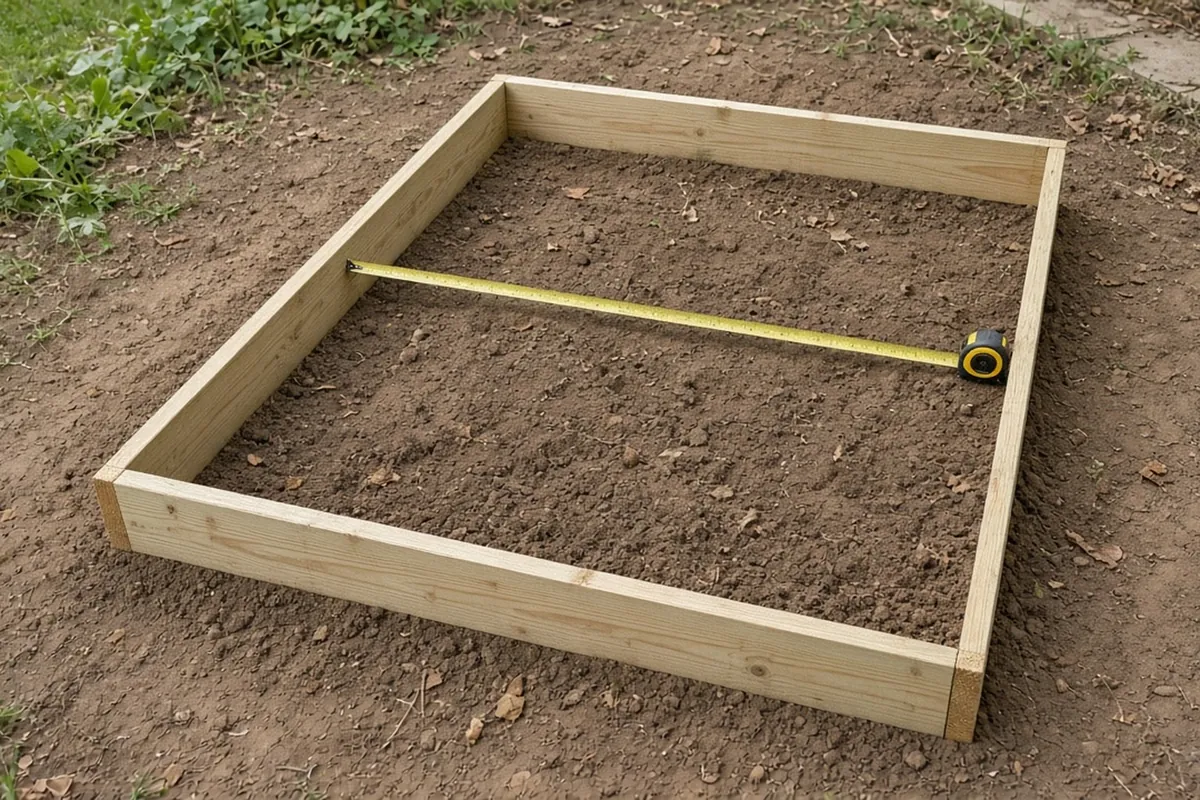 📘 Know-howInside vs outside: why a 4 x 8 raised bed holds less soil than you thinkA 4 x 8 ft frame of 2x lumber is 93 x 45 inches inside, about 29 square feet of soil. How to measure, what it does to your soil order and your cut list.Read the guide
 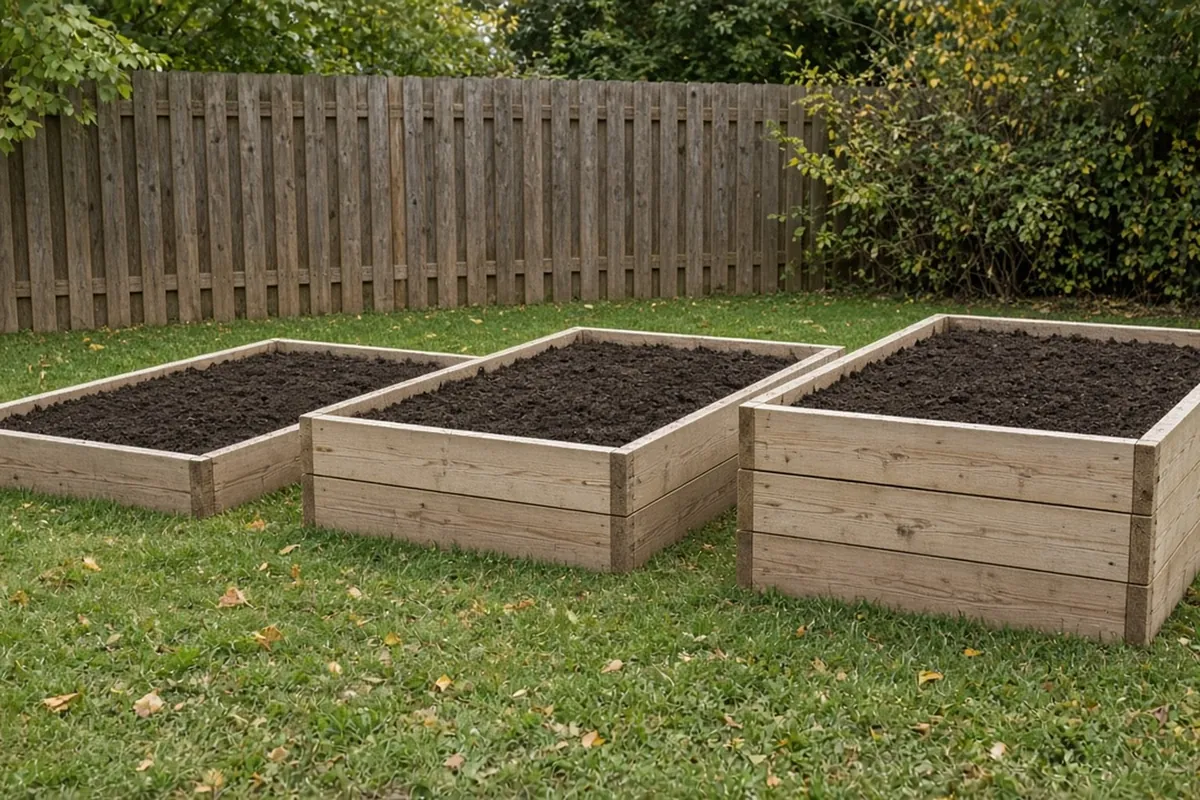 📘 Know-howHow tall to build a raised bed: real board heights and the depths extension pages giveTwo 2x6 boards make an 11 inch bed, enough on open ground for most crops. When to go to 16 1/2 or 24 inches, and what each extra board costs in lumber and soil.Read the guide
 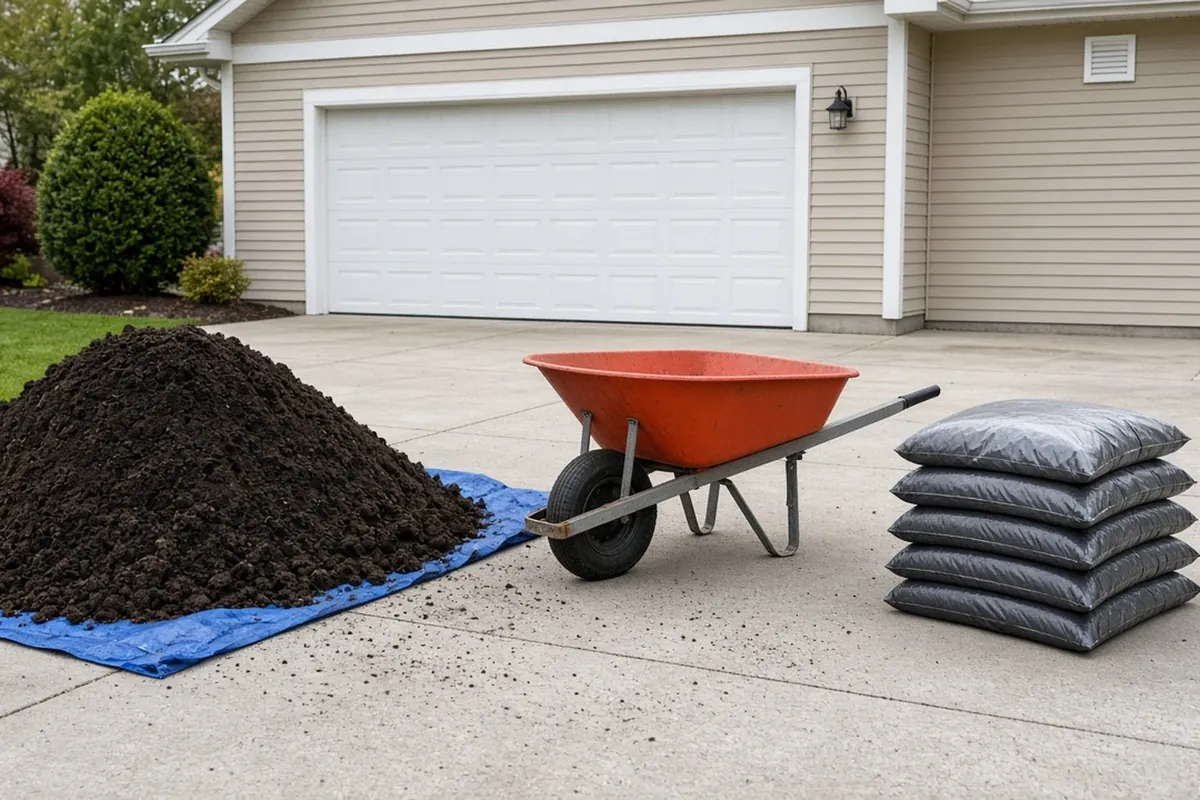 🧰 Problem solverBags or bulk: when a cubic yard delivery is cheaperHow to compare bagged soil, mulch or compost with a bulk cubic yard: price per cubic foot, the delivery fee, and the bag count where bulk wins.Read the guide
Common questions
Questions
What size should my first raised bed be?
4 x 8 ft is the usual first bed. Oregon State Extension says 4 ft is a good maximum width for adults, and UGA Extension says lengths in multiples of 2 or 3 ft waste the least lumber, so 8 ft uses whole boards.
Source: OSU Extension FS 270, raised bed gardening, checked October 10, 2026; UGA Extension C 1027-4, raised garden bed dimensions, checked October 10, 2026.
How deep should a raised bed be?
On open ground, 11 inches (two 2x6 boards) is plenty for most vegetables. UGA Extension says most crops need at least 10 inches of soil. On concrete, Maryland Extension wants 12 to 24 inches for peppers, tomatoes and squash.
Source: UGA Extension C 1027-4, raised garden bed dimensions, checked October 10, 2026; UMD Extension, growing vegetables in raised beds, checked October 10, 2026.
How many bags of soil fill a 4x8 raised bed?
Two 2x6 boards high, a 4 x 8 ft frame holds 26.64 cubic feet inside: 14 bags of 2 cu ft or 18 bags of 1.5 cu ft. Count on one more bag for the top-up after the soil settles.
Source: Kellogg Garden raised bed mix product page, checked October 6, 2026; Miracle-Gro raised bed soil product page, checked October 6, 2026; Illinois Extension, refreshing raised bed soil, checked October 6, 2026.
Should a raised bed have a bottom?
Not on open ground. Utah State Extension says beds shallower than 12 inches should be built with no bottom so roots can reach the soil below, and to loosen that soil 6 to 12 inches deep first.
Source: USU Extension, raised bed gardening, checked October 10, 2026.
Can I build a raised bed in the fall?
Yes. The ground is easy to dig, and the soil has the winter to settle. Plant garlic or bulbs right away, or cover the bed with about 2 inches of leaves, as Oregon State suggests, and plant in spring.
Source: OSU Extension FS 270, raised bed gardening, checked October 10, 2026.
The next job on the shelf
More garden systems
 7 steps🧭 SystemRefresh border mulch: measure each bed, then buy only the gapMeasure the old layer in every bed before you order. One example yard needs 23 bags of 2 cu ft, not 45. The steps, the 3 inch limit and a free mulch record.Open the system
  7 steps🧭 SystemTurn fall leaves into bed cover and mulch, and keep a tally of the bagsWhat to do with fall leaves: mow a thin layer into the lawn, shred the rest and spread 2 to 3 inches on beds. Free leaf haul tally to print.Open the system
  6 steps🧭 SystemFall raised bed reset: clear, top up and cover for winterPut a raised bed to bed in fall: clear finished plants, measure how far the soil sank, top it up with compost and cover it with leaves. Free checklist.Open the system
Sources
- Raised bed gardening (FS 270), Oregon State University Extension Service, published September 1, 2020. Checked October 10, 2026.
- Raised Garden Bed Dimensions (Circular 1027-4), University of Georgia Cooperative Extension, published December 14, 2022. Checked October 10, 2026.
- Voluntary Product Standard PS 20-20, American Softwood Lumber Standard, National Institute of Standards and Technology (US Department of Commerce), published January 1, 2020. Checked October 10, 2026.
- Raised Bed & Potting Mix, Kellogg Garden Products. Checked October 6, 2026.
- Raised Bed Gardening, Utah State University Extension, published February 1, 2012. Checked October 10, 2026.
- How to Build a Raised Bed, Penn State Extension. Checked October 10, 2026.
- Miracle-Gro Organic Raised Bed & Garden Soil, ScottsMiracle-Gro. Checked October 6, 2026.
- Refreshing raised bed soil generates exceptional results, University of Illinois Extension, published April 5, 2021. Checked October 6, 2026.
- Growing Vegetables in Raised Beds, University of Maryland Extension, published March 26, 2026. Checked October 10, 2026.
Planning guide, not a guarantee. See every source on the site on the sources page. Spotted an error? Tell us.