🧭 Garden systemSoil and mulch7 stepsFree working copy
Turn fall leaves into bed cover and mulch, and keep a tally of the bags
Quick answer
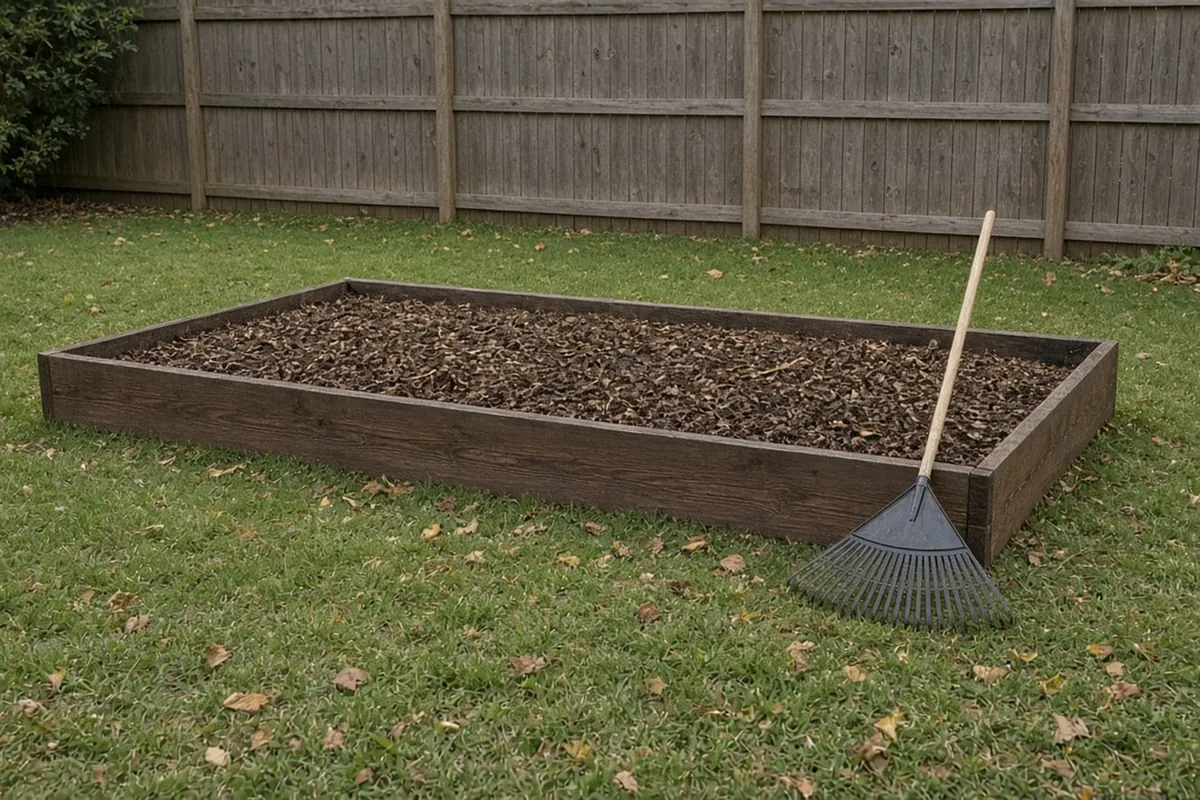
If the leaves on the lawn are under an inch deep, mow them where they lie. Thicker than that, Delaware Extension says to shred them and use them as mulch: 2 to 3 inches over perennial beds and 3 to 4 inches around shrubs and trees. Raised vegetable beds take a 2 inch winter cover, per Oregon State. A 4 x 8 ft bed at 2 inches takes 5.33 cubic feet of shredded leaves, about two 30-gallon bags. Shred one test bag first so you know how many whole bags to rake.
Source: Delaware Extension, Recycling Leaves, checked October 10, 2026; OSU Extension FS 270, raised bed gardening, checked October 10, 2026.

Decide first
What should you do with this year's leaves?
Do it yourself
Shred them onto the beds
If the leaves lie more than an inch deep, this is the plan. You need a mower with a bag (or a rake and a tarp), a tape measure and a few empty bags. One dry afternoon covers most backyard beds.
Source: Delaware Extension, Recycling Leaves, checked October 10, 2026.
Skip it
Skip the haul: mow them into the lawn
If the layer is under an inch, Delaware Extension says to let it dry and mow over it where it lies. Penn State says a layer up to about half an inch is good for the lawn. You won't need to rake or bag anything.
Source: Delaware Extension, Recycling Leaves, checked October 10, 2026; Penn State Extension, Leaves Are Treasure, Not Trash, checked October 9, 2026.
Get help
Get help with the tree or the overflow
If a tree itself looks wrong, ask a certified arborist; this page covers leaves on the ground, not tree health. If you have far more leaves than your beds and a leaf pile can take, check your town's fall yard waste pickup.
- 1 inor less on the lawn: just mow it inDelaware Extension, Recycling Leaves, October 10, 2026
- 2 to 3 inof shredded leaves over perennial bedsDelaware Extension, Recycling Leaves, October 10, 2026
- 2 inof winter cover on a raised bedOSU Extension FS 270, raised bed gardening, October 10, 2026
- 4.01 cu ftin a 30-gallon bag (231 cubic inches a gallon)Arithmetic
One dry afternoon, start to finish
The steps, in order
Check how deep the leaves are
Stand a ruler in the leaves on the lawn in a few spots. Under an inch: mow them in and you're done. Over an inch: Delaware Extension says to shred them for mulch, so go on to the next step.
Have ready: A ruler and a dry day.
Source: Delaware Extension, Recycling Leaves, checked October 10, 2026.
List the beds and pick a depth for each
Write each bed's inside length and width in feet. Delaware gives 2 to 3 inches over perennial beds and 3 to 4 around shrubs and trees; Oregon State gives 2 inches on raised beds for winter. Maryland says organic mulch should never go past 3 inches, so 3 is a safe top for shrubs on heavy soil.
Have ready: A tape measure and the working copy.
Source: Delaware Extension, Recycling Leaves, checked October 10, 2026; OSU Extension FS 270, raised bed gardening, checked October 10, 2026; Maryland Extension, Excess Mulch Problems, checked October 9, 2026.
Work out the cubic feet and the bags
Length × width × depth in inches ÷ 12 gives cubic feet. A gallon is 231 cubic inches, so a 30-gallon bag holds 4.01 cubic feet. A 4 x 8 ft raised bed at 2 inches is 5.33 cubic feet: 2 bags, rounded up.
Have ready: The bed list and the gallons printed on your bag box.
Shred one test bag
Fill bags with whole leaves, shred them, and count how many whole bags it takes to fill one bag of shredded leaves. No extension page we checked gives this figure, so your own trees and mower decide it. Multiply your bag total by it to know how much to rake.
Have ready: Two or three empty bags and the mower.
Shred the rest while it's dry
Delaware lists the ways: a mower with its bag on run over the leaves where they lie, a raked pile mowed several times, a string trimmer dipped into a garbage can of dry leaves, or a vacuum shredder, which works on dry leaves only. Empty the bag into a wheelbarrow, a cart or onto a tarp.
Have ready: A mower with a bag, or a rake and a tarp.
Source: Delaware Extension, Recycling Leaves, checked October 10, 2026.
Spread, keep trunks clear, water once
Spread each bed to its depth. Keep leaves off trunks and stems: Mississippi State says to pull mulch back 2 to 3 inches from the trunk, Maryland says 3. Penn State says watering the leaf mulch after you spread it helps it stay in place.
Have ready: A rake and a hose.
Source: MSU Extension P2301, mulches, checked October 9, 2026; Maryland Extension, Excess Mulch Problems, checked October 9, 2026; Penn State Extension, Leaves Are Treasure, Not Trash, checked October 9, 2026.
Pile the leftovers and write it down
Leaves you can't use go into a pile or bin. Penn State says a pile left alone takes a couple of years to become leaf mold, and shredding, turning, watering or a tarp speeds that to 6 to 12 months. On the tally, note each bed's bags and your test bag count, so next fall you know how many bags to rake.
Have ready: The working copy and a pen.
Source: Penn State Extension, Leaves Are Treasure, Not Trash, checked October 9, 2026.
Free, one page, black and white
Print the working copy
Leaf haul tally: the steps above as a checklist with a date box for each, on one US Letter page.
If a step gets skipped
What goes wrong
⚠️
Whole leaves piled thick
Mississippi State says whole leaves may mat when wet or blow away when dry. Shred them first; Penn State says shredded leaves mat down less.
Source: MSU Extension P2301, mulches, checked October 9, 2026; Penn State Extension, Leaves Are Treasure, Not Trash, checked October 9, 2026.
⚠️
Leaves heaped against trunks
Mississippi State says never to place mulch directly against the trunk of trees and shrubs. Leave a ring of bare soil, 2 to 3 inches by its count, 3 by Maryland's.
Source: MSU Extension P2301, mulches, checked October 9, 2026; Maryland Extension, Excess Mulch Problems, checked October 9, 2026.
⚠️
Going too deep
Iowa State says too deep a layer can waterlog the soil, and puts 2 to 3 inches on heavy soils. Maryland's cap for organic mulch is 3 inches.
Source: Iowa State Extension FAQ, mulch depth around trees and shrubs, checked October 9, 2026; Maryland Extension, Excess Mulch Problems, checked October 9, 2026.
⚠️
Shredding wet leaves
Damp leaves clog a mower bag and a vacuum shredder, which Delaware says works only on dry leaves. Wait for a dry afternoon. On the lawn, Delaware mows damp leaves a second time at a right angle.
Source: Delaware Extension, Recycling Leaves, checked October 10, 2026.
⚠️
Counting whole bags
A bag count worked out in cubic feet is a count of shredded bags. Rake by that number and you'll come up short. The test bag tells you how many whole bags make one shredded bag.
When the steps change
Variants
🪴
Raised vegetable beds
Lay 2 inches over the whole bed after the last harvest; Oregon State says this cover is well broken down by spring. Delaware also says shredded leaves can go over vegetable beds and be tilled in before spring planting.
Source: OSU Extension FS 270, raised bed gardening, checked October 10, 2026; Delaware Extension, Recycling Leaves, checked October 10, 2026.
🏙️
No time to shred
Illinois Extension says you can put 6 to 8 inches of whole leaves on a garden and till them in. Mississippi State lists whole leaves at 6 inches as a mulch, but they mat and blow, so keep them off shrub beds by the house.
Source: Illinois Extension, Don't bag your fall leaves (2025), checked October 9, 2026; MSU Extension P2301, mulches, checked October 9, 2026.
❄️
Trees and shrubs only, no beds
Delaware gives 3 to 4 inches of shredded leaves around shrubs and trees. On heavy soil, Iowa State's 2 to 3 inches suits better, kept at least 6 inches from tree trunks.
Source: Delaware Extension, Recycling Leaves, checked October 10, 2026; Iowa State Extension FAQ, mulch depth around trees and shrubs, checked October 9, 2026.
☀️
More leaves than you can spread
Build a leaf mold pile. Penn State suggests a bin 3 to 6 feet across and at least 3 feet tall. Illinois says shredded leaves compost in about 6 months, whole ones in 9 to 12.
Source: Penn State Extension, Leaves Are Treasure, Not Trash, checked October 9, 2026; Illinois Extension, Don't bag your fall leaves (2025), checked October 9, 2026.
What people learn the second year
Tips and tricks
- Write the gallons on the tally. Bag boxes print gallons, not cubic feet. Divide the gallons by 7.48 and you have the cubic feet a bag holds.
- Shred where the leaves fall. Running the bagging mower over the lawn picks up and shreds in one pass. Delaware lists it first.
- Mow twice if they're damp. On the lawn, Delaware runs a second pass at a right angle to the first when the leaves are a little damp. (Delaware Extension, Recycling Leaves)
- Keep two bags back. Wind thins the layer over winter. A couple of bags of shredded leaves by the shed top up the bare spots in late winter.
- Do the test bag every year. Different trees and a sharper or duller mower blade change how far leaves shrink. One bag at the start keeps the count honest.
The one we checked the steps against
Primary source
Recycling Leaves (fact sheet), University of Delaware Cooperative Extension. Checked October 10, 2026.
The University of Delaware Cooperative Extension fact sheet Recycling Leaves (reviewed March 2025) gives the whole decision this system runs on: under an inch on the lawn, mow it in; over an inch, shred the leaves and use them, 3 to 4 inches around shrubs or trees and 2 to 3 inches over perennial beds. It also lists four ways to shred them and says shredded leaves can be tilled into vegetable beds before spring planting.
The arithmetic and the background reading
Tools and guides in this system
- 🍂 CalculatorMulch calculatorHow much mulch a bed takes in cubic feet, cubic yards and 1.5 or 2 cu ft bags, at the depth you pick, with the 2 to 3 inch band worked out too.Open the tool
- 🧺 SectionAll soil and mulch toolsRaised-bed soil, mulch, compost and topsoil calculators that give cubic feet, cubic yards and bag counts, using bag sizes printed by the makers.See the section
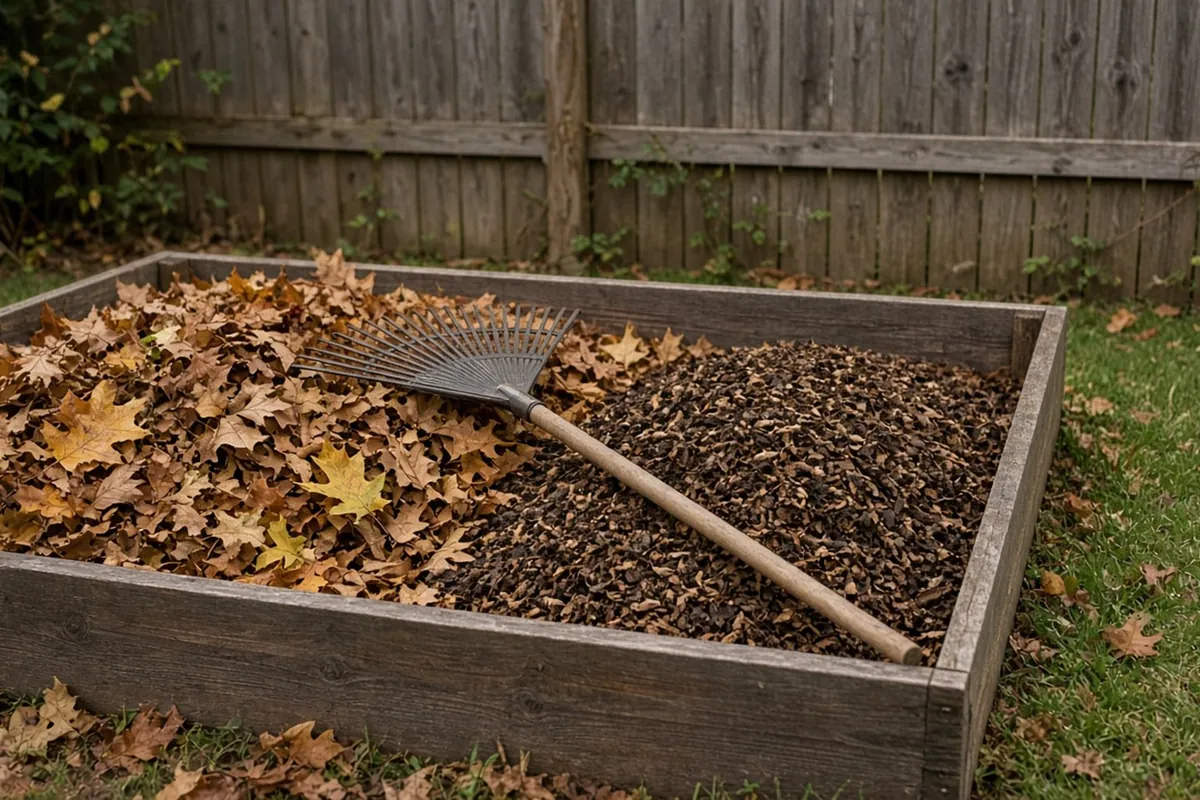 🧰 Problem solverWhat to do with fall leaves in the garden: shred them into mulchShred the leaves, then spread 2 to 3 inches on beds and 3 to 4 around shrubs. How to shred without a shredder, and how many bags a bed takes.Read the guide
 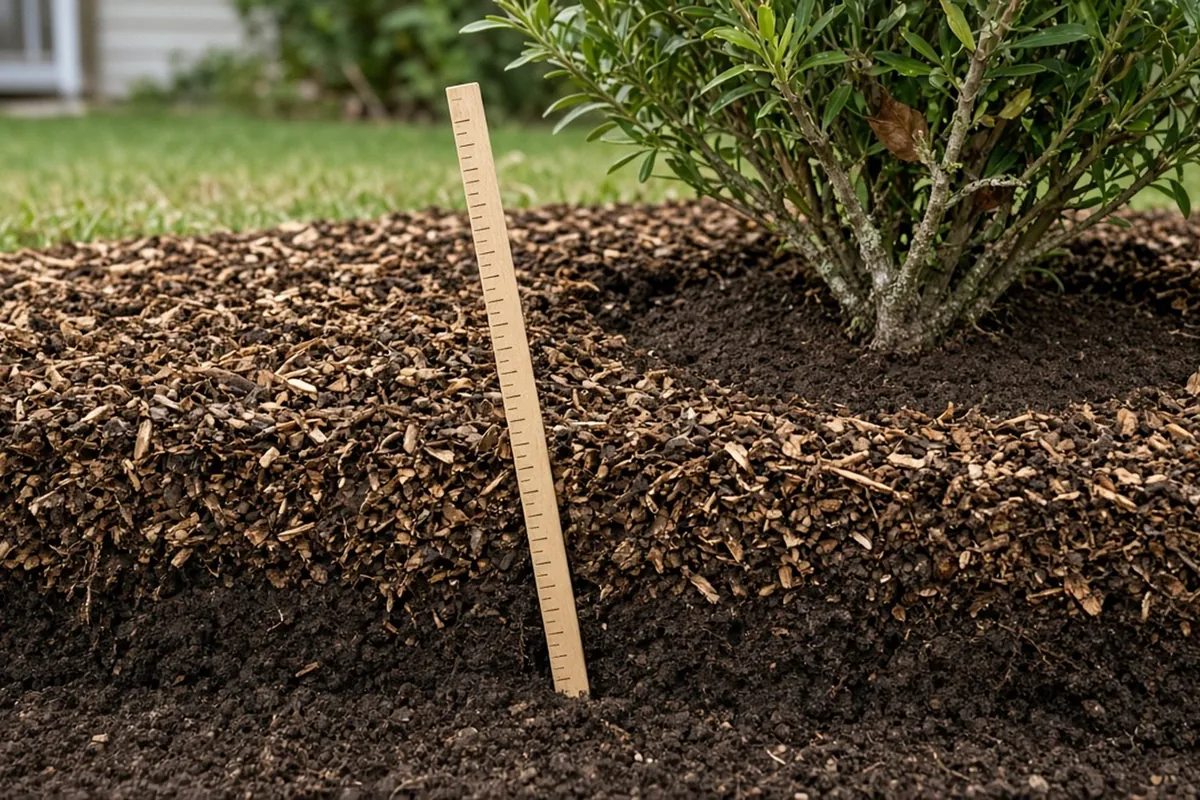 📘 Know-howHow deep should mulch be? The extension depths, material by materialTwo to 3 inches on most beds, deeper for whole leaves and straw, and never piled on a trunk. Extension depths side by side, plus the math for a top-up.Read the guide
Common questions
Questions
Should I rake leaves or leave them on the lawn?
It depends on how deep they are. Delaware Extension mows a layer under an inch straight into the lawn and shreds anything thicker for mulch. Penn State says up to about half an inch is good for the lawn.
Source: Delaware Extension, Recycling Leaves, checked October 10, 2026; Penn State Extension, Leaves Are Treasure, Not Trash, checked October 9, 2026.
How thick should leaf mulch be on garden beds?
Shredded leaves: 2 to 3 inches over perennial beds and 3 to 4 around shrubs and trees (Delaware). On raised vegetable beds, Oregon State gives a 2 inch winter cover. Maryland says organic mulch should not go past 3 inches.
Source: Delaware Extension, Recycling Leaves, checked October 10, 2026; OSU Extension FS 270, raised bed gardening, checked October 10, 2026; Maryland Extension, Excess Mulch Problems, checked October 9, 2026.
How many bags of leaves do I need for my beds?
Length × width in feet × depth in inches ÷ 12 gives cubic feet. Divide by your bag's cubic feet (gallons ÷ 7.48) and round up. A 4 x 8 ft bed at 2 inches is 5.33 cubic feet, two 30-gallon bags of shredded leaves.
How much do leaves shrink when you shred them?
No extension page we checked gives a number. Shred one bag of whole leaves and see how many whole bags fill one shredded bag. That ratio is yours, for your trees and your mower.
Can I leave shredded leaves on my vegetable beds all winter?
Yes. Oregon State says a 2 inch cover of leaves on raised beds is well broken down by spring. Delaware says you can also till shredded leaves into vegetable beds before spring planting.
Source: OSU Extension FS 270, raised bed gardening, checked October 10, 2026; Delaware Extension, Recycling Leaves, checked October 10, 2026.
The next job on the shelf
More garden systems
 7 steps🧭 SystemRefresh border mulch: measure each bed, then buy only the gapMeasure the old layer in every bed before you order. One example yard needs 23 bags of 2 cu ft, not 45. The steps, the 3 inch limit and a free mulch record.Open the system
 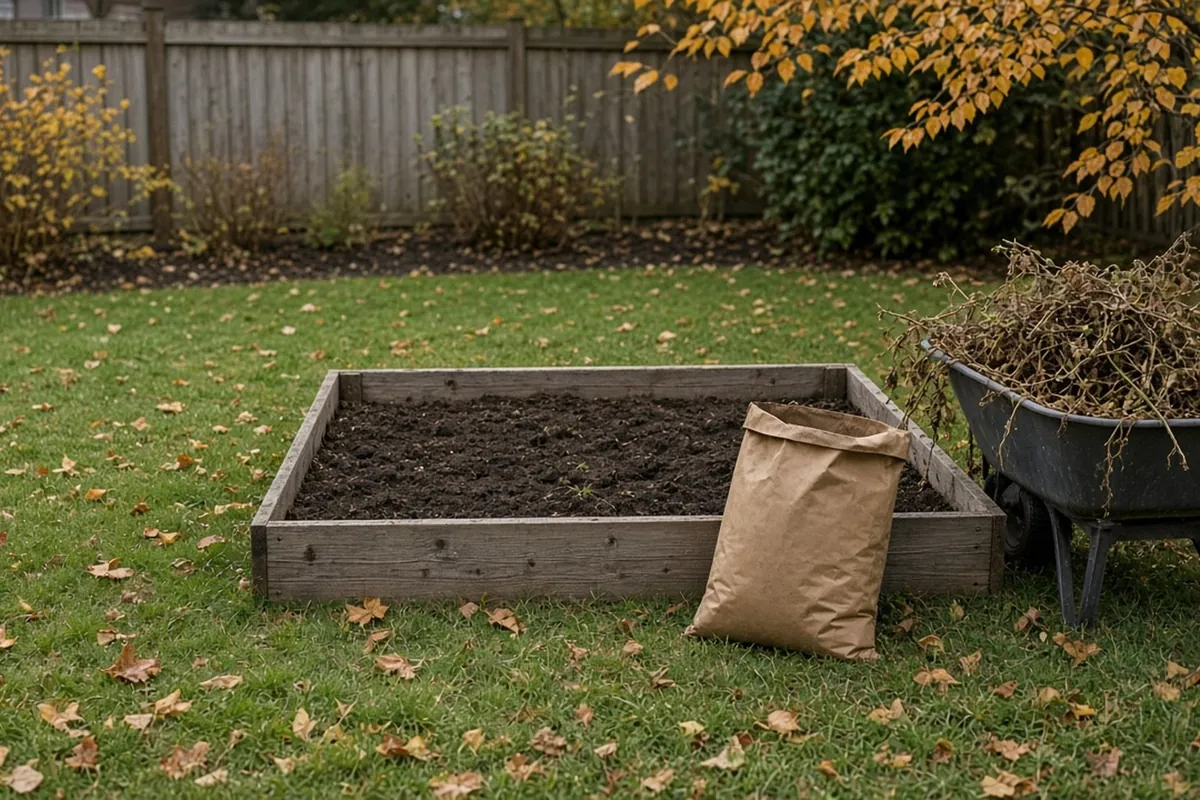 6 steps🧭 SystemFall raised bed reset: clear, top up and cover for winterPut a raised bed to bed in fall: clear finished plants, measure how far the soil sank, top it up with compost and cover it with leaves. Free checklist.Open the system
 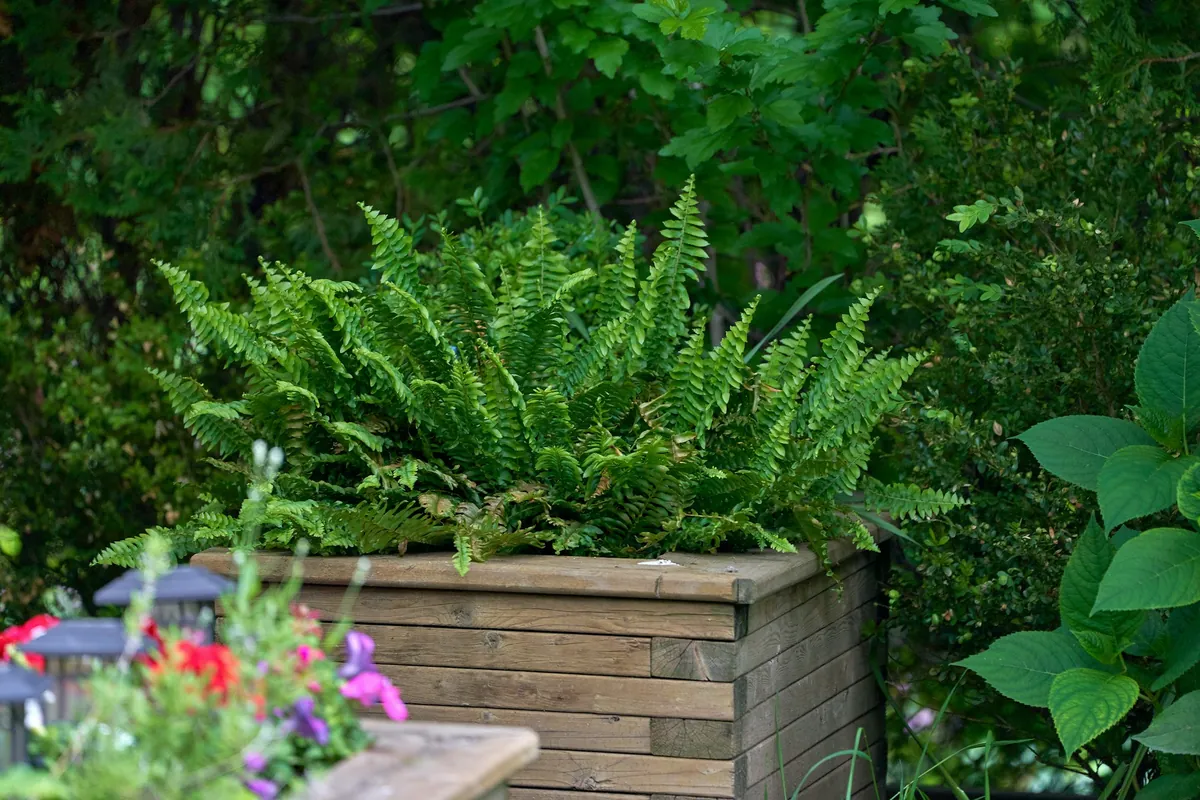 7 steps🧭 SystemFill a tall raised bed for less: wood below, soil on topUnder 17 inches, fill with soil. Taller, put logs and leaves in the lower half: a 4 x 8 bed 24 in tall takes 16 bags of soil, not 32. Free layer fill plan.Open the system
Sources
- Recycling Leaves (fact sheet), University of Delaware Cooperative Extension. Checked October 10, 2026.
- Raised bed gardening (FS 270), Oregon State University Extension Service, published September 1, 2020. Checked October 10, 2026.
- Leaves Are Treasure, Not Trash, Penn State Extension, published January 22, 2025. Checked October 9, 2026.
- Excess Mulch Problems, University of Maryland Extension, published March 14, 2023. Checked October 9, 2026.
- Mulches for the Landscape (P2301), Mississippi State University Extension. Checked October 9, 2026.
- How deep should the mulch layer be around trees and shrubs?, Iowa State University Extension and Outreach, published March 3, 2022. Checked October 9, 2026.
- Don't bag your fall leaves, use them, University of Illinois Extension, published October 27, 2025. Checked October 9, 2026.
Planning guide, not a guarantee. See every source on the site on the sources page. Spotted an error? Tell us.