🧭 Garden systemZones9 stepsFree working copy
Garlic planting in zones 3 to 5: wait for the frost, then plant
Quick answer
In zones 3 to 5, garlic goes in after the first fall frost. Minnesota Extension says one or two weeks after the first killing frost, and Wisconsin says the same. Look up your typical first frost and add 7 to 14 days. At the St. Paul station that's October 15 to 22. A 4 x 8 ft bed at 6 inches each way takes 128 cloves, or 16 to 22 heads. Set them 2 to 3 inches deep, pointed side up, and cover the bed with 3 to 4 inches of straw or shredded leaves that week.
Source: University of Minnesota Extension, Growing garlic in home gardens, checked October 8, 2026; University of Wisconsin Extension, Garlic (A3785), checked October 9, 2026; University of Kentucky Extension, October is garlic planting time, checked October 8, 2026; NOAA 1991-2020 U.S. Climate Normals, annual/seasonal, checked October 7, 2026.

Decide first
Should you plant garlic this fall?
Do it yourself
Plant it yourself
If you have a sunny bed you won't need until next summer, this is one afternoon in October plus a bale of straw. Garlic stays in the bed all winter and comes out the next summer.
Source: University of Minnesota Extension, Growing garlic in home gardens, checked October 8, 2026.
Skip it
Skip it if the bed is needed in spring
Fall garlic holds the bed through spring. If you want it for early crops, use another bed. Iowa State lists late March to mid-April as a spring planting time, but Maine's bulletin says spring garlic doesn't reach the size of fall garlic.
Source: Iowa State Extension, When should I plant garlic?, checked October 8, 2026; University of Maine Extension, Bulletin #2063 Growing Hardneck Garlic in Your Maine Garden, checked October 9, 2026.
Get help
Ask your county extension office
For varieties that do well in your county, or if the plants look wrong in spring, call your county Cooperative Extension office. This page covers dates, counts, mulch and the bed layout, not plant problems.
- 1 to 2 weeksafter the first killing frost (Minnesota Extension)University of Minnesota Extension, Growing garlic in home gardens, October 8, 2026
- Oct 15 to 22planting week at the St. Paul stationNOAA 1991-2020 U.S. Climate Normals, annual/seasonal, October 7, 2026
- 2 to 3 into the base of the clove, pointed side upUniversity of Minnesota Extension, Growing garlic in home gardens, October 8, 2026
- 3 to 4 inof straw or shredded leaves on topUniversity of Minnesota Extension, Growing garlic in home gardens, October 8, 2026
September to look up, one October afternoon to plant
The steps, in order
Look up your first fall frost
Type your zip code into the frost date lookup and write down the typical first fall frost and the 1 in 10 earlier date. For zip code 55108 in St. Paul, the station about half a mile away gives October 8 and September 25.
Have ready: Your zip code. Do it in September, before the seed garlic arrives.
Source: NOAA 1991-2020 U.S. Climate Normals, annual/seasonal, checked October 7, 2026.
Add one to two weeks
Count 7 and 14 days from the typical date. For St. Paul that's October 15 to 22. Minnesota and Wisconsin say a week or two after the first killing frost but give no temperature for one, so we use the typical 32°F date as the marker.
Have ready: The frost date from step 1 and a calendar.
Source: University of Minnesota Extension, Growing garlic in home gardens, checked October 8, 2026; University of Wisconsin Extension, Garlic (A3785), checked October 9, 2026; NOAA 1991-2020 U.S. Climate Normals, annual/seasonal, checked October 7, 2026.
Measure the bed and count the cloves
Measure inside the boards and type the size into the garlic calculator at 6 inches, the spacing Wisconsin gives. A 4 x 8 ft bed takes 8 rows of 16: 128 cloves.
Have ready: A tape measure.
Garlic and bulb planting calculator
Source: University of Wisconsin Extension, Garlic (A3785), checked October 9, 2026.
Order heads or pounds
At Kentucky's six to eight cloves a head, 128 cloves is 16 to 22 heads. At Maryland's 6 to 7 large hardneck heads a pound with 6 to 7 cloves each, that's about 2.6 to 3.6 pounds. Wisconsin says hardneck types do best where winters are long.
Have ready: The clove count. If the seller lists cloves per head for the variety, use that number.
Source: University of Kentucky Extension, October is garlic planting time, checked October 8, 2026; University of Maryland Extension, Garlic, checked October 8, 2026; University of Wisconsin Extension, Garlic (A3785), checked October 9, 2026.
Get the straw before the frost
For 3 to 4 inches over a 4 x 8 ft bed you need 8 to 10.7 cubic feet. Wisconsin asks for clean straw. Maine lists dried grass, leaves or straw.
Have ready: The bed size. Stack the bales or bags next to the bed.
Source: University of Wisconsin Extension, Garlic (A3785), checked October 9, 2026; University of Maine Extension, Bulletin #2063 Growing Hardneck Garlic in Your Maine Garden, checked October 9, 2026.
Split the heads on planting day
Wisconsin and Maine both say to separate the cloves just before planting. Plant the largest cloves, since Wisconsin says they generally grow the largest bulbs. Keep the small ones for the kitchen.
Have ready: A bowl for the planting cloves and another for the small ones.
Source: University of Wisconsin Extension, Garlic (A3785), checked October 9, 2026; University of Maine Extension, Bulletin #2063 Growing Hardneck Garlic in Your Maine Garden, checked October 9, 2026.
Plant 2 to 3 inches deep, 6 inches apart
Set each clove pointed side up with its base 2 to 3 inches below the surface, as Minnesota says. Wisconsin warns that cloves planted too shallow can be injured in winter and early spring. Start 3 inches in from the boards so the outer rows fit.
Have ready: A stick marked at 3 and 6 inches.
Source: University of Minnesota Extension, Growing garlic in home gardens, checked October 8, 2026; University of Wisconsin Extension, Garlic (A3785), checked October 9, 2026.
Mulch the same week
Spread 3 to 4 inches of straw or shredded leaves over the whole bed. Minnesota says this evens out winter and early spring soil temperatures and helps with weeds.
Have ready: The straw from step 5.
Source: University of Minnesota Extension, Growing garlic in home gardens, checked October 8, 2026.
Decide on the mulch in spring, then log the harvest
Minnesota and Wisconsin take the mulch off once the risk of hard freezes is over; Minnesota also lets you leave it on. The typical last frost at St. Paul, April 28, is a late marker for that. In summer Wisconsin harvests when about half the leaves have turned brown. Write both dates in the log.
Have ready: The printed bed plan, kept with the seed box.
Source: University of Minnesota Extension, Growing garlic in home gardens, checked October 8, 2026; University of Wisconsin Extension, Garlic (A3785), checked October 9, 2026; NOAA 1991-2020 U.S. Climate Normals, annual/seasonal, checked October 7, 2026.
Free, one page, black and white
Print the working copy
Garlic bed plan: the steps above as a checklist with a date box for each, on one US Letter page.
If a step gets skipped
What goes wrong
⚠️
Planting before the first frost
Maine's bulletin says early planting can let the top come up above the soil, where it's prone to winter injury. In these states the planting week starts after the first frost, so an early frost means you're on time.
Source: University of Maine Extension, Bulletin #2063 Growing Hardneck Garlic in Your Maine Garden, checked October 9, 2026.
⚠️
Planting too shallow
Wisconsin says shallow cloves are prone to injury in winter and early spring. Measure the 2 to 3 inches to the base of the clove instead of guessing.
Source: University of Wisconsin Extension, Garlic (A3785), checked October 9, 2026.
⚠️
Skipping the mulch, or packing it too heavy
Maine says mulch moderates the freeze and thaw cycles of the soil and the heaving of cloves. Wisconsin also warns against heavy mulch that keeps the soil from warming or wet soil from drying, and singles out wet leaves.
Source: University of Maine Extension, Bulletin #2063 Growing Hardneck Garlic in Your Maine Garden, checked October 9, 2026; University of Wisconsin Extension, Garlic (A3785), checked October 9, 2026.
⚠️
Ordering heads without checking cloves per head
Clove counts vary a lot. In a New Mexico trial, mean cloves per bulb ran from 5.5 to 15.9 across varieties. Break one head first and count before you order the rest.
Source: NMSU Research Report 717, Varietal Evaluation of Garlic in New Mexico, checked October 8, 2026.
When the steps change
Variants
🪴
Zone 3 or 4, far north
The rule stays the same; only the date moves. Near Bemidji, the Cass Lake station's typical first frost is September 26, so planting falls around October 3 to 10. Near Wausau it's October 4, so October 11 to 18.
Source: University of Minnesota Extension, Growing garlic in home gardens, checked October 8, 2026; University of Wisconsin Extension, Garlic (A3785), checked October 9, 2026; NOAA 1991-2020 U.S. Climate Normals, annual/seasonal, checked October 7, 2026; PRISM 2023 USDA hardiness zone GIS datasets and zip-code listing, checked October 6, 2026.
🏙️
Maine
Maine's bulletin gives a calendar span instead of the frost rule: about mid-September to the end of October, north to south. Use the early end in the north of the state and the late end in the south.
Source: University of Maine Extension, Bulletin #2063 Growing Hardneck Garlic in Your Maine Garden, checked October 9, 2026.
❄️
Iowa and zone 5b
Iowa State says October to early November and uses 4 to 6 inches of straw, moved between the rows in early spring. At the Ames station the typical first frost is October 8.
Source: Iowa State Extension, When should I plant garlic?, checked October 8, 2026; NOAA 1991-2020 U.S. Climate Normals, annual/seasonal, checked October 7, 2026; PRISM 2023 USDA hardiness zone GIS datasets and zip-code listing, checked October 6, 2026.
☀️
Missed the fall window
Iowa State lists late March to mid-April as a spring planting time. The bulbs will be smaller, Maine says, so put fall planting on next year's calendar.
Source: Iowa State Extension, When should I plant garlic?, checked October 8, 2026; University of Maine Extension, Bulletin #2063 Growing Hardneck Garlic in Your Maine Garden, checked October 9, 2026.
What people learn the second year
Tips and tricks
- Clear the bed before the frost. Pull the old plants and loosen the soil in late September. When the frost comes, all that's left is planting.
- Write down the real frost. The lookup gives a 30-year normal. Note the night your own yard first frosts this fall and count the week from that. (NOAA 1991-2020 U.S. Climate Normals, annual/seasonal)
- Mark the stick. Cut a stick to 6 inches and mark 3 inches on it. It sets both the spacing and the deepest planting depth.
- Count the cloves in one head first. Break one head before you order the rest. If it has more or fewer than the six to eight Kentucky uses, redo the head count. (University of Kentucky Extension, October is garlic planting time)
- Label the rows. Under 4 inches of straw every row looks the same. Put a tall tag at the start of each variety. (University of Minnesota Extension, Growing garlic in home gardens)
The one we checked the steps against
Primary source
Growing garlic in home gardens, University of Minnesota Extension. Checked October 8, 2026.
University of Minnesota Extension writes for zones 3 to 5. Its garlic page gives the timing rule this plan is built on (one or two weeks after the first killing frost), the 2 to 3 inch depth to the base of the clove, the 3 to 4 inches of leaf or straw mulch, and the spring choice to remove it or leave it on.
The arithmetic and the background reading
Tools and guides in this system
- 🧄 CalculatorGarlic and bulb planting calculatorHow many garlic cloves or spring bulbs fit a bed or a row, how many heads to buy, and how deep to plant them, from extension spacing figures.Open the tool
- ❄️ LookupFrost date lookup by zip codeFind the typical last spring and first fall frost for your zip code from NOAA 1991 to 2020 station normals, with the 1 in 10 year dates and a printable card.Open the tool
- 🍂 CalculatorMulch calculatorHow much mulch a bed takes in cubic feet, cubic yards and 1.5 or 2 cu ft bags, at the depth you pick, with the 2 to 3 inch band worked out too.Open the tool
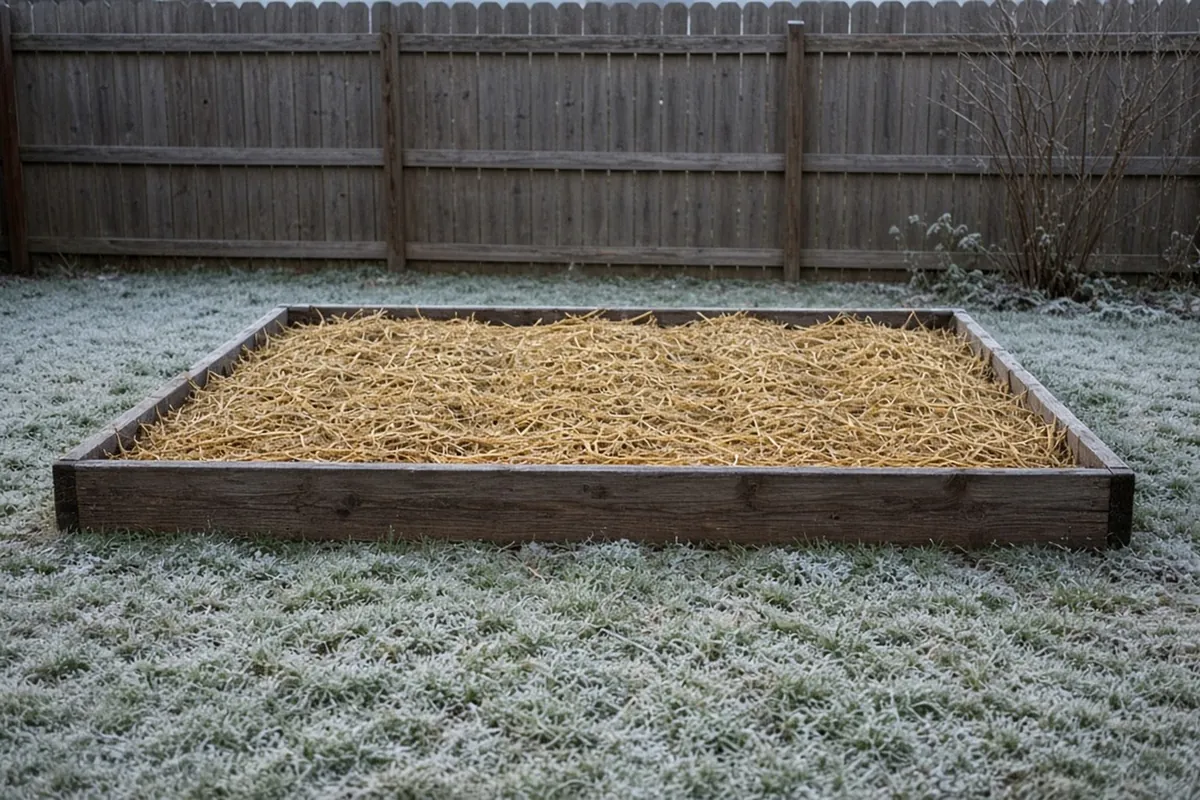
 🧰 Problem solverWhen to plant garlic in zones 3 to 5: one to two weeks after the first frostMinnesota and Wisconsin Extension say to plant garlic a week or two after the first killing frost. Find your frost date and turn it into a planting week.Read the guide
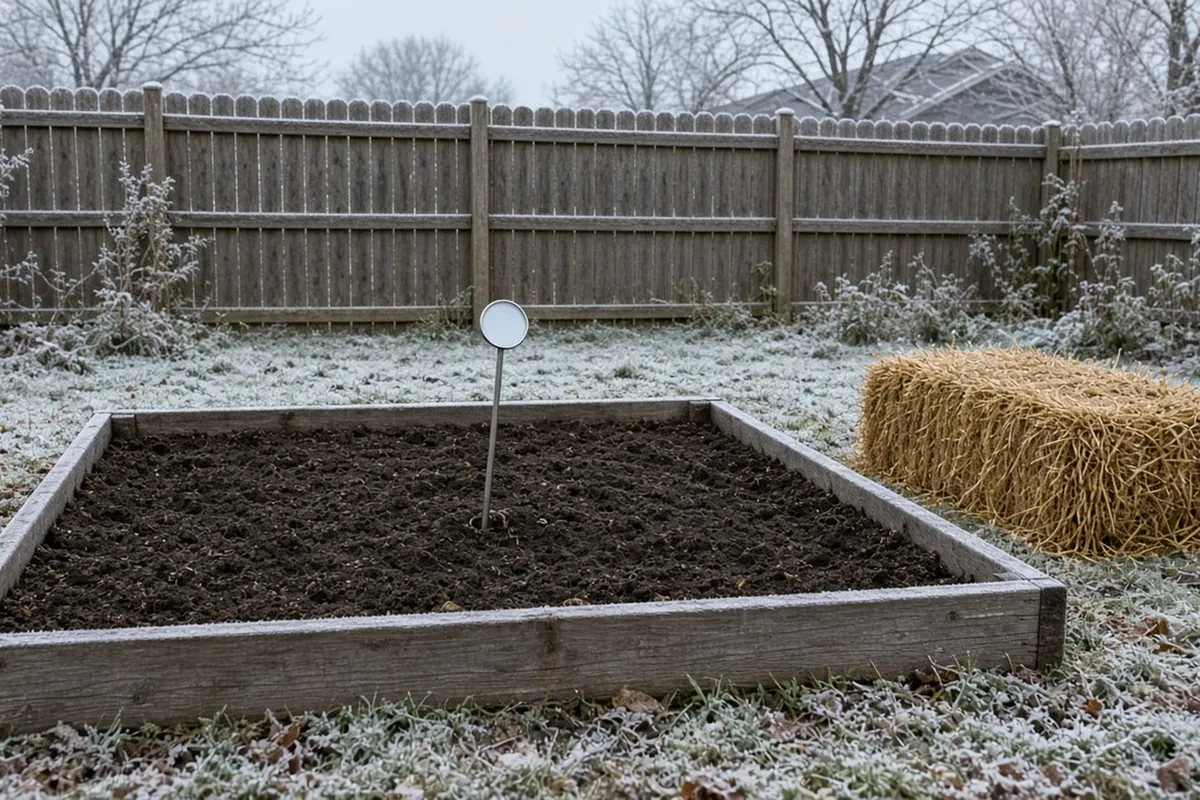
 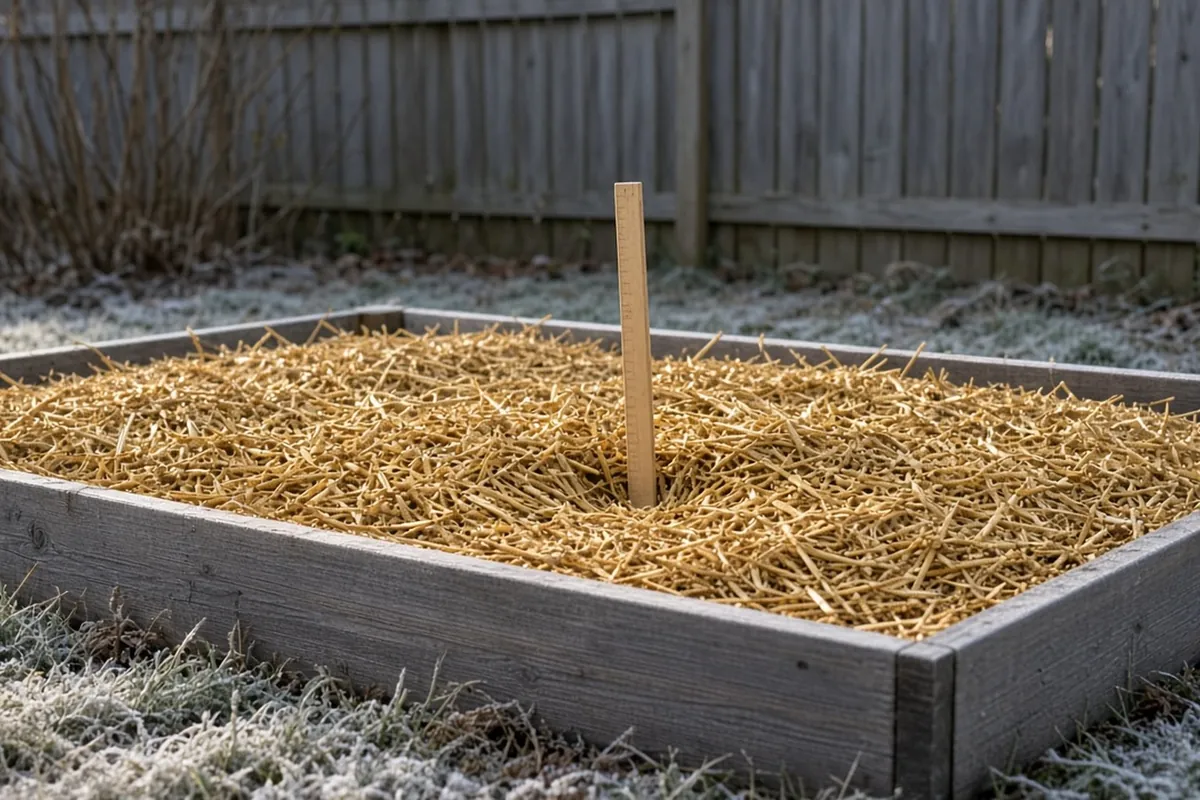 📘 Know-howHow deep to mulch garlic in cold zones, and when to pull the mulch backExtension pages put 3 to 4 inches of straw or leaves on fall garlic. See how much a bed takes, and when to pull it back, move it or leave it in spring.Read the guide
Common questions
Questions
When should I plant garlic in zone 5?
One or two weeks after the first killing frost, Minnesota and Wisconsin Extension say. At the St. Paul and Madison stations that's mid to late October.
Source: University of Minnesota Extension, Growing garlic in home gardens, checked October 8, 2026; University of Wisconsin Extension, Garlic (A3785), checked October 9, 2026; NOAA 1991-2020 U.S. Climate Normals, annual/seasonal, checked October 7, 2026.
When should I plant garlic in zone 3 or 4?
By the same rule, from an earlier frost date. Near Bemidji that's about October 3 to 10, and near Wausau October 11 to 18.
Source: University of Minnesota Extension, Growing garlic in home gardens, checked October 8, 2026; NOAA 1991-2020 U.S. Climate Normals, annual/seasonal, checked October 7, 2026.
How deep do I plant garlic in a cold zone?
With the base of the clove 2 to 3 inches below the surface, pointed side up, Minnesota says. Wisconsin warns that shallow cloves can be injured over winter.
Source: University of Minnesota Extension, Growing garlic in home gardens, checked October 8, 2026; University of Wisconsin Extension, Garlic (A3785), checked October 9, 2026.
How much straw do I put on garlic?
3 to 4 inches, Minnesota and Wisconsin say. For a 4 x 8 ft bed that's 8 to 10.7 cubic feet.
Source: University of Minnesota Extension, Growing garlic in home gardens, checked October 8, 2026; University of Wisconsin Extension, Garlic (A3785), checked October 9, 2026.
When do I take the straw off garlic?
Minnesota and Wisconsin say after the threat of hard freezes is over, so the soil warms. Minnesota also allows leaving it on, and a 2021 Maine answer leaves it until harvest.
Source: University of Minnesota Extension, Growing garlic in home gardens, checked October 8, 2026; University of Wisconsin Extension, Garlic (A3785), checked October 9, 2026; University of Maine Extension, Is it too early to pull the mulch off my garlic plants?, checked October 8, 2026.
The next job on the shelf
More garden systems
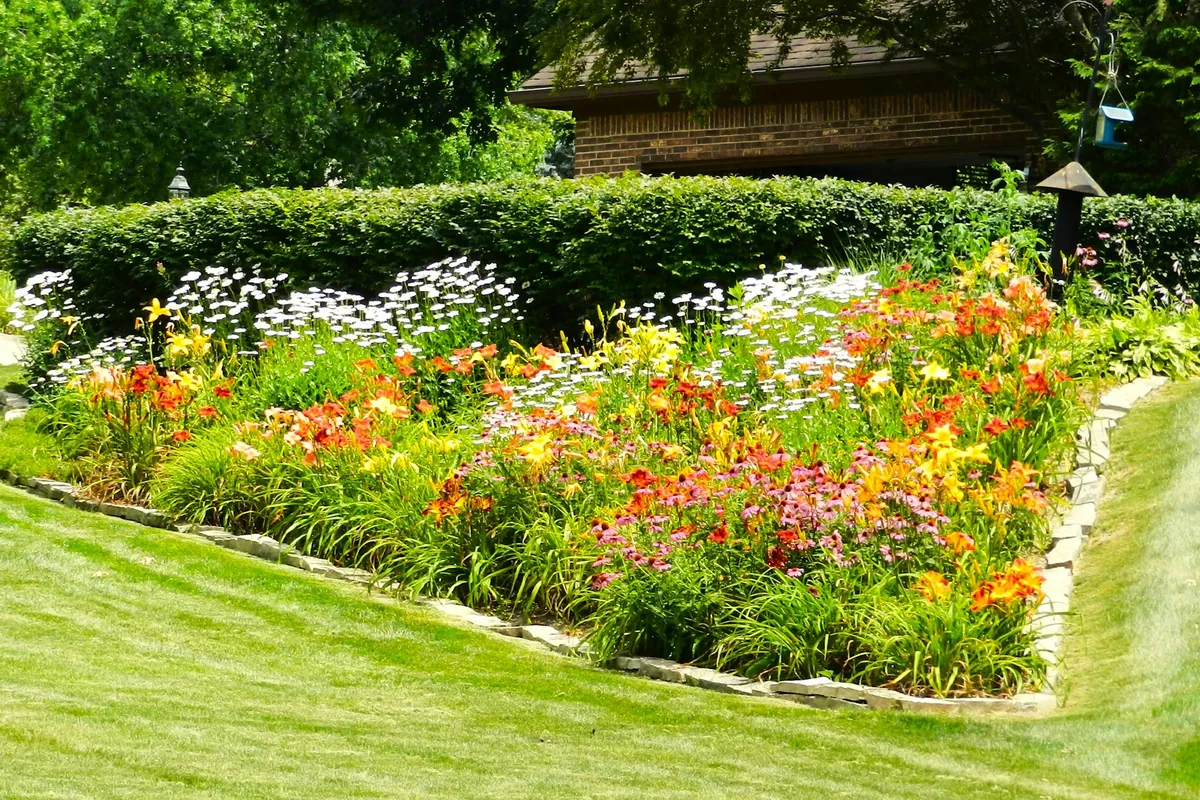 7 steps🧭 SystemRefresh border mulch: measure each bed, then buy only the gapMeasure the old layer in every bed before you order. One example yard needs 23 bags of 2 cu ft, not 45. The steps, the 3 inch limit and a free mulch record.Open the system
  7 steps🧭 SystemTurn fall leaves into bed cover and mulch, and keep a tally of the bagsWhat to do with fall leaves: mow a thin layer into the lawn, shred the rest and spread 2 to 3 inches on beds. Free leaf haul tally to print.Open the system
  6 steps🧭 SystemFall raised bed reset: clear, top up and cover for winterPut a raised bed to bed in fall: clear finished plants, measure how far the soil sank, top it up with compost and cover it with leaves. Free checklist.Open the system
Sources
- Growing garlic in home gardens, University of Minnesota Extension. Checked October 8, 2026.
- Garlic (Growing Garlic in Wisconsin, A3785), University of Wisconsin-Madison Division of Extension (Wisconsin Horticulture), published October 10, 2011. Checked October 9, 2026.
- October is garlic planting time, University of Kentucky, Martin-Gatton College of Agriculture, Food and Environment (Cooperative Extension), published October 13, 2022. Checked October 8, 2026.
- U.S. Climate Normals (1991-2020), annual/seasonal normals by station, NOAA National Centers for Environmental Information (NCEI). Checked October 7, 2026.
- When should I plant garlic?, Iowa State University Extension and Outreach, Yard and Garden, published July 24, 2024. Checked October 8, 2026.
- Bulletin #2063, Growing Hardneck Garlic in Your Maine Garden, University of Maine Cooperative Extension, published August 6, 2025. Checked October 9, 2026.
- Garlic, University of Maryland Extension, Home and Garden Information Center, published August 22, 2023. Checked October 8, 2026.
- Varietal Evaluation of Garlic in New Mexico (Research Report 717), New Mexico State University, Agricultural Experiment Station. Checked October 8, 2026.
- 2023 USDA Plant Hardiness Zone GIS Datasets, PRISM Group, Oregon State University (for USDA). Checked October 6, 2026.
- Is it too early to pull the mulch off my garlic plants?, University of Maine Cooperative Extension, Garden and Yard, published April 20, 2021. Checked October 8, 2026.
Planning guide, not a guarantee. See every source on the site on the sources page. Spotted an error? Tell us.