📘 Know-howContainers5 min read
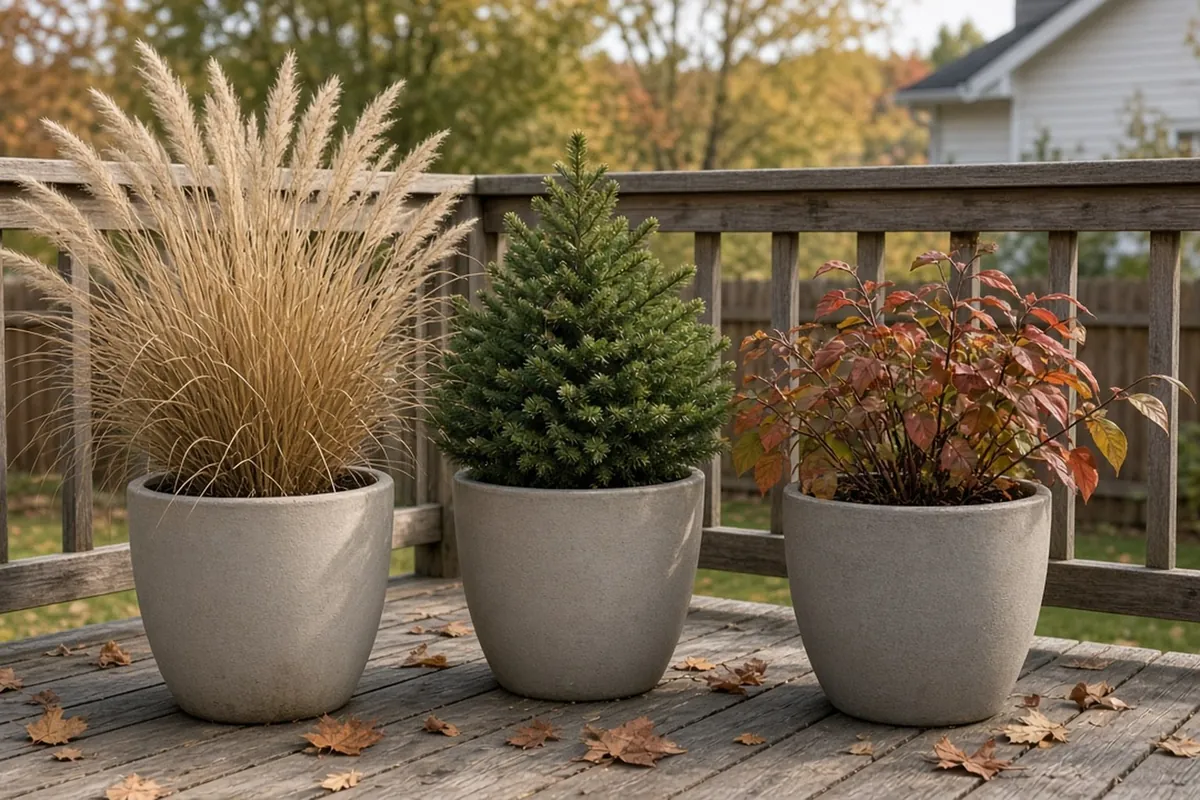
The two-zones-colder rule for plants that winter in pots
Quick answer
If a perennial spends the winter outside in its pot, Illinois Extension says to pick one that survives two zones colder than where you live. In zone 6, that means a tag that reaches zone 4 or lower. Plant tags assume roots in the ground, and a pot holds so little mix that the roots get much colder. A big pot and a sheltered spot help, but the tag check comes first.
Source: Illinois Extension, overwintering potted plants, checked October 6, 2026; Illinois Extension, overwintering perennial patio containers, checked October 7, 2026.

The basics
Why two zones, and not one
The zone on a plant tag describes a plant growing in the ground. Iowa State Extension points out that roots are far less cold hardy than the parts above ground, and that the mix in a pot left above ground can drop into the single digits.
Source: Iowa State Extension, overwintering unplanted trees, shrubs and perennials, checked October 7, 2026.
Your USDA zone is built from the average coldest winter night, in bands of 10°F. Two whole zones are 20°F, so the rule gives a potted plant a margin of about 20°F on the coldest night of an average winter. That's arithmetic on the zone bands, not a measured temperature for your pot.
Source: USDA Plant Hardiness Zone Map (2023), checked October 6, 2026.
- 2 zonescolder than your yard, for a pot that stays outIllinois Extension, overwintering potted plants, October 6, 2026
- 10°Fper whole USDA zoneUSDA Plant Hardiness Zone Map (2023), October 6, 2026
- 20°Fof margin on an average coldest night: two zones of 10°FArithmetic
- Single digitshow cold the mix in a pot above ground can get, in °FIowa State Extension, overwintering unplanted trees, shrubs and perennials, October 7, 2026
Find your row
Your zone, and the tag you need
| Your zone | Tag should reach, for a pot outside | Your average coldest night |
|---|---|---|
| 3 | Zone 1 | -40°F to -30°F |
| 4 | Zone 2 | -30°F to -20°F |
| 5 | Zone 3 | -20°F to -10°F |
| 6 | Zone 4 | -10°F to 0°F |
| 7 | Zone 5 | 0°F to 10°F |
| 8 | Zone 6 | 10°F to 20°F |
| 9 | Zone 7 | 20°F to 30°F |
Zone bands from the 2023 USDA Plant Hardiness Zone Map; two zones colder from Illinois Extension. Drop the a or b from your zone before you look it up.
Source: USDA Plant Hardiness Zone Map (2023), checked October 6, 2026; Illinois Extension, overwintering potted plants, checked October 6, 2026.
Tag in hand
How to check a plant, step by step
Look up your zone
Type your zip code into the zone finder. It returns your zone from the 2023 zip-code listing, letter and all.
Source: PRISM 2023 USDA hardiness zone GIS datasets and zip-code listing, checked October 6, 2026.
Take two off the whole number
Drop the letter and subtract two. Zone 7b becomes 7, and 7 minus 2 is 5. That's the zone the tag should reach.
Read the low end of the tag
Find the zone range on the tag or the nursery label. If its lowest zone is at or below your number, the plant can stay out in its pot with the usual protection.
Choose a bigger pot
Illinois Extension says large containers protect roots from cold better than small ones. If you're torn between two sizes for a plant that stays out, take the bigger one.
Source: Illinois Extension, overwintering perennial patio containers, checked October 7, 2026.
Plan B if the tag falls short
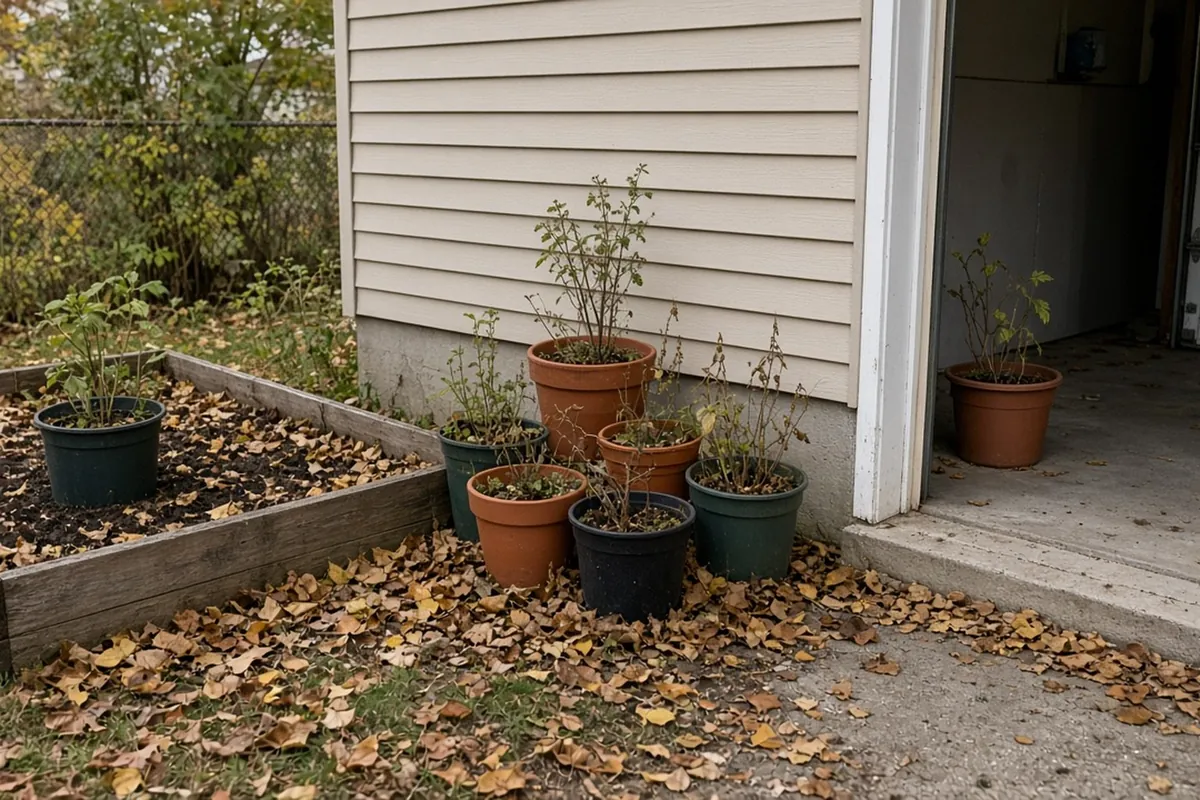
A plant that doesn't pass can still come through winter. Bury the pot in a bed or move it to an unheated garage, the plans in the bury, group or garage guide.
Source: Illinois Extension, overwintering potted plants, checked October 6, 2026.
Where it bends
When the rule matters less
- The pot spends winter in an unheated garage or shed. Iowa State Extension suggests about 20 to 45°F for that kind of storage, which keeps the roots well above the outdoor lows.
- The pot is buried in a bed. Illinois Extension says the soil around a buried pot insulates it, much like a plant in the ground.
- Pots are grouped on the north or east side of a building and mulched heavily. Illinois Extension lists that as a way to protect pots left outside, so a plant right at the edge of the rule has better odds.
- Your zone may have moved. USDA said about half of the country shifted to the next warmer half zone on the 2023 map, so look your zip code up again if you last checked in 2012.
Source: Iowa State Extension, overwintering unplanted trees, shrubs and perennials, checked October 7, 2026; Illinois Extension, overwintering potted plants, checked October 6, 2026; USDA ARS news release, November 15, 2023, checked October 6, 2026.
A mild winter or two doesn't prove a plant passes. The zone is an average of the coldest nights, and USDA notes that any winter can be colder than that average.
Source: USDA ARS, how to use the zone maps, checked October 6, 2026.
Print it, tick it off
Two zones colder check
Run this check before you plant a perennial in a pot that will stay outside.
- My zone from the zip-code listing, letter dropped
- My zone minus two, written down
- The lowest zone on the tag is at or below that number
- The pot is as large as the spot allows
- A winter spot picked: grouped by a wall, buried, or the garage
- Logged the plant, the pot and its winter plan on the pot list
What people learn the second year
Tips and tricks
- Read the first number on the tag. A tag that says zones 4 to 8 is hardy to zone 4. That first number is the one to check against your own zone minus two.
- Snap the tag before you lose it. Take a phone photo of each plant tag the day you pot it up. Plastic tags fade or vanish by winter.
- Group the doubtful ones. Keep a short list of pots that only just pass or fail the rule. Those are the ones to bury, huddle against a wall or move into the garage first.
- Write the coldest night down. Note the lowest temperature you see each winter next to your pot list. Over a few years it shows how your patio compares with the zone average.
Common questions
Questions
What does two zones colder mean for container plants?
It means the plant's tag should list a zone two numbers below yours. In zone 6, look for a tag that reaches zone 4. Illinois Extension recommends it for perennials that stay outside in pots.
Source: Illinois Extension, overwintering potted plants, checked October 6, 2026.
Does a big pot replace the two-zone rule?
No. Illinois Extension lists large containers as a separate tip because they protect roots better than small pots. Neither extension page says a big pot alone makes up for a plant that isn't hardy enough.
Source: Illinois Extension, overwintering perennial patio containers, checked October 7, 2026.
My plant is only hardy to my own zone. Can it winter in its pot?
Not outside on a patio, by this rule. Bury the pot in a garden bed or keep it in an unheated garage or shed at about 20 to 45°F, as Iowa State Extension describes.
Source: Iowa State Extension, overwintering unplanted trees, shrubs and perennials, checked October 7, 2026.
Do I count half zones?
Use the whole number. Plant tags list whole zones, so a 6a or 6b yard is zone 6, and the tag should reach zone 4.
Does the rule apply to annuals?
No. Annuals finish in one season, and tender plants that come indoors for winter never face the outdoor cold. The rule is for perennials, shrubs and small trees that stay outside in their pots.
The arithmetic, done for you
Tools for this job
- 🌡️ LookupUSDA zone finder by zip codeFind your 2023 USDA plant hardiness zone by zip code, see its winter low band in °F and °C, and check a plant tag's zone range against it.Open the tool
- 🏺 CalculatorContainer soil calculatorHow much potting mix to buy for round pots, square planters and window boxes: quarts, cubic feet and bag counts, filled an inch below the rim.Open the tool
Keep reading
More guides
 🧰 Problem solverBury it, group it or garage it: a winter plan for every potPotted perennials die in winter when their roots freeze. Three extension-backed winter plans, how to pick one per pot, and a checklist.Read the guide
  🧰 Problem solverBags or bulk: when a cubic yard delivery is cheaperHow to compare bagged soil, mulch or compost with a bulk cubic yard: price per cubic foot, the delivery fee, and the bag count where bulk wins.Read the guide
  ✅ ChecklistFall compost bin reset: empty the finished compost, then rebuild with leavesPull out the finished compost, spread it on your beds, then rebuild the bin 3 ft each way with fall leaves and greens, damp as a wrung-out sponge.Read the guide
Sources
- Overwintering potted plants, University of Illinois Extension, published November 27, 2024. Checked October 6, 2026.
- Overwintering Perennial Patio Containers, University of Illinois Extension, Hort in the Home Landscape blog, published November 10, 2014. Checked October 7, 2026.
- Overwintering Unplanted Trees, Shrubs and Perennials, Iowa State University Extension and Outreach, Yard and Garden. Checked October 7, 2026.
- 2023 USDA Plant Hardiness Zone Map, USDA Agricultural Research Service. Checked October 6, 2026.
- 2023 USDA Plant Hardiness Zone GIS Datasets, PRISM Group, Oregon State University (for USDA). Checked October 6, 2026.
- USDA Unveils Updated Plant Hardiness Zone Map, USDA Agricultural Research Service, published November 15, 2023. Checked October 6, 2026.
- How to Use the Maps, USDA Plant Hardiness Zone Map, USDA Agricultural Research Service. Checked October 6, 2026.
Planning guide, not a guarantee. See every source on the site on the sources page. Spotted an error? Tell us.