🧰 Problem solverZones5 min read
It froze after the last frost date: how to read the odds
Quick answer
The "average" last frost date is NOAA's 50% date: in about half of springs, a 32°F night still comes after it. So a frost a week later means you landed in the other half of springs. NOAA also publishes a 10% date, which a freeze passes in only about 1 spring in 10. For Columbus, Ohio, those are April 20 and May 7. Plan tender plants around the later date, and check the three nearest stations, since dates can differ by weeks within a few miles.
Source: NOAA 1991-2020 annual/seasonal normals documentation, checked October 7, 2026; NOAA 1991-2020 U.S. Climate Normals, annual/seasonal, checked October 7, 2026.

Why it happens
The average date is a coin flip
NOAA doesn't publish one last frost date. For each station it publishes the date at several probabilities, from 10% to 90% in steps of 10, built from 30 years of readings, 1991 to 2020. The date most charts call "average" is the 50% one.
Source: NOAA 1991-2020 annual/seasonal normals documentation, checked October 7, 2026; NOAA 1991-2020 U.S. Climate Normals, annual/seasonal, checked October 7, 2026.
The 50% date sits in the middle, so in about half of springs the last freezing night comes after it. If you planted on that date and got frost a week later, the data was right and you landed in the later half.
Source: NOAA 1991-2020 annual/seasonal normals documentation, checked October 7, 2026.
- About halfof springs still freeze after the 50% dateNOAA 1991-2020 annual/seasonal normals documentation, October 7, 2026
- 1 in 10springs freeze after the 10% dateNOAA 1991-2020 annual/seasonal normals documentation, October 7, 2026
- 17 daysfrom April 20 to May 7 at the Columbus stationNOAA 1991-2020 U.S. Climate Normals, annual/seasonal, October 7, 2026
- 17 daysbetween Baltimore stations 9 miles apartNOAA 1991-2020 U.S. Climate Normals, annual/seasonal, October 7, 2026
Read the table
Three spring dates, three fall dates
| NOAA column | Spring: a freeze still comes later in | Columbus spring | Fall: the first freeze has already come in | Columbus fall |
|---|---|---|---|---|
| 10% | about 1 year in 10 | May 7 | about 1 year in 10 | October 13 |
| 50% | about half of years | April 20 | about half of years | October 24 |
| 90% | about 9 years in 10 | April 5 | about 9 years in 10 | November 4 |
Columbus WCMH station, nearest to zip code 43215. The spring 10% date is the latest and the fall 10% date is the earliest: those two mark the cautious edges.
Source: NOAA 1991-2020 U.S. Climate Normals, annual/seasonal, checked October 7, 2026; NOAA 1991-2020 annual/seasonal normals documentation, checked October 7, 2026.
Between the two 10% dates, May 7 and October 13, Columbus has 159 days. Between the typical dates it has 187. The first is the season you can count on in 9 years out of 10. The second is the season you get in a middle-of-the-road year.
Source: NOAA 1991-2020 U.S. Climate Normals, annual/seasonal, checked October 7, 2026.
Where it happens
The station can be the problem
A frost date belongs to one weather station, not to your zip code. Stations sit on airports, rooftops, river bottoms and hills, and a few miles can change the date by weeks. For zip code 21201 in Baltimore, the nearest station is in the city by the harbor at 20 ft, with a typical last spring frost of March 24. Cylburn, 4.4 miles away at 235 ft, says April 2. The airport station, 9.4 miles out, says April 10.
Source: NOAA 1991-2020 U.S. Climate Normals, annual/seasonal, checked October 7, 2026.
A yard in a low spot or out in open country can frost before a city station reads 32°F, so a downtown date can run early for a suburban garden. Pick the station that looks most like your yard, not just the closest one.
Source: NOAA 1991-2020 annual/seasonal normals documentation, checked October 7, 2026.
Before next spring
How to set your own date, step by step
Look up your zip code
Type it into the frost date lookup. It finds the three nearest NOAA stations within 100 miles.
Source: NOAA 1991-2020 U.S. Climate Normals, annual/seasonal, checked October 7, 2026.
Pick the station like your yard
Compare distance and height. If your garden is in a dip, near a creek or out in the open, lean toward the later spring date among the three.
Write down both spring dates
Copy the typical date and the 1 in 10 date. The gap between them is your risk window.
Source: NOAA 1991-2020 annual/seasonal normals documentation, checked October 7, 2026.
Plan by what each plant can take
Cool-season and hardy plants go out near the typical date. Tender transplants wait for the 1 in 10 date or a clear forecast.
Source: NOAA 1991-2020 annual/seasonal normals documentation, checked October 7, 2026.
Log the real frosts
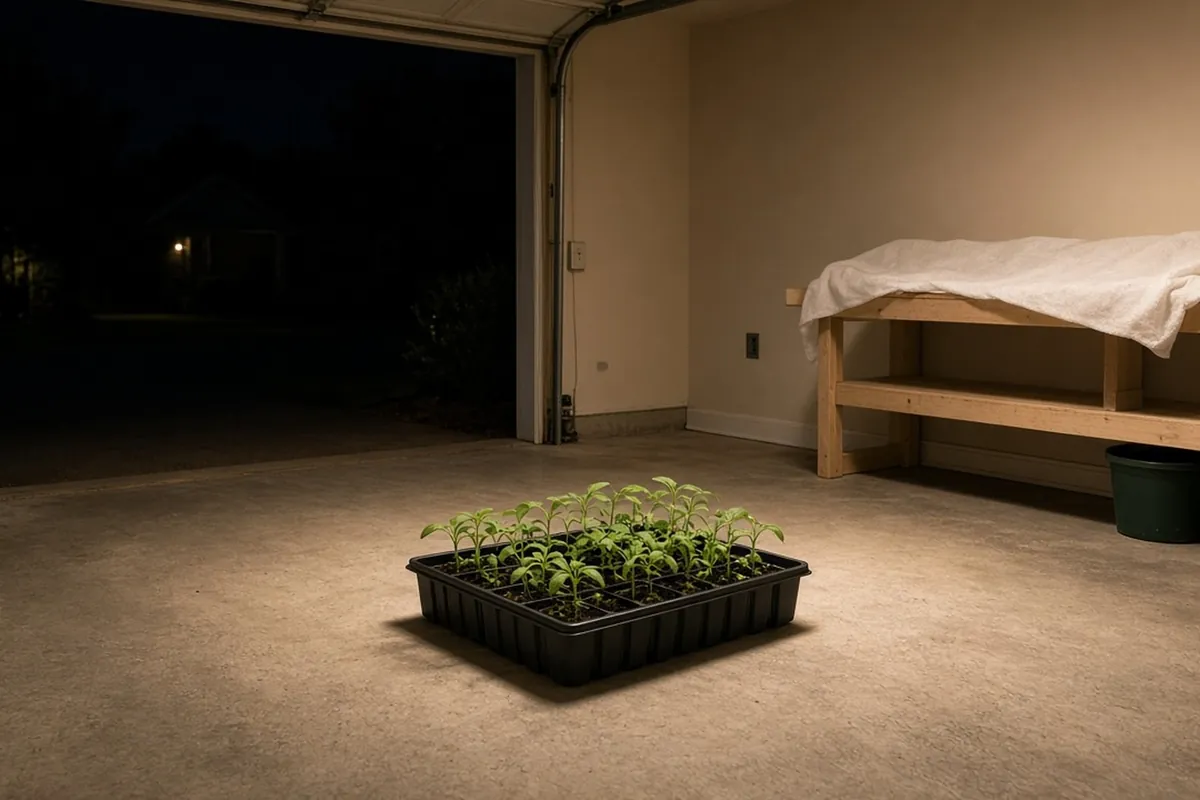
Print the frost date card and write down each year's actual last and first frost. After three or four years you'll know whether your yard runs early or late against the station.
The other end
The same odds in fall
Fall works in mirror image. At the typical first fall frost, about half of years have already had one. The 10% fall date is the early edge: only about 1 fall in 10 freezes before it. In Columbus that's October 13, so plans for the last harvest or bringing pots in are better counted back from there than from October 24.
Source: NOAA 1991-2020 annual/seasonal normals documentation, checked October 7, 2026; NOAA 1991-2020 U.S. Climate Normals, annual/seasonal, checked October 7, 2026.
Print it, tick it off
My frost date plan
Fill this in from the lookup, then check it each spring and fall.
- Station chosen, its distance and height
- Spring: typical date and 1 in 10 later date
- Fall: 1 in 10 earlier date and typical date
- Plants that go out at the typical date
- Plants that wait for the 1 in 10 date
- Forecast checked the week before planting out
- This year's real last and first frost, written down
What people learn the second year
Tips and tricks
- Read all three stations. If they disagree by more than a week, your area has big local differences. Pick the one that matches your yard's height and setting.
- Airport stations sit in the open. An airport is flat and open. A sheltered city lot can run earlier and an open suburban yard can run later, so treat the airport as a middle guess.
- Plant in two waves. Put out a few tender plants at the typical date and hold the rest for the 1 in 10 date. A late frost then hits only half of them. (NOAA 1991-2020 annual/seasonal normals documentation)
- Keep the forecast in charge. The calendar sets the window. The forecast for the coming week decides the day.
- Note where the frost hit. When frost comes late, write down which bed got it. Low corners and open lawn often frost first.
Common questions
Questions
Why did it frost after the last frost date?
Because the usual "last frost date" is NOAA's 50% date. In about half of springs, a 32°F night still comes after it.
Source: NOAA 1991-2020 annual/seasonal normals documentation, checked October 7, 2026.
What does the 1 in 10 frost date mean?
It's NOAA's 10% date. In spring, a freeze still comes after it in about 1 year out of 10. In fall, the first freeze has already come before it in about 1 year out of 10.
Source: NOAA 1991-2020 annual/seasonal normals documentation, checked October 7, 2026.
How accurate are last frost dates?
They're accurate as 30-year statistics for one station, 1991 to 2020. They can't tell you what this spring will do, and your yard can differ from the station.
Source: NOAA 1991-2020 U.S. Climate Normals, annual/seasonal, checked October 7, 2026.
Which weather station should I use for frost dates?
The one most like your yard: similar height, similar setting (city, open country, valley, near water), and close by. The frost date lookup shows the three nearest with their distance and height so you can compare.
Should I plant on the last frost date?
For tender plants, the later 1 in 10 date plus a clear forecast is the cautious choice. Hardy plants can go out around the typical date.
Source: NOAA 1991-2020 annual/seasonal normals documentation, checked October 7, 2026.
The arithmetic, done for you
Tools for this job
- ❄️ LookupFrost date lookup by zip codeFind the typical last spring and first fall frost for your zip code from NOAA 1991 to 2020 station normals, with the 1 in 10 year dates and a printable card.Open the tool
- 🌡️ LookupUSDA zone finder by zip codeFind your 2023 USDA plant hardiness zone by zip code, see its winter low band in °F and °C, and check a plant tag's zone range against it.Open the tool
Keep reading
More guides
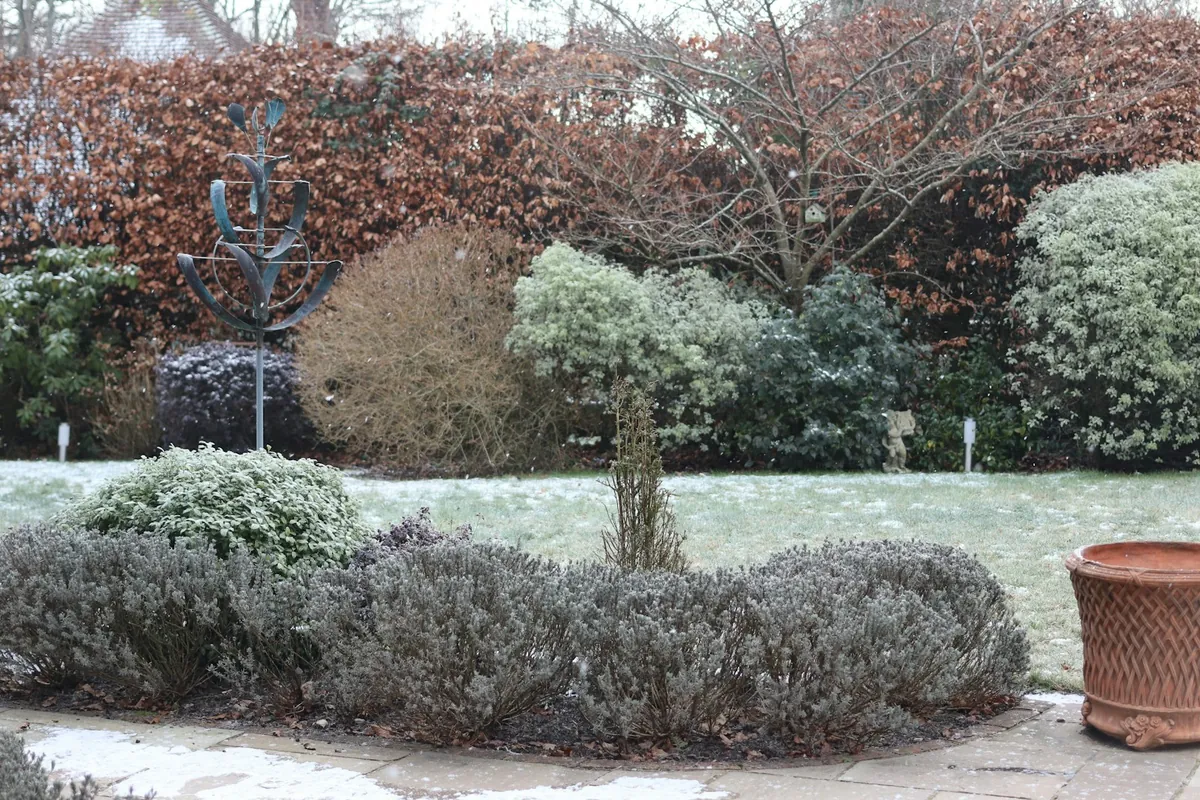 🧰 Problem solverOne corner of the yard frosts first: find and fix a frost pocketFrost in the low corner but not by the house? Cold air drains downhill on still nights. How to find a frost pocket, open it up and plant around it.Read the guide
 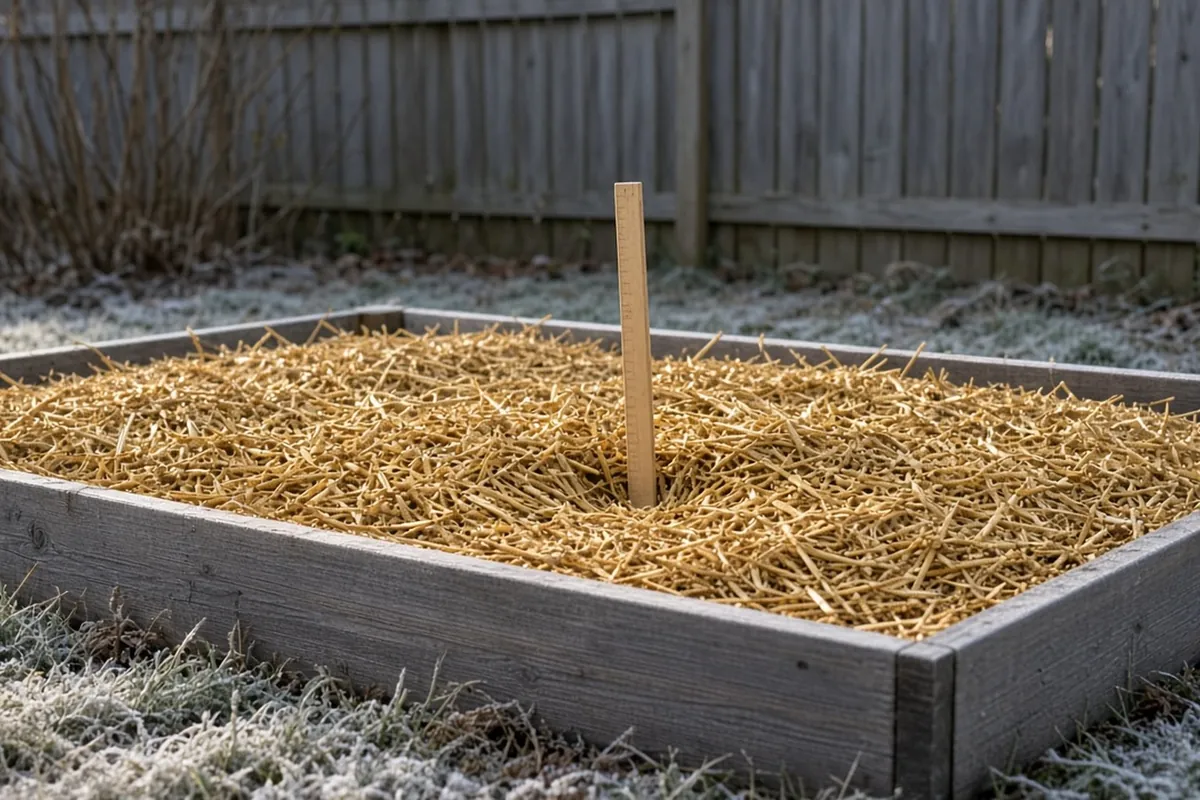 📘 Know-howHow deep to mulch garlic in cold zones, and when to pull the mulch backExtension pages put 3 to 4 inches of straw or leaves on fall garlic. See how much a bed takes, and when to pull it back, move it or leave it in spring.Read the guide
 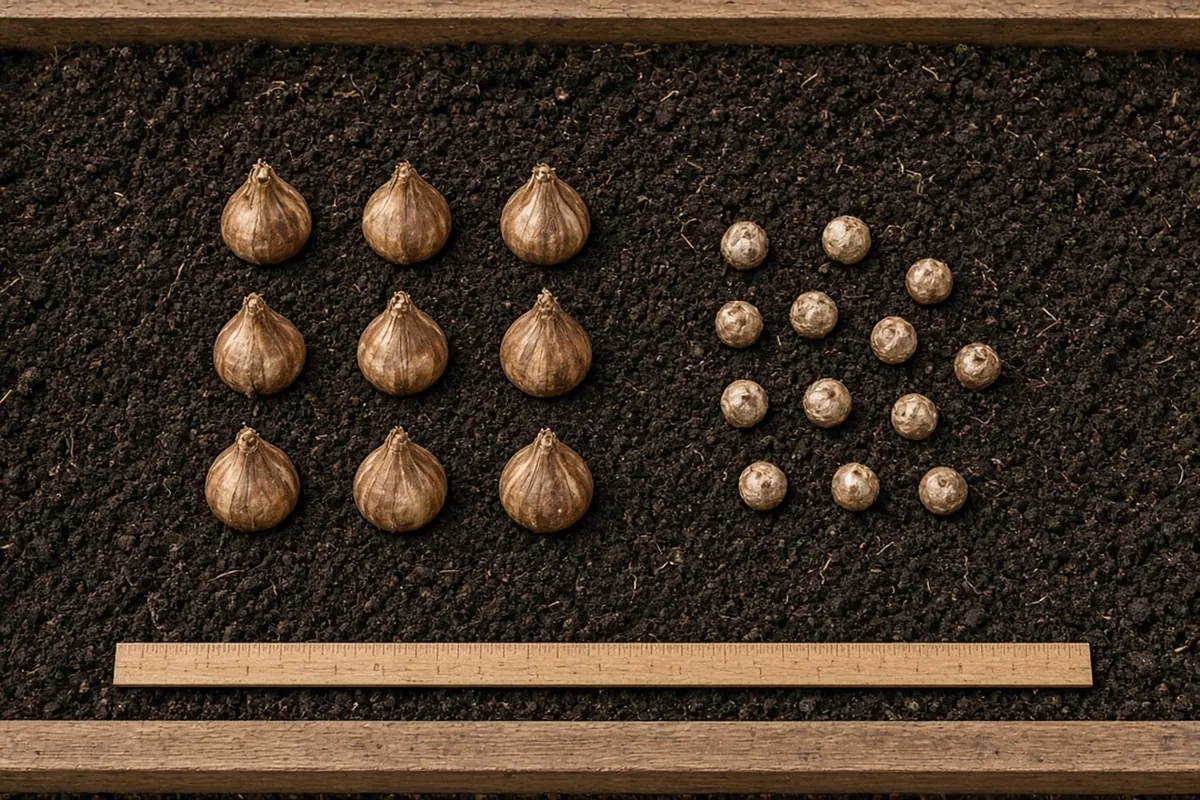 📘 Know-howHow many bulbs per square foot: tulips, daffodils and crocusTulips and daffodils at 6 inches apart come to 4 bulbs per square foot; crocus at 3 inches, 16. See the extension spacings and count a whole bed.Read the guide
Sources
- 1991-2020 U.S. Climate Normals documentation: Annual/Seasonal Normals, NOAA National Centers for Environmental Information (NCEI). Checked October 7, 2026.
- U.S. Climate Normals (1991-2020), annual/seasonal normals by station, NOAA National Centers for Environmental Information (NCEI). Checked October 7, 2026.
Planning guide, not a guarantee. See every source on the site on the sources page. Spotted an error? Tell us.