🧰 Problem solverZones4 min read
One corner of the yard frosts first: find and fix a frost pocket
Quick answer
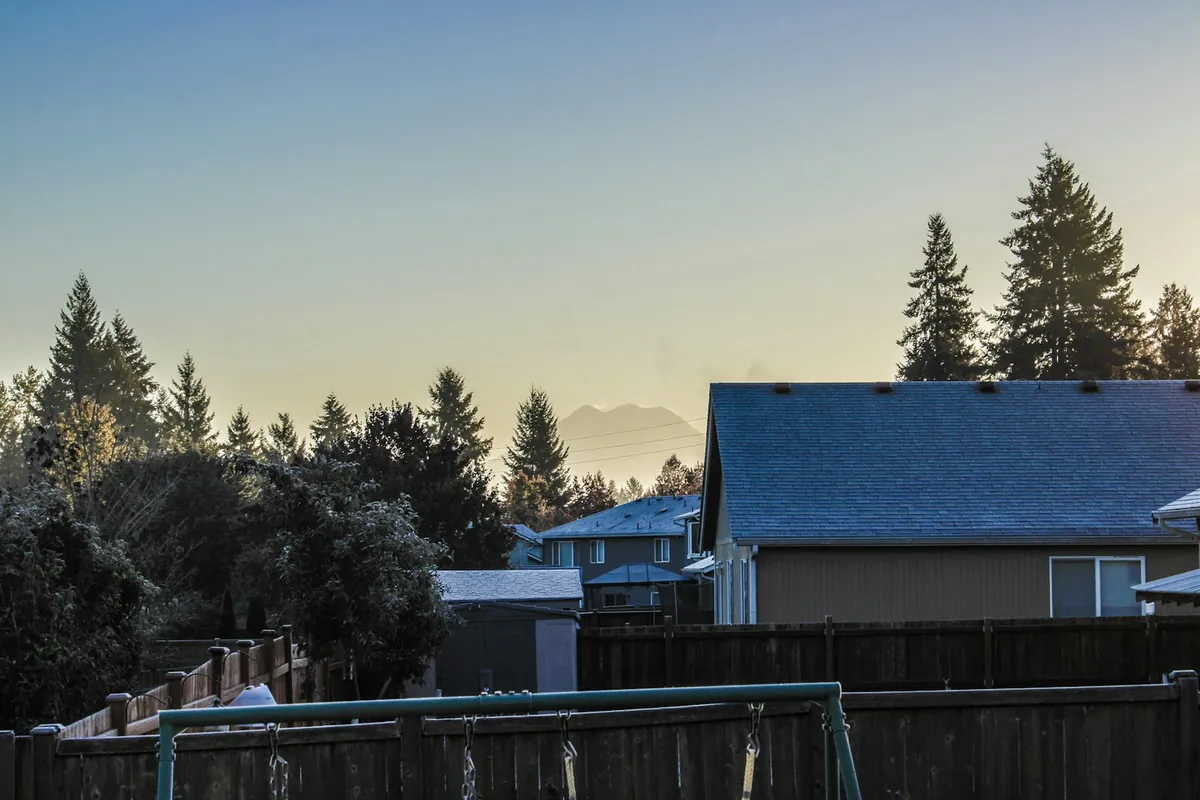
On clear, windless nights cold air forms near the ground, slides downhill and pools in the lowest spot, much like water. Purdue Extension says the air in these frost pockets can be as much as 15°F colder than the high ground around them. Find yours on a frosty morning, open any fence or hedge that dams the cold air at the low point, and keep tender plants out of it in spring and fall.
Source: Purdue Extension HO-203-W, cold weather, checked October 11, 2026.

The cause
Why the low corner frosts first
On a clear night with no wind, the ground loses heat fast and chills the air right above it. Cold air is heavier than warm air, so it slides downhill and settles in the lowest ground. Purdue Extension calls these spots frost pockets.
Source: Purdue Extension HO-203-W, cold weather, checked October 11, 2026.
That's how one frost can coat the lawn at the bottom of the yard and leave the beds by the house alone. A thermometer in the low corner and one up the slope can show very different numbers on the same morning.
- 15°Fcolder in a frost pocket than the high ground, at mostPurdue Extension HO-203-W, cold weather, October 11, 2026
- 32°Fthe night low that frost dates are built onNOAA 1991-2020 annual/seasonal normals documentation, October 7, 2026
- 2 to 3 weekslater first fall freeze near Lake Michigan's shorePurdue Extension HO-203-W, cold weather, October 11, 2026
- 1 daylater spring for every 100 feet higher upWSU Skagit Extension, microclimates, October 11, 2026
Find it
How to find a frost pocket
Wait for a frosty morning
Go out early, before the sun reaches the ground. Note where the frost is thick and white and where it's thin or missing.
Follow the slope down
Walk downhill from the frosty patch. The pocket is usually the lowest ground, or the uphill side of something that blocks the flow.
Source: Purdue Extension HO-203-W, cold weather, checked October 11, 2026.
Look for dams
Check for a solid fence, a thick hedge, a wall or a shed running across the slope. Cold air backs up on their uphill side.
Put out two thermometers
Set one in the low corner and one up near the house, both at plant height. Read them on a cold, clear morning. Check that they agree with each other first, as Purdue advises.
Source: Purdue Extension HO-203-W, cold weather, checked October 11, 2026.
Log what you find
Write the date and both readings on the log below. After a few frosty mornings you'll know how much colder the corner runs.
Fix it
Fixes that work
- Open the dam. If a fence or hedge crosses the slope, an opening at its lowest point lets the cold air keep moving. Purdue describes the same idea on a bigger scale: openings cut through woods at the low points around an orchard act as drains for cold air.
- Plant the pocket with tougher plants. Purdue's answer for cold sites is hardier plants, and later planting dates for tender vegetables.
- Move tender plants uphill. Early-flowering shrubs and spring transplants do better on higher ground or by a south-facing wall, which gives back heat at night.
- Raise the bed if the pocket is wet too. Low spots often hold water as well as cold air, and Purdue lists raised beds as one way to improve drainage.
Source: Purdue Extension HO-203-W, cold weather, checked October 11, 2026; UGA Extension Forsyth, microclimates, checked October 11, 2026.
Know the limits
What a fix can't do
An opening only helps cold air that's moving. A hollow with no way out stays cold whatever you cut, so the fix there is plant choice and timing. And a frost pocket is a clear, still night problem. When a windy cold front brings freezing air across the whole region, the high ground freezes too.
Source: Purdue Extension HO-203-W, cold weather, checked October 11, 2026.
Print it, tick it off
Frost pocket log
Fill in a line for each frosty morning.
- Date and time of the reading
- Sky and wind the night before: clear and still, cloudy, or windy
- Low corner reading at plant height
- High ground reading at the same height
- Difference between the two
- Where the frost was white and where it was missing
- Fences, hedges or sheds across the slope, and any opening made
What people learn the second year
Tips and tricks
- Read both thermometers close together. Temperatures climb fast once the sun is up. Read the low one and the high one within a minute or two of each other.
- Flag the frost line. Push a garden stake in at the edge of the white frost on two or three mornings. The stakes outline the pocket better than memory does.
- Don't plant a new dam. A dense new hedge along the bottom of a slope can trap cold air behind it. Leave a gap at the lowest point.
- Check again after changes. A new shed, fence or raised patio can make a pocket where there wasn't one.
Common questions
Questions
What is a frost pocket?
A low spot where cold air collects on clear, still nights. Purdue Extension says the air there can be as much as 15°F colder than the high ground nearby.
Source: Purdue Extension HO-203-W, cold weather, checked October 11, 2026.
Why does frost hit one part of my yard and not another?
Cold air drains downhill and pools in low ground or behind solid fences and hedges. Spots beside walls and paving get some heat back at night, so they often stay clear.
Source: Purdue Extension HO-203-W, cold weather, checked October 11, 2026; UGA Extension Forsyth, microclimates, checked October 11, 2026.
Can I get rid of a frost pocket?
Sometimes. If a fence, hedge or building dams the cold air, an opening at the low point lets it drain away. A hollow with no outlet stays cold, so plant it with tougher plants instead.
Source: Purdue Extension HO-203-W, cold weather, checked October 11, 2026.
Does a frost pocket change my frost dates?
Your frost dates come from a NOAA station, and Purdue notes that station readings often miss the cold in frost pockets. Expect the pocket to frost later in spring and earlier in fall than the station, and log it to see by how much.
Source: Purdue Extension HO-203-W, cold weather, checked October 11, 2026; NOAA 1991-2020 annual/seasonal normals documentation, checked October 7, 2026.
The arithmetic, done for you
Tools for this job
- ❄️ LookupFrost date lookup by zip codeFind the typical last spring and first fall frost for your zip code from NOAA 1991 to 2020 station normals, with the 1 in 10 year dates and a printable card.Open the tool
- 🌡️ LookupUSDA zone finder by zip codeFind your 2023 USDA plant hardiness zone by zip code, see its winter low band in °F and °C, and check a plant tag's zone range against it.Open the tool
Keep reading
More guides
 🧰 Problem solverIt froze after the last frost date: how to read the oddsA last frost date is a coin flip, not a promise. How NOAA's 50% and 1 in 10 dates work, how to pick the right station, and which date to plan around.Read the guide
 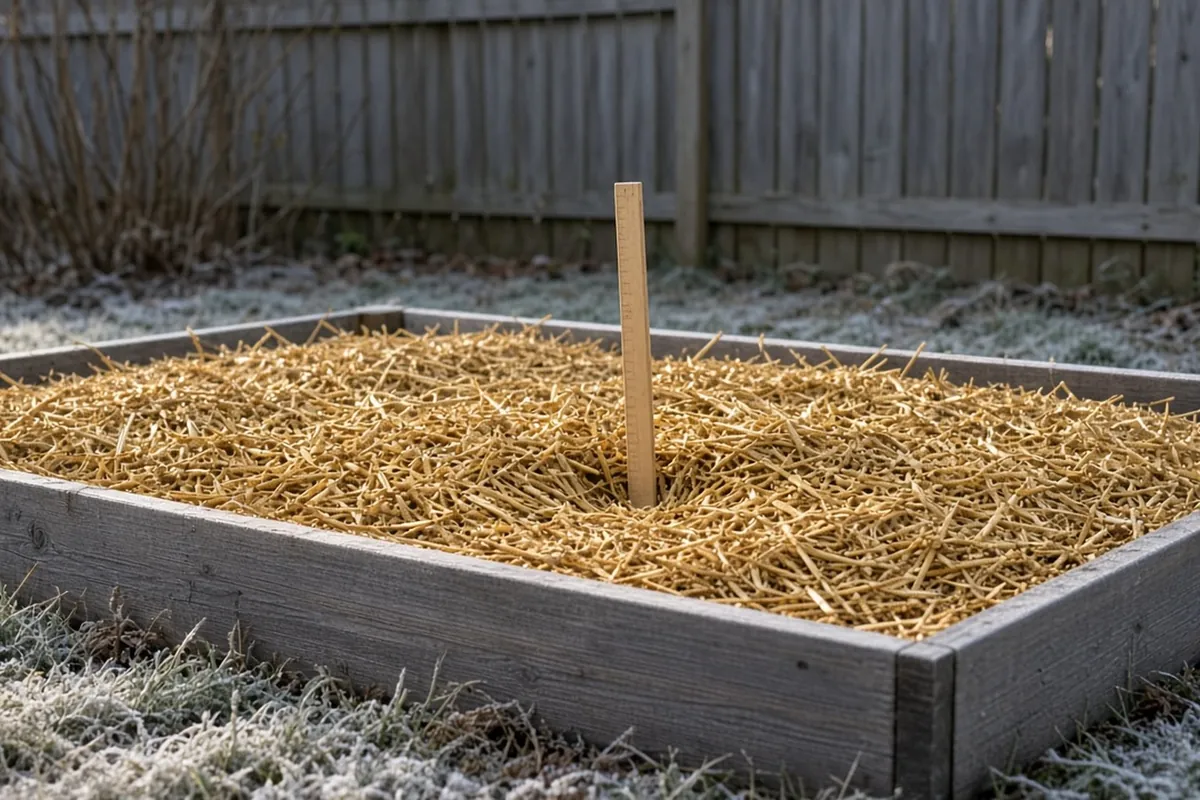 📘 Know-howHow deep to mulch garlic in cold zones, and when to pull the mulch backExtension pages put 3 to 4 inches of straw or leaves on fall garlic. See how much a bed takes, and when to pull it back, move it or leave it in spring.Read the guide
 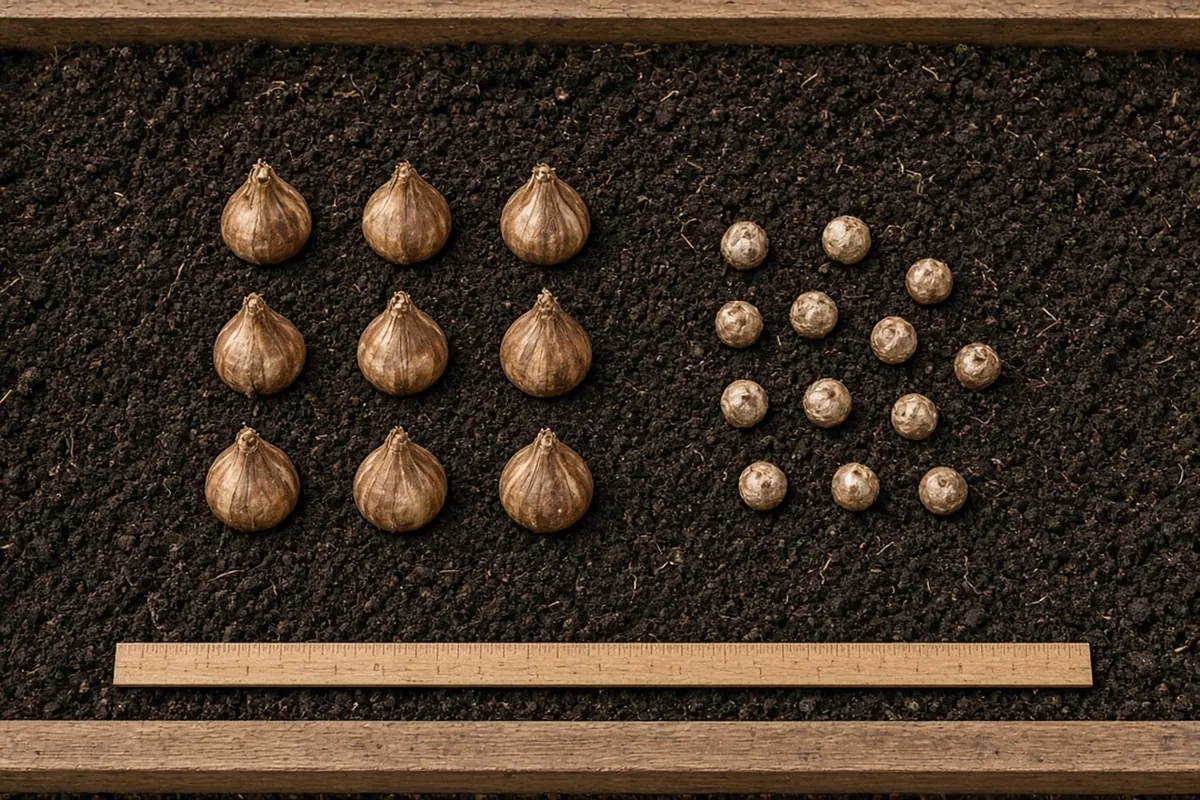 📘 Know-howHow many bulbs per square foot: tulips, daffodils and crocusTulips and daffodils at 6 inches apart come to 4 bulbs per square foot; crocus at 3 inches, 16. See the extension spacings and count a whole bed.Read the guide
Sources
- Effects of Cold Weather on Horticultural Plants in Indiana (HO-203-W), Purdue University Extension, published July 7, 2023. Checked October 11, 2026.
- 1991-2020 U.S. Climate Normals documentation: Annual/Seasonal Normals, NOAA National Centers for Environmental Information (NCEI). Checked October 7, 2026.
- Understanding the Difference Between USDA Zones and Microclimates, Washington State University Extension, Skagit County Master Gardeners, published August 3, 2023. Checked October 11, 2026.
- Making the Most of Microclimates, University of Georgia Cooperative Extension, Forsyth County, published February 1, 2021. Checked October 11, 2026.
Planning guide, not a guarantee. See every source on the site on the sources page. Spotted an error? Tell us.