📘 Know-howZones5 min read
How to read a plant tag: zones, sun hours, size and spacing
Quick answer
Check four lines. The zone range has to include your zone. The sun label has to match the hours your spot gets: University of Maryland Extension puts full sun at 6 or more hours of summer sun, part sun and part shade at 4 to 6, and shade at 4 or less. Height and spread are the plant's grown size, not its size in the pot. Spacing is the gap from the center of one plant to the center of the next.
Source: UMD Extension Frederick County, sun on plant labels, checked October 11, 2026.

The tag
The lines that matter
Most tags carry the same few facts. The order changes from grower to grower and the back is often in small print, but you're looking for a name, a zone range, a sun label, a height and spread, and a spacing. The care notes help later, but these lines decide whether the plant suits your yard.
Line 1
The zone range
A tag that says zones 4 to 8 means the plant is expected to come through winter outdoors in zones 4 through 8. Your zone has to sit inside that range. The coldest number is the one that matters most where winters are hard; the warmest matters in the South, where some plants don't get the cold they need. If you aren't sure whether you're the colder a half or the warmer b half of your zone, Wisconsin Extension says to pick plants rated for the colder one.
Source: Wisconsin Extension, hardiness zone maps (Jull), checked October 11, 2026.
Line 2
The sun label, in hours
Sun words on a label stand for hours of direct sun in summer. University of Maryland Extension spells them out. Full sun is 6 or more hours, afternoon sun included. Part sun and part shade both mean 4 to 6 hours, with a difference: part sun plants can take some of those hours in the hot afternoon, while part shade plants want them before midday. Shade plants want no more than 4 hours, filtered or in the morning.
Source: UMD Extension Frederick County, sun on plant labels, checked October 11, 2026.
- 6+ hoursfull sun, afternoon sun includedUMD Extension Frederick County, sun on plant labels, October 11, 2026
- 4 to 6 hourspart sun or part shadeUMD Extension Frederick County, sun on plant labels, October 11, 2026
- 4 hours or lessshade, filtered or morning onlyUMD Extension Frederick County, sun on plant labels, October 11, 2026
- 5°Fbetween the a and b halves of a zoneWisconsin Extension, hardiness zone maps (Jull), October 11, 2026
A tag with two icons, say full sun and part shade, is telling you the plant will grow in either. The direction a bed faces gives a first guess: the Maryland article calls south the harshest exposure and north the kindest, with west getting the hot afternoon sun and east the milder morning sun. Trees and fences change that, so count the hours in the spot itself.
Source: UMD Extension Frederick County, sun on plant labels, checked October 11, 2026.
Check it
Check a tag against your yard
Know your zone first
Look up your 2023 zone by zip code before you shop, and write it on your phone or a card in the car.
Source: USDA Plant Hardiness Zone Map (2023), checked October 6, 2026.
Read the coldest zone on the tag
If your zone is colder than the lowest number, the plant isn't expected to survive your winters in the ground.
Count the sun where it will go
Note sun or shade in the spot in the morning, at noon and in the afternoon, then add up the sunny hours and compare them with the label.
Plan for the grown size
Use the height and spread, not the pot, to decide where it goes. A small pot gives no hint of how wide the plant gets.
Space by the tag
Measure center to center at the spacing on the tag. The gaps will look big in the first season.
Keep the tag
Take a photo of the front and back, then note where you planted it on the log below.
Pots
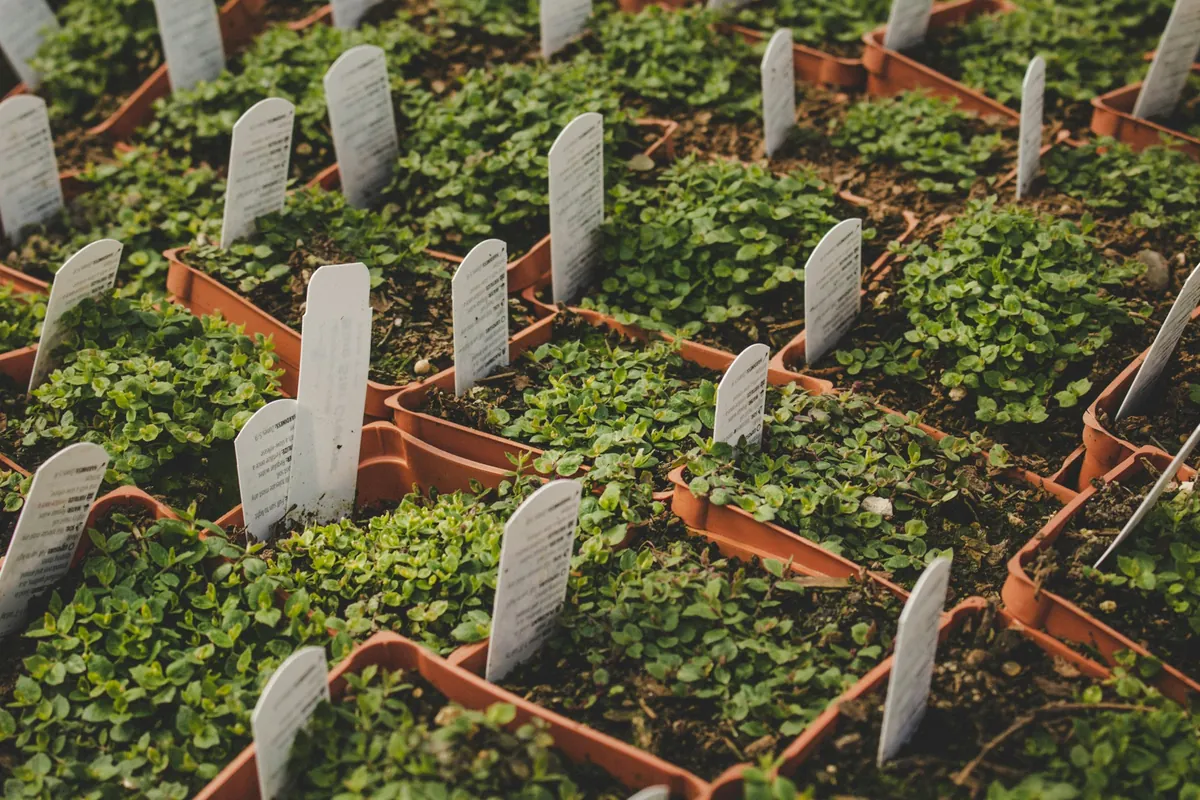
Reading a tag for a pot
The zone range on a tag is for plants in the ground. Roots in a pot sit in a small amount of soil that gets much colder than garden soil, so Illinois Extension says to choose plants that will survive two zones colder than where the pot spends the winter. For mixed pots, the Maryland article adds one more check: every plant in the pot should want the same light.
Source: Illinois Extension, overwintering potted plants, checked October 6, 2026; UMD Extension Frederick County, sun on plant labels, checked October 11, 2026.
Print it, tick it off
Plant tag check
Fill in a line for each plant before it goes in the ground.
- Plant name, common and botanical, as on the tag
- Zone range on the tag, and my zone
- Sun on the tag, and sunny hours I counted in the spot
- Height and spread on the tag
- Spacing on the tag, and spacing I used
- Ground or pot, and where in the yard
- Photo of the tag taken
What people learn the second year
Tips and tricks
- Photograph both sides. Tags fade, blow away and get pulled out with the weeds. A phone photo of the front and back keeps the details for good.
- Read the botanical name. Common names get shared between different plants. The italic name on the tag is the one to search when you want to know more.
- Count sun in midsummer. Sun hours on a label mean summer sun. A spot counted in early spring, before the trees leaf out, will read sunnier than it is.
- Ask about the zone edge. If your zone is the last number in the range, ask the nursery how the plant has done in local yards before you buy several.
Common questions
Questions
What does the zone range on a plant tag mean?
It's the range of USDA zones where the plant is expected to survive winter outdoors in the ground. Your zone needs to sit inside it. A plant tagged zones 4 to 8 fits a zone 6 yard.
How many hours is full sun?
University of Maryland Extension defines full sun as 6 or more hours of summer sun a day, including afternoon sun. Part sun and part shade are 4 to 6 hours, and shade is 4 hours or less.
Source: UMD Extension Frederick County, sun on plant labels, checked October 11, 2026.
What is the difference between part sun and part shade?
Both mean 4 to 6 hours of sun. A part sun plant can take some of that sun in the afternoon; a part shade plant wants its sun before midday, according to University of Maryland Extension.
Source: UMD Extension Frederick County, sun on plant labels, checked October 11, 2026.
Can I trust the zone on a plant tag?
Use it as a starting point. Wisconsin Extension notes that labels often overstate cold hardiness, especially on plants from large out of state growers, and suggests buying from a local source you trust.
Source: Wisconsin Extension, hardiness zone maps (Jull), checked October 11, 2026.
The arithmetic, done for you
Tools for this job
- 🌡️ LookupUSDA zone finder by zip codeFind your 2023 USDA plant hardiness zone by zip code, see its winter low band in °F and °C, and check a plant tag's zone range against it.Open the tool
- 🗺️ SectionAll zones toolsFind your 2023 USDA hardiness zone and your NOAA frost dates by zip code, with a printable hardiness log and a frost date card.See the section
Keep reading
More guides
 🧰 Problem solverIt froze after the last frost date: how to read the oddsA last frost date is a coin flip, not a promise. How NOAA's 50% and 1 in 10 dates work, how to pick the right station, and which date to plan around.Read the guide
  🧰 Problem solverOne corner of the yard frosts first: find and fix a frost pocketFrost in the low corner but not by the house? Cold air drains downhill on still nights. How to find a frost pocket, open it up and plant around it.Read the guide
  📘 Know-howHow deep to mulch garlic in cold zones, and when to pull the mulch backExtension pages put 3 to 4 inches of straw or leaves on fall garlic. See how much a bed takes, and when to pull it back, move it or leave it in spring.Read the guide
 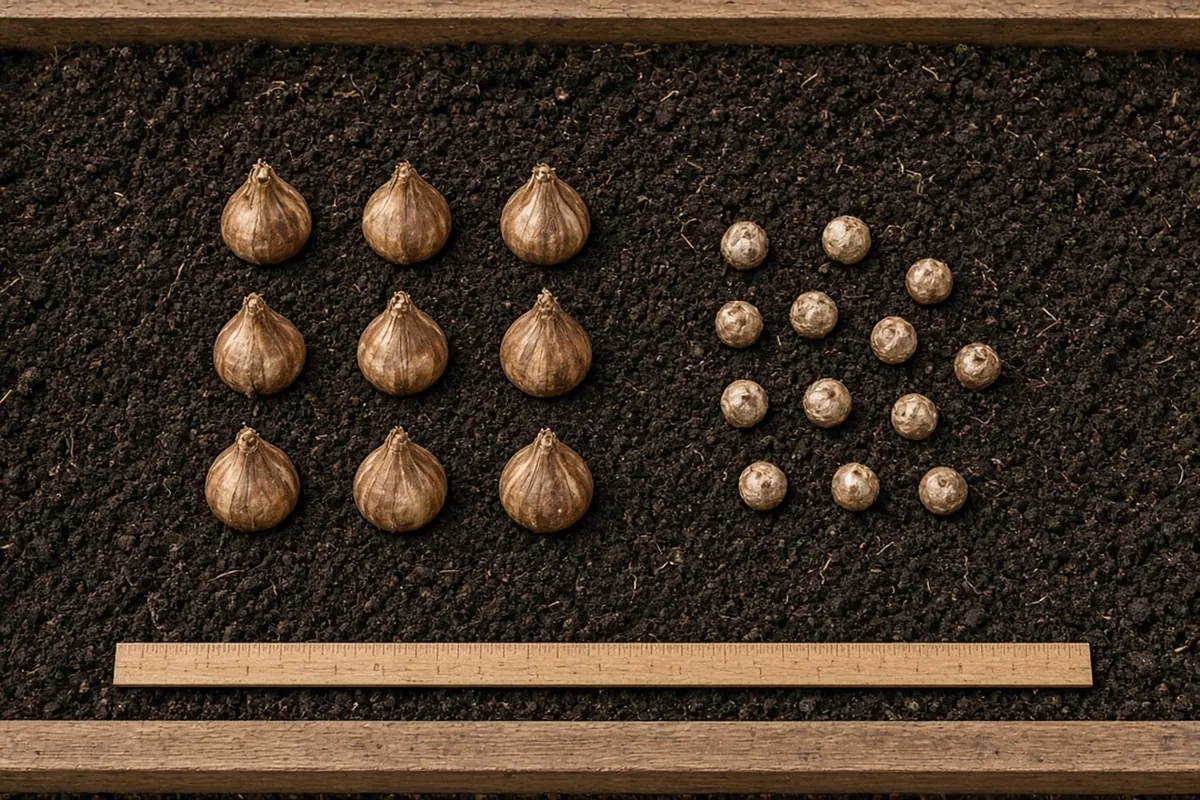 📘 Know-howHow many bulbs per square foot: tulips, daffodils and crocusTulips and daffodils at 6 inches apart come to 4 bulbs per square foot; crocus at 3 inches, 16. See the extension spacings and count a whole bed.Read the guide
Sources
- Seeing the Light of Day, University of Maryland Extension, Frederick County Extension Master Gardeners. Checked October 11, 2026.
- Hardiness Zone Maps, University of Wisconsin-Madison Division of Extension. Checked October 11, 2026.
- 2023 USDA Plant Hardiness Zone Map, USDA Agricultural Research Service. Checked October 6, 2026.
- Overwintering potted plants, University of Illinois Extension, published November 27, 2024. Checked October 6, 2026.
Planning guide, not a guarantee. See every source on the site on the sources page. Spotted an error? Tell us.