🧰 Problem solverZones4 min read
The tag says zone 7 and you're in zone 6: what you can do
Quick answer
Measure the gap first. Each zone is 10°F and each half zone is 5°F. Wisconsin Extension advises caution even with plants rated half a zone warmer than your area, and suggests trying a few in small numbers. Put that plant in your most sheltered spot, such as a bed against the house. If the gap is a full zone or more, plan on one season outdoors or a pot that comes inside for winter.
Source: Wisconsin Extension, hardiness zone maps (Jull), checked October 11, 2026.

Step one
How big is the gap?
Zones are built on the average coldest winter night over 30 years. Each full zone covers 10°F, split into a colder a half and a warmer b half 5°F apart. So a plant tagged for zone 6b in a 6a yard is 5°F short on an average winter. A plant tagged for zone 7 in a zone 6 yard is short by 10°F or so.
Source: Wisconsin Extension, hardiness zone maps (Jull), checked October 11, 2026.
- 10°Fbetween one full zone and the nextWisconsin Extension, hardiness zone maps (Jull), October 11, 2026
- 5°Fbetween the a and b halves of a zoneWisconsin Extension, hardiness zone maps (Jull), October 11, 2026
- ½ to 1 zoneless hardy, for flower buds on some trees and shrubsWisconsin Extension, hardiness zone maps (Jull), October 11, 2026
- 2 zonescolder to plan for when the plant stays in a potIllinois Extension, overwintering potted plants, October 6, 2026
Half a zone
If you want to try it
Buy one or two, not ten
Wisconsin Extension's advice for a new or borderline plant is to try a few in small numbers first and see how they do.
Source: Wisconsin Extension, hardiness zone maps (Jull), checked October 11, 2026.
Pick the most sheltered spot
Beds against a building, under trees, in a closed-in courtyard or near water can help a borderline plant survive, according to Wisconsin Extension.
Source: Wisconsin Extension, hardiness zone maps (Jull), checked October 11, 2026.
Stay out of the low corner
Frost pockets run colder than the rest of the yard, so keep the plant uphill of where cold air settles.
Source: Wisconsin Extension, hardiness zone maps (Jull), checked October 11, 2026.
Water it into fall
Dry plants come through winter worse, new plantings and evergreens most of all. Wisconsin Extension says fall watering helps, and snow cover insulates.
Source: Wisconsin Extension, hardiness zone maps (Jull), checked October 11, 2026.
Write it down
Note the plant, the tag's zones and the spot on the log below. Check it in spring and write down what came back.
A full zone or more
When the gap is too big
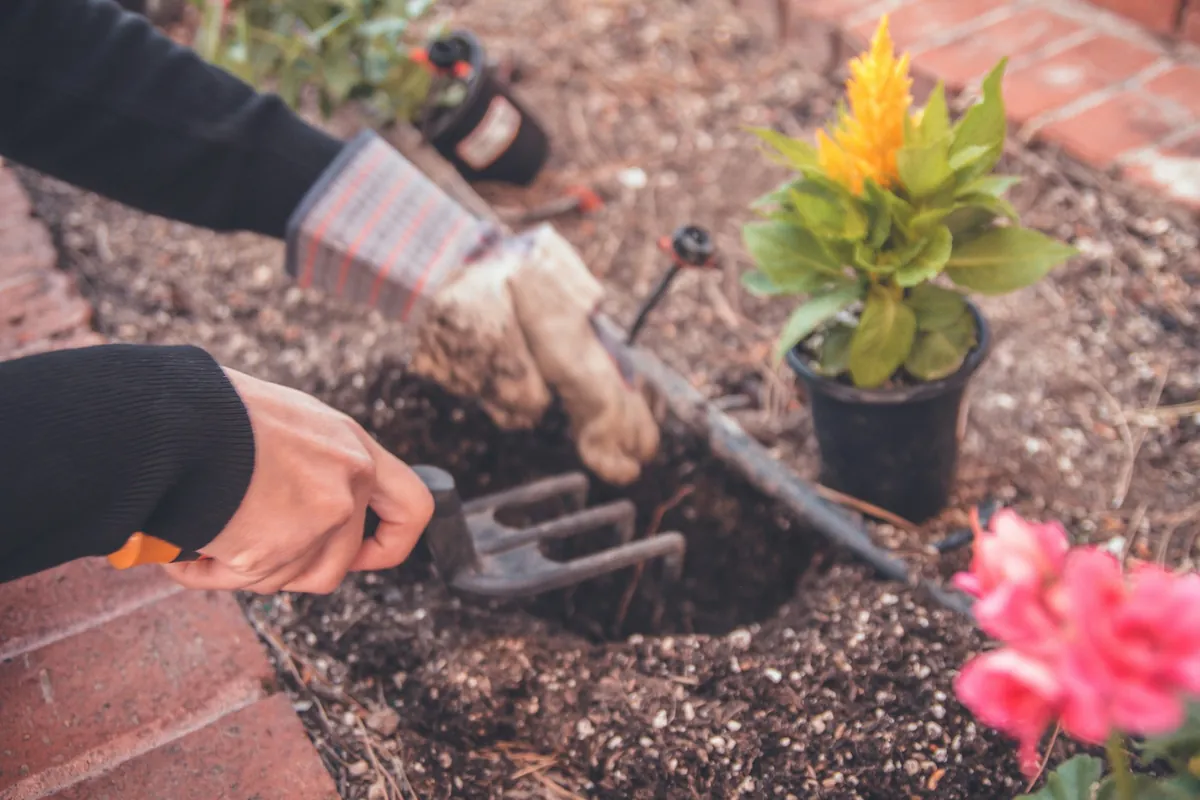
At a full zone or more, don't count on the plant surviving winter outside. Enjoy the plant for one season and replace it, or grow it in a pot and move it somewhere sheltered for winter. Illinois Extension names an unheated garage, a shed or a cool basement as good winter spots for potted plants. Leaving the pot outside is the worst of both: roots in a pot get colder than roots in the ground, and Illinois Extension says a potted plant needs to be hardy two zones colder than the yard.
Source: Illinois Extension, overwintering potted plants, checked October 6, 2026.
Near a zone line
If you live near the edge of a zone
Zone lines are drawn from averages, and a cold winter doesn't follow them. Iowa State Extension's rule for a yard near a boundary between two zones is to choose plants hardy for the colder zone. Wisconsin Extension says the same about the a and b halves: if you're not sure which one you're in, go with the colder a.
Source: Iowa State Extension, plant hardiness zone maps (1996), checked October 11, 2026; Wisconsin Extension, hardiness zone maps (Jull), checked October 11, 2026.
Print it, tick it off
Borderline plant log
One line per plant you're trying outside its zone. Fill in the last two each spring.
- Plant name and where it came from
- Zones on the tag, and my zone with its a or b half
- Gap: half a zone or a full zone
- Spot in the yard and why it's sheltered
- Date planted
- Winter notes: snow cover, coldest night I saw
- Spring check: came back, died back or lost
What people learn the second year
Tips and tricks
- Buy locally for borderline plants. Wisconsin Extension suggests buying from a local source you trust, since labels on plants shipped in from far away often overstate hardiness. (Wisconsin Extension, hardiness zone maps (Jull))
- Give it a few winters. One mild winter proves little. Keep the log for several seasons before you plant more of the same thing.
- Watch the swings, not just the low. Wisconsin Extension notes that a warm spell followed by a hard freeze can injure plants that had started to wake up. Write those weeks down on the log. (Wisconsin Extension, hardiness zone maps (Jull))
- Don't stack two gambles. A borderline plant in a pot left outside is short on both counts. Choose one: the ground in a sheltered spot, or a pot that comes in.
Common questions
Questions
Can I grow a zone 7 plant in zone 6?
Sometimes, in a sheltered spot, but it's a risk. That plant is rated for winters about 10°F milder than yours on average. Wisconsin Extension advises caution even at half a zone and suggests trying a few in small numbers first.
Source: Wisconsin Extension, hardiness zone maps (Jull), checked October 11, 2026.
What is a marginally hardy plant?
One whose tag puts your zone at, or just past, the cold end of its range. Iowa State Extension says to give such plants excellent care and a protected site.
Source: Iowa State Extension, plant hardiness zone maps (1996), checked October 11, 2026.
Where is the warmest spot in my yard for a borderline plant?
Usually a bed against the house, a closed-in courtyard, or a spot near water. Wisconsin Extension lists these as places that help borderline plants survive. Keep away from low spots where cold air collects.
Source: Wisconsin Extension, hardiness zone maps (Jull), checked October 11, 2026.
My plant survived but didn't flower. Why?
Wisconsin Extension notes that flower buds on some trees and shrubs can be half a zone to a full zone less hardy than the rest of the plant, so the plant can live while the buds don't.
Source: Wisconsin Extension, hardiness zone maps (Jull), checked October 11, 2026.
The arithmetic, done for you
Tools for this job
- 🌡️ LookupUSDA zone finder by zip codeFind your 2023 USDA plant hardiness zone by zip code, see its winter low band in °F and °C, and check a plant tag's zone range against it.Open the tool
- 🗺️ SectionAll zones toolsFind your 2023 USDA hardiness zone and your NOAA frost dates by zip code, with a printable hardiness log and a frost date card.See the section
Keep reading
More guides
 🧰 Problem solverIt froze after the last frost date: how to read the oddsA last frost date is a coin flip, not a promise. How NOAA's 50% and 1 in 10 dates work, how to pick the right station, and which date to plan around.Read the guide
  🧰 Problem solverOne corner of the yard frosts first: find and fix a frost pocketFrost in the low corner but not by the house? Cold air drains downhill on still nights. How to find a frost pocket, open it up and plant around it.Read the guide
  📘 Know-howHow deep to mulch garlic in cold zones, and when to pull the mulch backExtension pages put 3 to 4 inches of straw or leaves on fall garlic. See how much a bed takes, and when to pull it back, move it or leave it in spring.Read the guide
 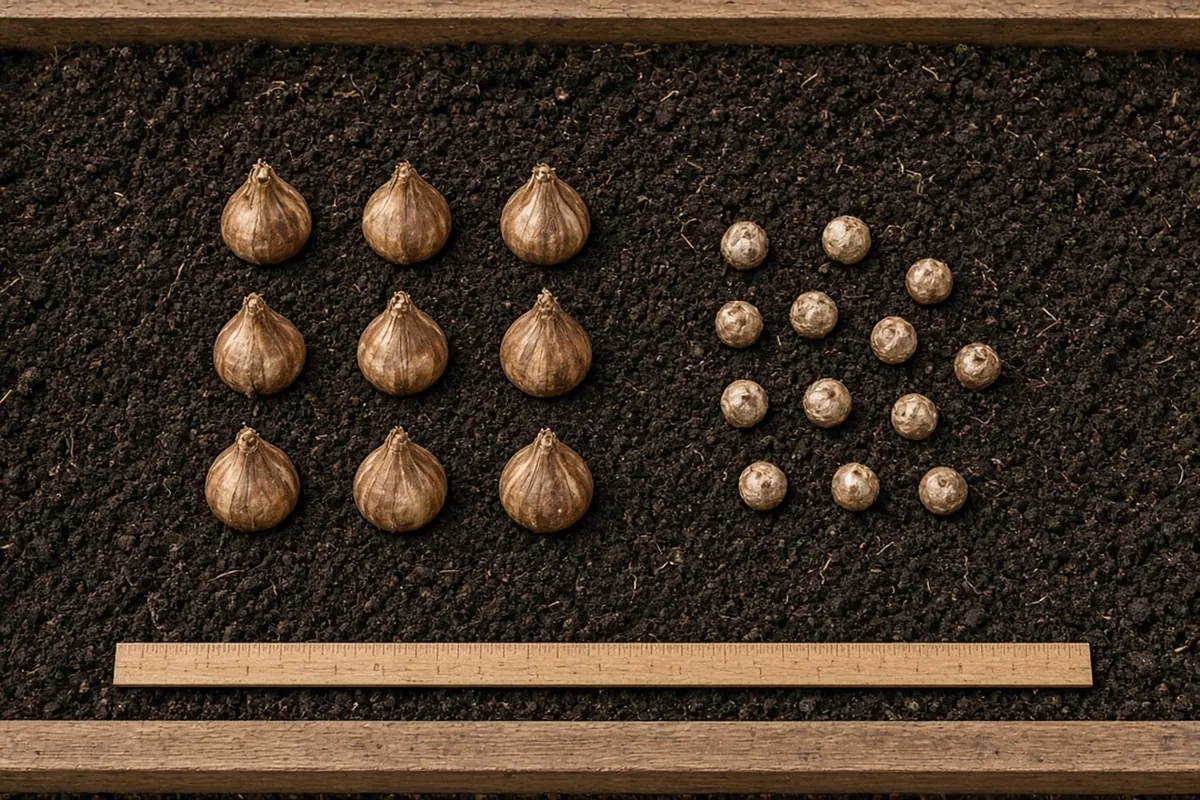 📘 Know-howHow many bulbs per square foot: tulips, daffodils and crocusTulips and daffodils at 6 inches apart come to 4 bulbs per square foot; crocus at 3 inches, 16. See the extension spacings and count a whole bed.Read the guide
Sources
- Hardiness Zone Maps, University of Wisconsin-Madison Division of Extension. Checked October 11, 2026.
- Overwintering potted plants, University of Illinois Extension, published November 27, 2024. Checked October 6, 2026.
- Plant Hardiness Zone Maps, Iowa State University Extension and Outreach, published February 9, 1996. Checked October 11, 2026.
Planning guide, not a guarantee. See every source on the site on the sources page. Spotted an error? Tell us.