🧰 Problem solverSoil and mulch4 min read
Gravel priced by the ton: how many cubic yards you're getting
Quick answer
Ask the yard what one cubic yard of that exact stone weighs, then do one division: tons × 2,000 ÷ pounds per cubic yard = cubic yards. There's no single answer, because each stone weighs differently. As an example, a gravel bag labeled 60 lb and about 0.6 cubic feet works out to 100 lb per cubic foot, or 2,700 lb (1.35 tons) per cubic yard. At that weight, a 10 x 12 ft patio base 4 inches deep is 1.48 yards, or 2 tons.
Source: Sakrete All-Purpose Gravel data sheet, checked October 6, 2026; NIST Guide to the SI (SP 811), Appendix B.8 conversion factors, checked October 11, 2026.

The mix-up
Why the quote and the calculator don't match
You worked out the base for a patio or path in cubic feet or cubic yards, then called a stone yard and got a price per ton. Both are allowed. NIST Handbook 130, the model rule on how goods are sold, says bulk aggregate, sand, chipped rock, landscape rock and topsoil must be sold by the cubic yard or cubic meter, or by weight. Flagstone is sold by weight only.
Source: NIST Handbook 130 (2026), Uniform Regulation for the Method of Sale of Commodities, checked October 11, 2026.
A yard is a volume and a ton is a weight, so you need a link between them: what one cubic yard of that material weighs. That figure changes from stone to stone, so the only reliable one comes from the yard selling it. A short ton is 2,000 pounds, and NIST lists it at 907 kilograms.
Source: NIST Guide to the SI (SP 811), Appendix B.8 conversion factors, checked October 11, 2026.
Step by step
Turn tons into yards, or yards into tons
Get the volume first
Run the gravel calculator for your base. It gives cubic feet and cubic yards. Our example patio is 10 x 12 ft on a 4 inch base: 40 cubic feet, or 1.48 cubic yards.
Ask for the weight per yard
Ask the yard what one cubic yard of that exact stone weighs. Write down the stone's name as they say it, not just gravel.
Tons to order
Cubic yards × pounds per yard ÷ 2,000. At the example 2,700 lb per yard, 1.48 yards is 4,000 lb, or 2 tons.
Source: NIST Guide to the SI (SP 811), Appendix B.8 conversion factors, checked October 11, 2026.
Or yards in a quote
If you were quoted tons, tons × 2,000 ÷ pounds per yard gives the yards. Three tons at 2,700 lb per yard is 2.22 yards.
Compare against your job
Set the yards you'd get beside the yards you need, then ask how the yard rounds an order before you settle on a number.
- 2,000 lbin a short tonNIST Guide to the SI (SP 811), Appendix B.8 conversion factors, October 11, 2026
- 27 cu ftin a cubic yardMSU Extension P2301, mulches, October 9, 2026
- about 0.6 cu ftin one 60 lb gravel bag (example label)Sakrete All-Purpose Gravel data sheet, October 6, 2026
- 1.35 tonsper yard at that bag's weightArithmetic
Quick reference
How the weight per yard changes the answer
| Pounds per cubic yard | Tons per yard | Yards in 1 ton | Tons for 1.48 yards |
|---|---|---|---|
| 2,400 | 1.2 | 0.83 | 1.78 |
| 2,700 | 1.35 | 0.74 | 2.0 |
| 3,000 | 1.5 | 0.67 | 2.22 |
Arithmetic only, across a spread of weights per yard picked for illustration. 2,700 lb comes from the example bag label; the other two rows are not measured figures for any stone.
The table shows why the weight per yard matters. Between the lightest and heaviest rows, the same 1.48 yard patio base swings by close to half a ton. Guessing the figure can leave you short or with a pile left over in the driveway.
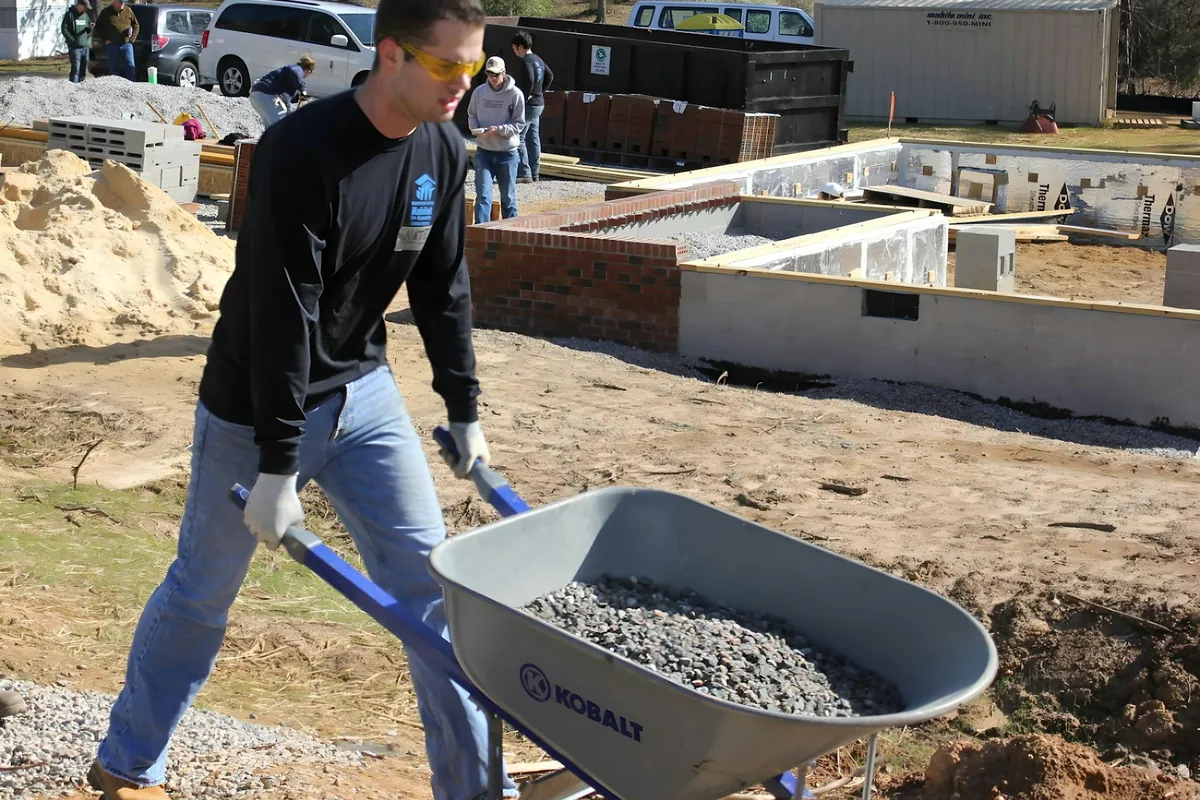
On the phone
What to ask before you order
Print it, tick it off
Gravel order sheet
Fill this in before you call, and finish it during the call.
- Job and size (length × width, base depth in inches)
- Cubic feet and cubic yards needed (from the calculator)
- Stone name as the yard calls it
- Price per ton or per yard, and the delivery fee
- Weight of one cubic yard of this stone, from the yard
- Tons to order (yards × pounds per yard ÷ 2,000)
- Smallest order or delivery the yard allows
- Drop spot for the pile, and date booked
What people learn the second year
Tips and tricks
- Get the weight per yard in writing. Ask the yard to put the pounds per yard on the quote or in a text. It's the one number the whole order depends on.
- Use the stone's exact name. Crushed stone, pea gravel and base rock can be priced and weighed differently. Read the same name back to the yard when you order.
- Measure the base depth after digging. If the hole came out deeper than planned, run the calculator again with the depth you actually dug before you order.
- Small jobs may be cheaper in bags. A path that needs a few cubic feet may cost less in bags than a bulk minimum plus delivery. Price both per cubic foot.
Common questions
Questions
How many cubic yards are in a ton of gravel?
It depends on the stone. Divide 2,000 by the pounds one cubic yard weighs. At an example 2,700 lb per yard, one ton is 0.74 yards. Ask your yard for the weight of its stone.
Is gravel sold by the ton or by the yard?
Either. NIST Handbook 130, which states use as a model, says bulk aggregate, rock and sand are sold by the cubic yard or cubic meter, or by weight. Flagstone is sold by weight only.
Source: NIST Handbook 130 (2026), Uniform Regulation for the Method of Sale of Commodities, checked October 11, 2026.
How many tons of gravel do I need for a 10 x 12 patio?
On a 4 inch base the patio needs 40 cubic feet, or 1.48 cubic yards. At an example 2,700 lb per yard that's 2 tons. Use your yard's weight per yard for the real order.
Can I use the weight on a gravel bag for bulk stone?
Only as a rough check. One maker labels a 60 lb bag at about 0.6 cubic feet, which is 100 lb per cubic foot, but bulk stone can differ. The yard's own figure is the one to order by.
Source: Sakrete All-Purpose Gravel data sheet, checked October 6, 2026.
The arithmetic, done for you
Tools for this job
- 🪨 CalculatorGravel and paver base calculatorHow much gravel and sand to buy for a paver patio, walkway or gravel path: cubic feet, cubic yards, bag counts and how deep to dig.Open the tool
- 🧺 SectionAll soil and mulch toolsRaised-bed soil, mulch, compost and topsoil calculators that give cubic feet, cubic yards and bag counts, using bag sizes printed by the makers.See the section
Keep reading
More guides
 🧰 Problem solverBags or bulk: when a cubic yard delivery is cheaperHow to compare bagged soil, mulch or compost with a bulk cubic yard: price per cubic foot, the delivery fee, and the bag count where bulk wins.Read the guide
  ✅ ChecklistFall compost bin reset: empty the finished compost, then rebuild with leavesPull out the finished compost, spread it on your beds, then rebuild the bin 3 ft each way with fall leaves and greens, damp as a wrung-out sponge.Read the guide
  🧰 Problem solverWhat to do with fall leaves in the garden: shred them into mulchShred the leaves, then spread 2 to 3 inches on beds and 3 to 4 around shrubs. How to shred without a shredder, and how many bags a bed takes.Read the guide
  🧰 Problem solverHow to fill a tall raised bed without buying 2 yards of soilA 4 x 8 bed 24 inches tall holds 64 cu ft. Put logs, branches and leaves in the lower half and you buy 32 cu ft of soil instead. What goes in, what stays out.Read the guide
Sources
- Sakrete All-Purpose Gravel product data sheet (Rev. 06/16), Sakrete (Oldcastle APG). Checked October 6, 2026.
- NIST Guide to the SI, Appendix B.8: Factors for Units Listed Alphabetically, National Institute of Standards and Technology (NIST), published August 18, 2025. Checked October 11, 2026.
- Handbook 130 (2026), IV. Uniform Regulations, B. Uniform Regulation for the Method of Sale of Commodities, National Institute of Standards and Technology (NIST), Office of Weights and Measures, published December 22, 2025. Checked October 11, 2026.
- Mulches for the Landscape (P2301), Mississippi State University Extension. Checked October 9, 2026.
Planning guide, not a guarantee. See every source on the site on the sources page. Spotted an error? Tell us.