🧭 Garden systemSoil and mulch8 stepsFree working copy
Build the base for a paver patio or gravel path, from the string line to the sand
Quick answer
Call 811, then set a string line at the finished height with a fall of about 1 inch every 8 feet away from the house. Dig the paver's thickness plus 1 inch of sand plus 4 to 6 inches of gravel below that string, compact the gravel in layers of no more than 4 inches, edge every open side, then screed the sand. A 10 x 12 ft patio with 2 3/8 inch pavers on 4 inches of gravel is a 7 3/8 inch dig, 40 cu ft of gravel (67 bags of 60 lb) and 10 cu ft of sand (17 bags). A plain gravel path skips the sand and pavers and needs 2 to 4 inches of stone.
Source: Rochester Concrete Products paver installation guide, checked October 12, 2026; Sakrete All-Purpose Gravel data sheet, checked October 6, 2026; Sakrete Multi-Purpose Sand data sheet, checked October 6, 2026; UC Master Gardeners, Gravel Pathways in the Garden, checked October 12, 2026.

Decide first
Build it yourself, keep it simple, or get help?
Do it yourself
Build it yourself
Do it yourself for a patio or walk you only walk on, on ground that drains. You need stakes and string, a tape, a spade, a tamper and somewhere for the dug soil to go. The example 10 x 12 patio means moving about 74 cubic feet of soil and 4,020 lb of bagged gravel, so plan helpers or a rented compactor.
Source: Rochester Concrete Products paver installation guide, checked October 12, 2026; Sakrete All-Purpose Gravel data sheet, checked October 6, 2026.
Skip it
Skip the pavers: lay a gravel path
If you just need a dry way across the yard, skip the sand and pavers. UC Master Gardeners call 2 inches of gravel a practical minimum for a path, or 4 inches with stepping stones set in. It's one layer and an edge.
Source: UC Master Gardeners, Gravel Pathways in the Garden, checked October 12, 2026.
Get help
Get help first
Anything a car drives on needs a much deeper base, and this site doesn't cover driveways. Rochester says ground that stays saturated more than half the time needs filter fabric and extra base, so talk that over with your supplier. Raised patios, steps and retaining walls belong with a contractor.
Source: Rochester Concrete Products paver installation guide, checked October 12, 2026.
- 7 to 9 intotal dig for a patio or walk, 2 3/8 in paversRochester Concrete Products paver installation guide, October 12, 2026
- 1 in per 8 ftfall away from the houseRochester Concrete Products paver installation guide, October 12, 2026
- 4 in maxper compacted gravel layerRochester Concrete Products paver installation guide, October 12, 2026
- 67 bagsof 60 lb gravel for the example 10 x 12 patioSakrete All-Purpose Gravel data sheet, October 6, 2026
Plan one evening, dig one weekend, lay the next
The steps, in order
Call 811 before you dig
Rochester's guide starts here: call 811 at least a few days before any digging, so buried lines get marked first. Write the ticket number on the checklist.
Have ready: The patio or path outline, and a few days' notice.
Source: Rochester Concrete Products paver installation guide, checked October 12, 2026.
Set a string at the finished height
Stake the outline and run string where the top of the pavers will be. Give it a fall away from the house; Rochester calls about 1 inch every 8 feet usually ideal. The example patio runs 12 feet out, so the string drops 1.5 inches.
Have ready: Stakes, mason's string, a line level and a tape.
Source: Rochester Concrete Products paver installation guide, checked October 12, 2026.
Add up the dig depth
Dig depth = paver + sand + gravel. Rochester uses 1 inch of sand and 4 inches of compacted gravel in well-drained or undisturbed soil, 6 inches where it drains poorly or was dug before. A 2 3/8 inch paver on 4 inches of gravel is 7 3/8 inches below the string.
Have ready: One of your pavers and a tape to measure its thickness.
Gravel and paver base calculator
Source: Rochester Concrete Products paver installation guide, checked October 12, 2026.
Work out the order and the soil pile
For 120 sq ft: gravel 120 × 4 ÷ 12 = 40 cu ft, which is 67 bags of 60 lb at about 0.6 cu ft each. Sand 10 cu ft is 17 bags of 60 lb. The hole itself is 120 × 7.375 ÷ 12 = 73.75 cu ft of soil, about 2.73 cubic yards.
Have ready: The calculator on your phone, and a plan for where the soil goes.
Gravel and paver base calculator
Source: Sakrete All-Purpose Gravel data sheet, checked October 6, 2026; Sakrete Multi-Purpose Sand data sheet, checked October 6, 2026.
Dig and check from the string
Dig the same depth below the string everywhere, so the bottom of the hole follows the slope. Measure at each corner and in the middle as you go. Measuring from the grass gets it wrong, because the lawn doesn't slope like the patio.
Have ready: A spade, a tarp for the soil and the tape.
Compact the gravel in layers
Spread the gravel and compact it in layers of no more than 4 inches, damp but not soaked. Rochester levels the finished base about 3 inches below the surface, leaving room for sand and paver. A 4 inch base is one pass; a 6 inch base is two.
Have ready: The gravel, a rake, a hose and a hand tamper or plate compactor.
Source: Rochester Concrete Products paver installation guide, checked October 12, 2026.
Put in the edge restraint
Rochester calls for edge restraints along every edge that would otherwise be loose. With the house holding one 10 ft side, the example patio needs 12 + 10 + 12 = 34 feet. A gravel path edged on both long sides needs twice its length.
Have ready: Edging measured to length, and its stakes.
Source: Rochester Concrete Products paver installation guide, checked October 12, 2026.
Screed 1 inch of sand and stay off it
Spread a 1 inch layer of coarse sand and screed it flat. Rochester says not to walk on or work from the screeded sand, so lay pavers from the ones already down. Then log the depths you used.
Have ready: The sand, two screed rails and a straight board.
Source: Rochester Concrete Products paver installation guide, checked October 12, 2026.
Free, one page, black and white
Print the working copy
Patio base checklist: the steps above as a checklist with a date box for each, on one US Letter page.
If a step gets skipped
What goes wrong
⚠️
Measuring the depth from the lawn
Grass is lumpy and slopes its own way. A dig measured from it leaves one end of the patio high and the other low. Measure every depth down from the string.
⚠️
Water running toward the house
A string set dead level, or sloped the wrong way, sends rain at the wall. Set the fall in the string before the first shovel, about 1 inch every 8 feet away from the house.
Source: Rochester Concrete Products paver installation guide, checked October 12, 2026.
⚠️
Dumping the whole base and tamping once
Rochester compacts the base in layers no thicker than 4 inches. A 6 inch base tamped in one go stays loose underneath, and the patio settles later.
Source: Rochester Concrete Products paver installation guide, checked October 12, 2026.
⚠️
Leaving an edge loose
Without a restraint on every open side, the outer row has nothing holding it in. On a gravel path, UC Master Gardeners say a border keeps the stone from moving into the soil next to it.
Source: Rochester Concrete Products paver installation guide, checked October 12, 2026; UC Master Gardeners, Gravel Pathways in the Garden, checked October 12, 2026.
⚠️
No plan for the dug soil
Even a small patio makes a big hole: the example 10 x 12 dig is about 74 cubic feet. Decide where the soil goes before you dig: a new bed, a low spot or a haul-away.
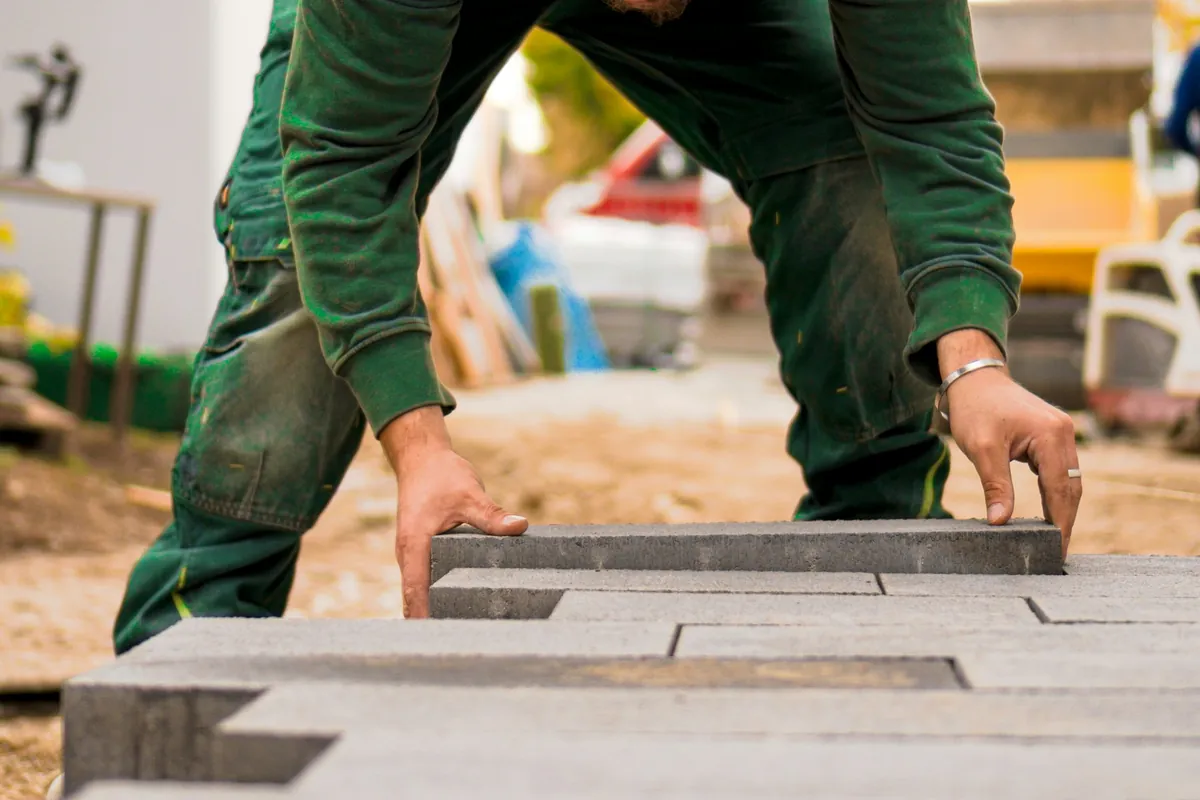
When the steps change
Variants
🪴
Paver patio on well-drained ground
Use Rochester's 4 inch gravel base, 1 inch of sand and your paver. With a 2 3/8 inch paver the dig is 7 3/8 inches, and a 10 x 12 patio takes 40 cubic feet of gravel.
Source: Rochester Concrete Products paver installation guide, checked October 12, 2026.
🏙️
Wet or dug-up ground
Rochester uses the 6 inch base where the soil drains poorly or was disturbed. The dig becomes 9 3/8 inches and the example patio needs 60 cubic feet of gravel, compacted in two layers. Ground saturated more than half the time also needs filter fabric: ask your supplier.
Source: Rochester Concrete Products paver installation guide, checked October 12, 2026.
❄️
Gravel path, no pavers
One layer of stone and an edge, no sand. UC Master Gardeners give 2 inches as a practical minimum and say angular gravel packs nearly solid while pea gravel never packs down completely. A 3 x 30 ft path at 3 inches is 22.5 cubic feet, 38 bags of 60 lb, with 60 feet of edging.
Source: UC Master Gardeners, Gravel Pathways in the Garden, checked October 12, 2026; Sakrete All-Purpose Gravel data sheet, checked October 6, 2026.
☀️
Stepping stones set in gravel
Allow 4 inches of gravel so thick stones or pavers can sit in it, the UC Master Gardener article says. On a 3 x 30 ft path that's 30 cubic feet of stone.
Source: UC Master Gardeners, Gravel Pathways in the Garden, checked October 12, 2026.
What people learn the second year
Tips and tricks
- Measure the paver you bought. Pavers vary. Put a tape on one from your pallet before you add up the dig, because that number goes straight into the depth.
- Mark the depth on a stick. Cut a scrap of wood to the dig depth and hang it from the string as you work. It's quicker than reading a tape at every spot.
- Dig onto a tarp. A tarp keeps the lawn clean and shows you how big the pile got. Move it to its new home the same day.
- Run the calculator at both depths. Price the 4 inch and the 6 inch base before you buy. On the example patio the difference is 20 cubic feet of gravel. (Rochester Concrete Products paver installation guide)
- Keep the log with the receipts. Write down the gravel and sand depths and what you bought. If a corner sinks years later, you'll know what's under it.
The one we checked the steps against
Primary source
Paver installation guide: planning, designing and installation guide for interlocking segmental pavers, Rochester Concrete Products. Checked October 12, 2026.
Rochester Concrete Products' installation guide is a paver maker's own instructions. Its pedestrian column gives the layer depths (2 3/8 inch paver, 1 inch sand, 4 to 6 inches of compacted gravel, 7 to 9 inches dug), when to use the deeper base, the 1 inch per 8 feet slope, 811 first, compaction in layers of 4 inches or less and edge restraints on every open side. Only the foot-traffic figures are used here.
The arithmetic and the background reading
Tools and guides in this system
- 🪨 CalculatorGravel and paver base calculatorHow much gravel and sand to buy for a paver patio, walkway or gravel path: cubic feet, cubic yards, bag counts and how deep to dig.Open the tool
- 🧺 SectionAll soil and mulch toolsRaised-bed soil, mulch, compost and topsoil calculators that give cubic feet, cubic yards and bag counts, using bag sizes printed by the makers.See the section
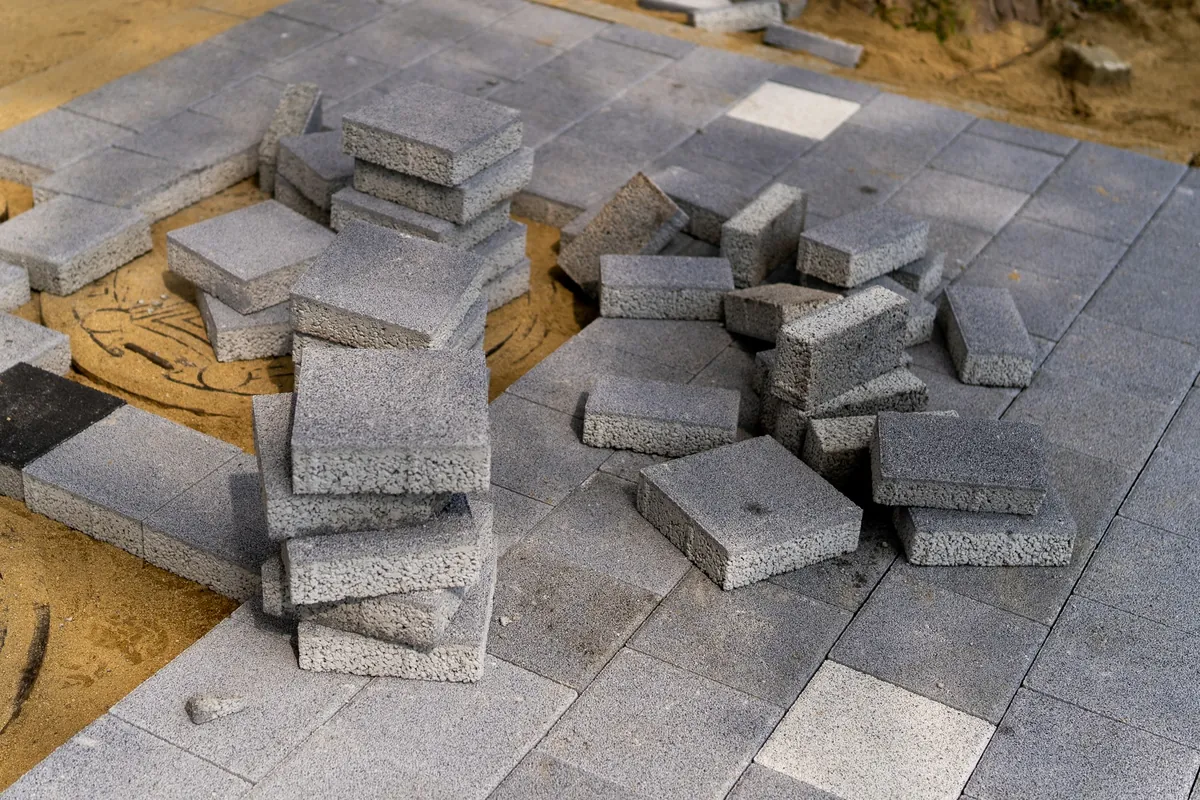 📘 Know-howHow deep to dig for a paver patio: paver, sand and gravel added upDig depth for a paver patio is the paver, the sand bed and the gravel base added up. Worked for a 10 x 12 patio with two makers' figures and the slope.Read the guide
 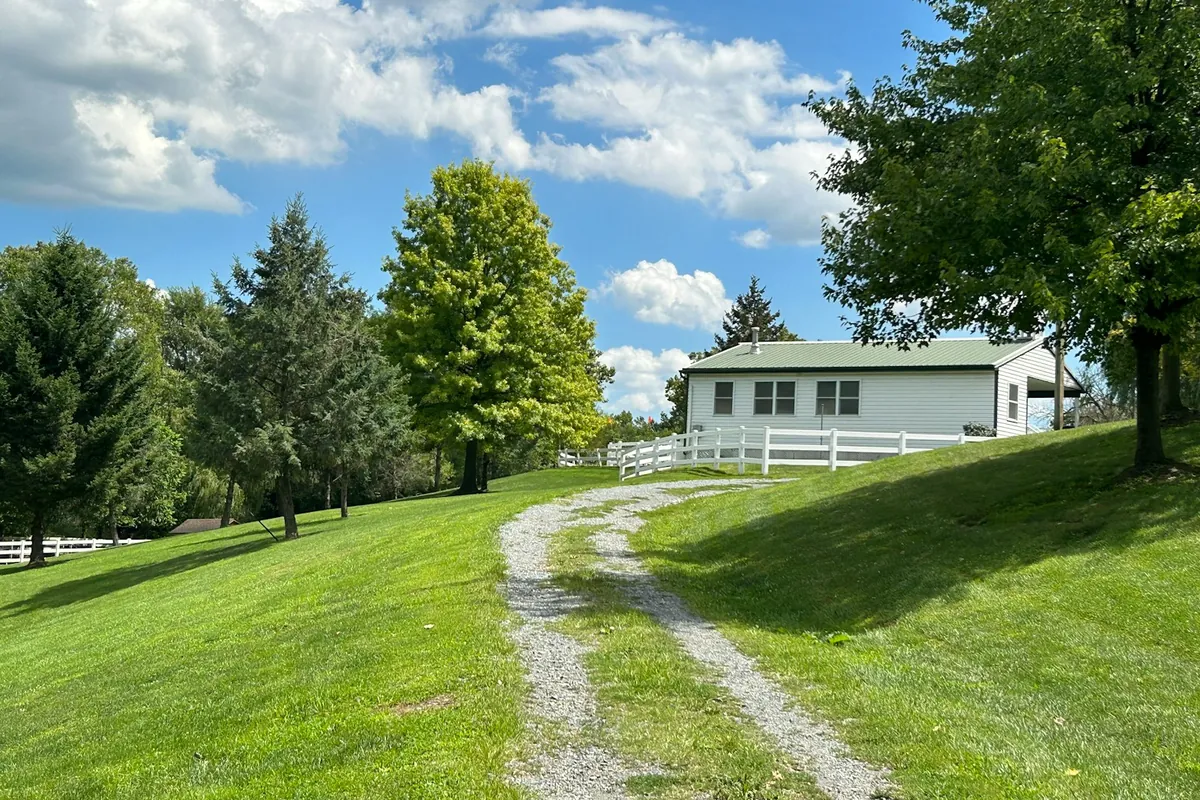 📘 Know-howA plain gravel garden path: how deep, how much edging, how many bagsA gravel path needs no sand or pavers. Here is the depth, the edging length and the bag or ton count, worked for a 3 x 30 ft path.Read the guide
  🧰 Problem solverGravel priced by the ton: how many cubic yards you're gettingThe calculator says cubic yards, the stone yard quotes tons. How to convert with the weight per yard of the exact material, and what to ask before you order.Read the guide
Common questions
Questions
What are the steps to build a paver patio base?
Call 811, stake the outline and set a string at the finished height with a fall away from the house, dig paver plus sand plus gravel below the string, compact the gravel in layers of no more than 4 inches, put in edge restraints, then screed 1 inch of sand. That order comes from Rochester Concrete Products' installation guide.
Source: Rochester Concrete Products paver installation guide, checked October 12, 2026.
How much gravel and sand do I need for a 10 x 12 patio?
On a 4 inch base, 40 cubic feet of gravel: 1.48 cubic yards, or 67 bags of 60 lb. A 1 inch sand bed is 10 cubic feet, 17 bags of 60 lb. On a 6 inch base the gravel goes up to 60 cubic feet.
Source: Sakrete All-Purpose Gravel data sheet, checked October 6, 2026; Sakrete Multi-Purpose Sand data sheet, checked October 6, 2026.
Do I need edging around a paver patio?
Rochester calls for edge restraints along every edge that would otherwise be unrestrained. A side against the house wall is already held, so a 10 x 12 patio with one 10 ft side on the house needs 34 feet.
Source: Rochester Concrete Products paver installation guide, checked October 12, 2026.
Can I just lay a gravel path instead?
Yes. A gravel path is one layer of stone held in by an edge, with no sand bed. UC Master Gardeners call 2 inches a practical minimum, or 4 inches with stepping stones, and say angular gravel packs firmer than pea gravel.
Source: UC Master Gardeners, Gravel Pathways in the Garden, checked October 12, 2026.
Does this work for a driveway?
No. These depths are for foot traffic only. Rochester lists a much deeper base for vehicles, and this site doesn't cover driveways.
Source: Rochester Concrete Products paver installation guide, checked October 12, 2026.
The next job on the shelf
More garden systems
 7 steps🧭 SystemRefresh border mulch: measure each bed, then buy only the gapMeasure the old layer in every bed before you order. One example yard needs 23 bags of 2 cu ft, not 45. The steps, the 3 inch limit and a free mulch record.Open the system
  7 steps🧭 SystemTurn fall leaves into bed cover and mulch, and keep a tally of the bagsWhat to do with fall leaves: mow a thin layer into the lawn, shred the rest and spread 2 to 3 inches on beds. Free leaf haul tally to print.Open the system
  6 steps🧭 SystemFall raised bed reset: clear, top up and cover for winterPut a raised bed to bed in fall: clear finished plants, measure how far the soil sank, top it up with compost and cover it with leaves. Free checklist.Open the system
Sources
- Paver installation guide: planning, designing and installation guide for interlocking segmental pavers, Rochester Concrete Products. Checked October 12, 2026.
- Sakrete All-Purpose Gravel product data sheet (Rev. 06/16), Sakrete (Oldcastle APG). Checked October 6, 2026.
- Sakrete Multi-Purpose Sand product data sheet (Rev. 11/18), Sakrete (Oldcastle APG). Checked October 6, 2026.
- Gravel Pathways in the Garden, UC Master Gardener Program of Contra Costa County, UC Agriculture and Natural Resources, published August 4, 2011. Checked October 12, 2026.
Planning guide, not a guarantee. See every source on the site on the sources page. Spotted an error? Tell us.