📘 Know-howSoil and mulch5 min read
How deep to dig for a paver patio: paver, sand and gravel added up
Quick answer
Add up the three layers: your paver's thickness, a 1 inch sand bed and the gravel base. Rochester Concrete Products lists 4 to 6 inches of compacted gravel for a patio or walk, more where the soil drains poorly, for a total dig of 7 to 9 inches with its 2 3/8 inch pavers. Quikrete's sheet gives a shallower 2 to 4 inches of gravel and a 4 to 7 inch dig. Measure every depth down from a string line set at the finished height.
Source: Rochester Concrete Products paver installation guide, checked October 12, 2026; Quikrete Patio Paver Sands data sheet, checked October 6, 2026.

The short version
Three layers make up the depth
At the bottom of the hole is a compacted gravel base. A thin bed of sand goes over it, and the pavers sit on the sand. The depth to dig is those three added together. Rochester Concrete Products, a paver maker, prints it as a chart: a 2 3/8 inch paver, 1 inch of bedding sand and 4 to 6 inches of compacted gravel, for a total of 7 to 9 inches on a patio or walk.
Source: Rochester Concrete Products paver installation guide, checked October 12, 2026.
Quikrete's data sheet for its paver sands is shallower. It calls for 2 to 4 inches of tamped gravel and 1 to 2 inches of sand, with the hole dug 4 to 7 inches below the finished grade. Both are makers' instructions for foot traffic, and the gap between them is mostly the gravel. Rochester says to use the shallow end in well-drained or undisturbed soil and the deep end where the soil drains poorly or has been dug before.
Source: Quikrete Patio Paver Sands data sheet, checked October 6, 2026; Rochester Concrete Products paver installation guide, checked October 12, 2026.
- 4 to 6 incompacted gravel base, patios and walks (Rochester)Rochester Concrete Products paver installation guide, October 12, 2026
- 1 inbedding sand over the base (Rochester)Rochester Concrete Products paver installation guide, October 12, 2026
- 7 to 9 intotal dig with 2 3/8 in pavers (Rochester)Rochester Concrete Products paver installation guide, October 12, 2026
- 1 in per 8 ftslope for water to run off (Rochester)Rochester Concrete Products paver installation guide, October 12, 2026
Step by step
Work out your own dig depth
Call 811 first
Rochester's guide puts this first: call 811 a few days before you dig, so buried lines are marked before the shovel goes in.
Source: Rochester Concrete Products paver installation guide, checked October 12, 2026.
Set a string at the finished height
Run string lines on stakes where the top of the pavers will be. Give them a fall away from the house; Rochester calls about 1 inch every 8 feet usually ideal. Across 12 feet that's a 1.5 inch drop.
Source: Rochester Concrete Products paver installation guide, checked October 12, 2026.
Measure one paver
Put a tape on the paver you bought, top to bottom. Pavers vary, and this number goes straight into the depth.
Pick the gravel depth for your soil
Well-drained or undisturbed ground takes Rochester's 4 inches. Ground that stays wet or was dug before takes 6 inches.
Source: Rochester Concrete Products paver installation guide, checked October 12, 2026.
Add it up and dig from the string
Paver + 1 inch of sand + gravel. A 2 3/8 inch paver on 4 inches of gravel means 7 3/8 inches down from the string, at every point, so the bottom of the hole follows the slope.
Compact the gravel in layers
Rochester says to compact the base in layers of no more than 4 inches, wet but not soaked. A 6 inch base goes down in two passes.
Source: Rochester Concrete Products paver installation guide, checked October 12, 2026.
Quick reference
Base depth, dig depth and gravel for a 10 x 12 ft patio
| Gravel base | Dig depth (2 3/8 in paver, 1 in sand) | Gravel, cubic feet | Gravel, cubic yards |
|---|---|---|---|
| 2 in | 5 3/8 in | 20 | 0.74 |
| 4 in | 7 3/8 in | 40 | 1.48 |
| 6 in | 9 3/8 in | 60 | 2.22 |
Arithmetic for a 120 sq ft patio. 2 and 4 inches are the ends of Quikrete's gravel range; 4 and 6 inches are the ends of Rochester's range for patios and walks. Rochester's chart rounds the total to 7 to 9 inches.
Source: Quikrete Patio Paver Sands data sheet, checked October 6, 2026; Rochester Concrete Products paver installation guide, checked October 12, 2026.
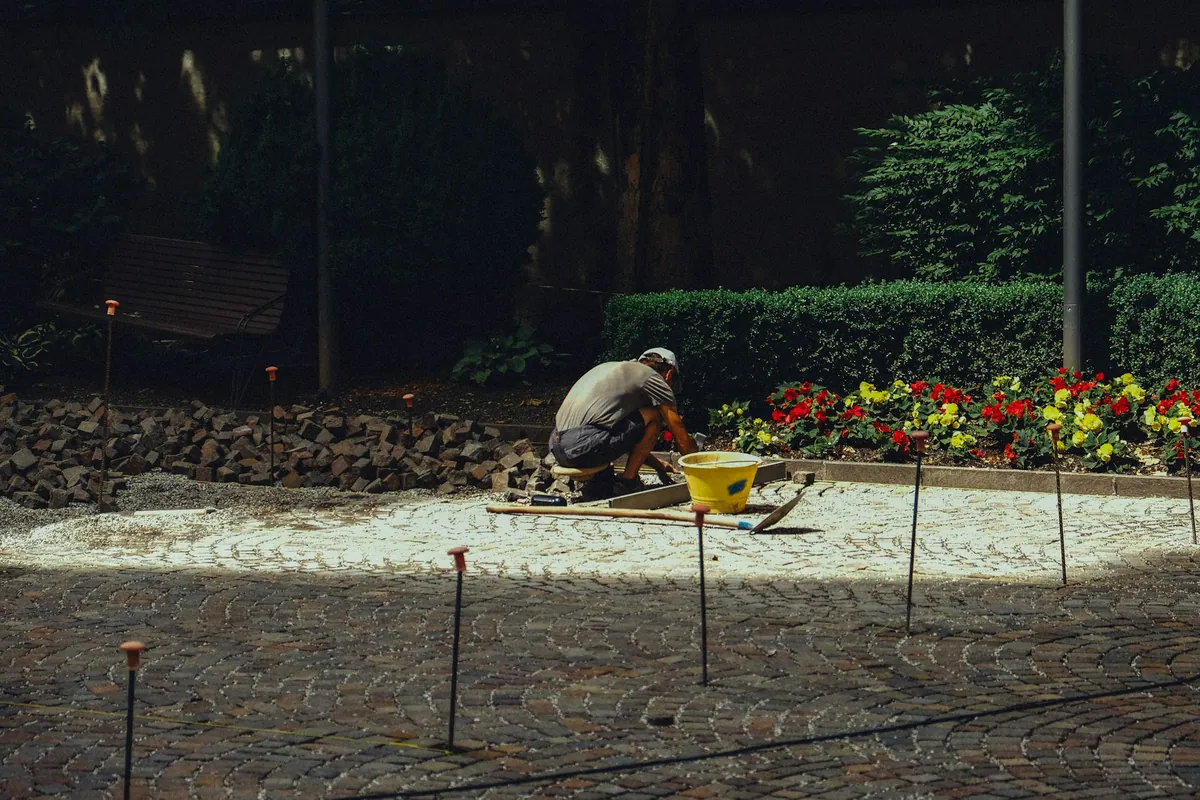
The hole is bigger than it looks. A 10 x 12 ft patio dug 7 3/8 inches deep removes about 74 cubic feet of soil, close to 2.7 cubic yards. Work out where that dirt will go before you start, because it's more than most yards can tuck behind a shed.
Where it goes wrong
Three ways the depth comes out wrong
- Measuring from the grass. The lawn is lumpy and doesn't slope the way the patio will. Measure from the string.
- Guessing the paver. A thicker paver than planned leaves the patio standing proud of the lawn. Measure the one you bought.
- Leaving the base too high. Rochester levels the compacted gravel about 3 inches below the finished surface, which leaves room for the sand and the paver.
Source: Rochester Concrete Products paver installation guide, checked October 12, 2026.
Print it, tick it off
Patio dig sheet
Fill this in before the first shovel goes in.
- 811 called, date and ticket number
- Patio length and width, and square feet
- Paver thickness, measured on one of yours
- Sand bed depth
- Gravel base depth, and why (soil drains well or poorly)
- Total dig depth from the string line
- Fall away from the house, high side to low side
- Where the dug soil will go
What people learn the second year
Tips and tricks
- Check the depth at the corners. Measure down from the string at each corner and the middle. A hole that's right in the middle can still be shallow at one end.
- Keep the soil off the lawn. Dig onto a tarp. It saves raking the lawn clean after, and you can see how big the pile got.
- Stay off the sand. Rochester says not to walk on or work from the screeded sand. Kneel on the pavers you've already laid instead. (Rochester Concrete Products paver installation guide)
- Write the depths down. Note the gravel and sand depths on the dig sheet. If a corner sinks years later, you'll know what's under it.
Common questions
Questions
How deep do I dig for a paver patio?
Paver thickness plus 1 inch of sand plus the gravel base. With 2 3/8 inch pavers and a 4 inch base, that's 7 3/8 inches. Rochester Concrete Products gives 7 to 9 inches for patios and walks; Quikrete's sheet gives 4 to 7.
Source: Rochester Concrete Products paver installation guide, checked October 12, 2026; Quikrete Patio Paver Sands data sheet, checked October 6, 2026.
How much gravel goes under pavers?
Rochester lists 4 to 6 inches of compacted gravel for foot traffic: the shallow end in well-drained or undisturbed soil, the deep end where it drains poorly. Quikrete's data sheet gives 2 to 4 inches.
Source: Rochester Concrete Products paver installation guide, checked October 12, 2026; Quikrete Patio Paver Sands data sheet, checked October 6, 2026.
How much sand goes under pavers?
Rochester uses a 1 inch bed of coarse sand; Quikrete's sheet gives 1 to 2 inches. On a 10 x 12 ft patio, 1 inch is 10 cubic feet of sand.
Source: Rochester Concrete Products paver installation guide, checked October 12, 2026; Quikrete Patio Paver Sands data sheet, checked October 6, 2026.
Does a paver patio need a slope?
Yes, so water runs off. Rochester calls a slope of about 1 inch every 8 feet usually ideal, falling away from the house. Set it in the string line and dig the same depth below the string everywhere.
Source: Rochester Concrete Products paver installation guide, checked October 12, 2026.
The arithmetic, done for you
Tools for this job
- 🪨 CalculatorGravel and paver base calculatorHow much gravel and sand to buy for a paver patio, walkway or gravel path: cubic feet, cubic yards, bag counts and how deep to dig.Open the tool
- 🧺 SectionAll soil and mulch toolsRaised-bed soil, mulch, compost and topsoil calculators that give cubic feet, cubic yards and bag counts, using bag sizes printed by the makers.See the section
Keep reading
More guides
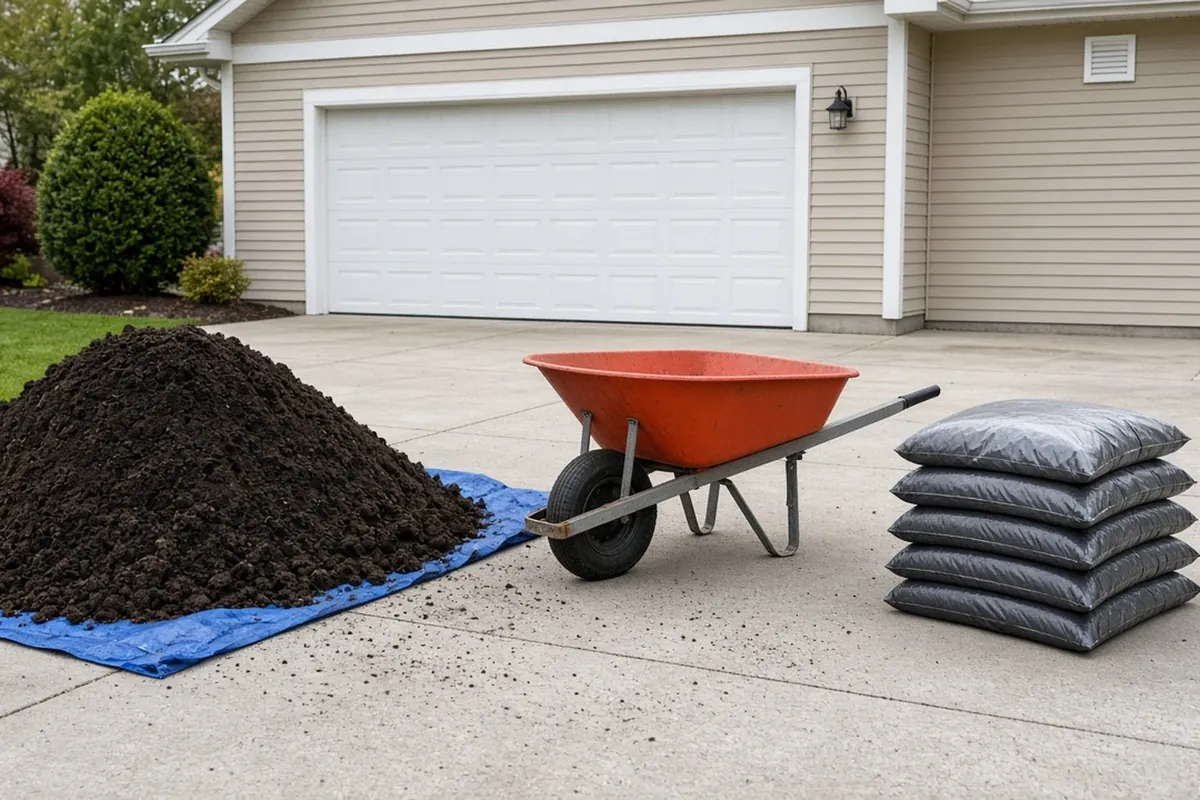 🧰 Problem solverBags or bulk: when a cubic yard delivery is cheaperHow to compare bagged soil, mulch or compost with a bulk cubic yard: price per cubic foot, the delivery fee, and the bag count where bulk wins.Read the guide
 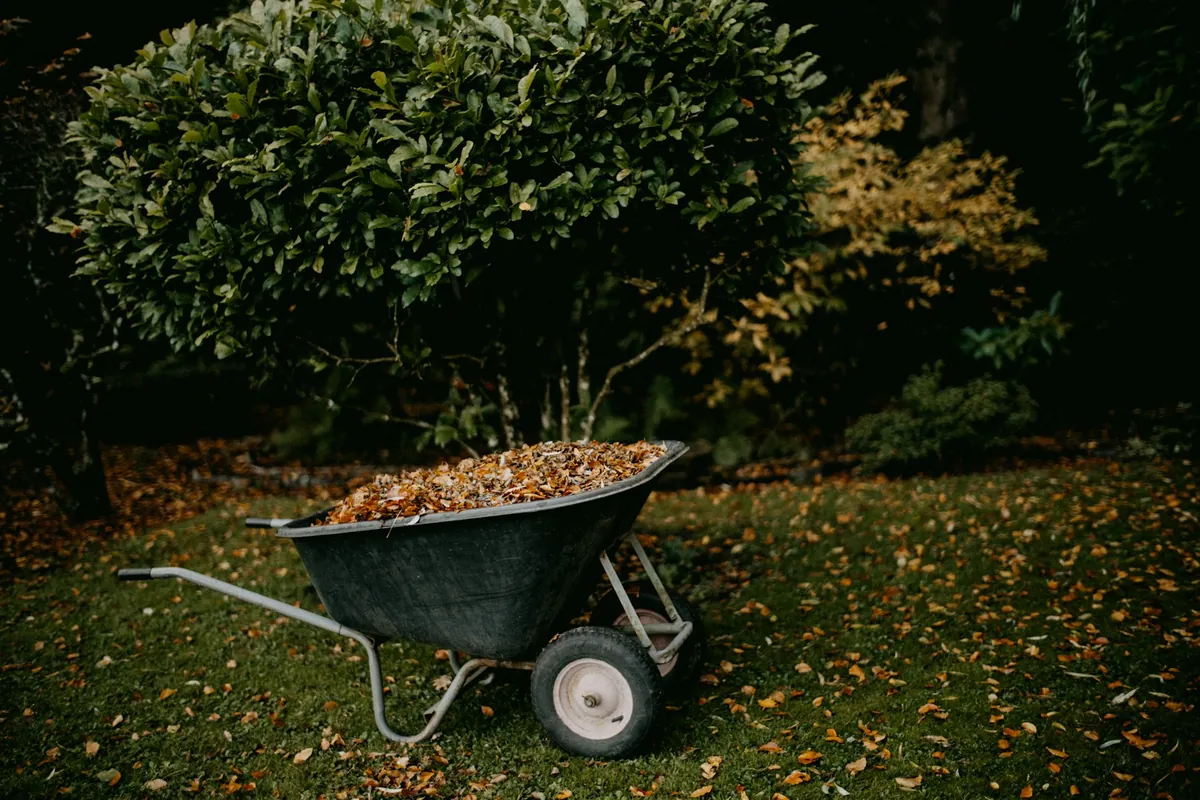 ✅ ChecklistFall compost bin reset: empty the finished compost, then rebuild with leavesPull out the finished compost, spread it on your beds, then rebuild the bin 3 ft each way with fall leaves and greens, damp as a wrung-out sponge.Read the guide
 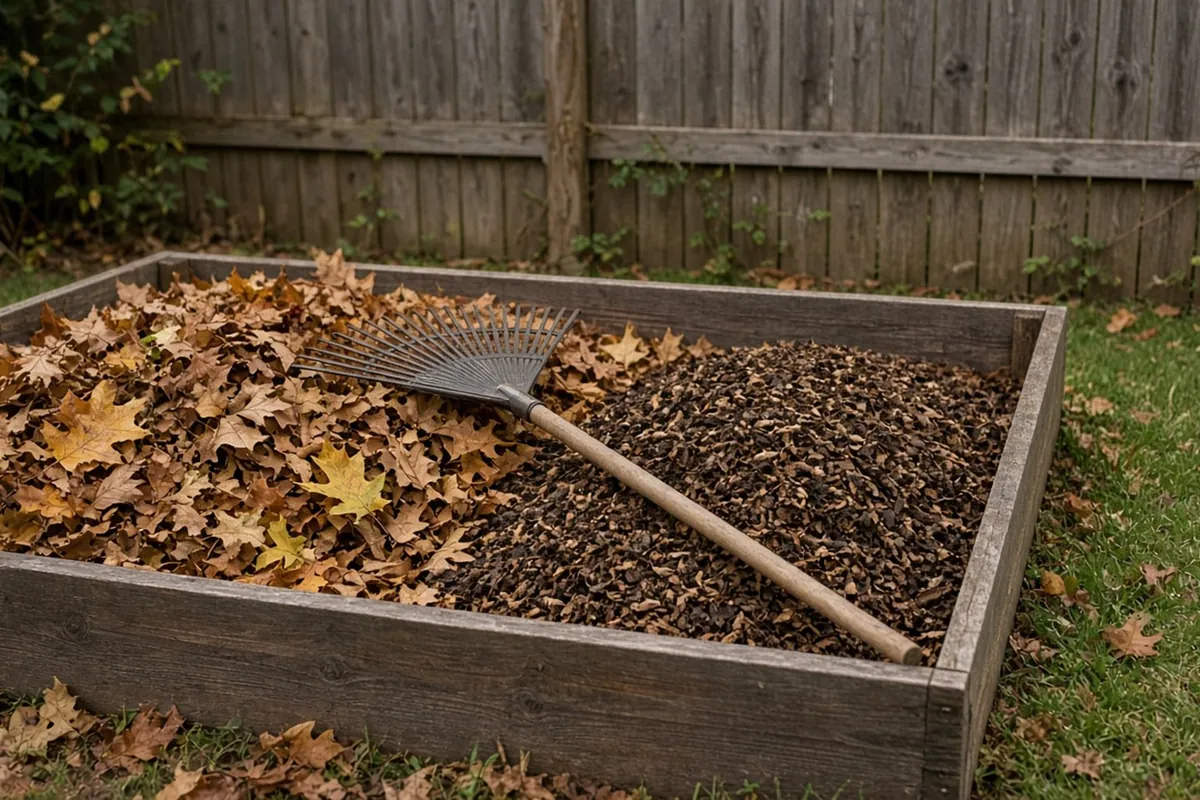 🧰 Problem solverWhat to do with fall leaves in the garden: shred them into mulchShred the leaves, then spread 2 to 3 inches on beds and 3 to 4 around shrubs. How to shred without a shredder, and how many bags a bed takes.Read the guide
  🧰 Problem solverHow to fill a tall raised bed without buying 2 yards of soilA 4 x 8 bed 24 inches tall holds 64 cu ft. Put logs, branches and leaves in the lower half and you buy 32 cu ft of soil instead. What goes in, what stays out.Read the guide
Sources
- Paver installation guide: planning, designing and installation guide for interlocking segmental pavers, Rochester Concrete Products. Checked October 12, 2026.
- QUIKRETE Patio Paver Sands: Base Sand No. 1150-49, Jointing Sand No. 1150-59 (data sheet), The Quikrete Companies. Checked October 6, 2026.
Planning guide, not a guarantee. See every source on the site on the sources page. Spotted an error? Tell us.