📘 Know-howZones6 min read
Microclimates in one yard: find the warm and cold spots
Quick answer
Your USDA zone is drawn in squares about half a mile across, so it can't see the corners of your yard. Inside one yard, south walls and paving run warmer, low ground and the north side of the house run colder, and wind and water change things again. Sketch the yard, map sun and shade at 9 a.m., noon and 3 p.m., take soil temperatures and note where frost lingers. Then put borderline plants in the warm spots and keep tender ones out of the cold ones.
Source: USDA ARS, how to use the zone maps, checked October 6, 2026; WSU Skagit Extension, microclimates, checked October 11, 2026; Purdue Extension HO-203-W, cold weather, checked October 11, 2026.

The basics
One zone, many small climates
The USDA draws its zone map in squares about half a mile across, and says outright that some microclimates are too small to show up on it. Washington State University's Skagit County Extension goes further: every yard has several.
Source: USDA ARS, how to use the zone maps, checked October 6, 2026; WSU Skagit Extension, microclimates, checked October 11, 2026.
A microclimate is a patch where the air, soil or light behaves differently from the rest of the yard. Purdue Extension describes them as the small weather differences from one side of a hill to the other, from one street to the next, and between spots in the same yard.
Source: Purdue Extension HO-203-W, cold weather, checked October 11, 2026.
- 1/2 milesquares the USDA zone map is drawn inUSDA ARS, how to use the zone maps, October 6, 2026
- 15°Fhow much colder a frost pocket can be than the high groundPurdue Extension HO-203-W, cold weather, October 11, 2026
- 1 daylater spring for every 100 feet of elevationWSU Skagit Extension, microclimates, October 11, 2026
- 3 timesa day to map sun and shade: 9 a.m., noon, 3 p.m.WSU Skagit Extension, microclimates, October 11, 2026
Warm spots
Where the warm spots are
- South-facing walls and slopes. They get the most direct sun, warm up earlier in spring and get warmer than north-facing ground.
- Brick, stone, concrete and asphalt. Hard surfaces soak up heat during the day and give it back at night, so the ground beside them runs a little warmer.
- Spots near big water. Water evens out temperatures. Within several miles of Lake Michigan's shore, the first fall freeze in northwest Indiana comes about two or three weeks later.
Source: Purdue Extension HO-203-W, cold weather, checked October 11, 2026; WSU Skagit Extension, microclimates, checked October 11, 2026; UGA Extension Forsyth, microclimates, checked October 11, 2026.
Cold and wet spots
Where the cold and damp spots are
- Low ground. On clear, windless nights cold air slides downhill and pools in the lowest spot, the way water would. Purdue says the air in these frost pockets can be as much as 15°F colder than the high ground around them.
- The north side of the house. It gets less sun, and the air there often sits still. WSU points to moss on the ground as a sign of that.
- Windy strips and solid fences. Wind dries plants out faster. A solid fence or wall makes the wind tumble over the top, which WSU says adds turbulence.
- Downspouts and puddles. Ground beside a downspout or paving gets extra water every rain. A puddle that's still there after the rest of the yard dries means poor drainage.
Source: Purdue Extension HO-203-W, cold weather, checked October 11, 2026; WSU Skagit Extension, microclimates, checked October 11, 2026; UGA Extension Forsyth, microclimates, checked October 11, 2026.
Make the map
Map your yard in one weekend
Sketch the yard
Draw the lot from above with north at the top. Add the house, fences, paving, beds, downspouts and big trees. Rough is fine.
Map sun and shade
On one clear day, shade in what's in shadow at 9 a.m., noon and 3 p.m. Do it again at the start, middle and end of the growing season.
Source: WSU Skagit Extension, microclimates, checked October 11, 2026.
Take soil temperatures
Push a garden thermometer about 2 inches into the soil and read it after about 3 minutes. Do the same in several spots at about the same time of day.
Source: WSU Skagit Extension, microclimates, checked October 11, 2026.
Mark the cold and wet ground
Walk the yard after rain and again on a frosty morning. Circle where water sits and where frost stays white the longest. Low ground and the uphill side of fences are the usual places.
Source: Purdue Extension HO-203-W, cold weather, checked October 11, 2026; WSU Skagit Extension, microclimates, checked October 11, 2026.
Write it down
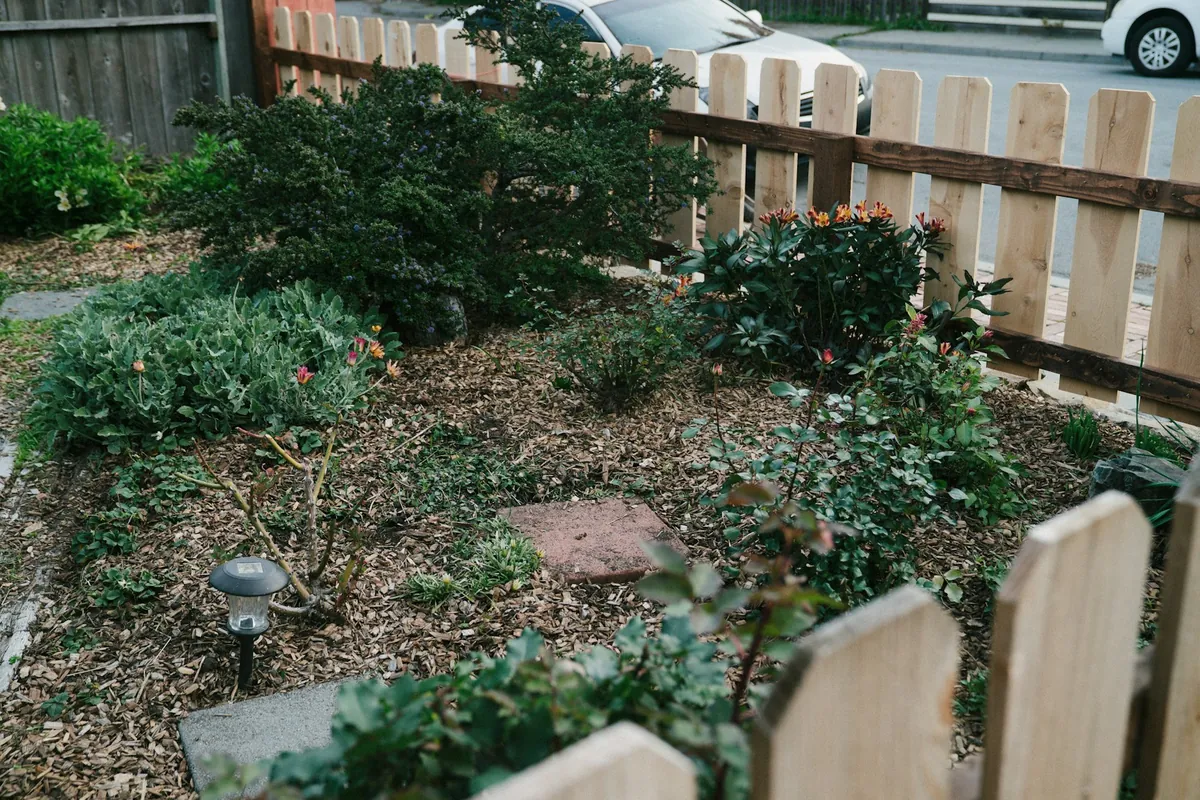
Number each spot on the sketch and fill in the sheet below. Add the first and last frost you see in each spot this year.
Use the map
What to do with the map
Put plants that are right at the edge of your zone in the warmest, most sheltered spot you found. UGA Extension suggests a south-facing wall for early-flowering plants, since it reflects light and gives back heat. Give shade lovers the north side. Keep tender transplants out of the low corner on the first nights after your last frost date.
Source: UGA Extension Forsyth, microclimates, checked October 11, 2026.
Don't count a warm wall as a whole extra zone. The USDA says wind, soil, moisture, snow and winter sun all change how plants survive, and none of the extension pages here put a number on a wall. Log what lives through a winter there before you count on it.
Source: USDA ARS, how to use the zone maps, checked October 6, 2026.
Print it, tick it off
Yard microclimate sheet
Number each spot on your sketch and fill in a line for each one.
- Sketch of the lot, north at the top, with house, fences, paving and downspouts
- Sun and shade at 9 a.m., noon and 3 p.m., start of the season
- The same three times at mid season and at the end of the season
- Soil temperature at about 2 inches in each spot, same time of day
- Low spots where water sits or frost stays white the longest
- Warm spots beside south or west walls and paving
- Windy strips and still corners
- First and last frost seen in each spot this year
What people learn the second year
Tips and tricks
- Map on a clear day. Clouds hide shadows. Pick a bright day for the sun and shade map, or the noon drawing will look like nothing is shaded.
- Use one thermometer for every reading. Two thermometers can disagree with each other. Purdue tells growers to check a thermometer's accuracy before relying on it, and using the same one everywhere keeps the comparison fair.
- Go out the morning after a light frost. White frost marks the cold ground and bare patches mark the warm spots, so one walk around the yard gives you a rough map.
- Count a dense hedge as a wall. A thick hedge across a slope can hold cold air on its uphill side just like a solid fence.
- Redo the map after big changes. A new fence, shed, patio or a fallen tree changes the sun, the wind and where cold air goes.
Common questions
Questions
What is a microclimate in a garden?
It's a small area where temperature, light, wind or moisture differs from the yard around it. Purdue Extension lists frost pockets, shade, wind exposure and the direction a slope faces as examples you can find inside one yard.
Source: Purdue Extension HO-203-W, cold weather, checked October 11, 2026.
Can my yard be in two USDA zones?
The zone map is drawn in squares about half a mile across, so one yard gets one zone. Spots inside it can still run warmer or colder. The USDA says some microclimates are too small to show up on the map.
Source: USDA ARS, how to use the zone maps, checked October 6, 2026.
Where is the warmest spot in my yard?
Usually beside a south-facing wall or paving in full sun, because hard surfaces give heat back at night. Soil readings at about 2 inches in several spots will show you for sure.
Source: UGA Extension Forsyth, microclimates, checked October 11, 2026; WSU Skagit Extension, microclimates, checked October 11, 2026.
Why does frost hit one part of my yard and not another?
Cold air is heavier than warm air. On clear, still nights it slides downhill and pools in the lowest ground, so that ground frosts first. The frost pocket guide covers how to find and fix it.
Source: Purdue Extension HO-203-W, cold weather, checked October 11, 2026.
How much warmer is a south-facing wall?
None of the extension pages we use give a number for a house wall, so we don't either. Take soil temperatures next to the wall and in the open, and keep a record of what survives there.
The arithmetic, done for you
Tools for this job
- 🌡️ LookupUSDA zone finder by zip codeFind your 2023 USDA plant hardiness zone by zip code, see its winter low band in °F and °C, and check a plant tag's zone range against it.Open the tool
- ❄️ LookupFrost date lookup by zip codeFind the typical last spring and first fall frost for your zip code from NOAA 1991 to 2020 station normals, with the 1 in 10 year dates and a printable card.Open the tool
Keep reading
More guides
 🧰 Problem solverIt froze after the last frost date: how to read the oddsA last frost date is a coin flip, not a promise. How NOAA's 50% and 1 in 10 dates work, how to pick the right station, and which date to plan around.Read the guide
  🧰 Problem solverOne corner of the yard frosts first: find and fix a frost pocketFrost in the low corner but not by the house? Cold air drains downhill on still nights. How to find a frost pocket, open it up and plant around it.Read the guide
  📘 Know-howHow deep to mulch garlic in cold zones, and when to pull the mulch backExtension pages put 3 to 4 inches of straw or leaves on fall garlic. See how much a bed takes, and when to pull it back, move it or leave it in spring.Read the guide
 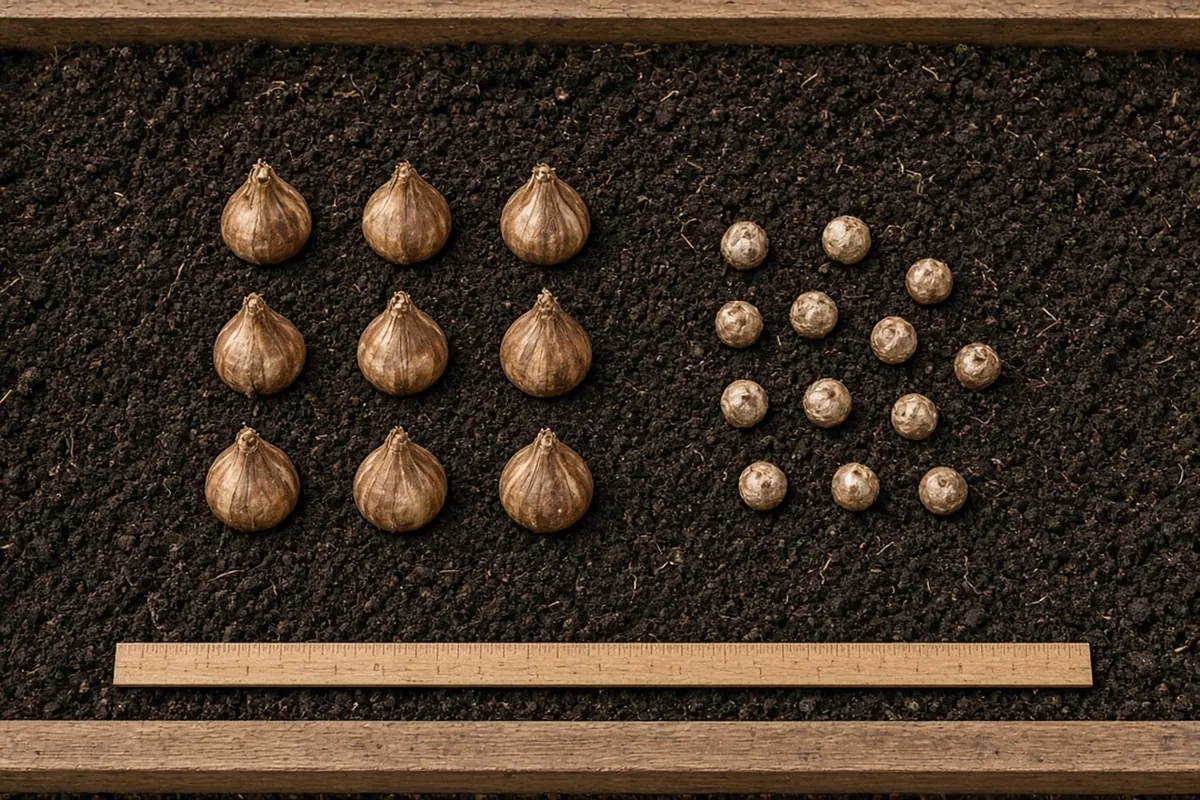 📘 Know-howHow many bulbs per square foot: tulips, daffodils and crocusTulips and daffodils at 6 inches apart come to 4 bulbs per square foot; crocus at 3 inches, 16. See the extension spacings and count a whole bed.Read the guide
Sources
- How to Use the Maps, USDA Plant Hardiness Zone Map, USDA Agricultural Research Service. Checked October 6, 2026.
- Understanding the Difference Between USDA Zones and Microclimates, Washington State University Extension, Skagit County Master Gardeners, published August 3, 2023. Checked October 11, 2026.
- Effects of Cold Weather on Horticultural Plants in Indiana (HO-203-W), Purdue University Extension, published July 7, 2023. Checked October 11, 2026.
- Making the Most of Microclimates, University of Georgia Cooperative Extension, Forsyth County, published February 1, 2021. Checked October 11, 2026.
Planning guide, not a guarantee. See every source on the site on the sources page. Spotted an error? Tell us.