📘 Know-howBeds5 min read
Nominal vs actual lumber sizes: what a 2x6 really is when you build a bed
Quick answer
The name is the board's size before drying and planing. Under PS 20, the federal lumber standard, a dry 2x6 is 1 1/2 by 5 1/2 inches, a 2x8 is 1 1/2 by 7 1/4, and a 2x12 is 1 1/2 by 11 1/4. Length is the one number you can count on: an 8 ft board is at least 96 inches and can run up to 3 inches longer. For a raised bed, two 2x6 boards stack to 11 inches, and the end boards of a 4 x 8 ft frame are cut to 45 inches.
Source: NIST, PS 20-20 American Softwood Lumber Standard, checked November 20, 2026.

The real sizes
What a 2x6 measures
PS 20 lists every board two ways: a nominal size, which is the name on the tag, and a minimum dressed size, which is what the board measures once it has been dried and planed smooth. The dressed size is the one that matters with a tape in your hand. Every 2x board is 1 1/2 inches thick (38 mm). Faces up to 6 inches wide come in 1/2 inch under the name, and faces of 8 inches and wider come in 3/4 inch under.
Source: NIST, PS 20-20 American Softwood Lumber Standard, checked November 20, 2026.
| On the tag | Real dry size | Two boards stacked |
|---|---|---|
| 2x4 | 1 1/2 x 3 1/2 in | 7 in |
| 2x6 | 1 1/2 x 5 1/2 in | 11 in |
| 2x8 | 1 1/2 x 7 1/4 in | 14 1/2 in |
| 2x10 | 1 1/2 x 9 1/4 in | 18 1/2 in |
| 2x12 | 1 1/2 x 11 1/4 in | 22 1/2 in |
| 4x4 (corner post) | 3 1/2 x 3 1/2 in | n/a |
| 1x6 | 3/4 x 5 1/2 in | 11 in |
Minimum dressed sizes for dry lumber, PS 20-20 Table 3. Stacked height = 2 x the face width.
Source: NIST, PS 20-20 American Softwood Lumber Standard, checked November 20, 2026.
- 1 1/2 inreal thickness of every 2x boardNIST, PS 20-20 American Softwood Lumber Standard, November 20, 2026
- 5 1/2 inreal face of a 2x6NIST, PS 20-20 American Softwood Lumber Standard, November 20, 2026
- 96 to 99 inwhat an 8 ft board can measureNIST, PS 20-20 American Softwood Lumber Standard, November 20, 2026
- 45 inend boards of a 4 x 8 ft frameArithmetic
Length
The length on the tag is close to true
PS 20 has boards sold in steps of 1 or 2 feet, and lumber 2 inches thick or less is trimmed at both ends to no less than the length on the tag and no more than 3 inches past it. An 8 ft board is at least 96 inches and may be up to 99. Plan on 96 and treat anything extra as trim.
Source: NIST, PS 20-20 American Softwood Lumber Standard, checked November 20, 2026.
In a raised bed
Where the missing inches show up
Take a 4 x 8 ft bed measured on the outside, two 2x6 boards high. The long sides use whole 8 ft boards. The ends sit between the long sides, so they are 48 inches less two board thicknesses: 45 inches. Two ends fit on one 8 ft board with 6 inches left, so the bed takes 6 boards of 8 ft. It stands 11 inches tall, not 12.
Work the cut from the name, 2 inches thick, and you would cut the ends to 44 inches. The frame then comes out 47 inches wide instead of 48. Height goes the same way. Call that bed a foot tall and you would order 32 cubic feet of soil, but it holds 26.6 inside, so the soil order changes too.
At the store
The lumber run, step by step
Write the cut list in real sizes
List each piece by its length: 4 long sides at 96 in and 4 ends at 45 in for the bed above. Write how many boards of each length to buy.
Measure the space in your car
Check that 8 ft boards fit with the hatch or trunk closed, or plan to have the boards cut to length before you leave, or delivered.
Look down each board
Hold one end at eye level and look along the edge. Leave boards that bow, twist or have big cracks at the ends.
Tape the boards you pick
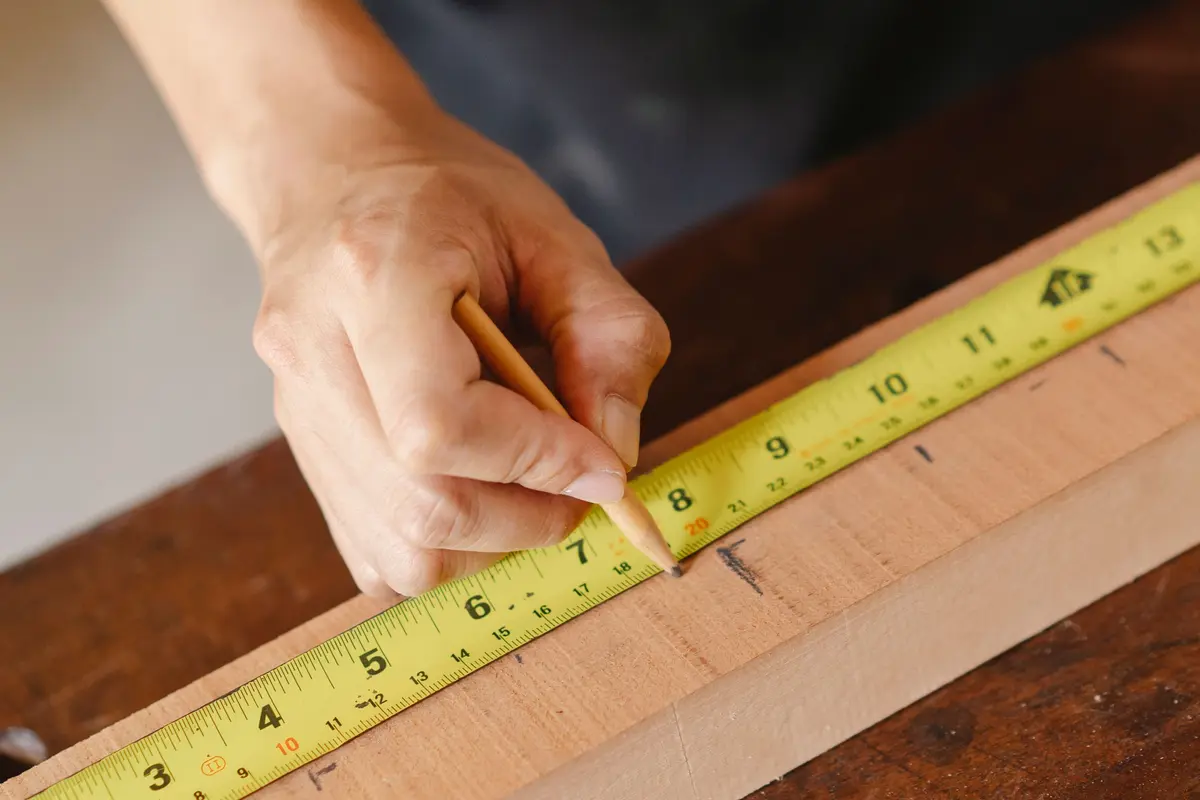
Check the length and the face width at the shelf. A 2x6 should read 5 1/2 in across and an 8 ft board at least 96 in long.
Source: NIST, PS 20-20 American Softwood Lumber Standard, checked November 20, 2026.
Cut ends from the real thickness
At home, measure the real thickness of your boards and cut the ends to the bed width less two of them: 45 in for a 4 ft bed of 2x lumber.
Print it, tick it off
Lumber run checklist
Take this to the store with a tape measure and your cut list.
- Bed size decided: outside or inside
- Cut list written in real sizes (ends = bed width less two board thicknesses)
- Number of boards and length of each written down
- Car space measured, or cutting or delivery arranged
- Each board looked down for bow, twist and end cracks
- Face width checked with a tape (2x6 = 5 1/2 in)
- Length checked (8 ft board = at least 96 in)
- Screws and any corner posts on the list
What people learn the second year
Tips and tricks
- Measure a board before you saw. PS 20 sizes are minimums for dry lumber. Measure the thickness of two of your own boards and cut the ends to the bed width less both. (NIST, PS 20-20 American Softwood Lumber Standard)
- Buy one more than the list. A spare board covers a bad cut or a board that splits at a screw. If you don't use it, it makes a stake or an edge for a path.
- Stack heights, not names. Add the real face widths to get the height: two 2x6 boards are 11 inches, a 2x6 on a 2x8 is 12 3/4. (NIST, PS 20-20 American Softwood Lumber Standard)
- Write both numbers on the plan. Put the tag name and the real size side by side on your sketch, so whoever cuts the boards works from the same numbers.
Common questions
Questions
What is the actual size of a 2x6?
1 1/2 by 5 1/2 inches for dry lumber, under the PS 20 American Softwood Lumber Standard. The name is the size before the board is dried and planed.
Source: NIST, PS 20-20 American Softwood Lumber Standard, checked November 20, 2026.
Is an 8 foot 2x6 actually 8 feet long?
At least 8 feet. PS 20 trims boards 2 inches thick or less to no less than the length on the tag and no more than 3 inches over, so an 8 ft board is 96 to 99 inches. Measure it and trim if the bed has to be exactly 8 ft.
Source: NIST, PS 20-20 American Softwood Lumber Standard, checked November 20, 2026.
How tall is a raised bed made of two 2x8 boards?
14 1/2 inches. A 2x8 is 7 1/4 inches across, so two of them stack to 14 1/2. Two 2x6 boards make 11 inches, and one 2x12 makes 11 1/4.
Source: NIST, PS 20-20 American Softwood Lumber Standard, checked November 20, 2026.
How long should the end boards be for a 4x8 raised bed?
45 inches if the long sides run past them and the bed is 48 inches wide on the outside. That is 48 less two board thicknesses of 1 1/2 inches.
Source: NIST, PS 20-20 American Softwood Lumber Standard, checked November 20, 2026.
The arithmetic, done for you
Tools for this job
- 🪚 CalculatorRaised bed lumber calculatorHow many boards to buy for a wooden raised bed, and where to cut them: side lengths, a board-by-board cut plan, corner posts and the soil it will hold.Open the tool
- 🪴 CalculatorRaised bed soil calculatorHow much soil fills a raised bed: cubic feet, cubic yards and a bag count for 1.5 or 2 cu ft bags, from the bed's length, width and depth.Open the tool
Keep reading
More guides
 📘 Know-howAre old seeds still good? How long seed keeps, and a 10-seed testHow many years vegetable seed keeps in cool, dry storage, how to sprout 10 seeds on a paper towel, and what to do with the count.Read the guide
 ✅ ChecklistHow to draw a garden bed map you'll actually use next yearMeasure the beds, pick a scale like 1 square = 1 foot, and mark what went where and when. Next spring the map tells you where each crop family goes.Read the guide
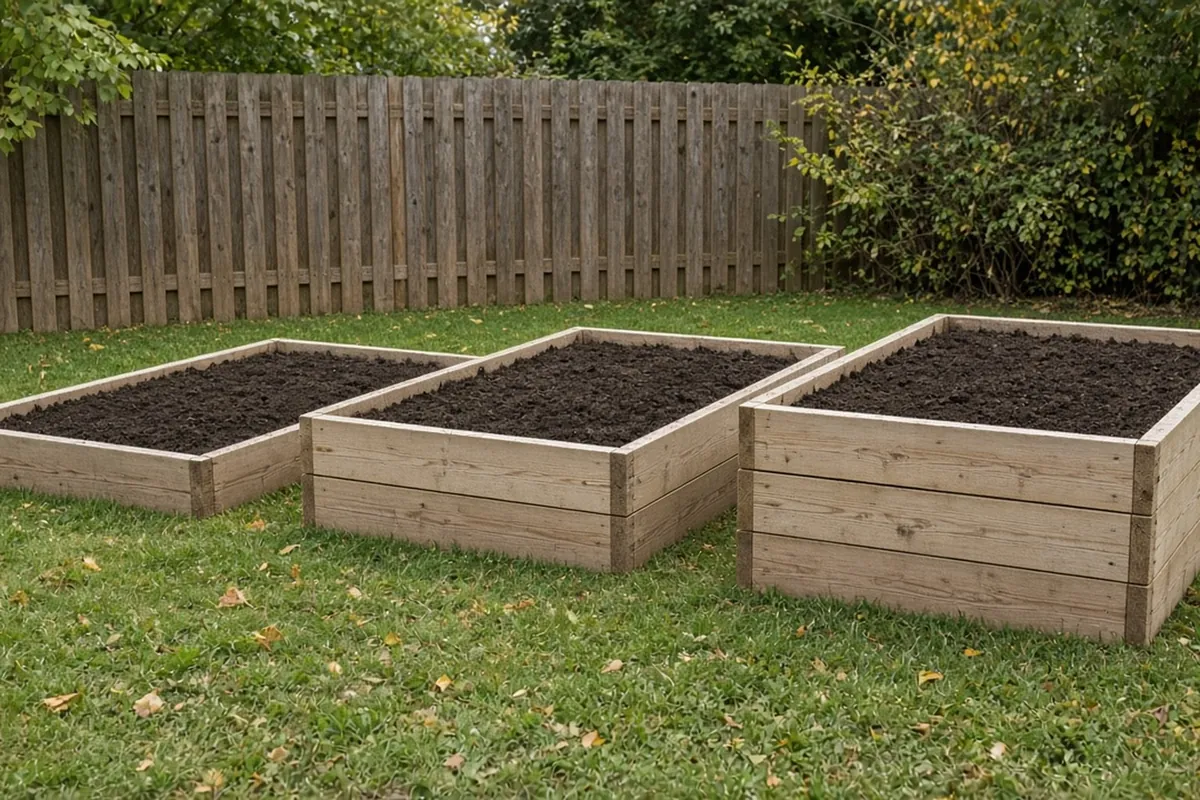 📘 Know-howHow tall to build a raised bed: real board heights and the depths extension pages giveTwo 2x6 boards make an 11 inch bed, enough on open ground for most crops. When to go to 16 1/2 or 24 inches, and what each extra board costs in lumber and soil.Read the guide
Sources
- Voluntary Product Standard PS 20-20, American Softwood Lumber Standard, National Institute of Standards and Technology (US Department of Commerce), published January 1, 2020. Checked November 20, 2026.
- Raised Garden Bed Dimensions (Circular 1027-4), University of Georgia Cooperative Extension, published December 14, 2022. Checked October 10, 2026.
Planning guide, not a guarantee. See every source on the site on the sources page. Spotted an error? Tell us.