🧭 Garden systemBeds8 stepsFree working copy
The winter planning desk: map the beds, count the seed, list the soil
Quick answer
Sketch the beds on paper, count last year's seed and sprout 10 from any old packet, then run each crop through the seed calculator and order only the gap by January or February, as Clemson Extension advises. Measure how far each bed sank and list the soil bags at the same sitting. A 4 x 8 ft bed of beans, carrots, peas and lettuce needs 856 seeds on hand, and a 2 inch top-up is 5.33 cubic feet, or 4 bags of 1.5 cu ft.
Source: Clemson HGIC 1256, planning a garden, checked October 14, 2026; 7 CFR 201.31, vegetable seed germination standards, checked October 14, 2026; Illinois Extension, test seed viability (2017), checked October 14, 2026; Miracle-Gro raised bed soil product page, checked October 6, 2026.

Decide first
Plan it yourself, skip the seed order, or get help?
Do it yourself
Plan it yourself
Do it yourself if you sow anything from seed: beans, carrots, peas, lettuce, radishes. You need the bed sizes, last year's packets, a pencil and about an evening. Clemson Extension's advice is to plan the garden on paper first and order seeds by January or February.
Source: Clemson HGIC 1256, planning a garden, checked October 14, 2026.
Skip it
Skip the seed order
If you buy every plant as a transplant in spring, there's no seed to count. Still sketch the beds and write the soil list, because a bed that sank last summer needs filling before anything goes in.
Get help
Get help with planting dates
This page stops at counts and quantities. Planting dates depend on your state and your frost dates. Clemson's chart dates are for South Carolina only, so ask your county extension office for your state's calendar and look up your frost dates by zip code.
Source: Clemson HGIC 1256, planning a garden, checked October 14, 2026.
- 856seeds on hand for the example 4 x 8 ft bedArithmetic
- 1 yronion and parsnip seed, cool and dryUNL Extension G2090, seed storage and germination, October 14, 2026
- 10 seedsin a paper towel testIllinois Extension, test seed viability (2017), October 14, 2026
- 4 bagsof 1.5 cu ft for a 2 in top-upMiracle-Gro raised bed soil product page, October 6, 2026
One evening in January, eight steps
The steps, in order
Sketch the beds on paper
Draw each bed to rough scale and mark which crop goes where, how many rows and how long each row is. Clemson says to plan the garden on paper first. The example is one 4 x 8 ft bed: 3 rows of beans, 2 of carrots and 2 of peas, each 8 ft, plus 2 rows of lettuce 4 ft long.
Have ready: Graph paper, a pencil and the size of every bed.
Source: Clemson HGIC 1256, planning a garden, checked October 14, 2026.
Count last year's seed
Open the old packets, count what's left of the big seed like beans and peas, and write the year on each one. Nebraska Extension's table gives onion and parsnip seed about 1 year in cool, dry storage, and beans, peas and carrots about 3.
Have ready: The seed box or drawer and a pen.
Source: UNL Extension G2090, seed storage and germination, checked October 14, 2026.
Test the doubtful packets
Roll 10 seeds in a slightly damp paper towel, seal it in a labeled bag and keep it above 70°F. Illinois Extension says to check after the packet's germination time, or 7 to 10 days. If 7 or more sprout, use the packet and sow a little thicker; fewer than 7, buy new seed.
Have ready: Paper towels, zip bags, a marker and a warm spot.
Source: Illinois Extension, test seed viability (2017), checked October 14, 2026.
Run each crop through the seed calculator
Enter rows, row length and spacing. Leave germination blank to use the federal minimum, or type your test result. The example bed comes to 576 seeds sown and 856 on hand, because carrots only have to reach 55% and beans 70%.
Have ready: The bed sketch and the seed calculator.
Source: 7 CFR 201.31, vegetable seed germination standards, checked October 14, 2026.
Take the leftovers off the order
Tested leftovers fill part of each row. If 120 old bean seeds test at 80%, they should fill about 96 of the bed's 144 spots. The other 48 spots need 69 new seeds at the 70% floor, so you buy 69 instead of 206.
Have ready: Your counts and test results.
Source: Illinois Extension, test seed viability (2017), checked October 14, 2026; 7 CFR 201.31, vegetable seed germination standards, checked October 14, 2026.
Write the soil list
Use the gap you measured in fall, or measure on a thawed day: how far the soil sits below the top of the frame. A 4 x 8 ft bed that sank 2 inches needs 4 × 8 × 2 ÷ 12 = 5.33 cubic feet, which is 4 bags of 1.5 cu ft or 3 bags of 2 cu ft.
Have ready: A ruler or your fall notes, and the soil calculator.
Source: Miracle-Gro raised bed soil product page, checked October 6, 2026; Kellogg Garden raised bed mix product page, checked October 6, 2026.
Order by January or February
Copy each crop's seeds to buy and the packets onto the pack, round every packet count up, and order. Clemson's advice is to order seed by January or February.
Have ready: The filled-in pack and the seed counts printed on the packets you plan to buy.
Source: Clemson HGIC 1256, planning a garden, checked October 14, 2026.
Store the seed and file the pack
Keep the seed cool, dark and dry until sowing. UVM Extension calls temperatures around 40°F ideal, in an airtight container if it goes in the fridge. Fold the pack into the seed box, so next winter starts from this year's list.
Have ready: A tin or jar with a tight lid.
Source: UVM Extension, can old seeds still grow (2026), checked October 14, 2026.
Free, one page, black and white
Print the working copy
Winter planning pack: the steps above as a checklist with a date box for each, on one US Letter page.
If a step gets skipped
What goes wrong
⚠️
Ordering one packet of everything
Packets bought by eye run short on the crops that need a lot of seed. In the example bed, carrots need 350 seeds on hand and lettuce only 60. Count each crop before you order.
Source: 7 CFR 201.31, vegetable seed germination standards, checked October 14, 2026.
⚠️
Counting on old onion seed
Nebraska Extension gives onion and parsnip seed about 1 year in cool, dry storage. A packet from two springs ago may leave a bare row. Buy those fresh each winter.
Source: UNL Extension G2090, seed storage and germination, checked October 14, 2026.
⚠️
Testing seed in a cold room
Illinois Extension keeps the towel test above 70°F, and Nebraska Extension uses 70 to 75°F. A test on a cold windowsill doesn't match those conditions, so its count tells you less.
Source: Illinois Extension, test seed viability (2017), checked October 14, 2026; UNL Extension G2090, seed storage and germination, checked October 14, 2026.
⚠️
Copying another state's planting dates
Seed charts often come with a planting calendar for one state. Clemson's dates are for South Carolina. Use the spacing and seed amounts anywhere, but take dates from your own state and frost dates.
Source: Clemson HGIC 1256, planning a garden, checked October 14, 2026.
⚠️
Leaving the soil until planting day
A bed that sank over the summer still needs filling in spring. Put the bags on the same list as the seed so they're bought before planting day.

When the steps change
Variants
🪴
First garden, no leftovers
Skip the counting and the test. Order straight from the calculator at the federal floors: 856 seeds on hand for the example bed.
Source: 7 CFR 201.31, vegetable seed germination standards, checked October 14, 2026.
🏙️
A drawer full of old packets
Test every packet older than its storage life before you order. A tested 80% bean packet of 120 seeds cut the example order from 206 seeds to 69.
Source: UNL Extension G2090, seed storage and germination, checked October 14, 2026; Illinois Extension, test seed viability (2017), checked October 14, 2026.
❄️
Several sowings of the same crop
If you sow lettuce or radishes every few weeks, count each sowing as its own line. The seed for the third sowing has to be in the box too.
☀️
Long rows bought by weight
Bulk seed comes by the ounce. Clemson's seed per 100 ft of row puts 24 ft of snap beans at about 2.9 ounces and 16 ft of peas at about 2.6 ounces.
Source: Clemson HGIC 1256, planning a garden, checked October 14, 2026.
What people learn the second year
Tips and tricks
- Start with the bed map, not the catalog. Once the rows are on paper, the catalog can't talk you into a fourth tomato. Fill the map first, then shop from it.
- Start the towel test before you sit down. A test takes 7 to 10 days, according to Illinois Extension. Start it in early January and the results are ready when you write the order. (Illinois Extension, test seed viability (2017))
- Write the year on every new packet. When the order arrives, mark each packet with the year. Next winter's count takes minutes.
- Measure the sinking in fall. A frozen bed is hard to read. Write down how far each bed sank when you clean it up in fall, and the January soil list is already done.
- Keep one line per sowing. Lettuce sown three times is three lines on the order. Count every sowing, or the later ones run short.
The one we checked the steps against
Primary source
Planning a Garden (HGIC 1256), Clemson Cooperative Extension, Home & Garden Information Center, published February 12, 2021. Checked October 14, 2026.
Clemson Extension's Planning a Garden factsheet (HGIC 1256) says to plan on paper first and order seed by January or February, and its planting chart gives the in-row spacing and seed per 100 ft of row that the seed calculator uses. Its planting dates are for South Carolina, so they are not used here.
The arithmetic and the background reading
Tools and guides in this system
- 🌱 CalculatorSeed quantity calculatorHow many seeds your rows take, how many to keep on hand once germination is allowed for, and how many packets or ounces to order.Open the tool
- 🪴 CalculatorRaised bed soil calculatorHow much soil fills a raised bed: cubic feet, cubic yards and a bag count for 1.5 or 2 cu ft bags, from the bed's length, width and depth.Open the tool
 🧰 Problem solverThe winter seed order: how much seed to buy, crop by cropWork out how many seeds and packets to order for spring, one crop at a time, with leftovers counted first and the germination rate allowed for.Read the guide
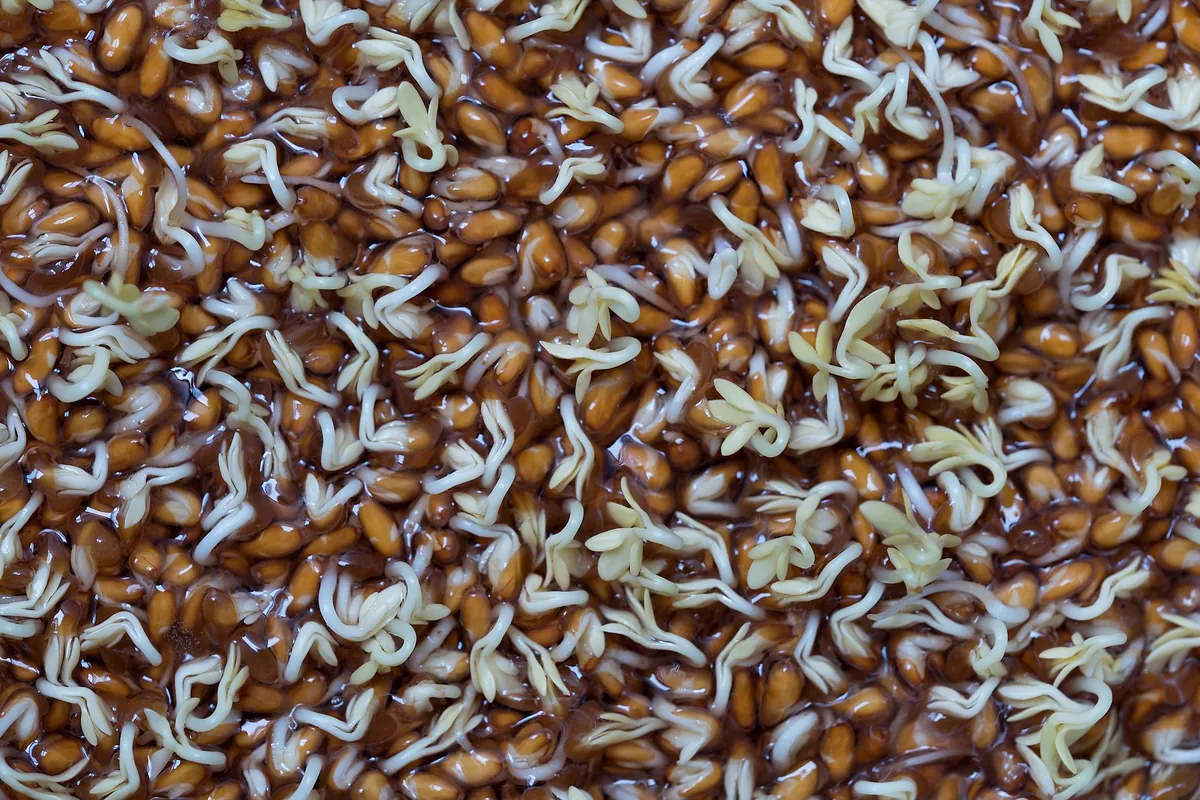 📘 Know-howAre old seeds still good? How long seed keeps, and a 10-seed testHow many years vegetable seed keeps in cool, dry storage, how to sprout 10 seeds on a paper towel, and what to do with the count.Read the guide
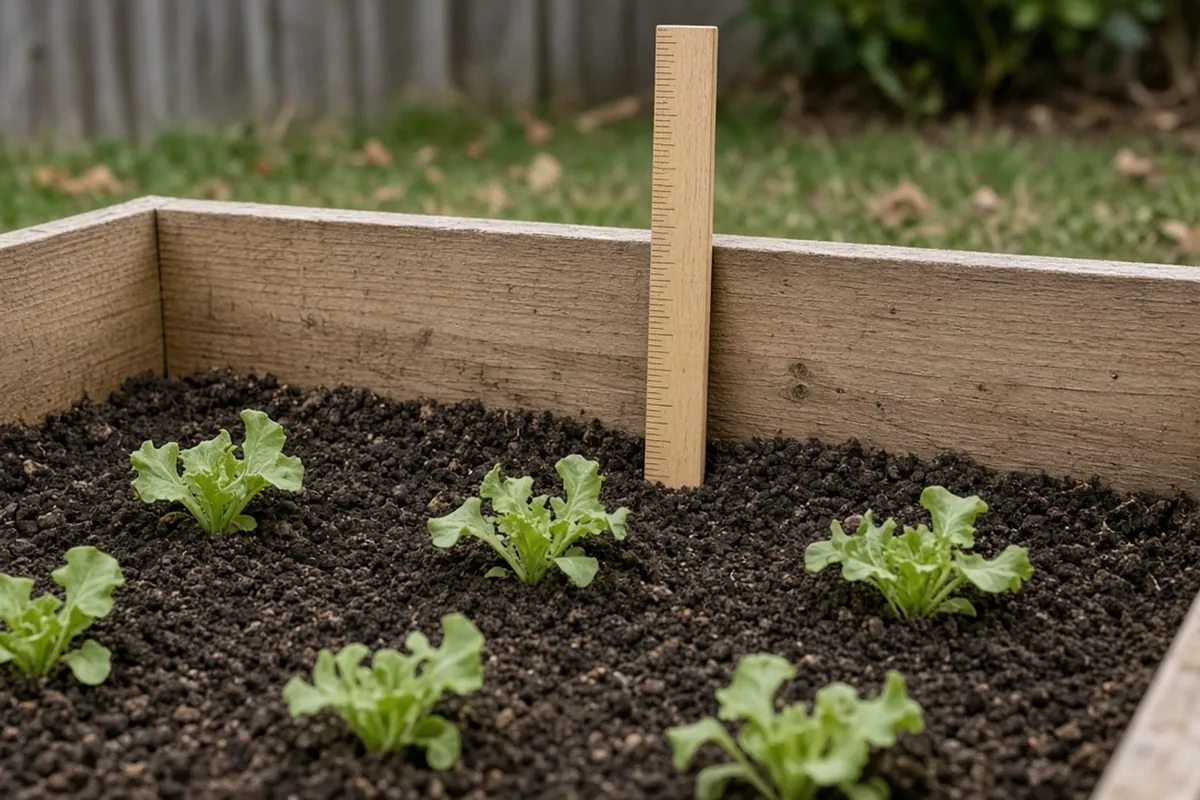 🧰 Problem solverRaised bed soil sank after a month: why, and how much to top upWhy raised bed soil settles after filling, what extension services say to add each year, and how to turn the gap into cubic feet and bags.Read the guide
Common questions
Questions
What should I do in January to plan my vegetable garden?
Sketch the beds on paper, count last year's seed, test the old packets, work out how much seed each crop needs, and order the gap. Clemson Extension advises planning on paper first and ordering seed by January or February. Add the soil you'll need to top up the beds to the same list.
Source: Clemson HGIC 1256, planning a garden, checked October 14, 2026.
How much seed do I need for a 4 x 8 raised bed?
It depends on the crops. Three rows of beans, two of carrots and two of peas, each 8 ft, plus two 4 ft rows of lettuce come to 576 seeds sown and 856 on hand once the federal germination minimums are allowed for.
Source: Clemson HGIC 1256, planning a garden, checked October 14, 2026; 7 CFR 201.31, vegetable seed germination standards, checked October 14, 2026.
Can I still use seed from last year?
Usually, if it was kept cool and dry. Nebraska Extension gives most vegetable seed 2 to 5 years, but onion and parsnip about 1. Sprout 10 seeds on a damp paper towel first; Illinois Extension says to buy new seed if fewer than 7 come up.
Source: UNL Extension G2090, seed storage and germination, checked October 14, 2026; Illinois Extension, test seed viability (2017), checked October 14, 2026.
How much soil do I need to top up a raised bed in spring?
Multiply length by width in feet by the gap in inches, then divide by 12. A 4 x 8 ft bed that sank 2 inches needs 5.33 cubic feet: 4 bags of 1.5 cu ft or 3 bags of 2 cu ft.
Source: Miracle-Gro raised bed soil product page, checked October 6, 2026; Kellogg Garden raised bed mix product page, checked October 6, 2026.
When should I plant what I order?
This page doesn't give planting dates, because they change by state and by frost date. Ask your county extension office for your state's planting calendar and look up your frost dates by zip code.
The next job on the shelf
More garden systems
 7 steps🧭 SystemRefresh border mulch: measure each bed, then buy only the gapMeasure the old layer in every bed before you order. One example yard needs 23 bags of 2 cu ft, not 45. The steps, the 3 inch limit and a free mulch record.Open the system
 8 steps🧭 SystemEnd-of-season review: turn this year's harvest into next year's planAdd up each crop's pounds, set them beside an extension average, grade them, size next year's rows and move each family to a new bed. Free review sheet.Open the system
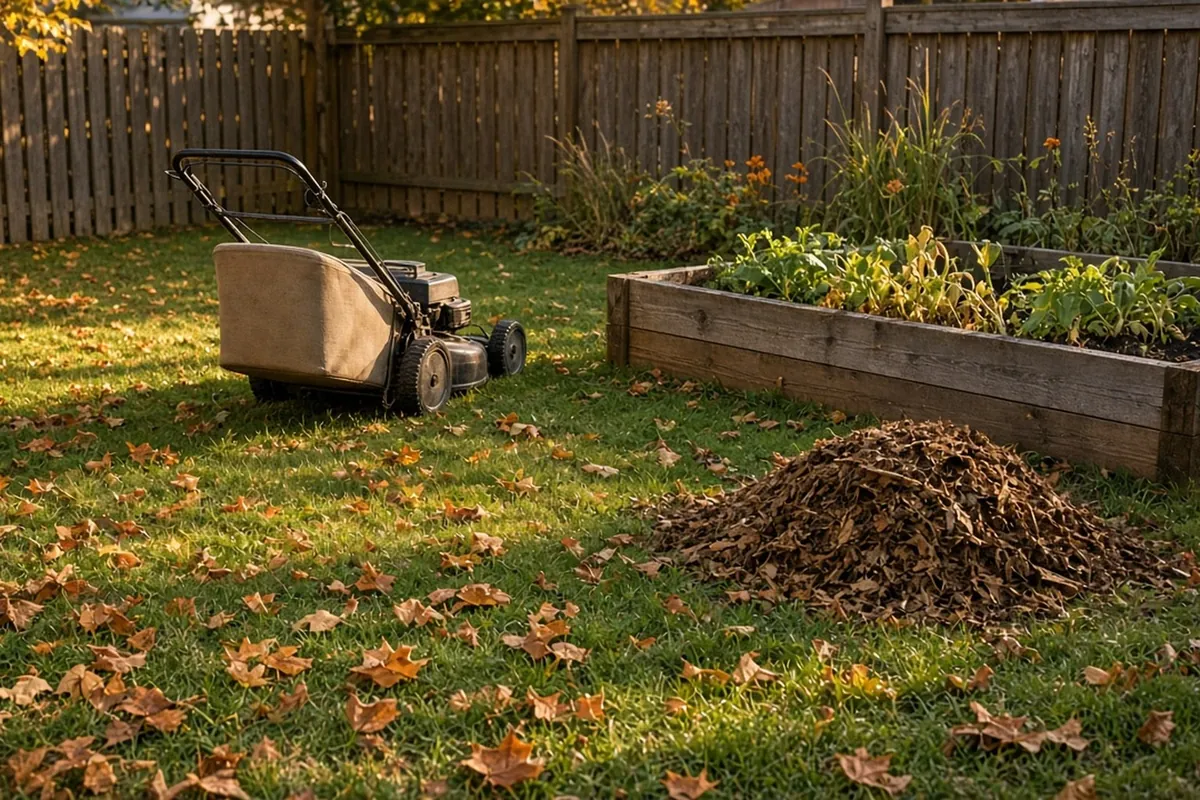 7 steps🧭 SystemTurn fall leaves into bed cover and mulch, and keep a tally of the bagsWhat to do with fall leaves: mow a thin layer into the lawn, shred the rest and spread 2 to 3 inches on beds. Free leaf haul tally to print.Open the system
Sources
- Planning a Garden (HGIC 1256), Clemson Cooperative Extension, Home & Garden Information Center, published February 12, 2021. Checked October 14, 2026.
- 7 CFR 201.31, Minimum germination standards for vegetable seeds in interstate commerce, USDA Agricultural Marketing Service (Federal Seed Act regulations, eCFR), published July 7, 2020. Checked October 14, 2026.
- Test seed viability (ILRiverHort blog), University of Illinois Extension, published February 3, 2017. Checked October 14, 2026.
- Miracle-Gro Organic Raised Bed & Garden Soil, ScottsMiracle-Gro. Checked October 6, 2026.
- Vegetable Garden Seed Storage and Germination Requirements (G2090), University of Nebraska-Lincoln Extension, published June 1, 2011. Checked October 14, 2026.
- Raised Bed & Potting Mix, Kellogg Garden Products. Checked October 6, 2026.
- Can old seeds still grow?, University of Vermont Extension, published January 16, 2026. Checked October 14, 2026.
Planning guide, not a guarantee. See every source on the site on the sources page. Spotted an error? Tell us.