📘 Know-howSoil and mulch5 min read
Compost or topsoil: which does your bed need?
Quick answer
Use compost for the thin yearly layer: Oregon State suggests a quarter inch to 1 inch on a planted bed each year. Use topsoil, usually mixed with compost, when a bed has lost real depth. Maryland Extension mixes compost and topsoil 1:2 or 1:1 to fill a bed. A 4 x 8 ft bed that sank 2 inches needs 5.33 cu ft. At 1:1 that's 2 bags of compost (1.5 cu ft) and 4 bags of topsoil (0.75 cu ft).
Source: OSU Extension EM 9308, using compost, checked October 6, 2026; Maryland Extension, Soil to Fill Raised Beds, checked October 15, 2026; Kellogg Garden compost product page, checked October 6, 2026; Scotts Premium Topsoil product page, checked October 6, 2026.

Two jobs
What each one is for
The two bags sit side by side at the store and look alike, but you buy them for different jobs. Compost is broken-down plant material. You spread it in thin layers to keep the top of a bed in good shape. Topsoil is mineral soil from the top layer of the ground. It adds bulk, so it's the one to reach for when a bed has lost several inches of depth.
Compost in a bed keeps breaking down, so beds sink. Oregon State says to expect newly filled beds to settle as the compost decomposes, and to refill as needed. Illinois Extension says a few inches of compost or good topsoil each year should keep up with the settling. That gives you a simple rule: a thin layer on a bed that's holding its level, and something with more bulk when it has dropped.
Source: OSU Extension EM 9308, using compost, checked October 6, 2026; Illinois Extension, refreshing raised bed soil, checked October 6, 2026.
- 1/4 to 1 inof compost a year on a planted bed (Oregon State)OSU Extension EM 9308, using compost, October 6, 2026
- 1:2 or 1:1compost to topsoil when filling a bed (Maryland)Maryland Extension, Soil to Fill Raised Beds, October 15, 2026
- 4 sq ftone 0.75 cu ft topsoil bag covers at 2 in (maker)Scotts Premium Topsoil product page, October 6, 2026
- 5.33 cu ftto refill a 4 x 8 bed that sank 2 inArithmetic
Pick one
Which one your bed needs this spring
Measure how far it dropped
Lay a straight board across the frame and measure down to the soil in three places. Average the three numbers.
Under an inch: compost only
A bed that's close to full only needs its yearly layer. Oregon State's range is a quarter inch to 1 inch, spread on top.
Source: OSU Extension EM 9308, using compost, checked October 6, 2026.
Two inches or more: bring in topsoil too
Several inches of compost alone will keep sinking as it breaks down. Maryland fills beds with compost and topsoil at 1:2 or 1:1. Some sellers sell the two premixed.
Source: Maryland Extension, Soil to Fill Raised Beds, checked October 15, 2026.
Bed on a hard surface? Skip most of the topsoil
For a bed sitting on concrete or a driveway, Maryland uses compost and a soilless mix 1:1. It adds topsoil, up to 20% of the mix, only in beds at least 16 inches deep.
Source: Maryland Extension, Soil to Fill Raised Beds, checked October 15, 2026.
Turn the inches into bags
Square feet times inches, divided by 12, is cubic feet. Split that by your ratio, then divide each part by its bag size and round up.
Worked example
A 4 x 8 bed that sank 2 inches
The bed is 32 sq ft. Two inches over that is 32 x 2 / 12 = 5.33 cu ft. Compost here comes in 1.5 cu ft bags and topsoil in 0.75 cu ft bags. The chart and the table show four ways to fill the same 5.33 cu ft.
Source: Kellogg Garden compost product page, checked October 6, 2026; Scotts Premium Topsoil product page, checked October 6, 2026.
| Mix | Compost (1.5 cu ft bags) | Topsoil (0.75 cu ft bags) |
|---|---|---|
| All compost | 5.33 cu ft, 4 bags | none |
| 1:1 | 2.67 cu ft, 2 bags | 2.67 cu ft, 4 bags |
| 1:2 | 1.78 cu ft, 2 bags | 3.56 cu ft, 5 bags |
| All topsoil | none | 5.33 cu ft, 8 bags |
Cubic feet = 32 sq ft x 2 in / 12, split by the ratio. Bag sizes vary, so check the cubic feet printed on the bags you buy.
Buying bulk
What to look at before a load of topsoil arrives
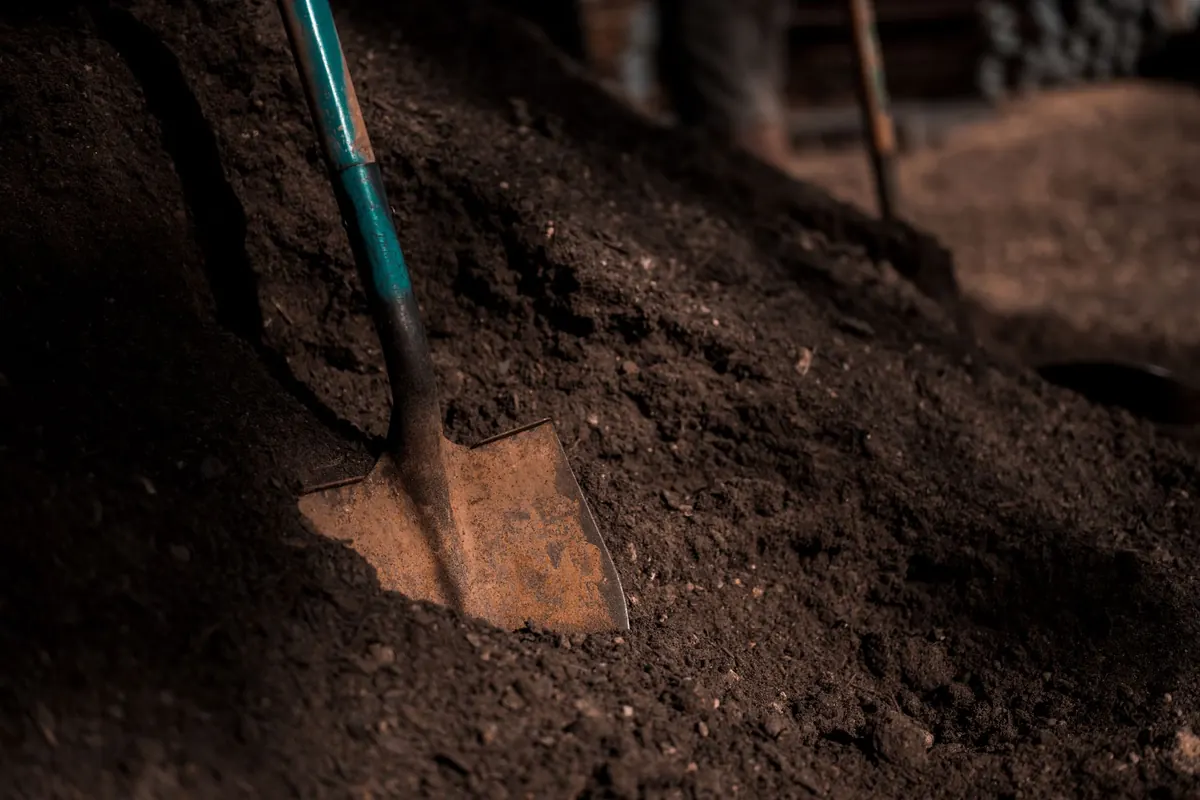
Topsoil sales aren't regulated in Maryland, and Maryland Extension suggests looking at a load before you buy. Good topsoil is dark and crumbly and smells earthy. Pass on soil that's very sandy or heavy clay, smells bad, or has grayish streaks or a chalky, sticky or rough feel.
Source: Maryland Extension, Soil to Fill Raised Beds, checked October 15, 2026.
Print it, tick it off
Compost or topsoil checklist
Fill this in before you head to the store or call for a load.
- Bed length and width in feet
- Drop measured at three spots, averaged in inches
- Job named: yearly layer (compost) or depth back (compost and topsoil)
- Ratio picked: all compost, 1:1 or 1:2
- Cubic feet worked out (square feet x inches / 12), split by the ratio
- Bag sizes read off the bags, in cubic feet
- Bags rounded up for each material, or a bulk quote
- Bulk load looked at: dark, crumbly, earthy smell
What people learn the second year
Tips and tricks
- Mix them on a tarp first. Dump both materials onto a tarp next to the bed and turn them with a shovel a few times. You get an even blend instead of a layer of each.
- Mound it a little. Leave the new mix slightly above the level you want, since it settles once it's watered.
- Write down what went in. Note the date, the inches and the ratio for each bed. Next spring's measurement tells you whether that mix held its level.
- Price both ways for a big job. Once the bag count climbs past a dozen or so, ask a supplier what a premixed compost and topsoil load costs for the same cubic feet.
Common questions
Questions
Should I use compost or topsoil in a raised bed?
Both, for different jobs. Compost is the thin layer you add each year, a quarter inch to 1 inch per Oregon State. When the bed needs depth back, Maryland Extension mixes compost and topsoil 1:2 or 1:1.
Source: OSU Extension EM 9308, using compost, checked October 6, 2026; Maryland Extension, Soil to Fill Raised Beds, checked October 15, 2026.
What ratio of compost to topsoil should I mix?
Maryland Extension uses 1 part compost to 1 or 2 parts topsoil to fill a raised bed. For a bed on a hard surface it uses compost and a soilless mix 1:1 instead.
Source: Maryland Extension, Soil to Fill Raised Beds, checked October 15, 2026.
How much compost and topsoil for a 4 x 8 raised bed?
It depends on the depth. For a 2 inch drop, 32 sq ft x 2 / 12 = 5.33 cu ft. At 1:1 that's 2.67 cu ft of each: 2 bags of 1.5 cu ft compost and 4 bags of 0.75 cu ft topsoil.
Source: Kellogg Garden compost product page, checked October 6, 2026; Scotts Premium Topsoil product page, checked October 6, 2026.
Can I top up a raised bed with just topsoil?
Illinois Extension says a few inches of compost or high-quality topsoil each year should keep up with settling, so topsoil alone works for a top-up. The yearly compost layer can go on top afterward.
Source: Illinois Extension, refreshing raised bed soil, checked October 6, 2026.
Is bagged garden soil the same as topsoil?
Often not. Maryland Extension says bagged organic soils usually don't contain topsoil, just mixes of bark, compost, peat and similar materials. Check the ingredients on the bag.
Source: Maryland Extension, Soil to Fill Raised Beds, checked October 15, 2026.
The arithmetic, done for you
Tools for this job
- 🪱 CalculatorCompost and topsoil calculatorHow much compost or topsoil to buy for a garden bed or lawn: cubic feet, cubic yards and bag counts, plus the mix you get when you dig it in.Open the tool
- 🪴 CalculatorRaised bed soil calculatorHow much soil fills a raised bed: cubic feet, cubic yards and a bag count for 1.5 or 2 cu ft bags, from the bed's length, width and depth.Open the tool
Keep reading
More guides
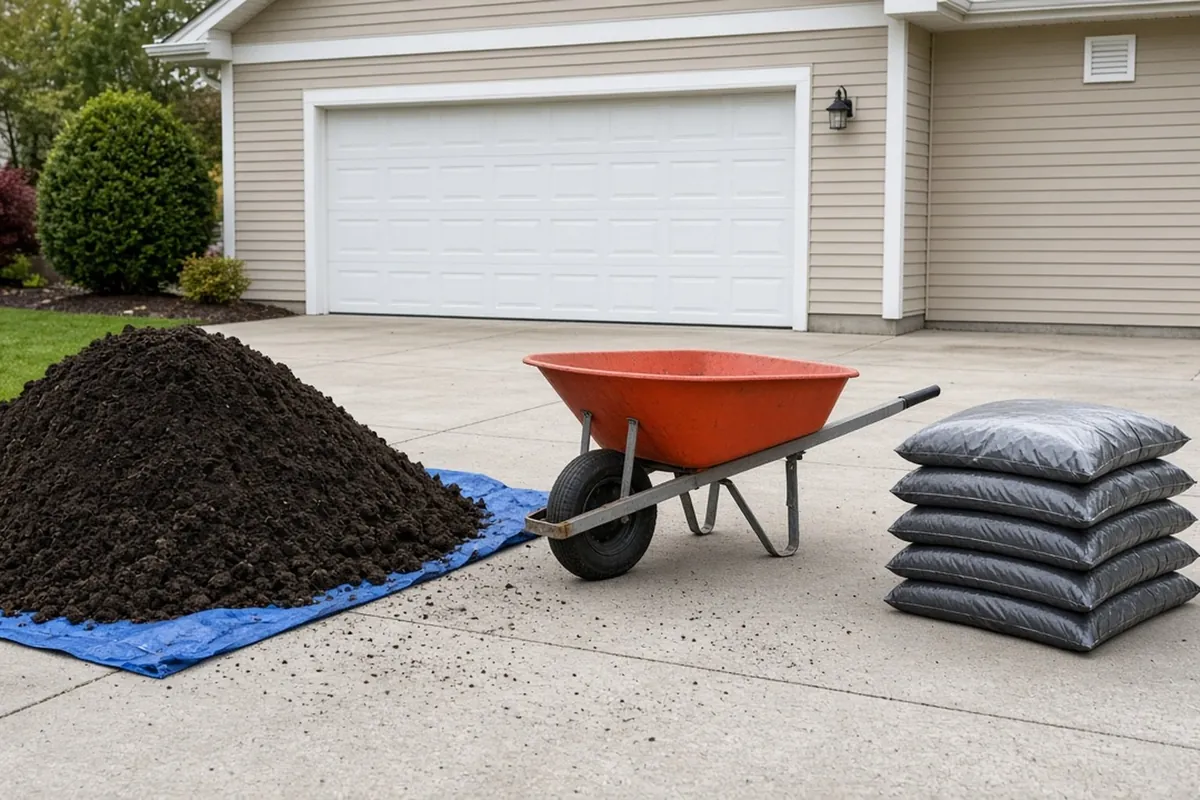 🧰 Problem solverBags or bulk: when a cubic yard delivery is cheaperHow to compare bagged soil, mulch or compost with a bulk cubic yard: price per cubic foot, the delivery fee, and the bag count where bulk wins.Read the guide
 ✅ ChecklistFall compost bin reset: empty the finished compost, then rebuild with leavesPull out the finished compost, spread it on your beds, then rebuild the bin 3 ft each way with fall leaves and greens, damp as a wrung-out sponge.Read the guide
 🧰 Problem solverWhat to do with fall leaves in the garden: shred them into mulchShred the leaves, then spread 2 to 3 inches on beds and 3 to 4 around shrubs. How to shred without a shredder, and how many bags a bed takes.Read the guide
Sources
- How to use compost in gardens and landscapes (EM 9308), Oregon State University Extension Service, published February 1, 2021. Checked October 6, 2026.
- Soil to Fill Raised Beds, University of Maryland Extension, published November 6, 2024. Checked October 15, 2026.
- Gardner & Bloome Organics Purely Compost, Kellogg Garden Products. Checked October 6, 2026.
- Scotts Premium Topsoil Lawn & Garden Soil Conditioner, ScottsMiracle-Gro. Checked October 6, 2026.
- Refreshing raised bed soil generates exceptional results, University of Illinois Extension, published April 5, 2021. Checked October 6, 2026.
Planning guide, not a guarantee. See every source on the site on the sources page. Spotted an error? Tell us.