🧭 Garden systemSoil and mulch8 stepsFree working copy
Spring bed top-up: test the soil, measure the drop, buy once
Quick answer
Squeeze a handful of soil first: if it crumbles, start; if it stays in a clump, wait. Rake off the winter cover, measure how far each bed sits below the frame at three spots and average them. Refill a bed that sank by that depth; give a bed that held its level a quarter inch to 1 inch of compost, as Oregon State suggests. Loosen with a fork rocked in place, as Maryland Extension does, and don't flip the soil. Two 4 x 8 ft beds, one 1.5 inches down and one level, take 4 bags of 1.5 cu ft.
Source: Kentucky Extension NEP-219, Preparing Your Garden, checked October 15, 2026; OSU Extension EM 9308, using compost, checked October 6, 2026; Maryland Extension, Soil to Fill Raised Beds, checked October 15, 2026; Kellogg Garden compost product page, checked October 6, 2026.

Decide first
Top it up yourself, skip it this year, or get help?
Do it yourself
Top it up yourself
Do it yourself on any raised or in-ground bed you can reach from the path. You need a ruler, a garden fork, a rake and one trip to the store for bags.
Skip it
Skip the refill
If the soil still sits where it did last spring and you spread compost in fall, there's nothing to refill. Do the squeeze test, loosen with the fork and plant. Oregon State's yearly layer is a quarter inch to 1 inch, so one fall layer covers it.
Source: OSU Extension EM 9308, using compost, checked October 6, 2026.
Get help
Get help with soil tests and feeding
This page stops at depths, volumes and bag counts. What your soil needs to feed the plants is a soil test question. Your county extension office can tell you how to send a sample and read the results.
Source: Maryland Extension, Soil to Fill Raised Beds, checked October 15, 2026.
- 1.5 inaverage drop in bed A, from 1, 1.5 and 2 inArithmetic
- 1/4 to 1 inof compost a year on a bed that held its levelOSU Extension EM 9308, using compost, October 6, 2026
- 6 to 8 inbetween fork spots when looseningMaryland Extension, Soil to Fill Raised Beds, October 15, 2026
- 4 bagsof 1.5 cu ft for the two example bedsKellogg Garden compost product page, October 6, 2026
One dry spring morning, eight steps
The steps, in order
Do the squeeze test
Squeeze a handful from the wettest bed and open your hand. Kentucky Extension says soil that crumbles is ready to work and soil that stays in a clump is too wet. If it clumps, measure and shop now, and do the digging after a few dry days.
Have ready: Your hand, and the bed that dries last.
Source: Kentucky Extension NEP-219, Preparing Your Garden, checked October 15, 2026.
Rake off the winter cover
Oregon State covers beds with 2 inches of leaves or other organic material each winter. Pull it onto the paths or the compost pile so the real soil level shows.
Have ready: A rake and somewhere to put the leaves.
Source: OSU Extension FS 270, raised bed gardening, checked October 10, 2026.
Measure the drop at three spots
Measure from the top of the frame down to the soil near each end and in the middle, then average them. Illinois Extension calls settling a fact of raised bed gardening, so most beds will be down. In the example, bed A reads 1, 1.5 and 2 inches: 1.5 inches on average.
Have ready: A ruler or tape and a pencil.
Source: Illinois Extension, refreshing raised bed soil, checked October 6, 2026.
Pick the layer for each bed
A bed that sank gets the drop back. Illinois says a few inches of compost or good topsoil a year keeps up with settling, and Maryland mixes compost and topsoil 1:2 or 1:1 to fill. A bed that held its level gets Oregon State's yearly quarter inch to 1 inch of compost. Bed B in the example gets half an inch.
Have ready: The averages from step 3.
Source: Illinois Extension, refreshing raised bed soil, checked October 6, 2026; Maryland Extension, Soil to Fill Raised Beds, checked October 15, 2026; OSU Extension EM 9308, using compost, checked October 6, 2026.
Add up the bags for every bed
Square feet times inches, divided by 12, is cubic feet. Bed A: 32 × 1.5 ÷ 12 = 4 cu ft, or 3 bags of 1.5 cu ft. Bed B: 32 × 0.5 ÷ 12 = 1.33 cu ft, or 1 bag. That's 4 bags in one trip.
Have ready: The soil calculator and the bag size you plan to buy.
Source: Kellogg Garden compost product page, checked October 6, 2026.
Loosen with a fork, don't flip
Maryland Extension's method: drive a garden fork in, rock it back and forth, move 6 to 8 inches and repeat. Don't lift and flip the soil over. Work from the path so you don't pack it down again.
Have ready: A garden fork or spade.
Source: Maryland Extension, Soil to Fill Raised Beds, checked October 15, 2026.
Spread, mix and rake level
Tip the bags along the bed, spread them and mix the new layer into the top few inches with the fork. Maryland mixes compost into the top 4 inches of an existing bed. Rake it level just below the frame.
Have ready: The bags, the fork and the rake.
Source: Maryland Extension, Soil to Fill Raised Beds, checked October 15, 2026.
Write it on the sheet
Note the date, the three readings and what went in for each bed. Next spring you'll know how fast each bed sinks, and the fall reset can start from the same numbers.
Have ready: The spring prep sheet and a pen.
Free, one page, black and white
Print the working copy
Spring prep sheet: the steps above as a checklist with a date box for each, on one US Letter page.
If a step gets skipped
What goes wrong
⚠️
Digging wet soil
Kentucky Extension says soil that stays in a clump is too wet to work. Dig it anyway and you pack down the soil you meant to loosen. Wait for a few dry days.
Source: Kentucky Extension NEP-219, Preparing Your Garden, checked October 15, 2026.
⚠️
Measuring with the leaves still on
Two inches of winter cover can hide a two inch drop. Rake the bed bare first, or you'll buy too little.
Source: OSU Extension FS 270, raised bed gardening, checked October 10, 2026.
⚠️
Taking one reading in the middle
Beds rarely sink evenly. In the example the drop runs from 1 inch to 2 inches across one bed. Three readings, averaged, keep you from being a bag short or a bag over.
⚠️
Flipping the soil over
Maryland Extension says not to lift and flip the soil. Rock the fork in place instead.
Source: Maryland Extension, Soil to Fill Raised Beds, checked October 15, 2026.
⚠️
Buying topsoil by the name on the bag
Maryland Extension notes that topsoil sales aren't regulated there, and that bagged 'organic soil' often has no topsoil in it. Good topsoil is dark and crumbly and smells earthy. Skip soil that is very sandy or sticky, smells bad or has gray mottling.
Source: Maryland Extension, Soil to Fill Raised Beds, checked October 15, 2026.

When the steps change
Variants
🪴
The bed sank several inches
Refill with compost and topsoil rather than compost alone. Maryland mixes them 1:2 or 1:1. A 4 x 8 bed down 2 inches is 5.33 cu ft: at 1:1, 2 bags of compost (1.5 cu ft) and 4 of topsoil (0.75 cu ft).
Source: Maryland Extension, Soil to Fill Raised Beds, checked October 15, 2026; Kellogg Garden compost product page, checked October 6, 2026; Scotts Premium Topsoil product page, checked October 6, 2026.
🏙️
The bed held its level
Skip the refill and add Oregon State's quarter inch to 1 inch of compost on top. Half an inch on a 4 x 8 bed is 1.33 cu ft, one bag of 1.5 cu ft.
Source: OSU Extension EM 9308, using compost, checked October 6, 2026; Kellogg Garden compost product page, checked October 6, 2026.
❄️
A tall bed on a patio or other hard surface
Maryland fills these with compost and soilless mix 1:1, and adds topsoil only to beds at least 16 inches deep, up to 20% by volume. Top up with the same mix you filled with.
Source: Maryland Extension, Soil to Fill Raised Beds, checked October 15, 2026.
☀️
An in-ground bed with no frame
There is no frame to measure from, so skip the drop. Maryland adds 2 to 4 inches of compost to a bed in good shape and mixes it into the top 4 inches.
Source: Maryland Extension, Soil to Fill Raised Beds, checked October 15, 2026.
What people learn the second year
Tips and tricks
- Test the bed that dries last. Beds in shade or at the low end of the yard dry last. When that one crumbles, the rest are ready.
- Measure on a wet day, dig on a dry one. Measuring doesn't harm wet soil. Take the readings and buy the bags while you wait for the squeeze test to pass. (Kentucky Extension NEP-219, Preparing Your Garden)
- Add up every bed before you shop. Each small bed rounds up to a whole bag on its own. Add the cubic feet for all the beds first, then round once, and you won't carry home a spare bag for every bed.
- Keep last fall's numbers. If you wrote down the drop when you reset the beds in fall, the spring readings show how much they sank over winter.
- Leave a little room below the frame. Rake the new soil level just under the top board, so water and mulch stay in the bed.
The one we checked the steps against
Primary source
Soil to Fill Raised Beds, University of Maryland Extension, published November 6, 2024. Checked October 15, 2026.
University of Maryland Extension's Soil to Fill Raised Beds page gives the fork method (rock in place every 6 to 8 inches, don't flip), the compost and topsoil ratios for filling, the hard-surface mix and the signs of good topsoil. Its soil-test and nutrient lines are not used here.
The arithmetic and the background reading
Tools and guides in this system
- 🪴 CalculatorRaised bed soil calculatorHow much soil fills a raised bed: cubic feet, cubic yards and a bag count for 1.5 or 2 cu ft bags, from the bed's length, width and depth.Open the tool
- 🪱 CalculatorCompost and topsoil calculatorHow much compost or topsoil to buy for a garden bed or lawn: cubic feet, cubic yards and bag counts, plus the mix you get when you dig it in.Open the tool
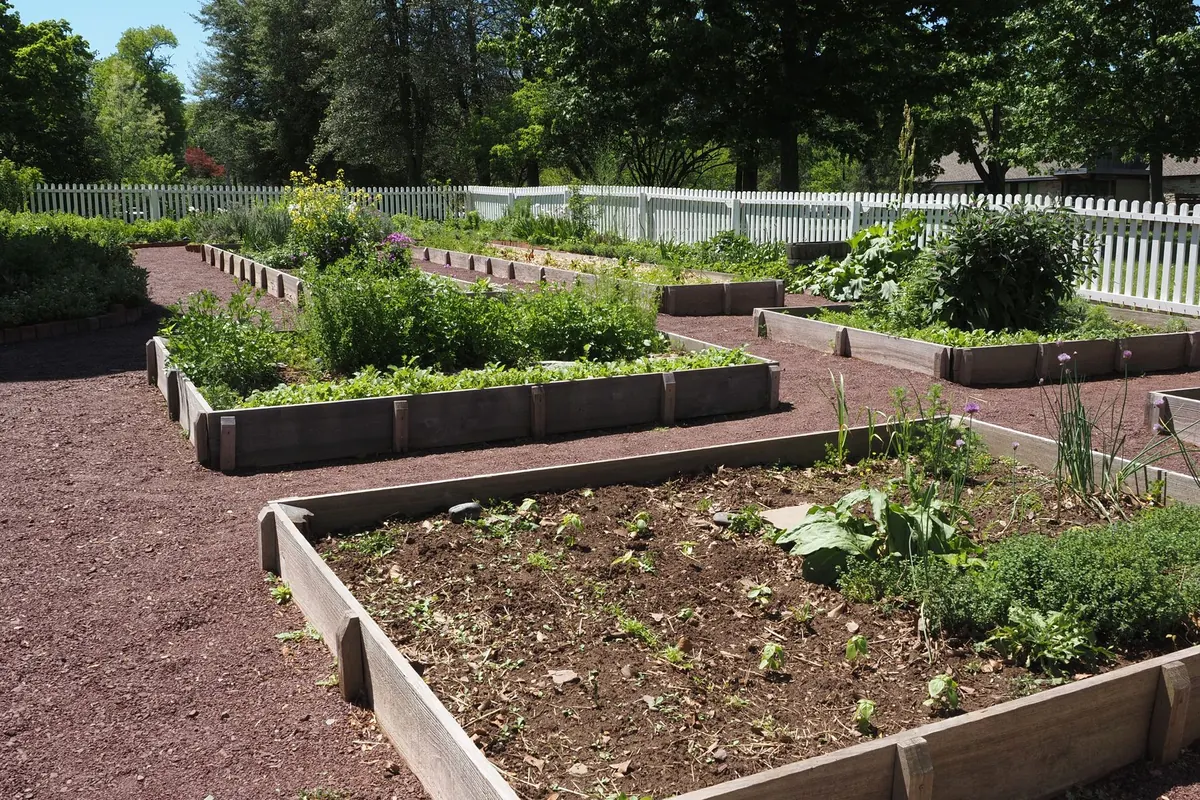 ✅ ChecklistSpring raised bed prep: the checklistSqueeze test first, then measure how far the bed sank, top it up and loosen it without flipping. Worked example: a 4 x 8 bed, 1.5 inches down, 3 bags.Read the guide
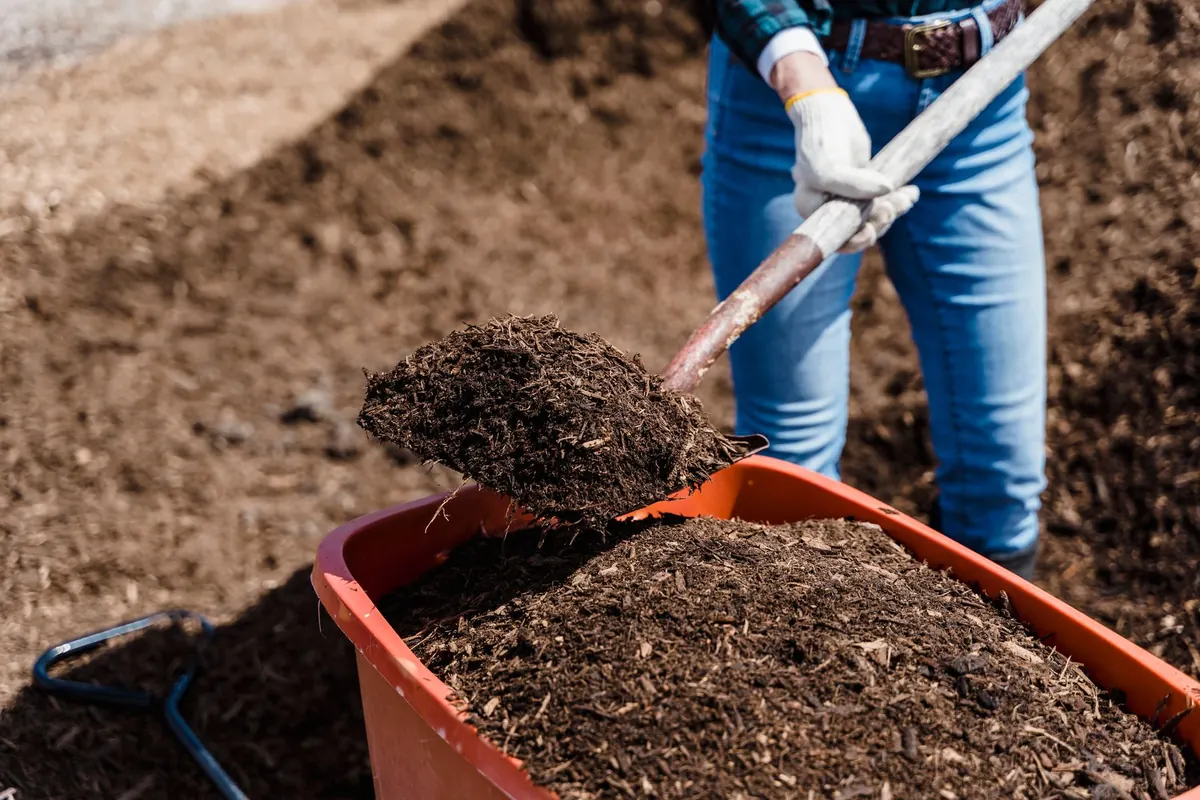 📘 Know-howCompost or topsoil: which does your bed need?Compost is the yearly top layer. Topsoil puts back depth. The extension figures for each job, plus bag counts for a 4 x 8 bed that sank 2 inches.Read the guide
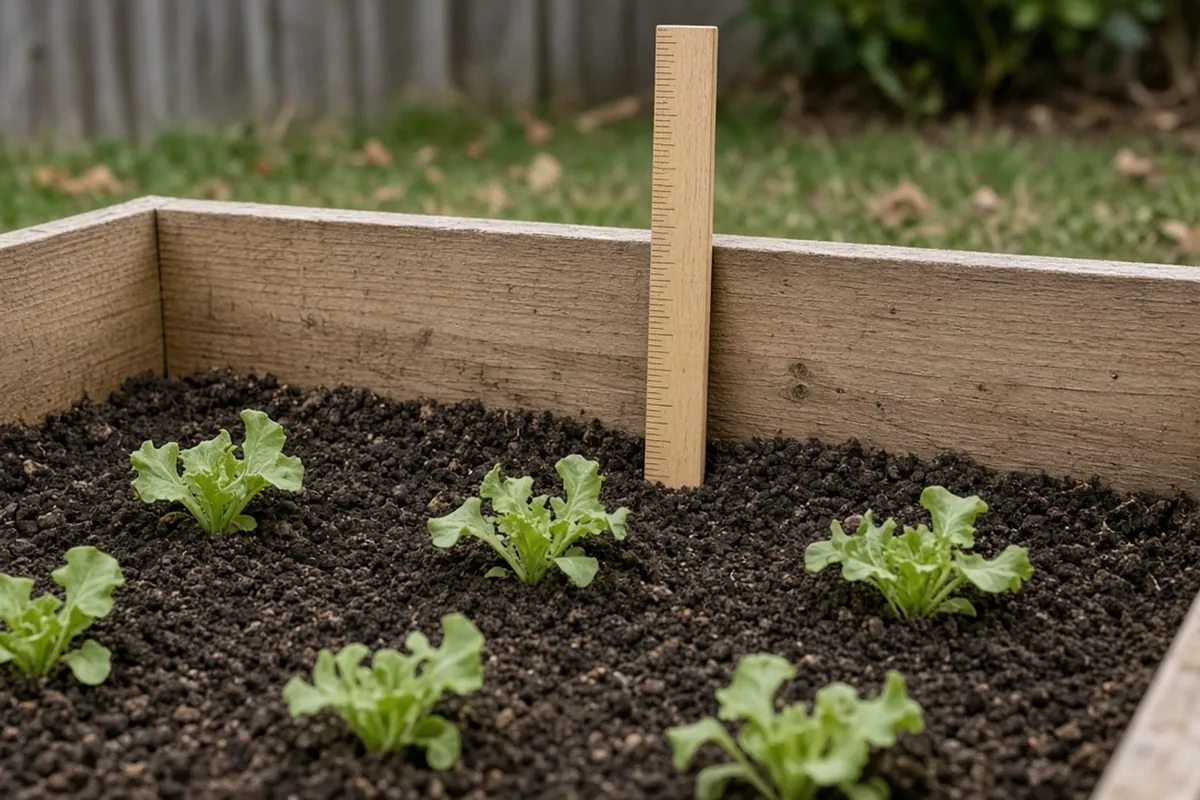 🧰 Problem solverRaised bed soil sank after a month: why, and how much to top upWhy raised bed soil settles after filling, what extension services say to add each year, and how to turn the gap into cubic feet and bags.Read the guide
Common questions
Questions
How do I prepare a raised bed for spring planting?
Do the squeeze test, rake off the winter cover, measure how far the soil sits below the frame at three spots, refill that depth or add a thin compost layer, then loosen with a fork rocked in place and rake level. Maryland Extension says not to flip the soil.
Source: Kentucky Extension NEP-219, Preparing Your Garden, checked October 15, 2026; Maryland Extension, Soil to Fill Raised Beds, checked October 15, 2026.
How much soil do I add to a raised bed in spring?
Refill the depth it sank. A 4 x 8 ft bed 1.5 inches down needs 4 cu ft, which is 3 bags of 1.5 cu ft. If the bed held its level, Oregon State suggests a quarter inch to 1 inch of compost a year.
Source: OSU Extension EM 9308, using compost, checked October 6, 2026; Kellogg Garden compost product page, checked October 6, 2026.
Why did my raised bed soil sink over winter?
Illinois Extension calls settling a fact of raised bed gardening: new fill has little structure, and digging and planting help it settle. Oregon State adds that compost in the mix keeps breaking down. Illinois says a few inches of compost or topsoil a year keeps up with it.
Source: Illinois Extension, refreshing raised bed soil, checked October 6, 2026; OSU Extension EM 9308, using compost, checked October 6, 2026.
Should I till a raised bed in spring?
Maryland Extension loosens the soil with a garden fork rocked back and forth every 6 to 8 inches and says not to lift and flip it over.
Source: Maryland Extension, Soil to Fill Raised Beds, checked October 15, 2026.
When is the soil dry enough to work?
Squeeze a handful and open your hand. Kentucky Extension says soil that crumbles is ready, and soil that stays in a clump is too wet.
Source: Kentucky Extension NEP-219, Preparing Your Garden, checked October 15, 2026.
The next job on the shelf
More garden systems
 7 steps🧭 SystemRefresh border mulch: measure each bed, then buy only the gapMeasure the old layer in every bed before you order. One example yard needs 23 bags of 2 cu ft, not 45. The steps, the 3 inch limit and a free mulch record.Open the system
 8 steps🧭 SystemEnd-of-season review: turn this year's harvest into next year's planAdd up each crop's pounds, set them beside an extension average, grade them, size next year's rows and move each family to a new bed. Free review sheet.Open the system
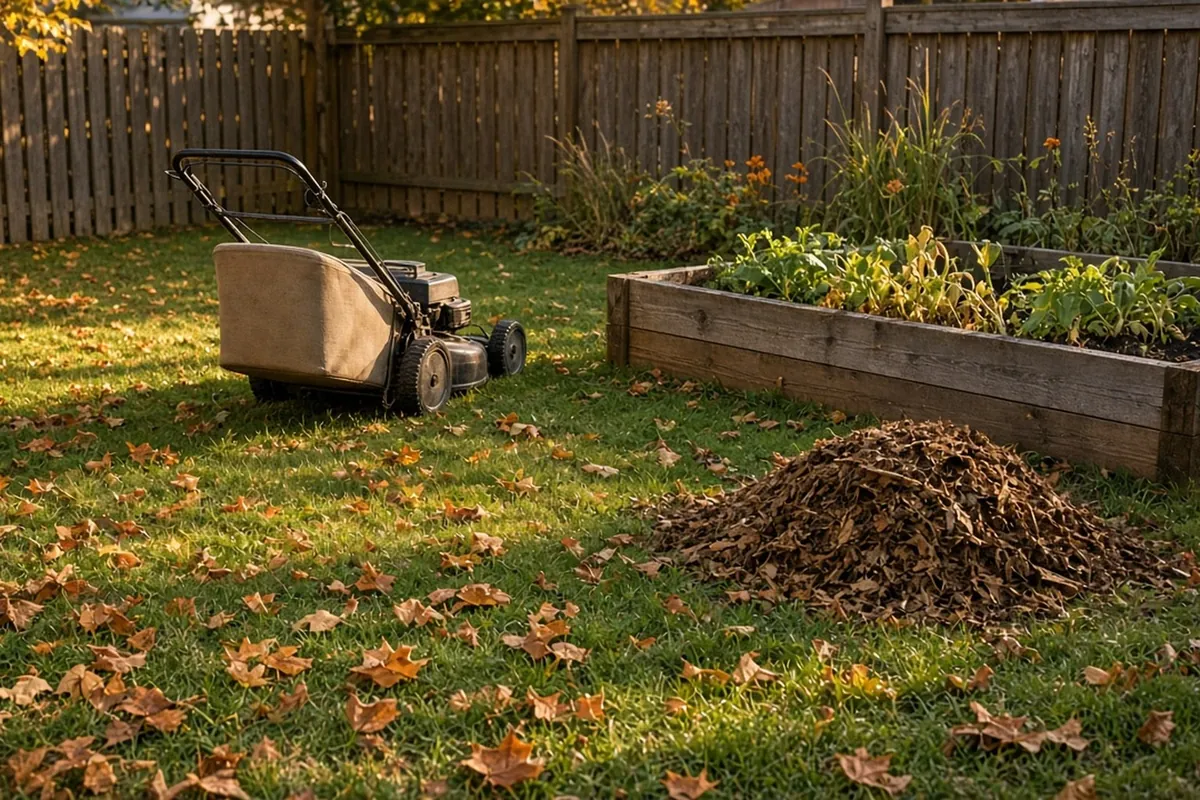 7 steps🧭 SystemTurn fall leaves into bed cover and mulch, and keep a tally of the bagsWhat to do with fall leaves: mow a thin layer into the lawn, shred the rest and spread 2 to 3 inches on beds. Free leaf haul tally to print.Open the system
Sources
- Growing Your Own Vegetables: Preparing Your Garden (NEP-219), University of Kentucky Cooperative Extension, published June 24, 2020. Checked October 15, 2026.
- How to use compost in gardens and landscapes (EM 9308), Oregon State University Extension Service, published February 1, 2021. Checked October 6, 2026.
- Soil to Fill Raised Beds, University of Maryland Extension, published November 6, 2024. Checked October 15, 2026.
- Gardner & Bloome Organics Purely Compost, Kellogg Garden Products. Checked October 6, 2026.
- Raised bed gardening (FS 270), Oregon State University Extension Service, published September 1, 2020. Checked October 10, 2026.
- Refreshing raised bed soil generates exceptional results, University of Illinois Extension, published April 5, 2021. Checked October 6, 2026.
- Scotts Premium Topsoil Lawn & Garden Soil Conditioner, ScottsMiracle-Gro. Checked October 6, 2026.
Planning guide, not a guarantee. See every source on the site on the sources page. Spotted an error? Tell us.