✅ ChecklistSoil and mulch4 min read
Spring raised bed prep: the checklist
Quick answer
Squeeze a handful of soil first. Kentucky Extension says if it crumbles it's ready, and if it stays in a clump it's too wet to work. Then measure how far the bed sank at three spots and average them. Top up that depth, or add Oregon State's quarter inch to 1 inch of compost if the bed held its level. A 4 x 8 bed that's 1.5 inches down needs 4 cu ft, which is 3 bags of 1.5 cu ft.
Source: Kentucky Extension NEP-219, Preparing Your Garden, checked October 15, 2026; OSU Extension EM 9308, using compost, checked October 6, 2026; Kellogg Garden compost product page, checked October 6, 2026.

Before anything else
Is the soil ready to work?
Kentucky Extension calls spring the easiest time to work soil, but only once it has dried out enough. Its test is quick. Grab a handful, squeeze it and open your hand. If it crumbles, it's ready. If it stays in a clump, it's too wet. Good soil is loose, though not so loose it looks like powder or dust.
Source: Kentucky Extension NEP-219, Preparing Your Garden, checked October 15, 2026.
In order
The spring prep, step by step
Clear the top
Rake off any winter cover. Oregon State covers beds with 2 inches of leaves each winter. Pull those aside to the path or the compost pile so you can see the soil level.
Source: OSU Extension FS 270, raised bed gardening, checked October 10, 2026.
Measure the drop at three spots
Measure from the top of the frame down to the soil near each end and in the middle. Add the three numbers and divide by 3. Illinois Extension says settling is simply part of raised bed gardening, so expect some drop.
Source: Illinois Extension, refreshing raised bed soil, checked October 6, 2026.
Pick the layer
If the bed held its level, add Oregon State's yearly quarter inch to 1 inch of compost. If it sank, add back the inches you measured. Illinois says a few inches of compost or good topsoil each year keeps up.
Source: OSU Extension EM 9308, using compost, checked October 6, 2026; Illinois Extension, refreshing raised bed soil, checked October 6, 2026.
Work out the bags
Square feet times inches, divided by 12, gives cubic feet. Divide by the cubic feet printed on the bag and round up.
Loosen, don't flip
Maryland Extension's method: push a garden fork in, rock it back and forth, then step 6 to 8 inches along and repeat. Don't lift and turn the soil over.
Source: Maryland Extension, Soil to Fill Raised Beds, checked October 15, 2026.
Spread, mix and write it down
Spread the new layer and rake it level. Maryland mixes 2 to 4 inches of compost into the top 4 inches of soil with a fork or spade. Note the date and the inches for each bed.
Source: Maryland Extension, Soil to Fill Raised Beds, checked October 15, 2026.
- Crumblesmeans ready; a clump means too wet (Kentucky)Kentucky Extension NEP-219, Preparing Your Garden, October 15, 2026
- 1/4 to 1 inof compost a year on a bed that held its level (Oregon State)OSU Extension EM 9308, using compost, October 6, 2026
- 6 to 8 inbetween fork spots when loosening (Maryland)Maryland Extension, Soil to Fill Raised Beds, October 15, 2026
- 3 bagsof 1.5 cu ft for a 4 x 8 bed 1.5 in downArithmetic
Worked example
One 4 x 8 bed in April
Three readings from the frame top: 1 inch, 1.5 inches and 2 inches. The average is 4.5 / 3 = 1.5 inches. The bed is 32 sq ft, so 32 x 1.5 / 12 = 4 cu ft. In 1.5 cu ft bags that's 2.67, so buy 3 bags.
Source: Kellogg Garden compost product page, checked October 6, 2026.

Print it, tick it off
Spring bed prep checklist
One line per bed. Keep it with last fall's notes.
- Squeeze test: crumbles (go) or clump (wait)
- Winter cover raked off
- Drop at three spots, in inches, and the average
- Layer picked: refill the drop or a yearly compost layer
- Cubic feet (square feet x inches / 12)
- Bag size and bag count, rounded up
- Loosened with a fork, not flipped
- Date spread and inches added
What people learn the second year
Tips and tricks
- Do the test in the wettest bed. Beds in shade or at the low end of the yard dry last. If that one crumbles, the rest are ready too.
- Keep the leaves. The winter leaf cover you rake off can go straight into the compost pile or onto the paths.
- Buy all the bags in one trip. Add up every bed's cubic feet before you go. Small beds each round up to a whole bag, and a spare often covers them all.
- Stay off the bed. Work from the path. Stepping in a freshly loosened bed packs back down what you just loosened.
Common questions
Questions
How do I know when garden soil is ready to work in spring?
Use the squeeze test from Kentucky Extension. Squeeze a handful and open your hand. If it crumbles, it's ready. If it stays in a clump, it's too wet.
Source: Kentucky Extension NEP-219, Preparing Your Garden, checked October 15, 2026.
How much soil should I add to a raised bed in spring?
Measure how far it sank and refill that depth. Illinois Extension says a few inches of compost or good topsoil a year keeps up with settling. If the bed held its level, Oregon State suggests a quarter inch to 1 inch of compost.
Source: Illinois Extension, refreshing raised bed soil, checked October 6, 2026; OSU Extension EM 9308, using compost, checked October 6, 2026.
Should I till or turn over a raised bed in spring?
Maryland Extension loosens soil by rocking a garden fork in place every 6 to 8 inches and says not to lift and flip the soil over.
Source: Maryland Extension, Soil to Fill Raised Beds, checked October 15, 2026.
How many bags of soil for a 4 x 8 bed that sank 1.5 inches?
32 sq ft x 1.5 / 12 = 4 cu ft. In 1.5 cu ft bags that's 2.67, so 3 bags.
Source: Kellogg Garden compost product page, checked October 6, 2026.
What do I do with the leaves I put on the bed in fall?
Rake them off before you measure, so you see the real soil level. Put them on the paths or in the compost pile.
The arithmetic, done for you
Tools for this job
- 🪴 CalculatorRaised bed soil calculatorHow much soil fills a raised bed: cubic feet, cubic yards and a bag count for 1.5 or 2 cu ft bags, from the bed's length, width and depth.Open the tool
- 🪱 CalculatorCompost and topsoil calculatorHow much compost or topsoil to buy for a garden bed or lawn: cubic feet, cubic yards and bag counts, plus the mix you get when you dig it in.Open the tool
Keep reading
More guides
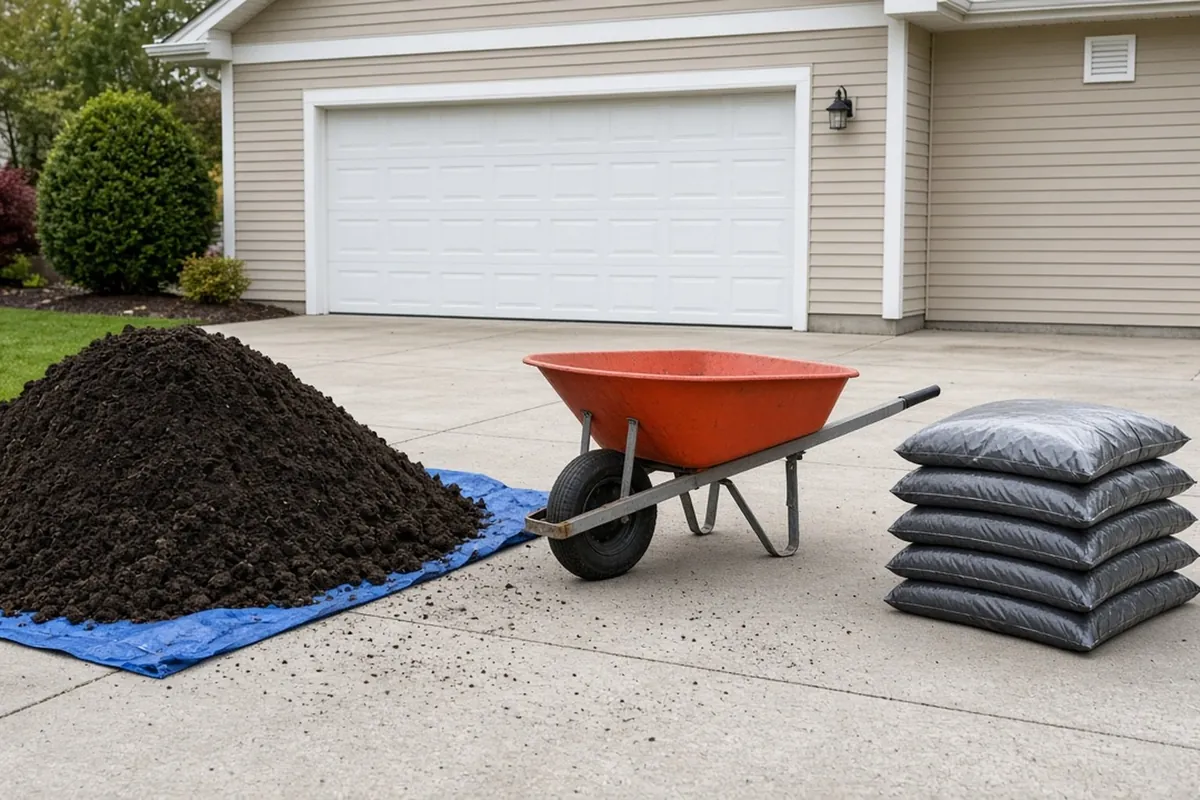 🧰 Problem solverBags or bulk: when a cubic yard delivery is cheaperHow to compare bagged soil, mulch or compost with a bulk cubic yard: price per cubic foot, the delivery fee, and the bag count where bulk wins.Read the guide
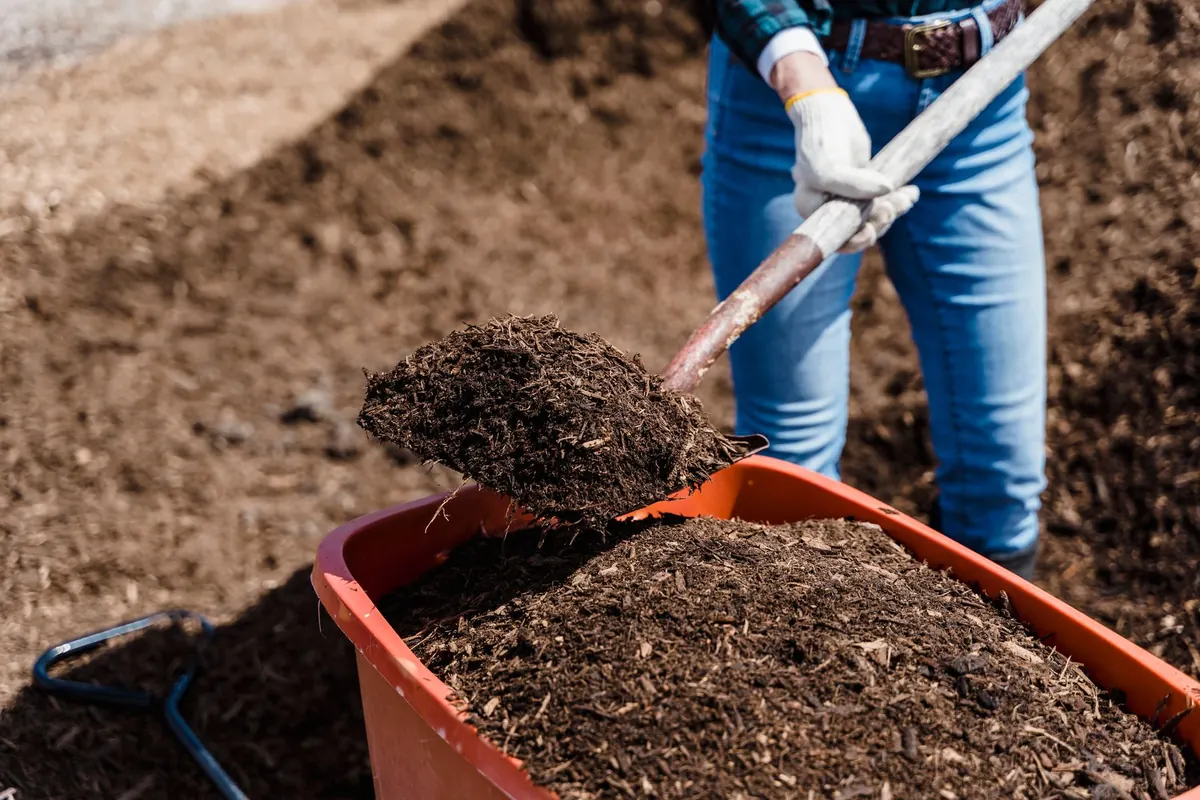 📘 Know-howCompost or topsoil: which does your bed need?Compost is the yearly top layer. Topsoil puts back depth. The extension figures for each job, plus bag counts for a 4 x 8 bed that sank 2 inches.Read the guide
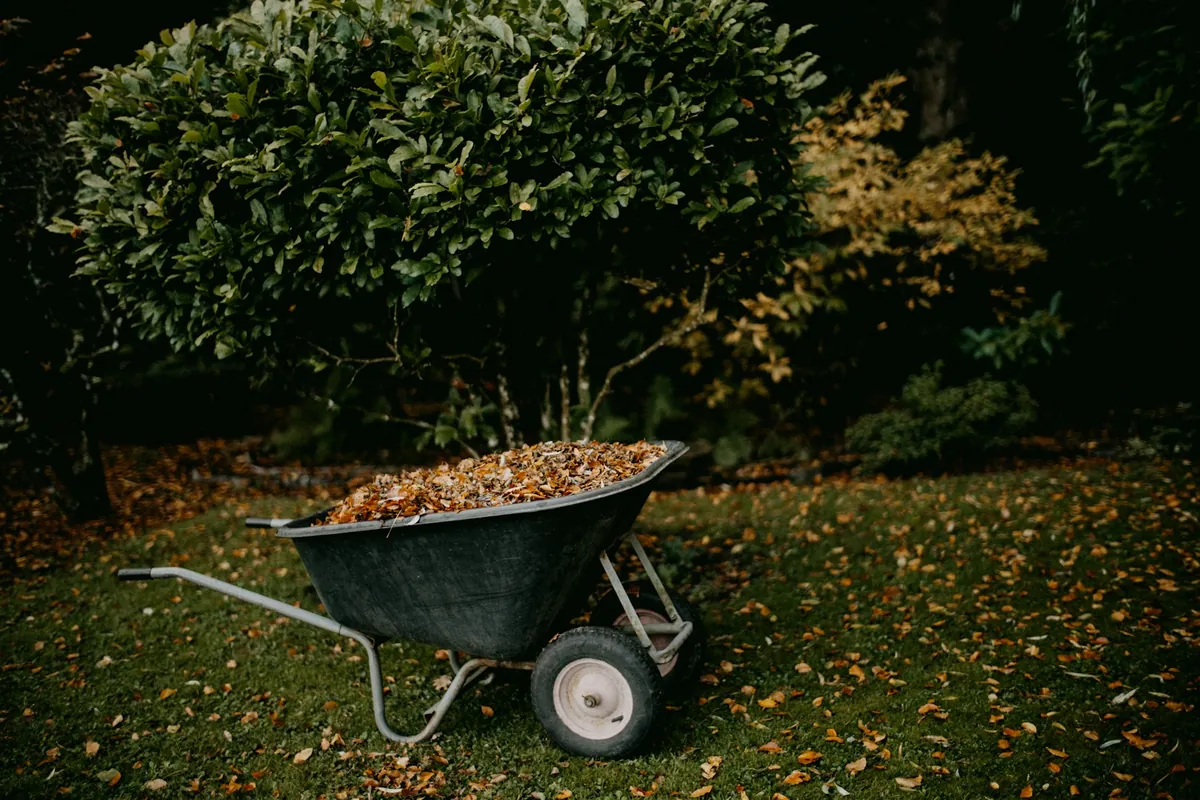 ✅ ChecklistFall compost bin reset: empty the finished compost, then rebuild with leavesPull out the finished compost, spread it on your beds, then rebuild the bin 3 ft each way with fall leaves and greens, damp as a wrung-out sponge.Read the guide
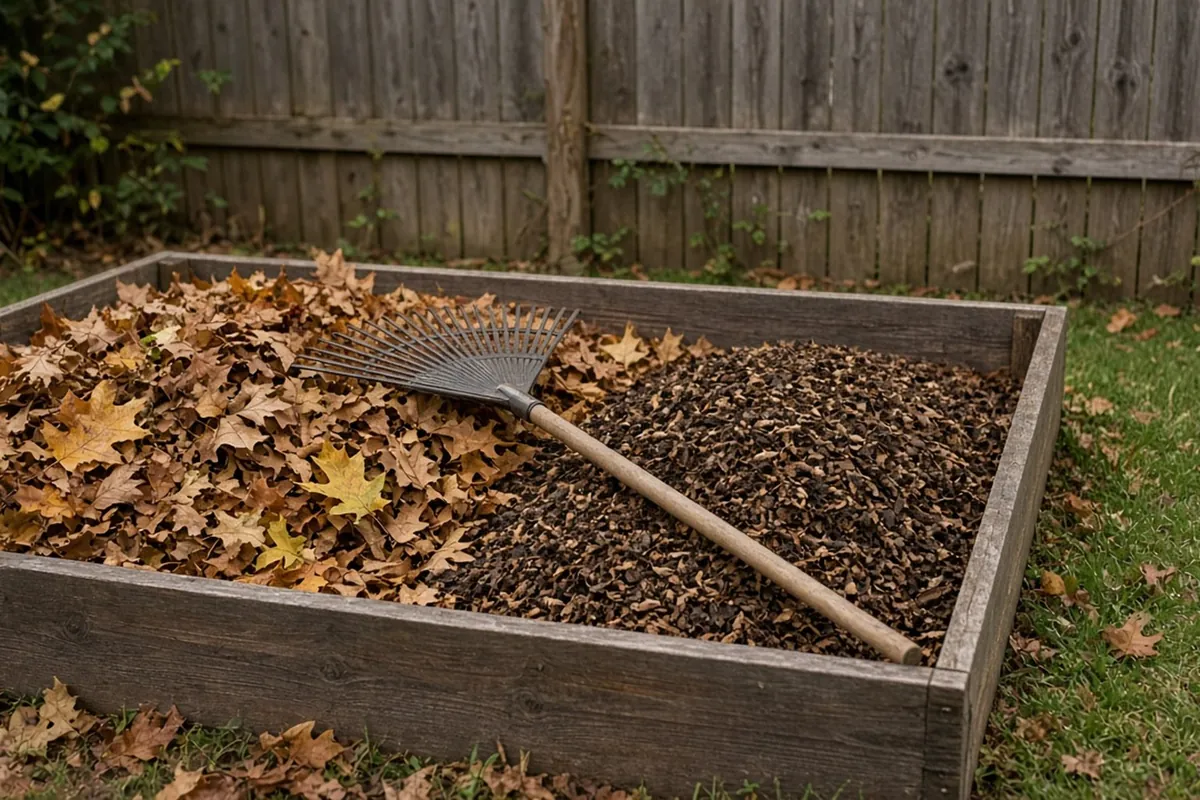 🧰 Problem solverWhat to do with fall leaves in the garden: shred them into mulchShred the leaves, then spread 2 to 3 inches on beds and 3 to 4 around shrubs. How to shred without a shredder, and how many bags a bed takes.Read the guide
Sources
- Growing Your Own Vegetables: Preparing Your Garden (NEP-219), University of Kentucky Cooperative Extension, published June 24, 2020. Checked October 15, 2026.
- How to use compost in gardens and landscapes (EM 9308), Oregon State University Extension Service, published February 1, 2021. Checked October 6, 2026.
- Gardner & Bloome Organics Purely Compost, Kellogg Garden Products. Checked October 6, 2026.
- Raised bed gardening (FS 270), Oregon State University Extension Service, published September 1, 2020. Checked October 10, 2026.
- Refreshing raised bed soil generates exceptional results, University of Illinois Extension, published April 5, 2021. Checked October 6, 2026.
- Soil to Fill Raised Beds, University of Maryland Extension, published November 6, 2024. Checked October 15, 2026.
Planning guide, not a guarantee. See every source on the site on the sources page. Spotted an error? Tell us.