🌱 BedsFree toolPrintable record
Seed quantity calculator
Quick answer
Three 8 ft rows of bush snap beans, 2 inches apart as Clemson Extension's planting chart lists them, take 144 seeds. Bean packets only have to sprout at 70% under federal seed rules, so keep 206 seeds on hand. Bought by weight, Clemson's 3/4 pound per 100 ft of row comes to about 3 ounces.
Source: Clemson HGIC 1256, planning a garden, checked October 14, 2026; 7 CFR 201.31, vegetable seed germination standards, checked October 14, 2026.

Seed quantity calculator
Change any number and the answer updates as you type.
Seeds to have on hand 206 seeds
- Sowing spots
- 3 rows of 48, 2 in apart
- Seeds sown
- 144 seeds
- Germination allowed for
- 70%, the federal minimum for this crop
- Packets
- Type the seed count from the packet
- Bulk seed at Clemson's rate
- 2.88 oz for 24 ft of row
Packets that test at or above the federal minimum don't have to print a rate, so the minimum is the safe number to plan with. If yours prints a rate, type it in.
No garden math needed
How to use this, in plain words
Measure each row, or the bed length if the rows run the long way, and decide how many rows you will sow.
Pick the crop. The tool fills in the spacing from Clemson Extension's planting chart and the federal germination minimum. Change either one to match your packet.
Turn the packet over. If it prints a germination rate or a seed count, type them in. Many small packets print neither, which the federal rules allow when the seed meets the standard.
Read the seeds to keep on hand, then the packets line. If you buy bulk seed, use the ounces line instead.
Print the seed order sheet, one line per crop, and keep it next to the catalog or take it to the store.
Source: Clemson HGIC 1256, planning a garden, checked October 14, 2026; 7 CFR 201.31, vegetable seed germination standards, checked October 14, 2026; 7 CFR 201.29, germination on small seed packets, checked October 14, 2026.
What the store won't tell you
Before you start
- Count what is left in last year's open packets before you order more, and write the year on each one.
- The spacing on the packet is for that variety. If it differs from the chart, go with the packet.
- Some packets print a weight instead of a seed count. That is fine for the ounces line; for the packets line you need a count.
- Clemson Extension suggests planning the garden on paper first. A quick sketch shows whether the rows you are counting fit.
Source: Clemson HGIC 1256, planning a garden, checked October 14, 2026.
Go deeper: Seeds per foot of row: sowing spacing, seeds per hole, and thinning · The winter seed order: how much seed to buy, crop by crop · Are old seeds still good? How long seed keeps, and a 10-seed test · How to store leftover seed over winter so it still comes up in spring · Seed packet dates: what packed for, sell by and tested really mean · How many tomato plants fit in a 4 x 8 raised bed · How to read a plant tag: zones, sun hours, size and spacing · Inside vs outside: why a 4 x 8 raised bed holds less soil than you think · How many weeks before last frost to start seeds · When to start seeds in zones 3 to 5 · Will it ripen before fall frost? Count the days to maturity · When to start seeds in zones 8 to 10 · When to start seeds for a fall garden in zones 8 to 10 · How to plan next year's garden from this year's harvest
The formula, in words
How it works
- Spots in a row: the row length in inches divided by the spacing between seeds, rounded down. Each seed gets its own stretch of row, the same rule as the bulb planting calculator.
- Seeds sown: spots per row × rows × seeds dropped in each spot.
- Seeds on hand: seeds sown divided by the germination rate, rounded up. If the packet prints no rate, the tool uses the federal minimum for that crop: 55% for carrots, 70% for beans, 80% for peas and lettuce.
- Packets: seeds on hand divided by the seed count on one packet, rounded up.
- Bulk seed: Clemson's amount per 100 ft of row × your total row length ÷ 100.
Source: 7 CFR 201.31, vegetable seed germination standards, checked October 14, 2026; 7 CFR 201.29, germination on small seed packets, checked October 14, 2026; Clemson HGIC 1256, planning a garden, checked October 14, 2026.
Printable sheet
What to record
Write the order down one crop at a time before you shop or fill in a catalog form. The printable sheet has a line for each crop:
- Crop and variety
- Rows and row length
- Spacing and seeds per spot
- Seeds to have on hand
- Packets or ounces to order
- Seed left from last year
- Ordered from, and the date
Checked by hand
Worked example
Bush snap beans in a 4 by 8 ft raised bed: three rows down the 8 ft length, one seed every 2 inches, and a packet that prints no germination rate, so the federal 70% minimum.
- Along each row: 8 ft × 12 = 96 in, ÷ 2 in = 48 spots.
- 3 rows × 48 = 144 spots, one seed each: 144 seeds.
- Germination: 144 ÷ 0.7 = 205.71, rounded up to 206 seeds on hand.
- By weight: 12 oz per 100 ft × 24 ft ÷ 100 = 2.88 oz.
Why it may not match the bag or the store
If the answer surprises you
❓
The weight and the count don't agree
They answer different questions. The count is seed by seed at your spacing. The weight is Clemson's bulk rate for a row, for when a seller only sells by the ounce. For packets, go by the count.
Source: Clemson HGIC 1256, planning a garden, checked October 14, 2026.
❓
More seeds than spots
That's the germination allowance. At the 70% federal minimum for beans, 144 spots need 206 seeds on hand, because up to 3 in 10 may not come up.
Source: 7 CFR 201.31, vegetable seed germination standards, checked October 14, 2026.
❓
Almost every seed came up
The federal number is only the lowest rate a packet can have without a Below Standard label. A packet can test well above it, and then you have spares. Keep them dry in a dated envelope.
Source: 7 CFR 201.31, vegetable seed germination standards, checked October 14, 2026.
Other cases
Variants
🟫
Two or three seeds in each spot
Some packets say to drop a few seeds in each spot and thin to the strongest. Set seeds in each spot to match. The count multiplies, and the germination allowance goes on top of that.
⭕
A bed instead of long rows
In a raised bed, count how many rows fit across the width and use the bed length as the row length. The printed sheet has room for each crop's own layout.
🔁
A packet marked Below Standard
Seed that tests under the federal minimum has to say Below Standard and print its real rate. Type that rate in. A 45% spinach packet needs 80 seeds for 36 spots, more than twice as many.
Source: 7 CFR 201.29, germination on small seed packets, checked October 14, 2026; 7 CFR 201.31, vegetable seed germination standards, checked October 14, 2026.
📏
Ordering by weight
Bulk seed is sold by the ounce or the pound. The weight line uses Clemson's seed per 100 ft of row. Use it for bulk orders, and go by the count for packets.
Source: Clemson HGIC 1256, planning a garden, checked October 14, 2026.
Where each figure comes from
Numbers this tool uses
- 1 inIn-row spacing, carrots and peas (Clemson chart)Clemson HGIC 1256, planning a garden, October 14, 2026
- 2 inIn-row spacing, snap beans and spinach (Clemson chart)Clemson HGIC 1256, planning a garden, October 14, 2026
- 3/4 lbSeed per 100 ft of row, snap beans (Clemson chart)Clemson HGIC 1256, planning a garden, October 14, 2026
- 55%Federal germination minimum, carrots (7 CFR 201.31)7 CFR 201.31, vegetable seed germination standards, October 14, 2026
- 70%Federal germination minimum, garden beans (7 CFR 201.31)7 CFR 201.31, vegetable seed germination standards, October 14, 2026
- A rate only if Below StandardPackets of 1 lb or less (7 CFR 201.29)7 CFR 201.29, germination on small seed packets, October 14, 2026
Limitations
- Planning estimate, not a guarantee; how many seeds come up depends on seed age, storage, soil temperature and moisture.
- The spacing presets come from a South Carolina extension chart and are a starting point. When the packet for your variety says something else, go with the packet.
- The federal minimum covers seed sold across state lines. Swapped seed, saved seed and old packets have no such floor, so sprout a few first or type your own rate.
- Counts and weights only. This page doesn't cover which varieties to grow or how seed is treated.
What people learn the second year
Tips and tricks
- Sow the spares, then thin. Put the extra seed in the row on sowing day rather than saving it for gaps. Thin to the spacing once the seedlings are up. Gaps filled weeks later give an uneven row.
- Date every packet. A packet with no year on it is a guess next spring. Write the year on the back with a marker when it arrives.
- Count big seed, sprinkle small seed. Beans, peas and corn are easy to count out one by one. Carrot and lettuce seed is too fine to count, so sow it thinly and plan to thin.
- Split a packet across sowings. If you sow lettuce or radishes every few weeks, divide the packet by the number of sowings before the first one, so the last sowing isn't short.
- Order in winter. Clemson Extension's advice is to plan the garden and order seeds by January or February. (Clemson HGIC 1256, planning a garden)
Read before the store run
Guides that go deeper
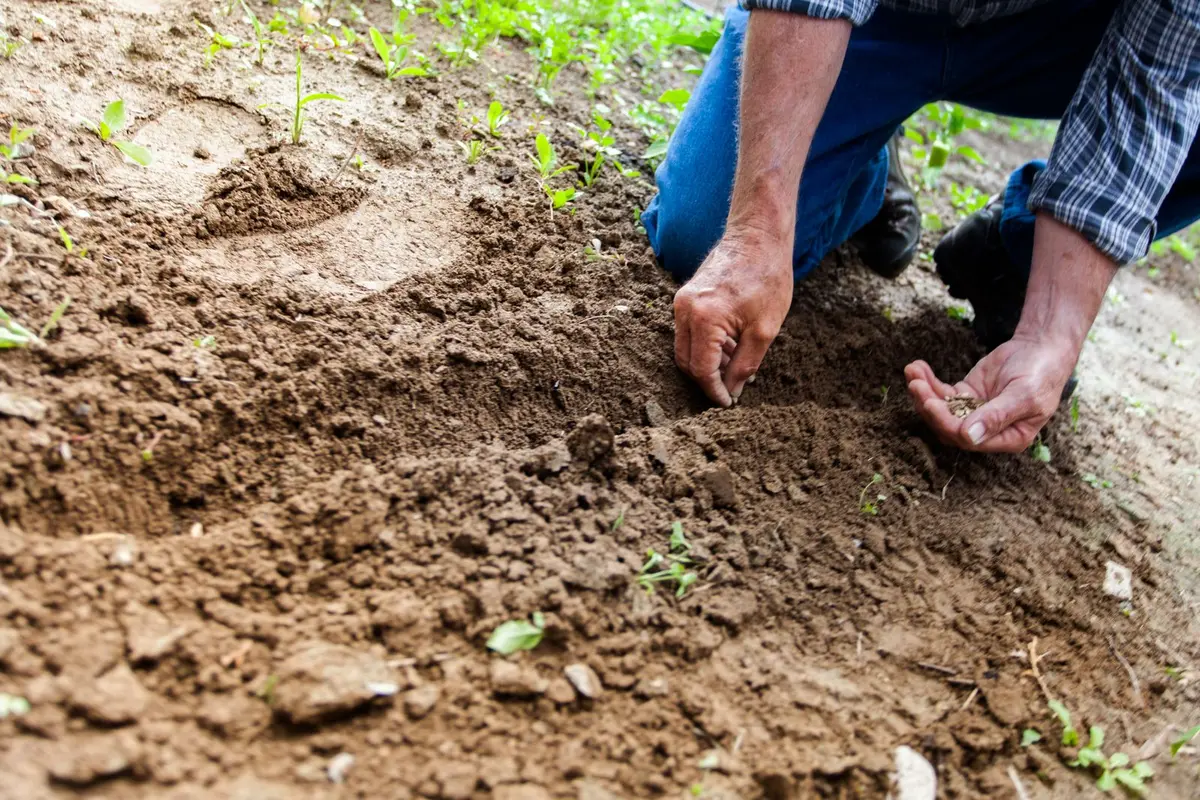 📘 Know-howSeeds per foot of row: sowing spacing, seeds per hole, and thinningWhy a packet's sowing spacing and the final plant spacing differ, how many seeds go in each hole or hill, and how to count seed for a row.Read the guide
 🧰 Problem solverThe winter seed order: how much seed to buy, crop by cropWork out how many seeds and packets to order for spring, one crop at a time, with leftovers counted first and the germination rate allowed for.Read the guide
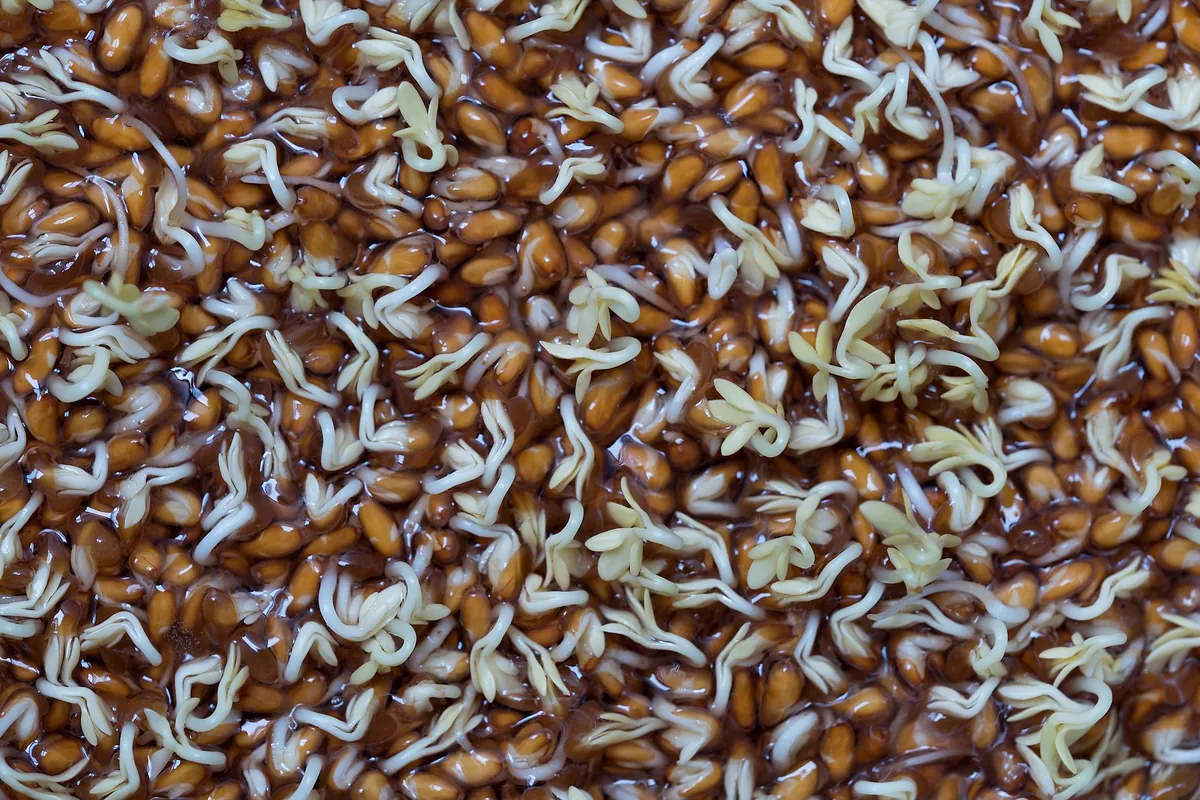 📘 Know-howAre old seeds still good? How long seed keeps, and a 10-seed testHow many years vegetable seed keeps in cool, dry storage, how to sprout 10 seeds on a paper towel, and what to do with the count.Read the guide
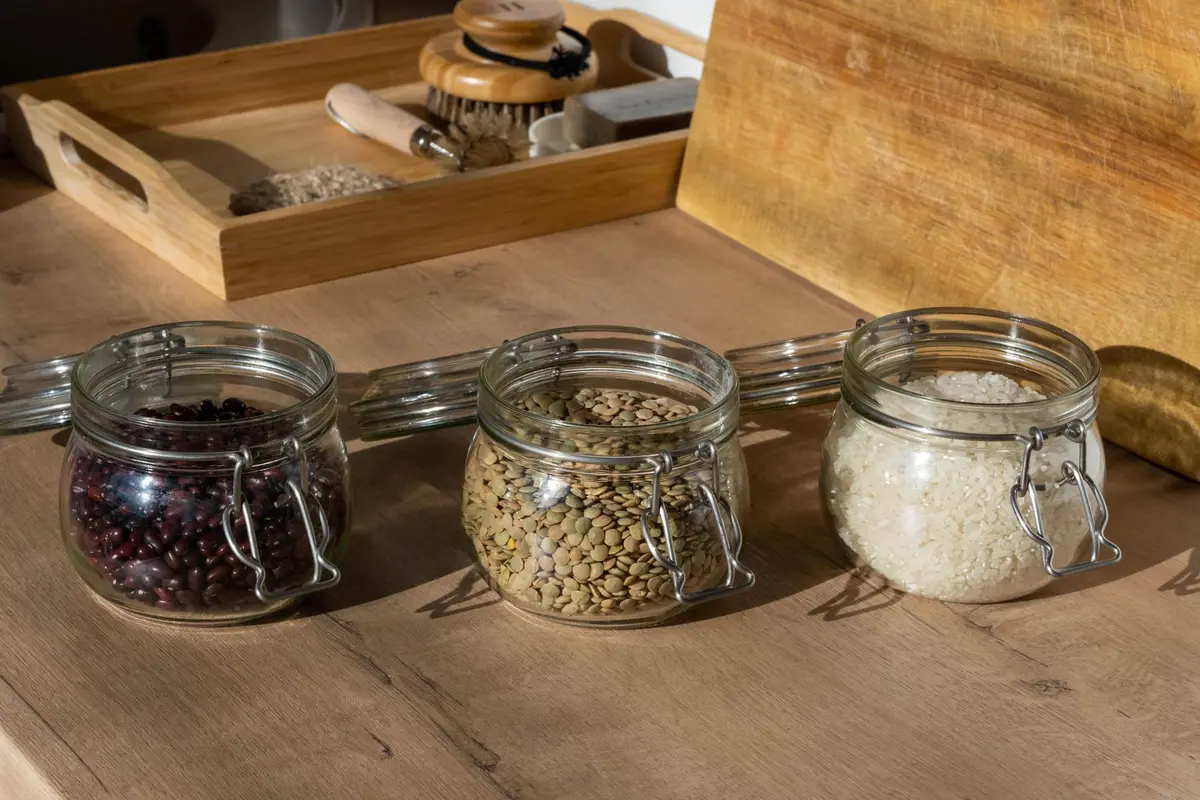 📘 Know-howHow to store leftover seed over winter so it still comes up in springWhere to keep leftover vegetable seed until spring: the 100 rule for temperature and humidity, jars and the fridge, and how warmth shortens seed life.Read the guide
 🧰 Problem solverSeed packet dates: what packed for, sell by and tested really meanWhat the packed for year, the sell by date and a Below Standard test date on a seed packet mean, and why an old date doesn't mean dead seed.Read the guide
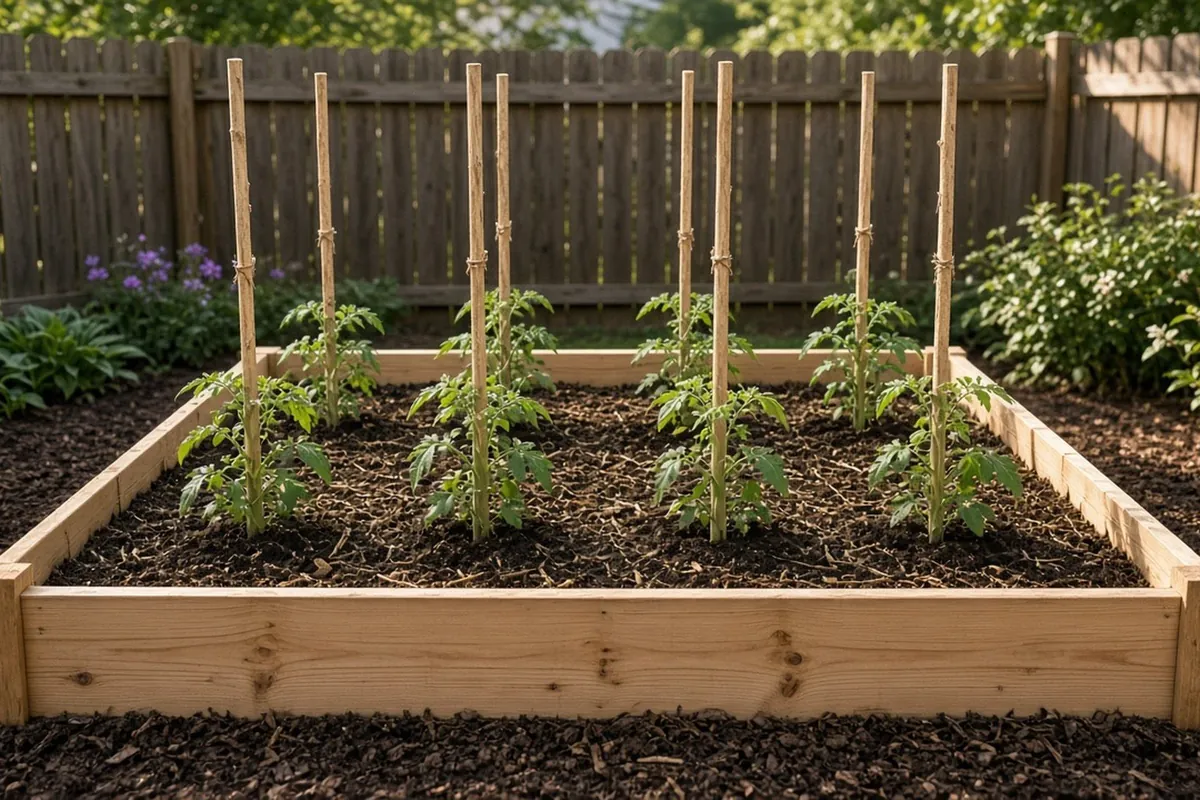 📘 Know-howHow many tomato plants fit in a 4 x 8 raised bedAt the extension spacing of 18 to 24 inches, a 4 x 8 ft bed takes 8 to 10 staked tomatoes in two rows, or 4 in wide cages. See the layouts and the math.Read the guide
 📘 Know-howHow to read a plant tag: zones, sun hours, size and spacingWhat the zone range, sun icon, height, spread and spacing on a plant tag mean, and how to check each one against your own yard before you buy.Read the guide
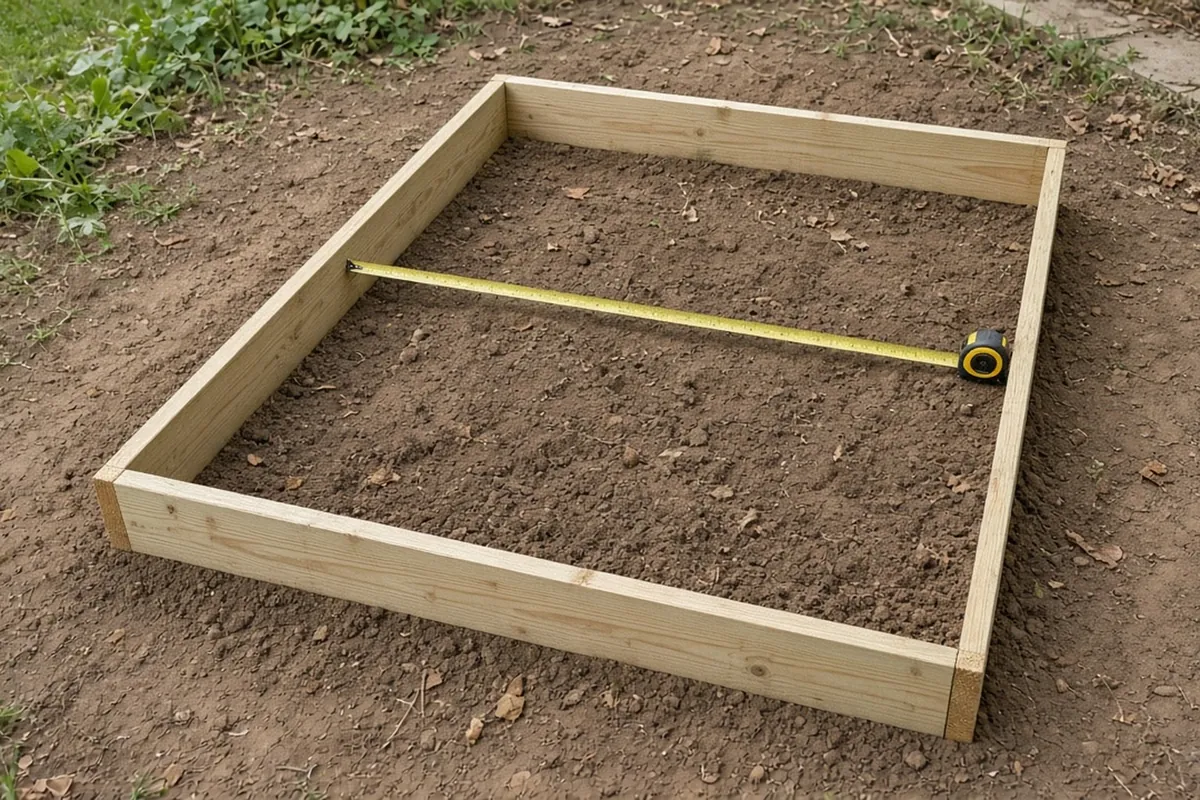 📘 Know-howInside vs outside: why a 4 x 8 raised bed holds less soil than you thinkA 4 x 8 ft frame of 2x lumber is 93 x 45 inches inside, about 29 square feet of soil. How to measure, what it does to your soil order and your cut list.Read the guide
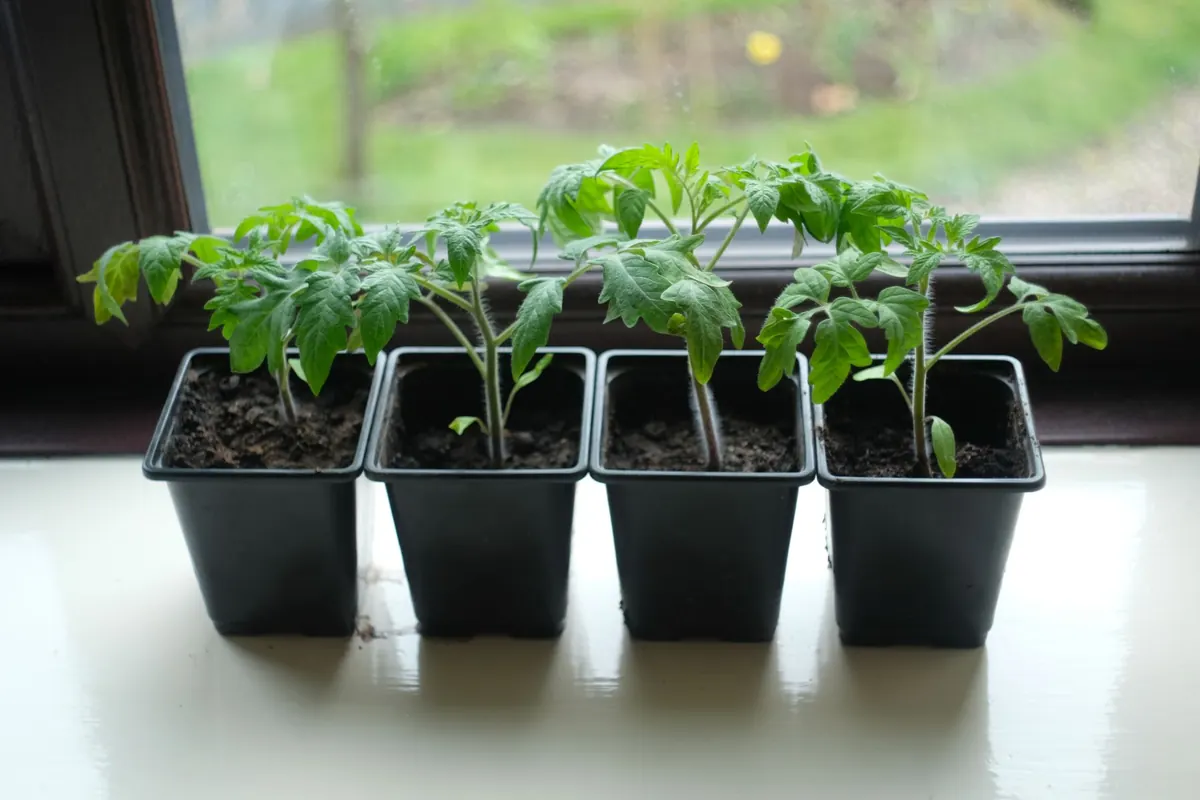 📘 Know-howHow many weeks before last frost to start seedsFind your last frost date, read the weeks on the packet, then count back on a calendar. Worked example for zone 6b: tomatoes, peppers and broccoli.Read the guide
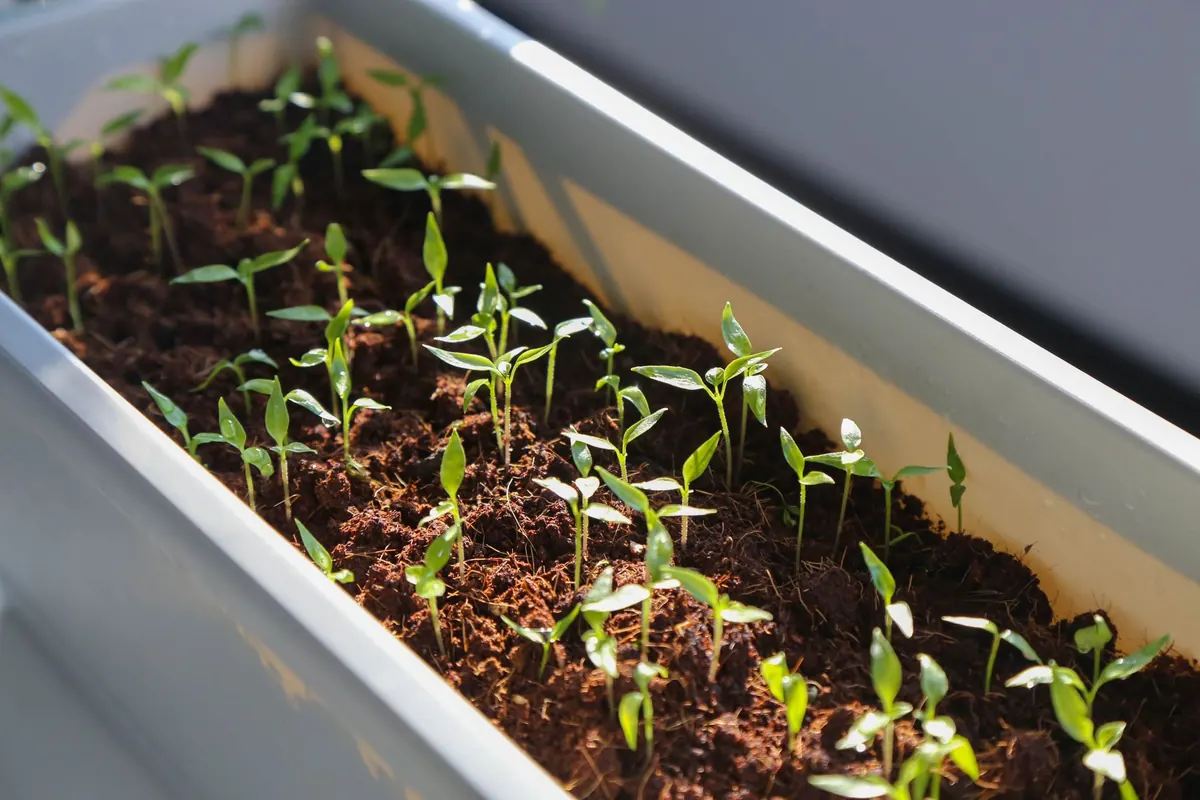 📘 Know-howWhen to start seeds in zones 3 to 5Pick the day plants go outside, then count back the weeks plus the days seeds take to sprout. Worked dates for zones 3b, 4a and 5a.Read the guide
 🧰 Problem solverWill it ripen before fall frost? Count the days to maturityCount from your planting-out day to the early fall frost date, then check the days to maturity against it. Worked example at two Montana stations.Read the guide
 📘 Know-howWhen to start seeds in zones 8 to 10In a warm yard the spring tomato trays go in around December and January. Count back from the planting-out day, with worked dates for four zips.Read the guide
 🧰 Problem solverWhen to start seeds for a fall garden in zones 8 to 10Fall tomatoes planted too late meet the first frost before the first pick. Count back for the sow day and forward for the harvest, with Florida examples.Read the guide
 📘 Know-howHow to plan next year's garden from this year's harvestTurn this season's harvest record into next year's plan: pounds per 10 ft, grow more or less, row length for a goal, and which bed each crop moves to.Read the guide
Common questions
Questions
How many seeds do I need for a 10 foot row?
It depends on the spacing. At 1 inch, as Clemson Extension lists carrots and peas, a 10 ft row takes 120 seeds. At 2 inches, as for snap beans and spinach, it takes 60. Then allow for germination: carrots at the 55% federal minimum need 219 on hand.
Source: Clemson HGIC 1256, planning a garden, checked October 14, 2026; 7 CFR 201.31, vegetable seed germination standards, checked October 14, 2026.
What germination rate should I assume if the packet doesn't say?
The federal minimum for the crop. Packets of 1 pound or less don't have to print a rate when the seed meets the standard: 70% for garden beans, 55% for carrots, 80% for peas and lettuce. Seed below the standard has to say Below Standard and give its rate.
Source: 7 CFR 201.29, germination on small seed packets, checked October 14, 2026; 7 CFR 201.31, vegetable seed germination standards, checked October 14, 2026.
How many bean seeds for a 4 by 8 raised bed?
Three rows down the 8 ft length, 2 inches apart, take 144 seeds. Allowing for the 70% federal minimum for beans, keep 206 on hand.
Source: Clemson HGIC 1256, planning a garden, checked October 14, 2026; 7 CFR 201.31, vegetable seed germination standards, checked October 14, 2026.
How much seed do I need per 100 feet of row?
Clemson Extension's chart lists 1 pound for garden peas, 3/4 pound for snap beans, 4 ounces for sweet corn, 1 ounce for spinach and 1/4 ounce for carrots. The tool scales these to your row length.
Source: Clemson HGIC 1256, planning a garden, checked October 14, 2026.
More for the same garden
Related tools
- 📓 CalculatorGarden log plannerAdd each planting's days to harvest to the day it went in, see the first pick date against your fall frost, and print a season garden log.Open the tool
- 🧺 CalculatorHarvest yield calculatorAdd up a season of picks, see pounds per 10 ft of row against an extension average, and size next year's row for the harvest you want.Open the tool
- 🪴 CalculatorRaised bed soil calculatorHow much soil fills a raised bed: cubic feet, cubic yards and a bag count for 1.5 or 2 cu ft bags, from the bed's length, width and depth.Open the tool
- 🧄 CalculatorGarlic and bulb planting calculatorHow many garlic cloves or spring bulbs fit a bed or a row, how many heads to buy, and how deep to plant them, from extension spacing figures.Open the tool
- ❄️ LookupFrost date lookup by zip codeFind the typical last spring and first fall frost for your zip code from NOAA 1991 to 2020 station normals, with the 1 in 10 year dates and a printable card.Open the tool
- 🪚 CalculatorRaised bed lumber calculatorHow many boards to buy for a wooden raised bed, and where to cut them: side lengths, a board-by-board cut plan, corner posts and the soil it will hold.Open the tool
- 🧺 SectionAll beds toolsPlan a wooden raised bed: how many boards to buy, where to cut them, how tall the bed ends up and how much soil it will hold.See the section
Sources
- Planning a Garden (HGIC 1256), Clemson Cooperative Extension, Home & Garden Information Center. Checked October 14, 2026.
- 7 CFR 201.31, Minimum germination standards for vegetable seeds in interstate commerce, USDA Agricultural Marketing Service (Federal Seed Act regulations, eCFR). Checked October 14, 2026.
- 7 CFR 201.29, Germination of vegetable seed in containers of 1 pound or less, USDA Agricultural Marketing Service (Federal Seed Act regulations, eCFR). Checked October 14, 2026.
See every source on the site on the sources page. Spotted an error? Tell us.