🧰 Problem solverZones5 min read
Will it ripen before fall frost? Count the days to maturity
Quick answer
Count the days from your planting-out day to the early first fall frost date, then compare the days to maturity. For tomatoes, that number usually counts from transplanting. SDSU Extension lists Early Girl at 52 days from transplant and Brandywine at 85. At the Austin 1 W station near zip 59601 (Helena, Montana), June 18 to August 30 is 73 days: Early Girl fits, Brandywine doesn't.
Source: SDSU Extension, Choosing Vegetable Varieties for Your Area, checked October 17, 2026; Johnny's Selected Seeds, Days to Maturity definition, checked October 17, 2026; NOAA 1991-2020 U.S. Climate Normals, annual/seasonal, checked October 7, 2026.

Why it happens
The season is shorter than the number on the packet
SDSU Extension says the growing season is set mostly by the number of frost-free days where you live. In South Dakota that runs from about 70 days in Custer to 157 in Yankton. If a variety needs more days than that, frost can come before the first ripe fruit.
Source: SDSU Extension, Choosing Vegetable Varieties for Your Area, checked October 17, 2026.
Days to maturity is the number of days from planting or transplanting until the part you eat is ready, SDSU says. Johnny's Selected Seeds uses the same idea in its catalog: days from seeding to harvest, or from the transplant date for a transplanted crop.
Source: SDSU Extension, Choosing Vegetable Varieties for Your Area, checked October 17, 2026; Johnny's Selected Seeds, Days to Maturity definition, checked October 17, 2026.
The fix
Check the fit in five steps
Look up both frost dates
Type your zip code into the frost date lookup. Write down the 1 in 10 last spring frost and the early (1 in 10) first fall frost for the station most like your yard.
Source: NOAA 1991-2020 U.S. Climate Normals, annual/seasonal, checked October 7, 2026.
Count your safe season
Count the days from the planting-out day to the early first fall frost. At either end, only about 1 year in 10 has a freeze inside that stretch.
Read the days to maturity
Copy the number from the packet or catalog, plus the words around it: from transplant or from seeding.
Source: Johnny's Selected Seeds, Days to Maturity definition, checked October 17, 2026.
Count forward
Add the days to maturity to the planting-out day, or to the sow day for a crop sown in the bed. That's the first harvest date to expect.
Compare and choose
If the first harvest lands after the early frost date, pick a variety with fewer days. That's SDSU's advice for areas with a very short warm season.
Source: SDSU Extension, Choosing Vegetable Varieties for Your Area, checked October 17, 2026.
- 52 daysEarly Girl tomato, from transplant (SDSU)SDSU Extension, Choosing Vegetable Varieties for Your Area, October 17, 2026
- 85 daysBrandywine tomato, from transplant (SDSU)SDSU Extension, Choosing Vegetable Varieties for Your Area, October 17, 2026
- 70 daysfrost-free in Custer, South Dakota (SDSU)SDSU Extension, Choosing Vegetable Varieties for Your Area, October 17, 2026
- 157 daysfrost-free in Yankton, South Dakota (SDSU)SDSU Extension, Choosing Vegetable Varieties for Your Area, October 17, 2026
Worked example
One zip code, two stations
Zip 59601 covers Helena, Montana, in zone 4b. The frost lookup lists three NOAA stations nearby, and they don't agree. Austin 1 W sits at 4,851 feet, 8.5 miles out. The Helena airport sits at 3,828 feet, 12.3 miles out. Both are counted below with the same two tomatoes, planted out on each station's 1 in 10 last frost date.
Source: NOAA 1991-2020 U.S. Climate Normals, annual/seasonal, checked October 7, 2026; USDA Plant Hardiness Zone Map (2023), checked October 6, 2026.
| Station | Out day to early first frost | Early Girl (52 d) | Brandywine (85 d) |
|---|---|---|---|
| Austin 1 W (4,851 ft) | June 18 to August 30: 73 days | August 9: fits | September 11: after the early date |
| Helena airport (3,828 ft) | May 25 to September 17: 115 days | July 16: fits | August 18: fits |
First harvest = planting-out day + days to maturity from transplant. Dates for 2027, a non-leap year.
Source: NOAA 1991-2020 U.S. Climate Normals, annual/seasonal, checked October 7, 2026; SDSU Extension, Choosing Vegetable Varieties for Your Area, checked October 17, 2026.
At Austin, Brandywine's first ripe fruit would come on September 11. That's 12 days after the early frost date and only 3 days before the typical one, September 14. At the airport, both tomatoes have weeks to spare. Before you choose a variety, choose the station that's most like your yard in height and exposure.
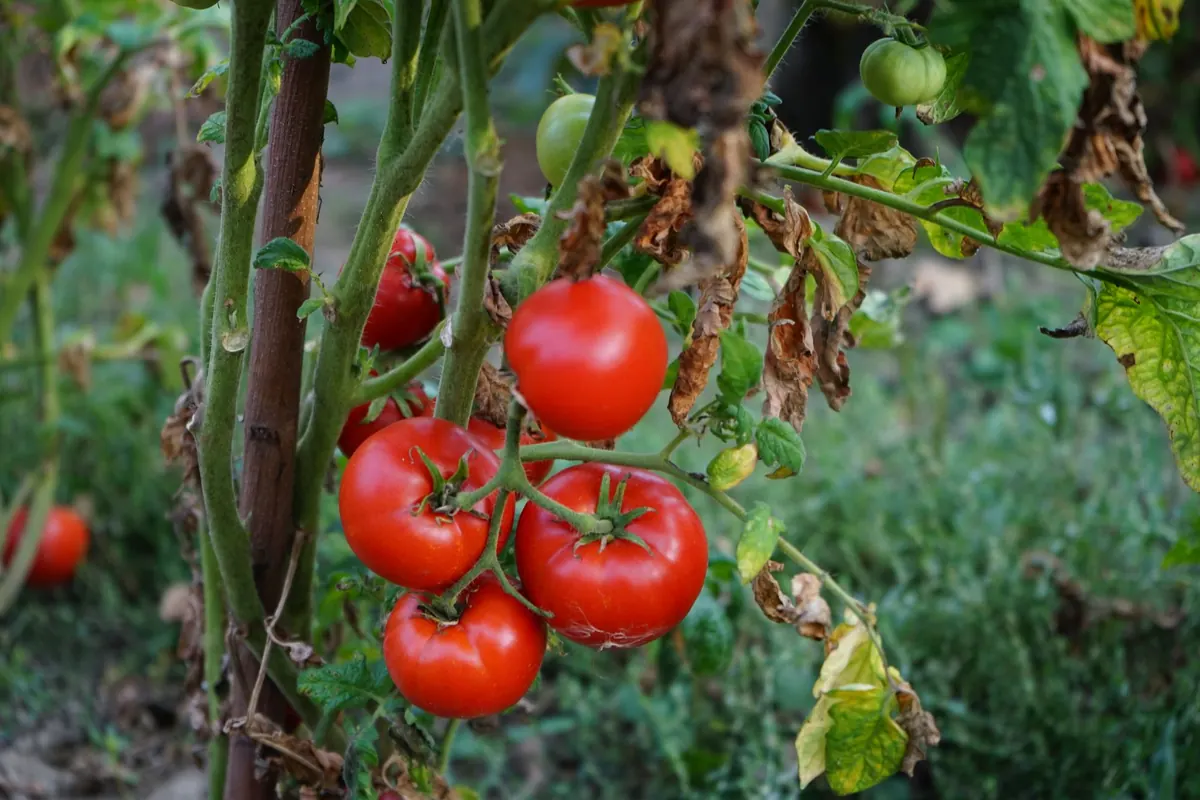
A cool summer is a second limit. SDSU notes that Custer stays rather cool all summer, which makes tomatoes, peppers and squash hard to bring to maturity there even within the frost-free days.
Source: SDSU Extension, Choosing Vegetable Varieties for Your Area, checked October 17, 2026.
Print it, tick it off
Season fit sheet
One line per crop. Count forward from the day it goes in the bed.
- Zip code and station
- Planting-out day (1 in 10 last frost or later)
- Early first fall frost (1 in 10)
- Safe season in days
- Crop, variety and days to maturity
- Counts from: transplant or seeding
- First harvest date
- Fits, or swap for fewer days
What people learn the second year
Tips and tricks
- Do the math before you order seeds. Fill in the sheet in winter, while the catalog is still open. Swapping a variety is easy before the order goes in.
- Write the station's height down. Near zip 59601, the Austin 1 W station (8.5 miles away) sits 1,023 feet higher than the Helena airport (12.3 miles away). Pick the station closest to your yard's height, not just the nearest one.
- Count both ends. A late spring pushes the out day later, which also pushes the harvest later. If you plant out a week late, add that week.
- Log the real first harvest. Write down the day you pick the first ripe fruit. After a season or two, you'll know how your yard compares with the packet.
Common questions
Questions
Does days to maturity start from seed or from transplant?
It depends on the crop. SDSU says the number runs from planting or transplanting. Johnny's counts transplanted crops from the transplant date, and crops that can go either way from direct seeding.
Source: SDSU Extension, Choosing Vegetable Varieties for Your Area, checked October 17, 2026; Johnny's Selected Seeds, Days to Maturity definition, checked October 17, 2026.
How do I find my frost-free days?
Look up your zip code in the frost lookup. It gives the days between the typical (50%) dates. For a safer count, use the 1 in 10 last spring frost and the early first fall frost.
Source: NOAA 1991-2020 U.S. Climate Normals, annual/seasonal, checked October 7, 2026.
Will tomatoes ripen in a 70-day season?
Check the days to maturity first. Early Girl is listed at 52 days from transplant. SDSU notes a cool site like Custer, with about 70 frost-free days, makes warm-season crops hard to bring to maturity.
Source: SDSU Extension, Choosing Vegetable Varieties for Your Area, checked October 17, 2026.
Do I count the weeks indoors as part of days to maturity?
Not for a number counted from transplant. Those weeks come before the planting-out day, so count forward from the day the plants go into the bed.
Source: Johnny's Selected Seeds, Days to Maturity definition, checked October 17, 2026.
Why do two stations near me give different seasons?
The stations sit at different heights and have different dates. Near zip 59601, the Austin 1 W station at 4,851 feet has a 73-day safe season, and the Helena airport at 3,828 feet has 115 days.
Source: NOAA 1991-2020 U.S. Climate Normals, annual/seasonal, checked October 7, 2026.
The arithmetic, done for you
Tools for this job
- ❄️ LookupFrost date lookup by zip codeFind the typical last spring and first fall frost for your zip code from NOAA 1991 to 2020 station normals, with the 1 in 10 year dates and a printable card.Open the tool
- 🌱 CalculatorSeed quantity calculatorHow many seeds your rows take, how many to keep on hand once germination is allowed for, and how many packets or ounces to order.Open the tool
Keep reading
More guides
 🧰 Problem solverWhen to start seeds for a fall garden in zones 8 to 10Fall tomatoes planted too late meet the first frost before the first pick. Count back for the sow day and forward for the harvest, with Florida examples.Read the guide
 ✅ ChecklistFirst fall frost: a job list counted back from your frost dateFind your first fall frost date by zip code, then count back: last planting day, pots in, covers ready, and how to cover plants on a frost night.Read the guide
 🧰 Problem solverIt froze after the last frost date: how to read the oddsA last frost date is a coin flip, not a promise. How NOAA's 50% and 1 in 10 dates work, how to pick the right station, and which date to plan around.Read the guide
Sources
- Choosing Vegetable Varieties for Your Area, South Dakota State University Extension, published December 4, 2018. Checked October 17, 2026.
- Days to Maturity (catalog definition on each product page), Johnny's Selected Seeds (seed maker). Checked October 17, 2026.
- U.S. Climate Normals (1991-2020), annual/seasonal normals by station, NOAA National Centers for Environmental Information (NCEI). Checked October 7, 2026.
- 2023 USDA Plant Hardiness Zone Map, USDA Agricultural Research Service. Checked October 6, 2026.
Planning guide, not a guarantee. See every source on the site on the sources page. Spotted an error? Tell us.