🧺 BedsFree toolPrintable record
Harvest yield calculator
Quick answer
Two 8 ft rows of bush beans that gave six picks adding up to 11 lb come to 6.88 lb per 10 ft of row. Mississippi State Extension's average for bush snap beans is 60 lb per 100 ft, or 9.6 lb for those 16 ft, so this bed did 115% of it. Planting for 20 lb next year takes 30 ft of row.
Source: Mississippi State Extension, vegetable planting guide, checked October 21, 2026.

Harvest yield calculator
Change any number and the answer updates as you type.
This season's harvest 11 lb
- Picks added up
- 6 weighings from 16 ft of row
- Your yield
- 6.88 lb per 10 ft
- Mississippi State average
- 9.6 lb for the same row (6 lb per 10 ft): you picked 115% of it
- Next year, for 20 lb
- 30 ft of row, 14 ft more than this year
No garden math needed
How to use this, in plain words
Weigh each pick on a kitchen or bathroom scale and jot the number on a sheet by the back door. Weigh it the way you bring it in, before trimming.
Measure the rows the crop took up and add them together. Two rows down a 4 by 8 ft bed is 16 ft.
Pick the crop and type the row, the plant count if you have one, and every weighing with a + between them.
Read your pounds per 10 ft next to the Mississippi State average for the same row, to see how the bed did against a typical garden row.
Type the pounds you want next year, then copy the row length onto the printed season-end record with a note on what changed.
Source: Mississippi State Extension, vegetable planting guide, checked October 21, 2026.
What the store won't tell you
Before you start
- Weigh in the same state every time: straight from the plant, before washing or trimming.
- A missed weighing is fine. Write down your best guess and mark it with a question mark so you know later.
- Count the rows the crop really used, not the whole bed. Half a bed of beans is half the row.
- Fill in the record before you clear the bed, while you still know which rows did best.
Go deeper: The winter seed order: how much seed to buy, crop by crop · How many tomato plants fit in a 4 x 8 raised bed · Seeds per foot of row: sowing spacing, seeds per hole, and thinning · Will it ripen before fall frost? Count the days to maturity · How to plan next year's garden from this year's harvest · How to weigh and log your garden harvest without it becoming a chore
The formula, in words
How it works
- Season total: add every weighing. Type them with a + between them, or one total if you kept a running sum.
- Yield per 10 ft: the season total divided by the feet of row, times 10. With a plant count, the total divided by the plants as well.
- Extension average for your row: Mississippi State's pounds per 100 ft for the crop, times your feet of row, divided by 100. Your share is your total divided by that figure.
- Next year's row: the pounds you want divided by this year's pounds per foot, rounded up to a whole foot. With a plant count, the same scaling gives the plants. With nothing weighed yet, the tool plans from the extension average instead.
Source: Mississippi State Extension, vegetable planting guide, checked October 21, 2026.
Printable sheet
What to record
Fill in one line per crop at the end of the season, while the picks are fresh in your mind. The printable sheet has a line for each crop:
- Crop and variety
- Feet of row or number of plants
- Planted on, first pick, last pick
- Season total in pounds
- Pounds per 10 ft and the extension average
- Grow more, less or the same next year
- What changed this year (spot, weather, timing)
Checked by hand
Worked example
Bush snap beans in a 4 by 8 ft raised bed: two rows down the 8 ft length, so 16 ft of row. Six picks over the summer weighed on a kitchen scale, and a goal of 20 lb next year.
- Picks: 1.5 + 2.25 + 2.5 + 2 + 1.75 + 1 = 11 lb.
- Per 10 ft: 11 lb ÷ 16 ft × 10 = 6.88 lb.
- Average for the row: 60 lb per 100 ft × 16 ft ÷ 100 = 9.6 lb, so 11 ÷ 9.6 = 115%.
- Next year: 20 lb ÷ (11 lb ÷ 16 ft) = 29.09 ft, rounded up to 30 ft.
Why it may not match the bag or the store
If the answer surprises you
❓
Far above the average
This happens a lot with tomatoes and peppers in raised beds. Mississippi State's 125 lb per 100 ft for tomatoes is a long-row figure with wide gaps between plants, about 10 lb for 8 ft. A close-planted bed that gets picked often can beat it by a wide margin, so plan from your own number.
Source: Mississippi State Extension, vegetable planting guide, checked October 21, 2026.
❓
Far below the average
Check the row length first: counting the whole bed when the crop only filled part of it drags the number down. Then look at the season notes for a late start, a shady spot or a missed week of picking.
❓
Next year's row looks huge
The row scales straight from this year. If doubling the harvest doubles the row past what your beds hold, split it: a second sowing in the same space, or a smaller goal.
Other cases
Variants
🟫
You only know the plant count
Tomatoes, peppers and squash are easier to count by the plant. Type the plants and the row they took up. The result gives pounds a plant, and next year's line gives a plant count as well as feet.
⭕
Several sowings of one crop
If you sowed beans or lettuce every few weeks, add all the rows together and all the picks together. The yield per 10 ft is then the average across the sowings.
🔁
Nothing weighed this year
Leave the picks blank and type next year's goal. The row comes from the Mississippi State average for the crop. Weigh next season's picks and your own number takes over.
Source: Mississippi State Extension, vegetable planting guide, checked October 21, 2026.
📏
Crops counted, not weighed
Sweet corn, melons and head lettuce are listed by the ear, fruit or head in the extension table, so this tool leaves them out. Pick Another crop and type the count in place of pounds; the per-row and next-year math still works.
Source: Mississippi State Extension, vegetable planting guide, checked October 21, 2026.
Where each figure comes from
Numbers this tool uses
- 60 lbAverage per 100 ft, bush snap beans (Mississippi State)Mississippi State Extension, vegetable planting guide, October 21, 2026
- 125 lbAverage per 100 ft, tomatoesMississippi State Extension, vegetable planting guide, October 21, 2026
- 150 lbAverage per 100 ft, bell peppersMississippi State Extension, vegetable planting guide, October 21, 2026
- 100 lbAverage per 100 ft, carrotsMississippi State Extension, vegetable planting guide, October 21, 2026
- 50 lbAverage per 100 ft, leaf lettuceMississippi State Extension, vegetable planting guide, October 21, 2026
- 40 lbAverage per 100 ft, radishesMississippi State Extension, vegetable planting guide, October 21, 2026
Limitations
- Planning estimate, not a guarantee; next year's harvest depends on weather, timing, spacing and how often you pick.
- The extension averages come from a Mississippi table for long garden rows. Use them as a yardstick for comparing seasons.
- Weights and row lengths only. This page doesn't cover which varieties to grow, plant problems, or storing and eating the harvest.
What people learn the second year
Tips and tricks
- Keep the scale by the door. A cheap kitchen scale on the porch gets used. One indoors gets forgotten until the end of the season.
- Tare the basket once. Set the empty basket on the scale and zero it, then every pick reads as produce only.
- Write the date with each weight. Dates show when the crop peaked and when it tailed off. Next year you know when to sow a second round.
- Grade the year, not just the crop. A cold spring or a hot July drags every crop down together. If all the numbers fell, it was the year; if one fell, it was that bed.
- Compare seasons in pounds per 10 ft. Beds change size and crops move around. A per-10-ft number lets you compare this year's beans with last year's even if the row was longer.
Read before the store run
Guides that go deeper
 🧰 Problem solverThe winter seed order: how much seed to buy, crop by cropWork out how many seeds and packets to order for spring, one crop at a time, with leftovers counted first and the germination rate allowed for.Read the guide
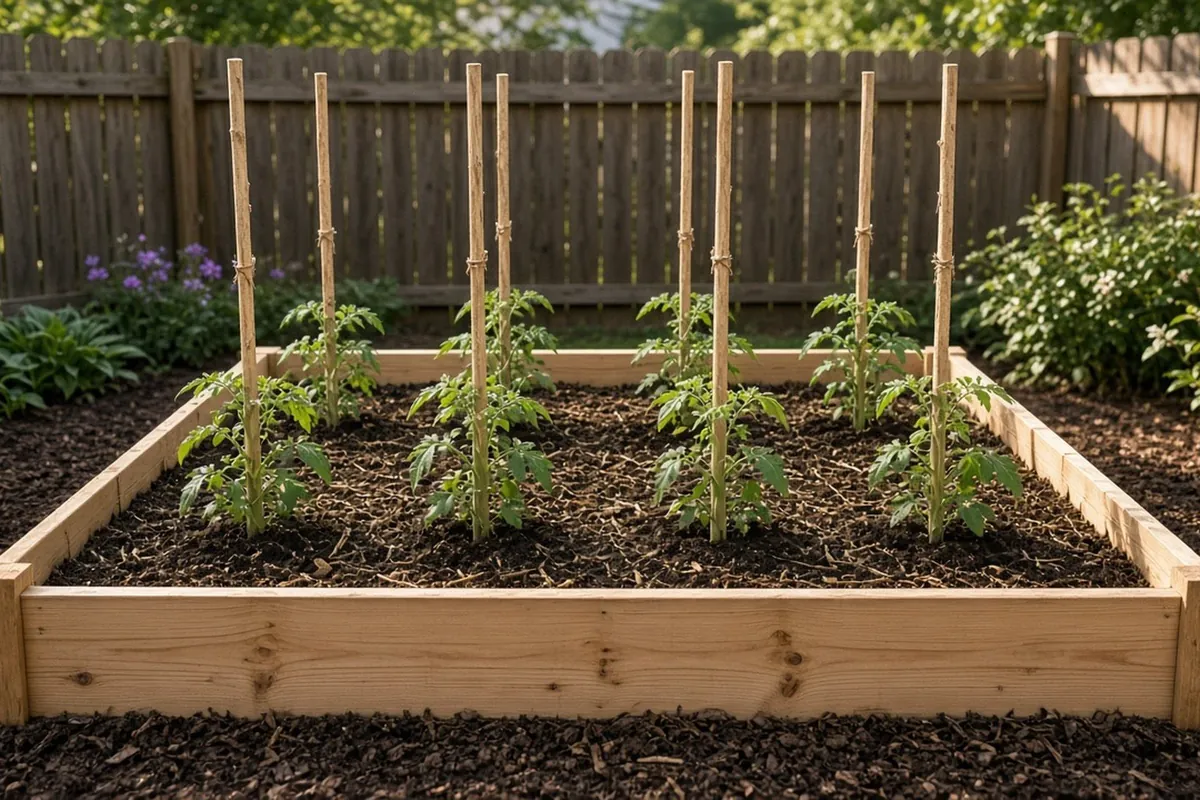 📘 Know-howHow many tomato plants fit in a 4 x 8 raised bedAt the extension spacing of 18 to 24 inches, a 4 x 8 ft bed takes 8 to 10 staked tomatoes in two rows, or 4 in wide cages. See the layouts and the math.Read the guide
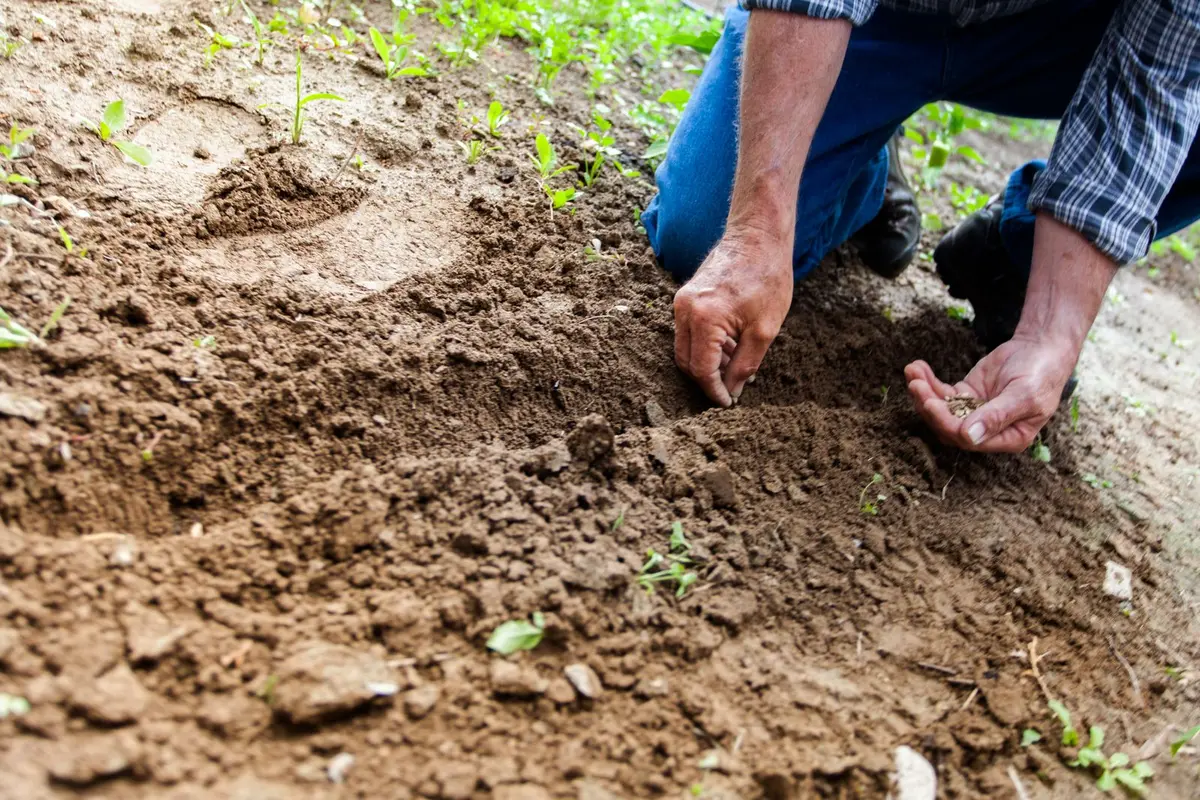 📘 Know-howSeeds per foot of row: sowing spacing, seeds per hole, and thinningWhy a packet's sowing spacing and the final plant spacing differ, how many seeds go in each hole or hill, and how to count seed for a row.Read the guide
 🧰 Problem solverWill it ripen before fall frost? Count the days to maturityCount from your planting-out day to the early fall frost date, then check the days to maturity against it. Worked example at two Montana stations.Read the guide
 📘 Know-howHow to plan next year's garden from this year's harvestTurn this season's harvest record into next year's plan: pounds per 10 ft, grow more or less, row length for a goal, and which bed each crop moves to.Read the guide
 ✅ ChecklistHow to weigh and log your garden harvest without it becoming a choreA simple way to weigh every pick and keep a season harvest log: the scale, zeroing the basket, ounces to pounds, and the columns worth keeping.Read the guide
Common questions
Questions
How many pounds of beans do you get from a 10 foot row?
Mississippi State Extension's average for bush snap beans is 60 lb per 100 ft of row, about 6 lb for 10 ft. Pole beans average 80 lb per 100 ft, about 8 lb for 10 ft. A well-picked bed can do better.
Source: Mississippi State Extension, vegetable planting guide, checked October 21, 2026.
What is a normal vegetable yield per 100 feet of row?
Mississippi State's table lists, for example, 125 lb for tomatoes, 150 lb for bell peppers and summer squash, 100 lb for carrots and cucumbers, 50 lb for leaf lettuce and 40 lb for radishes. These are home-garden averages, so treat them as a yardstick.
Source: Mississippi State Extension, vegetable planting guide, checked October 21, 2026.
How do I work out how much to plant next year?
Divide the pounds you want by this year's pounds per foot of row. If 16 ft gave 11 lb and you want 20 lb, that's 20 ÷ (11 ÷ 16) = 29.1 ft, rounded up to 30 ft.
Do I weigh before or after cleaning?
Either works if you do it the same way all season. Weighing straight from the plant, before trimming, is the easiest habit to keep.
What should go on an end-of-season garden checklist?
For each crop: the row or plant count, when you planted and first picked, the season total, how it compared with last year, and one line on what to change. The printable record has those columns.
More for the same garden
Related tools
- 📓 CalculatorGarden log plannerAdd each planting's days to harvest to the day it went in, see the first pick date against your fall frost, and print a season garden log.Open the tool
- 🌱 CalculatorSeed quantity calculatorHow many seeds your rows take, how many to keep on hand once germination is allowed for, and how many packets or ounces to order.Open the tool
- 🪴 CalculatorRaised bed soil calculatorHow much soil fills a raised bed: cubic feet, cubic yards and a bag count for 1.5 or 2 cu ft bags, from the bed's length, width and depth.Open the tool
- ❄️ LookupFrost date lookup by zip codeFind the typical last spring and first fall frost for your zip code from NOAA 1991 to 2020 station normals, with the 1 in 10 year dates and a printable card.Open the tool
- 🪚 CalculatorRaised bed lumber calculatorHow many boards to buy for a wooden raised bed, and where to cut them: side lengths, a board-by-board cut plan, corner posts and the soil it will hold.Open the tool
- 🧺 SectionAll beds toolsPlan a wooden raised bed: how many boards to buy, where to cut them, how tall the bed ends up and how much soil it will hold.See the section
Sources
- Vegetable Gardens: Planting Guide, Mississippi State University Extension Service. Checked October 21, 2026.
See every source on the site on the sources page. Spotted an error? Tell us.