🧭 Garden systemBeds8 stepsFree working copy
Season garden log: a map, a line per planting, the real pick dates
Quick answer
Keep one log per season. Map the beds at 1 square = 1 foot, then give each planting a line: crop, variety, bed, day in, seed or transplant and the packet's days to harvest. Day in plus days gives the estimated first pick, so beans sown May 13 at 58 days are due about July 10. When you start picking, write the first and last dates and the pounds.
Source: N.C. Cooperative Extension Forsyth County, Garden Journal template, checked October 22, 2026; Johnny's Selected Seeds, Days to Maturity definition, checked October 17, 2026.

Decide first
Keep a garden log yourself, skip it, or get help?
Do it yourself
Keep the log yourself
Do it if you grow vegetables or flowers in beds, rows or a few big pots and want next year to go better than this one. It takes a notebook or binder, a pencil and a few minutes on each planting or picking day.
Skip it
Skip it
For a pot or two of herbs on the porch, a log is more than you need. Write the day you planted on the pot's label and leave it there.
Get help
Get help with a planting that went wrong
The log tracks dates, places and pounds. When a crop does badly and you want to know why, take the log to your county extension office or its Master Gardener volunteers. Your dates and notes give them something to go on. This page doesn't diagnose plant problems.
- 1 sq = 1 ftmap scale in the N.C. Extension garden journalN.C. Cooperative Extension Forsyth County, Garden Journal template, October 22, 2026
- Jul 10estimated first pick: beans sown May 13 at 58 daysN.C. Cooperative Extension Forsyth County, Garden Journal template, October 22, 2026
- 10 dayshow far that row's real first pick (Jun 30) beat the estimateN.C. Cooperative Extension Forsyth County, Garden Journal template, October 22, 2026
- 3 to 4 yrbefore a plant family goes back in the same bedIowa State Extension, Crop Rotation in the Vegetable Garden, October 22, 2026
From the first map to the last pick
The steps, in order
Pick a format and keep it near the beds
A notebook, a binder, a wall calendar or a spreadsheet all work. UVM Extension shows all four. Iowa State Extension says the journal should be close by while you're in the garden, so a binder on a hook by the back door beats a file on the computer.
Have ready: A notebook or binder, a pencil, and a spot near the garden door.
Source: UVM Extension, Gardening Journal: A Simple Tool That Pays Off, checked November 6, 2026; Iowa State Extension, Garden Journaling, checked November 6, 2026.
Draw the bed map at 1 square = 1 foot
N.C. Extension's garden journal starts with a map and suggests a scale of 1 square = 1 foot. A 4 x 8 ft bed is 32 squares. Write last year's plant families on the map if you have them, so you can see where each one can't go back.
Have ready: Graph paper, a tape measure and each bed's size.
Source: N.C. Cooperative Extension Forsyth County, Garden Journal template, checked October 22, 2026; Iowa State Extension, Crop Rotation in the Vegetable Garden, checked October 22, 2026.
Give every planting its own line
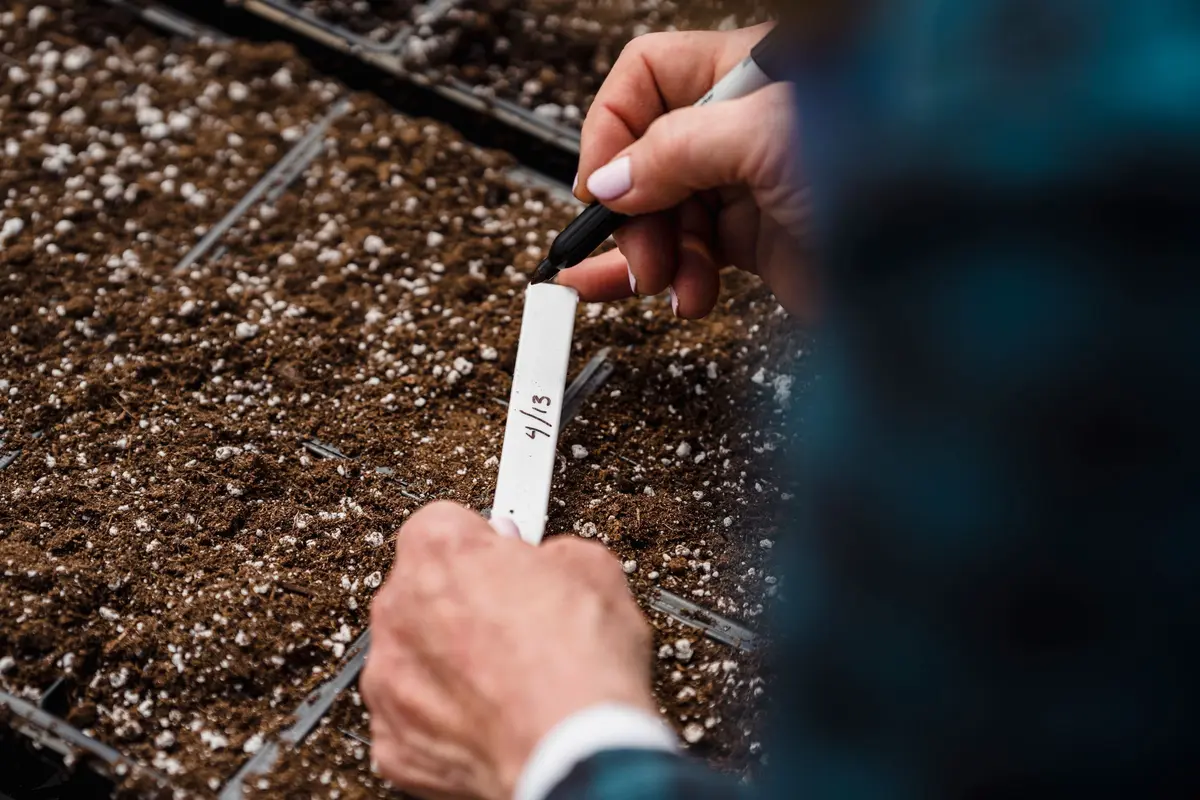
On planting day, write the crop and variety, the bed, the date and S for seed or T for transplant. UVM Extension says varieties, planting dates and garden layout are the place to start. Two sowings of one crop get two lines.
Have ready: The seed packet or plant tag and the log.
Source: N.C. Cooperative Extension Forsyth County, Garden Journal template, checked October 22, 2026; UVM Extension, Gardening Journal: A Simple Tool That Pays Off, checked November 6, 2026.
Work out the estimated first pick
Add the packet's days to harvest to the day it went in. For a transplant, count from the day you set it out, not the day you sowed it. Beans sown May 13 at 58 days are due about July 10.
Have ready: The packet's days to harvest and the garden log calculator.
Source: N.C. Cooperative Extension Forsyth County, Garden Journal template, checked October 22, 2026; Johnny's Selected Seeds, Days to Maturity definition, checked October 17, 2026.
Check the late plantings against the first frost
For anything that goes in from midsummer on, compare the estimated first pick with your typical first fall frost. In Columbus, Ohio, that's October 24 at the nearest NOAA station. Broccoli set out August 1 at 74 days is due about October 14, ten days before it.
Have ready: Your zip code and the frost date lookup.
Source: NOAA 1991-2020 U.S. Climate Normals, annual/seasonal, checked October 7, 2026.
Write the first and last real pick
When you start picking, write the date next to the estimate. When you stop, write that date too. N.C. Extension's worked row has beans sown May 13 with a first pick on June 30 and a last pick on July 24. That's ten days ahead of the estimate, which is useful to know next spring.
Have ready: The log, open to this season's page.
Source: N.C. Cooperative Extension Forsyth County, Garden Journal template, checked October 22, 2026.
Weigh each pick into the harvest log
Put the date at the top of a column and each crop's pounds under it, one row per crop, as N.C. Extension's harvest log does. Small picks count too. Illinois Extension also suggests weighing the harvest as you go.
Have ready: A kitchen or hanging scale and the harvest log page.
Source: N.C. Cooperative Extension Forsyth County, Garden Journal template, checked October 22, 2026; Illinois Extension, Garden Journal (youth gardening), checked October 22, 2026.
Grade each line and carry the log to the review
After the last pick, mark each line poor, good or super and say whether you'd plant it again, as UVM's 4-H garden record does. Then the log feeds the end-of-season review and next year's bed map.
Have ready: The full log and the season review sheet.
Source: UVM Extension, 4-H Gardening Project Record, checked October 22, 2026.
Free, one page, black and white
Print the working copy
Garden log: the steps above as a checklist with a date box for each, on one US Letter page.
If a step gets skipped
What goes wrong
⚠️
Counting a transplant's days from the sowing date
Days to harvest for a transplanted crop count from the day it goes in the garden. Count from the day you sowed it indoors and the estimate comes out weeks too early.
Source: Johnny's Selected Seeds, Days to Maturity definition, checked October 17, 2026.
⚠️
A log kept in the house
A notebook left in the house means notes written from memory hours later, or not at all. Iowa State Extension says to keep the journal close while you're out in the garden.
Source: Iowa State Extension, Garden Journaling, checked November 6, 2026.
⚠️
A map with no scale
A sketch with no scale can't tell you whether 30 ft of beans fits next year. Draw it at 1 square = 1 foot, as N.C. Extension suggests, and the map does the fit check for you.
Source: N.C. Cooperative Extension Forsyth County, Garden Journal template, checked October 22, 2026.
⚠️
No variety name
"Tomato" isn't enough. UVM Extension's 4-H record has a variety column so you can tell which one to plant again. Copy the name from the packet or tag on the day it goes in.
Source: UVM Extension, 4-H Gardening Project Record, checked October 22, 2026.
⚠️
Only the big picks written down
The first few beans and the last handful in fall add up. If the log skips them, the crop looks worse than it was when you do the review.
When the steps change
Variants
🪴
Pots and grow bags
Number each pot and use the number where the bed would go. The map becomes a numbered list of pots and where each one sits.
🏙️
A spreadsheet or phone
Use the same columns: crop and variety, bed, day in, S or T, days, estimated first pick, first pick, last pick, pounds. UVM Extension lists a spreadsheet as one way to keep a journal.
Source: UVM Extension, Gardening Journal: A Simple Tool That Pays Off, checked November 6, 2026.
❄️
Several sowings of one crop
Give each sowing its own line and its own estimate. Beans sown May 13 and June 3 at 58 days are due about July 10 and July 31.
☀️
A fall garden
Add a column for days before the first fall frost: the frost date minus the estimated first pick. A negative number means the planting went in too late.
What people learn the second year
Tips and tricks
- Date the label, then the log. Write the day on the plant label the moment it goes in. If the log has to wait until evening, the label still has the date.
- Keep the packets with the log. Tape or clip the empty packet to the page. The variety name and days to harvest are printed right there.
- Write the weather only when it's odd. Write the weather only when it's unusual: a late frost, a hot week, a long dry spell. UVM Extension says weather notes help explain why a garden struggled or thrived. (UVM Extension, Gardening Journal: A Simple Tool That Pays Off)
- Take a photo on the first of each month. Stand in the same spot each time. Iowa State Extension suggests adding pictures to the journal, and a row of monthly photos shows what filled in and what didn't. (Iowa State Extension, Garden Journaling)
- Start a new page each season. Keep last year's pages behind this year's. The old map tells you where each family can't go this time. (Iowa State Extension, Crop Rotation in the Vegetable Garden)
The one we checked the steps against
Primary source
Garden Journal (template with instructions), N.C. Cooperative Extension, Forsyth County Center. Checked October 22, 2026.
N.C. Cooperative Extension's garden journal template is a working log: a bed map at a scale you choose, a summary with crop, planting date, seed or transplant, estimated and actual harvest dates, and a harvest log in pounds. It says real planting and harvest dates help you adjust next year's schedule and rotation.
The arithmetic and the background reading
Tools and guides in this system
- 📓 CalculatorGarden log plannerAdd each planting's days to harvest to the day it went in, see the first pick date against your fall frost, and print a season garden log.Open the tool
- ❄️ LookupFrost date lookup by zip codeFind the typical last spring and first fall frost for your zip code from NOAA 1991 to 2020 station normals, with the 1 in 10 year dates and a printable card.Open the tool
- 🧺 CalculatorHarvest yield calculatorAdd up a season of picks, see pounds per 10 ft of row against an extension average, and size next year's row for the harvest you want.Open the tool
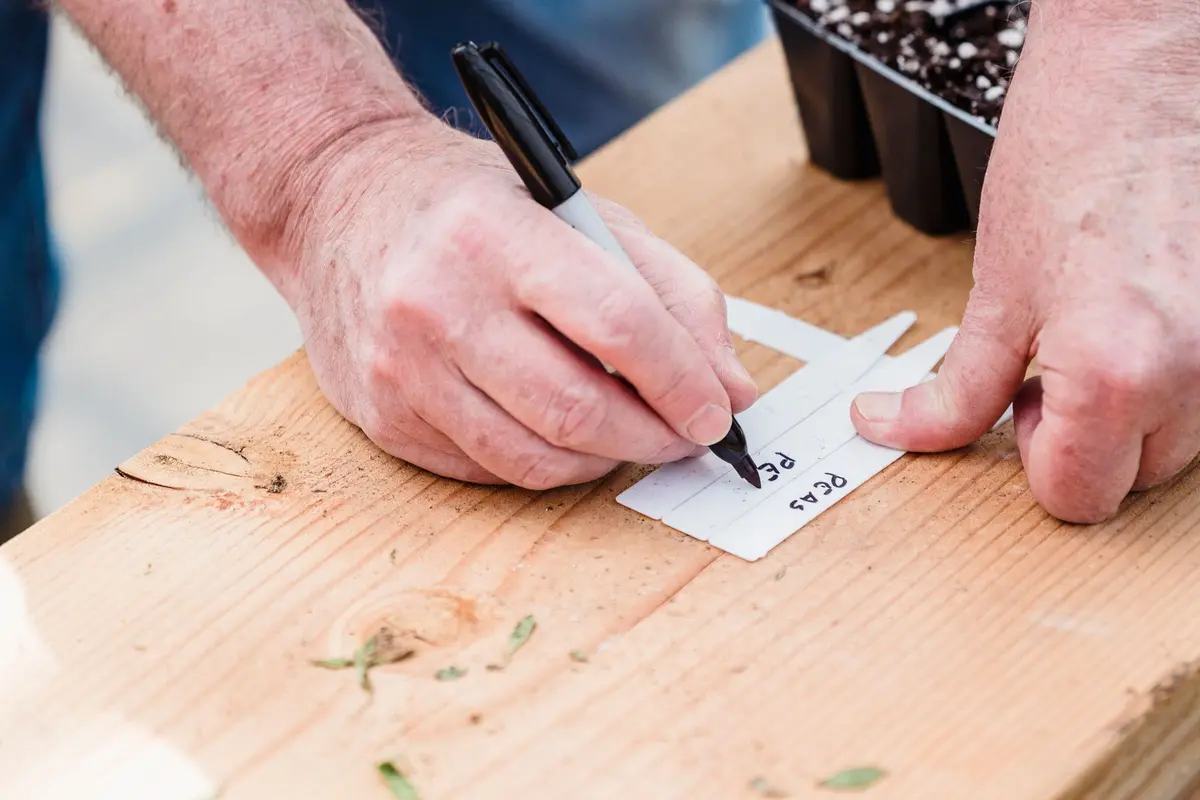 📘 Know-howWhat to write in a garden journal, and what each note is forThe few notes a garden journal needs: variety, the day in, where it went, first and last pick, pounds and weather, and the question each one answers.Read the guide
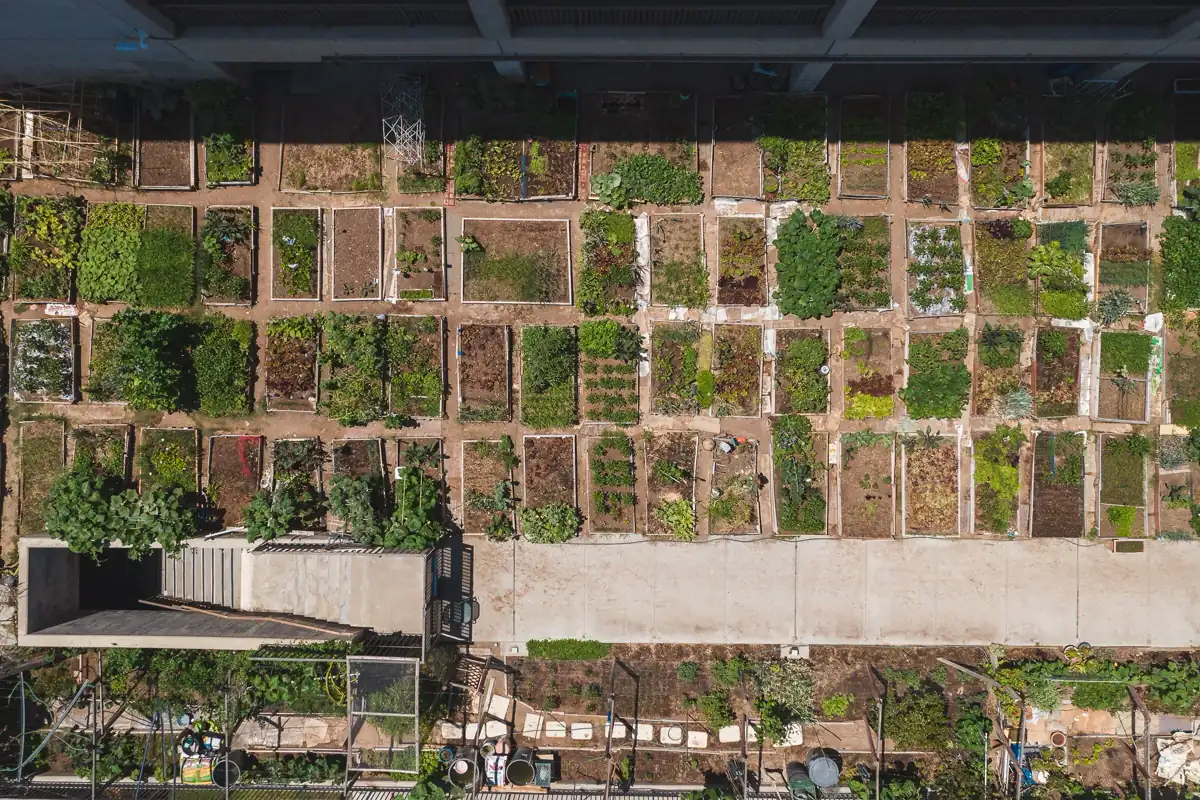 ✅ ChecklistHow to draw a garden bed map you'll actually use next yearMeasure the beds, pick a scale like 1 square = 1 foot, and mark what went where and when. Next spring the map tells you where each crop family goes.Read the guide
Common questions
Questions
What should I write in a garden log?
A bed map, then one line per planting: crop and variety, bed, the day it went in, seed or transplant, and the packet's days to harvest. Add the estimated first pick, the real first and last picks, and the pounds. N.C. Extension's garden journal uses these columns.
Source: N.C. Cooperative Extension Forsyth County, Garden Journal template, checked October 22, 2026.
How do I work out when a crop will be ready?
Add the days to harvest on the packet to the day it went in. Seed counts from sowing and a transplant from the day you set it out. Beans sown May 13 at 58 days are due about July 10.
Source: N.C. Cooperative Extension Forsyth County, Garden Journal template, checked October 22, 2026; Johnny's Selected Seeds, Days to Maturity definition, checked October 17, 2026.
Should I use a notebook or an app?
Either works. UVM Extension shows a notebook, a calendar, binder notes and a spreadsheet. Iowa State Extension says what matters is keeping it close by while you're in the garden.
Source: UVM Extension, Gardening Journal: A Simple Tool That Pays Off, checked November 6, 2026; Iowa State Extension, Garden Journaling, checked November 6, 2026.
What scale should a garden bed map use?
N.C. Extension suggests 1 square = 1 foot on graph paper. A 4 x 8 ft bed is then 32 squares, and you can count the feet of row each crop took.
Source: N.C. Cooperative Extension Forsyth County, Garden Journal template, checked October 22, 2026.
Why write down the real harvest dates?
Packet days are an average. N.C. Extension says actual planting and harvest dates help you adjust next year's planting schedule and crop rotation. In its example, beans came in 10 days before the estimate.
Source: N.C. Cooperative Extension Forsyth County, Garden Journal template, checked October 22, 2026.
The next job on the shelf
More garden systems
 7 steps🧭 SystemRefresh border mulch: measure each bed, then buy only the gapMeasure the old layer in every bed before you order. One example yard needs 23 bags of 2 cu ft, not 45. The steps, the 3 inch limit and a free mulch record.Open the system
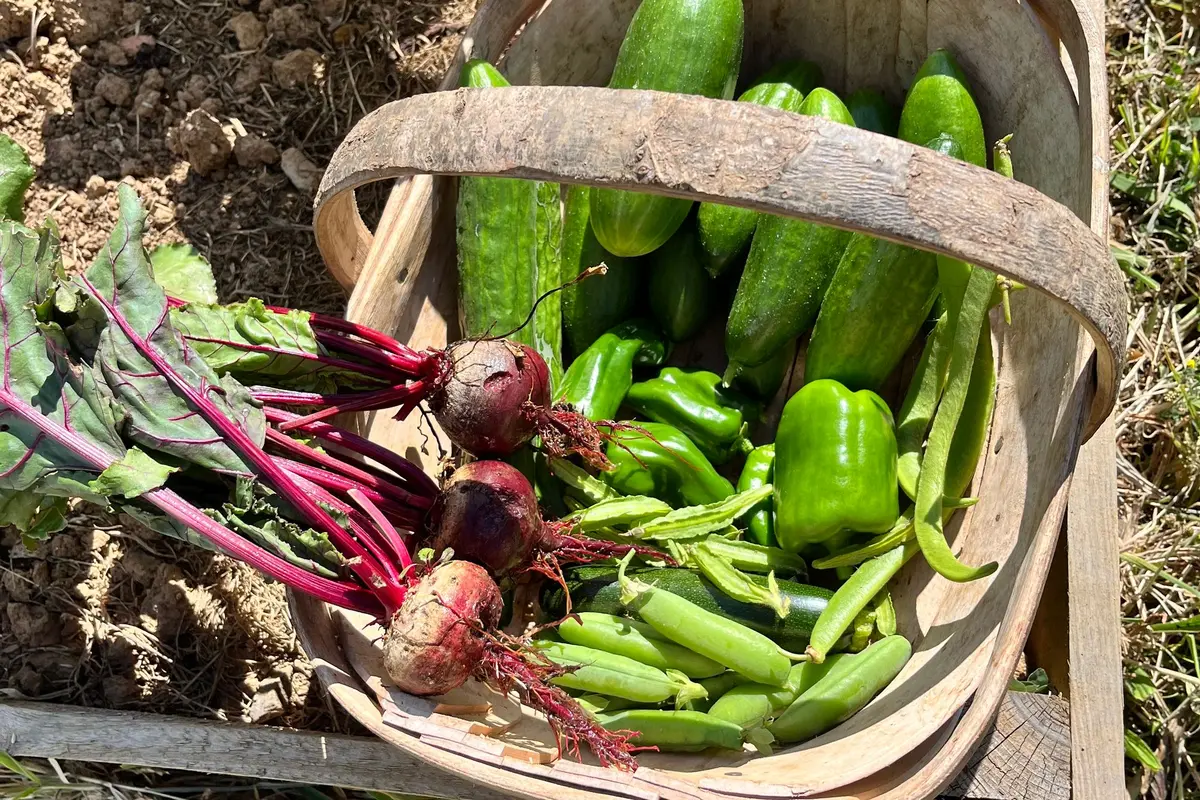 8 steps🧭 SystemEnd-of-season review: turn this year's harvest into next year's planAdd up each crop's pounds, set them beside an extension average, grade them, size next year's rows and move each family to a new bed. Free review sheet.Open the system
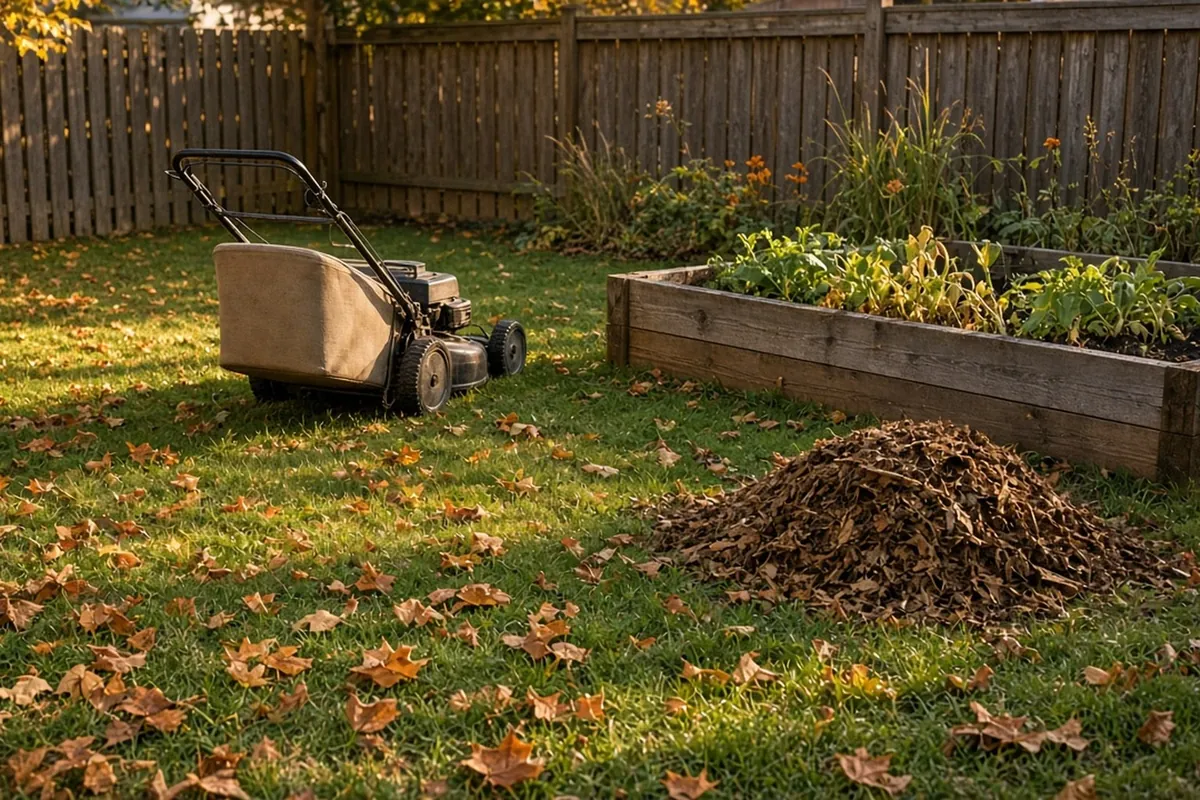 7 steps🧭 SystemTurn fall leaves into bed cover and mulch, and keep a tally of the bagsWhat to do with fall leaves: mow a thin layer into the lawn, shred the rest and spread 2 to 3 inches on beds. Free leaf haul tally to print.Open the system
Sources
- Garden Journal (template with instructions), N.C. Cooperative Extension, Forsyth County Center. Checked October 22, 2026.
- Days to Maturity (catalog definition on each product page), Johnny's Selected Seeds (seed maker). Checked October 17, 2026.
- Gardening Journal: A Simple Tool That Pays Off, University of Vermont Extension, published January 30, 2026. Checked November 6, 2026.
- Garden Journaling, Iowa State University Extension and Outreach, Yard and Garden, published May 1, 2025. Checked November 6, 2026.
- Crop Rotation in the Vegetable Garden, Iowa State University Extension and Outreach, Yard and Garden, published April 1, 2025. Checked October 22, 2026.
- U.S. Climate Normals (1991-2020), annual/seasonal normals by station, NOAA National Centers for Environmental Information (NCEI). Checked October 7, 2026.
- Garden Journal, University of Illinois Extension. Checked October 22, 2026.
- 4-H Gardening Project Record, University of Vermont Extension (4-H), published April 15, 2014. Checked October 22, 2026.
Planning guide, not a guarantee. See every source on the site on the sources page. Spotted an error? Tell us.