✅ ChecklistBeds4 min read
How to draw a garden bed map you'll actually use next year
Quick answer
Measure each bed and the paths between them, choose a scale (the Forsyth County garden journal suggests 1 square = 1 foot), and draw the beds on graph paper. Mark every planting with the crop, variety, date, and seed or transplant, and write the year at the top. A 4 x 8 ft bed is 4 x 8 squares. Next spring, use the map to move each plant family to a different bed.
Source: N.C. Cooperative Extension Forsyth County, Garden Journal template, checked October 22, 2026; Iowa State Extension, Crop Rotation in the Vegetable Garden, checked October 22, 2026.

The problem
By spring, nobody remembers where the tomatoes were
In October the beds are full and it's obvious what grew where. By March they're bare soil, and the question "which bed had the tomatoes?" has three different answers in one house. Rotating crops depends on that answer.
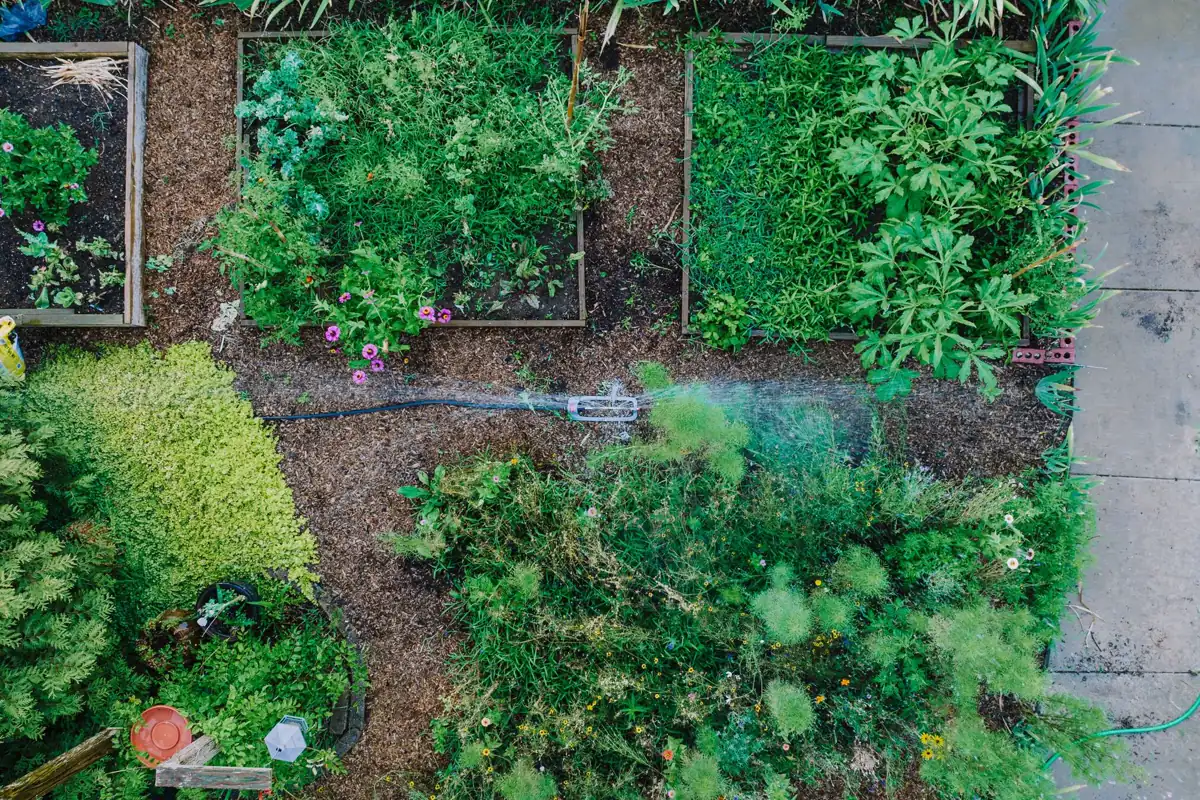
N.C. Cooperative Extension's Forsyth County garden journal opens with a map of beds and plantings for that reason. It says to use the record of where crops were planted to rotate to different plant families the following year. Iowa State Extension gives four ways to keep it: a garden log, a map, a diagram or a photo.
Source: N.C. Cooperative Extension Forsyth County, Garden Journal template, checked October 22, 2026; Iowa State Extension, Crop Rotation in the Vegetable Garden, checked October 22, 2026.
Draw it once
Measure, pick a scale, draw the beds
Measure each bed and path
Run a tape along the length and width of each bed, and across each path. Write the numbers on a scrap of paper as you go.
Pick a scale
Forsyth County's journal gives 1 square = 1 foot as an example. For small beds, 1 square = 6 inches leaves more room to write.
Source: N.C. Cooperative Extension Forsyth County, Garden Journal template, checked October 22, 2026.
Draw the beds, then the landmarks
Count out each bed in squares and outline it. Add the fence, the house wall or a tree, and an arrow for north, so the map makes sense to someone else.
Mark every planting
Put a number in each patch and a key beside the map: crop, variety, date, and seed or transplant. Numbers keep small beds readable.
Date it and file it
Write the year at the top and keep the map in the front of your garden journal. Start a new sheet every year.
The count is simple at 1 square = 1 foot: a 4 x 8 ft bed is 4 squares by 8, or 32 squares, and each square is 1 sq ft. At 1 square = 6 inches, double both sides: 8 x 16 = 128 squares for the same bed. Two 4 ft beds with a 2 ft path between them come to 10 squares across at the 1 ft scale.
- 1 sq = 1 ftthe scale the Forsyth County journal gives as an exampleN.C. Cooperative Extension Forsyth County, Garden Journal template, October 22, 2026
- 32squares for a 4 x 8 ft bed at that scaleArithmetic
- 128squares for the same bed at 1 square = 6 inArithmetic
- 3 to 4 yrbefore a plant family goes back in the same spotIowa State Extension, Crop Rotation in the Vegetable Garden, October 22, 2026
Use it next spring
Turn last year's map into this year's plan
Lay last year's map next to a blank copy. Write the plant family beside each crop: Iowa State Extension groups tomatoes, peppers and potatoes as the nightshade family, beans and peas as the pea family, and lettuce with the sunflower family. Then put each family in a bed it wasn't in. Iowa State suggests keeping a family out of the same spot for 3 to 4 years, or longer if you can.
Source: Iowa State Extension, Crop Rotation in the Vegetable Garden, checked October 22, 2026.
Print it, tick it off
Bed map checklist
Draw the map at planting time and check it again at season's end.
- Each bed and path measured with a tape
- Scale chosen and written on the map (1 square = 1 ft or 6 in)
- Beds outlined, with a fence, wall or tree and a north arrow
- Every planting numbered, with a key: crop, variety, date, seed or transplant
- Year written at the top
- Map kept at the front of the garden journal
- Plant family written beside each crop at season's end
- Next year's plan drawn with each family in a different bed
What people learn the second year
Tips and tricks
- Draw the outline once, copy it. Draw the beds in pen, copy the sheet a few times, and fill in a fresh copy each year. The beds don't move, only the crops.
- Name beds with letters. Bed A, bed B. Short names fit in the journal's bed column and on plant labels.
- Photograph from the same spot. A photo from the back step each month backs up the map. Iowa State lists a photo as one way to keep the record.
- Second plantings go on the same map. When lettuce comes out and beans go in, add a new number in that patch with the new date. The map shows the whole season.
Common questions
Questions
What scale should I use for a garden map?
The Forsyth County garden journal gives 1 square = 1 foot as an example, which keeps the counting easy. For small raised beds, 1 square = 6 inches leaves more room to write.
Source: N.C. Cooperative Extension Forsyth County, Garden Journal template, checked October 22, 2026.
How many squares is a 4 x 8 ft bed on graph paper?
At 1 square = 1 foot it's 4 by 8, or 32 squares. At 1 square = 6 inches it's 8 by 16, or 128 squares.
Why map the garden every year?
So you know where each crop grew when you plan the next season. The Forsyth County journal says to use the record of where crops were planted to rotate to different plant families the following year.
Source: N.C. Cooperative Extension Forsyth County, Garden Journal template, checked October 22, 2026.
How long before the same crop family goes back in a bed?
Iowa State Extension suggests 3 to 4 years, or 5 or more if you can. With only two beds, swap the families each year; Iowa State says rotating as best you can still helps.
Source: Iowa State Extension, Crop Rotation in the Vegetable Garden, checked October 22, 2026.
Can I use a photo instead of drawing a map?
Yes. Iowa State Extension lists a garden log, a map, a diagram or a photo as ways to keep track. A photo works best with a short note of what is in each bed.
Source: Iowa State Extension, Crop Rotation in the Vegetable Garden, checked October 22, 2026.
The arithmetic, done for you
Tools for this job
- 📓 CalculatorGarden log plannerAdd each planting's days to harvest to the day it went in, see the first pick date against your fall frost, and print a season garden log.Open the tool
- 🧺 SectionAll beds toolsPlan a wooden raised bed: how many boards to buy, where to cut them, how tall the bed ends up and how much soil it will hold.See the section
Keep reading
More guides
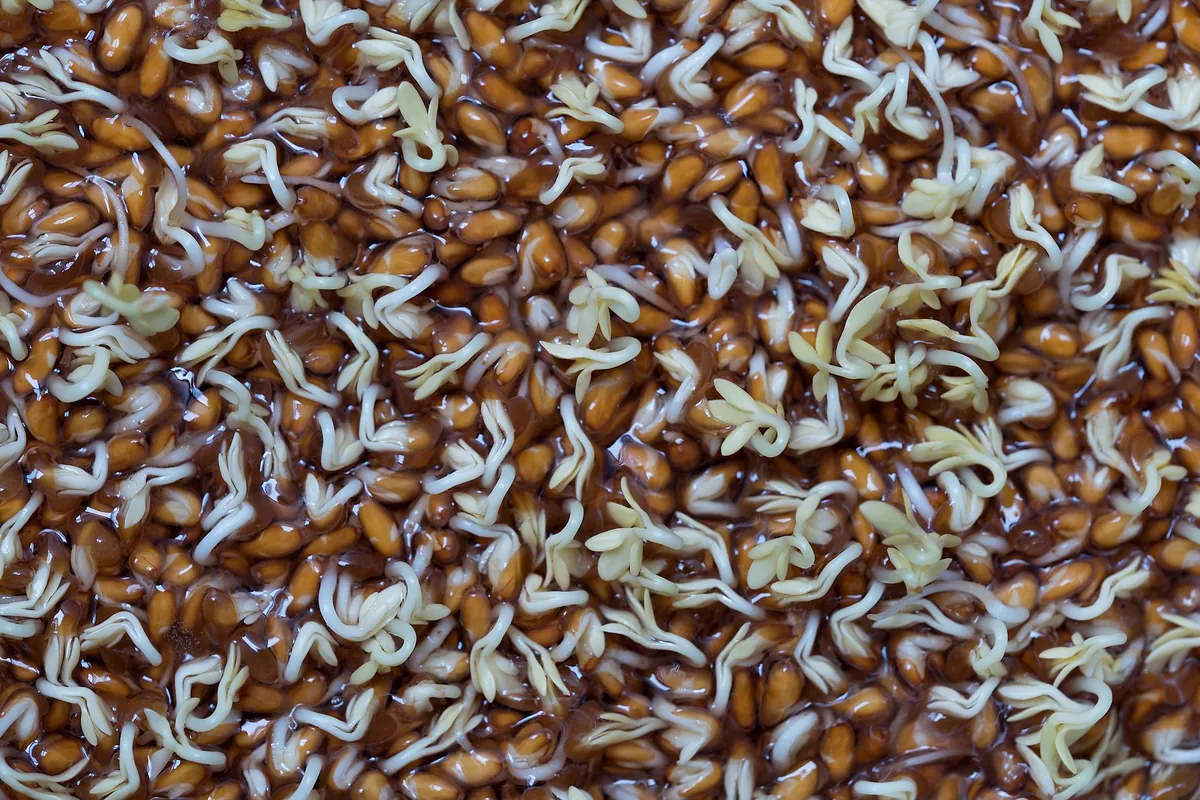 📘 Know-howAre old seeds still good? How long seed keeps, and a 10-seed testHow many years vegetable seed keeps in cool, dry storage, how to sprout 10 seeds on a paper towel, and what to do with the count.Read the guide
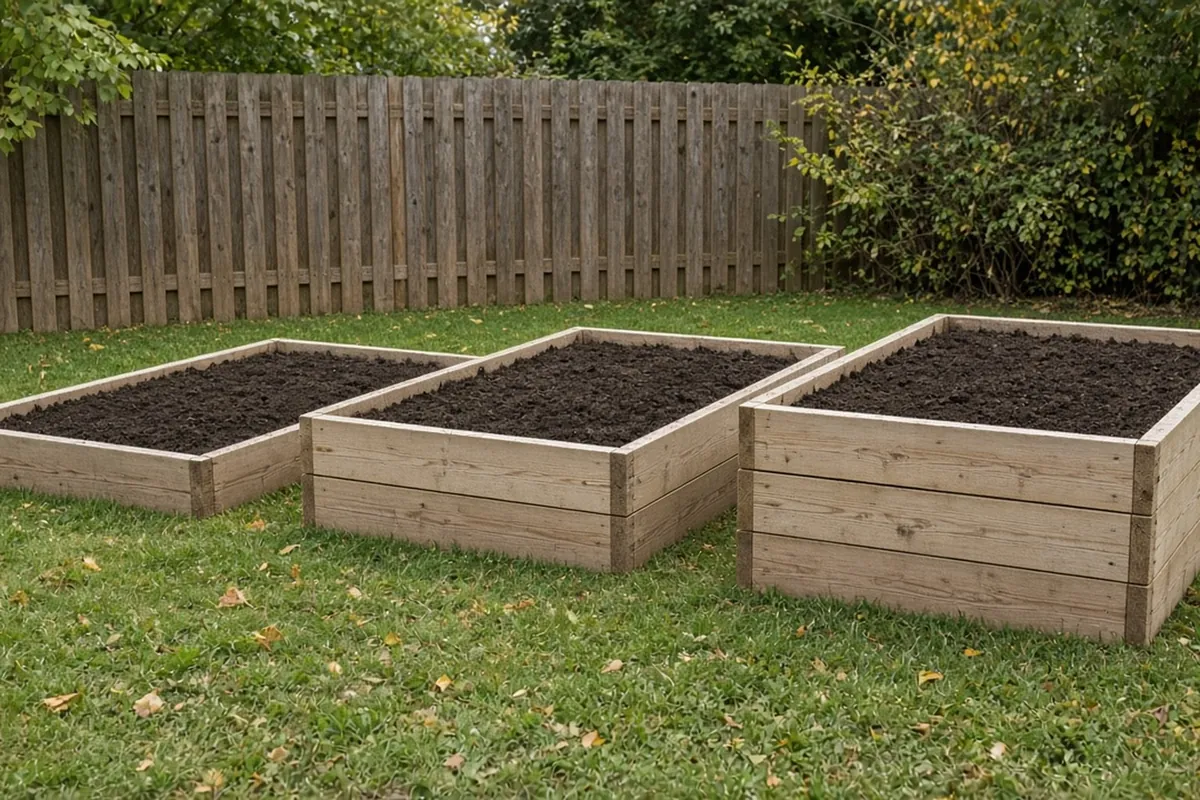 📘 Know-howHow tall to build a raised bed: real board heights and the depths extension pages giveTwo 2x6 boards make an 11 inch bed, enough on open ground for most crops. When to go to 16 1/2 or 24 inches, and what each extra board costs in lumber and soil.Read the guide
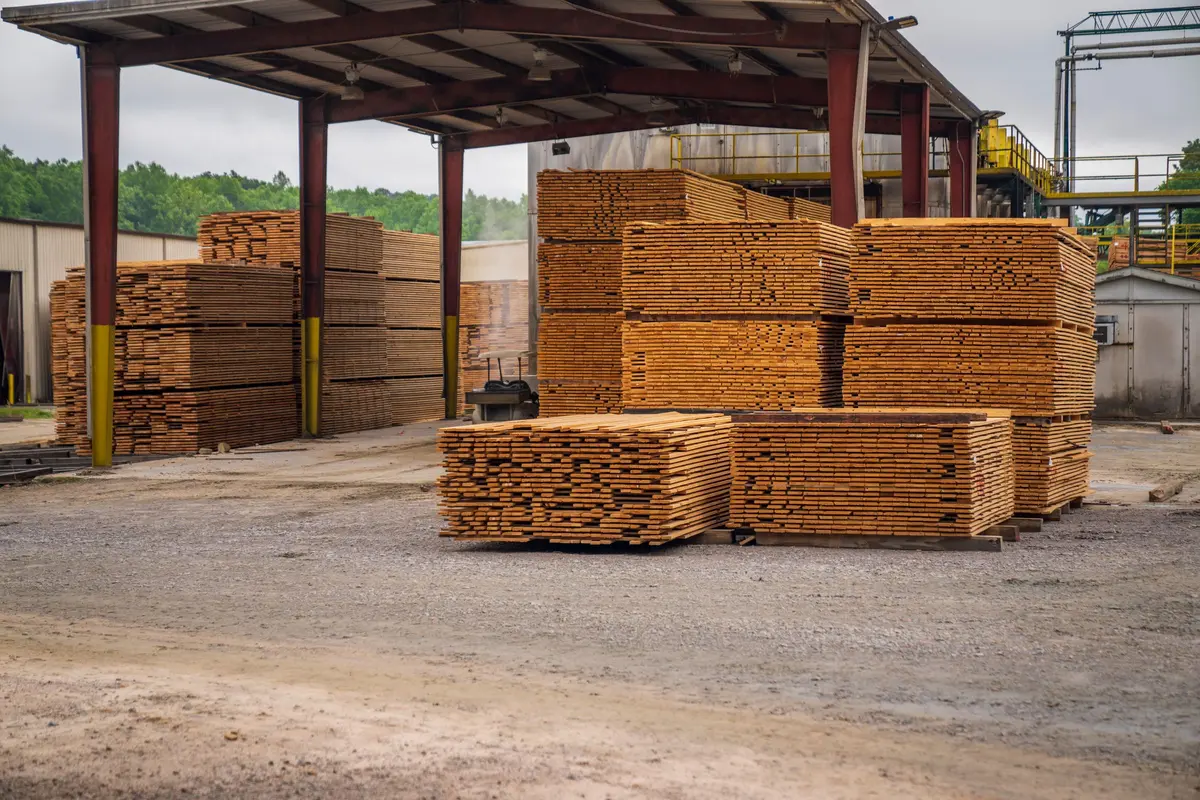 📘 Know-howNominal vs actual lumber sizes: what a 2x6 really is when you build a bedA 2x6 is 1 1/2 by 5 1/2 inches. The real size of every 2x board under the federal lumber standard, what it does to bed height and end cuts, and a lumber list.Read the guide
Sources
- Garden Journal (template with instructions), N.C. Cooperative Extension, Forsyth County Center. Checked October 22, 2026.
- Crop Rotation in the Vegetable Garden, Iowa State University Extension and Outreach, Yard and Garden, published April 1, 2025. Checked October 22, 2026.
Planning guide, not a guarantee. See every source on the site on the sources page. Spotted an error? Tell us.