📘 Know-howBeds6 min read
How to plan next year's garden from this year's harvest
Quick answer
For each crop, divide the season's pounds by the feet of row to get pounds per foot, then divide next year's goal by that number to get next year's row. Bush beans that gave 11 lb from 16 ft come to 0.69 lb a foot, so 20 lb next year takes 30 ft. Then move each plant family to a different bed; Iowa State Extension suggests 3 to 4 years before a family returns to the same spot.
Source: Iowa State Extension, Crop Rotation in the Vegetable Garden, checked October 22, 2026.

The idea
Why this year's record beats a guess
Most garden plans start in January with a catalog and a hunch. By then the beans that buried you in July and the lettuce that bolted early are a blur. A record made at the end of the season keeps the real numbers: how much each row gave, when it started and stopped, and what you would change.
Extension record books ask the same questions. The University of Vermont Extension 4-H record has columns for days to harvest, a yield grade of poor, good or super, and a plain yes or no for planting it again. Its point is that the record lets you look back on the year and decide what to change. N.C. Cooperative Extension in Forsyth County says a harvest log in pounds shows which crops and varieties are most productive in your garden, and which may not be good choices next time.
Source: UVM Extension, 4-H Gardening Project Record, checked October 22, 2026; N.C. Cooperative Extension Forsyth County, Garden Journal template, checked October 22, 2026.
The arithmetic
Turn pounds into next year's row
Take one bed with three crops. Two 8 ft rows of bush beans gave 11 lb, which is 6.88 lb per 10 ft. Mississippi State Extension's average for bush snap beans is 60 lb per 100 ft, or 9.6 lb for 16 ft, so the beans did 115% of it. Four tomato plants on 8 ft gave 38 lb against an average of 10 lb for that row. Eight feet of leaf lettuce gave 2.5 lb against 4 lb.
Source: Mississippi State Extension, vegetable planting guide, checked October 21, 2026.
Now set a goal for each crop and divide it by this year's pounds per foot. The beans: 20 lb ÷ (11 ÷ 16) is 29.1 ft, so plant 30 ft. The tomatoes gave more than the household used, so the goal drops to 25 lb: 25 ÷ (38 ÷ 4) is 2.6 plants, so three plants in about 6 ft. The lettuce goal of 4 lb takes 13 ft. Round up every time; a short row can't make up the gap.
- 115%beans against the extension averageArithmetic
- 30 ftof beans for 20 lb next yearArithmetic
- 60 lbper 100 ft, bush snap bean averageMississippi State Extension, vegetable planting guide, October 21, 2026
- 3 to 4 yrbefore a plant family returns to a bedIowa State Extension, Crop Rotation in the Vegetable Garden, October 22, 2026
Step by step
Build next year's plan in one sitting
Lay out the season
Put this year's bed map, harvest log and planting dates on one table. If you didn't weigh, estimate in pounds and mark each guess with a question mark.
Work out pounds per 10 ft
Divide each crop's total by its feet of row and multiply by 10. That puts a long row and a short row on the same footing.
Grade each crop
Write grow more, grow less or keep beside each crop. Go by what the household used as well as the yield. A big harvest nobody ate means grow less.
Size the rows
Divide each goal by this year's pounds per foot and round up. Add the rows and check they fit the beds you have.
Move each family
Give each plant family a different bed from this year. Iowa State Extension groups tomatoes and peppers as nightshades, beans and peas as the pea family, cucumbers and squash as gourds, and lettuce in the sunflower family.
Source: Iowa State Extension, Crop Rotation in the Vegetable Garden, checked October 22, 2026.
Shift the dates
Compare each crop's first pick with the planting date plus the packet's days to harvest. Forsyth County's journal says these dates help you adjust next year's planting schedule.
Source: N.C. Cooperative Extension Forsyth County, Garden Journal template, checked October 22, 2026.
Where it goes
Rotate by plant family, one bed a year
Iowa State Extension's advice is to keep a plant family out of the same spot for 3 to 4 years, or 5 or more if you can. It notes that three or four raised beds make rotation straightforward, and that rotating as best you can still helps when the garden is small. The simplest plan with four beds is to move every family one bed over each year.
Source: Iowa State Extension, Crop Rotation in the Vegetable Garden, checked October 22, 2026.
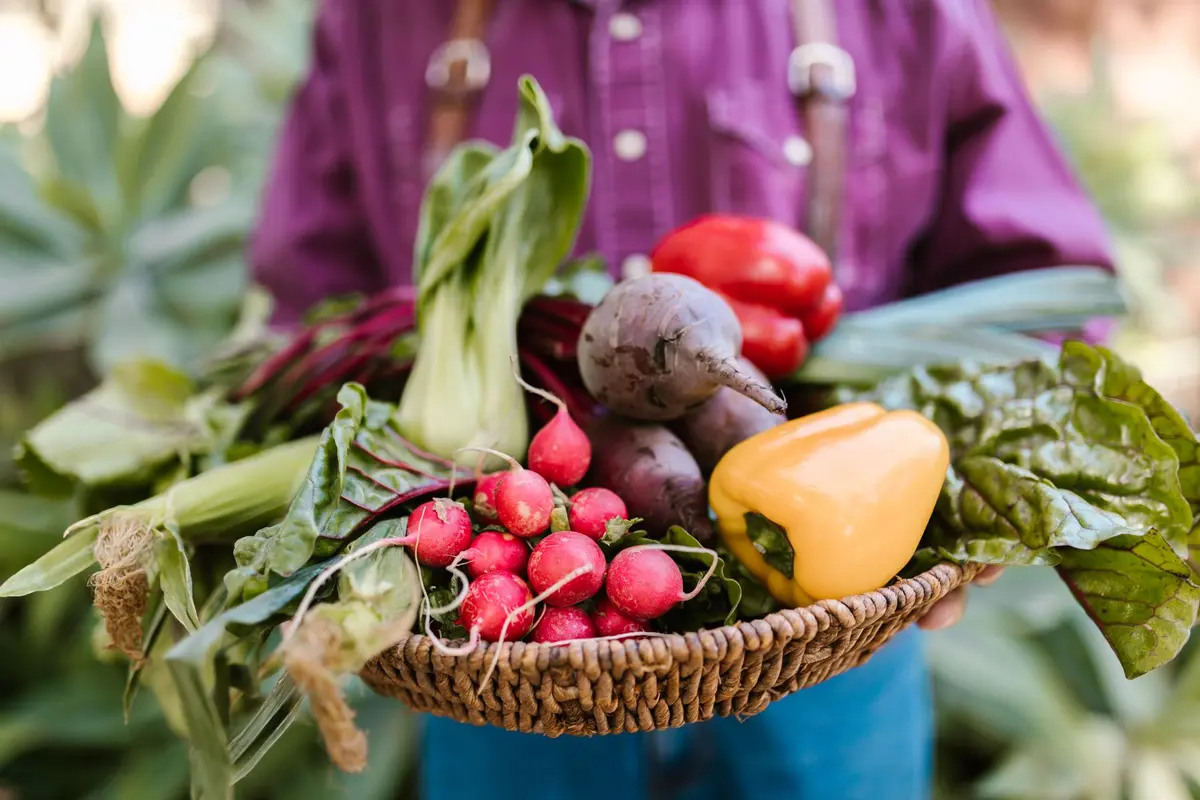
Write the year and the families on the bed map before you put it away. Iowa State suggests a log, a map, a diagram or even a photo of the beds. Any of them works as long as you can find it in spring.
Source: Iowa State Extension, Crop Rotation in the Vegetable Garden, checked October 22, 2026.
Print it, tick it off
Next-year plan checklist
Run through it once after the last harvest, with the season's record in front of you.
- Bed map, harvest log and planting dates together on one table
- Season total in pounds for every crop (guesses marked with ?)
- Pounds per 10 ft worked out for each crop
- Grow more, grow less or keep written beside each crop
- Next year's row for each goal, rounded up
- Rows added up and checked against the beds you have
- Each plant family moved to a different bed
- Planting dates moved earlier or later where the first pick came off schedule
What people learn the second year
Tips and tricks
- Plan from what you used. Ask what ran out first and what you gave away by the bagful. Those two answers set the goals better than the yield alone.
- Change one thing per crop. If you move the beans, keep the variety and the date the same. Change two things at once and next fall you won't know which one helped.
- Keep the plan with the seed box. Fold the plan into the seed box or jar. When the January order comes around, the row lengths are right there.
- Use the extension average only at the start. The average is a yardstick for a first season. Once you have one weighed year, your own pounds per foot plans better than any table.
Common questions
Questions
How do I know how much to plant next year?
Divide the pounds you want by this year's pounds per foot of row, then round up. If 16 ft of beans gave 11 lb and you want 20 lb, that's 20 ÷ 0.69 = 29.1 ft, so plant 30 ft.
What if I didn't weigh anything this year?
Use an extension average for the first year. Mississippi State Extension lists bush snap beans at 60 lb per 100 ft of row and tomatoes at 125 lb. Then weigh next season's picks so the year after runs on your own numbers.
Source: Mississippi State Extension, vegetable planting guide, checked October 21, 2026.
How many years should I wait before planting tomatoes in the same bed?
Iowa State Extension suggests keeping a plant family out of the same spot for 3 to 4 years, or 5 or more if possible. Tomatoes share a family with peppers, potatoes and eggplant, so count those too.
Source: Iowa State Extension, Crop Rotation in the Vegetable Garden, checked October 22, 2026.
Can I rotate crops with only one or two raised beds?
Yes, as best you can. Iowa State Extension says rotating within the space you have still helps. With two beds, swap the families each year; with one, split it into halves or quarters and move families between them.
Source: Iowa State Extension, Crop Rotation in the Vegetable Garden, checked October 22, 2026.
When should I make next year's garden plan?
Right after the last harvest, while you still remember which rows did well. Write the grades and row lengths then, and order seed against that plan in winter.
The arithmetic, done for you
Tools for this job
- 🧺 CalculatorHarvest yield calculatorAdd up a season of picks, see pounds per 10 ft of row against an extension average, and size next year's row for the harvest you want.Open the tool
- 🌱 CalculatorSeed quantity calculatorHow many seeds your rows take, how many to keep on hand once germination is allowed for, and how many packets or ounces to order.Open the tool
Keep reading
More guides
 📘 Know-howAre old seeds still good? How long seed keeps, and a 10-seed testHow many years vegetable seed keeps in cool, dry storage, how to sprout 10 seeds on a paper towel, and what to do with the count.Read the guide
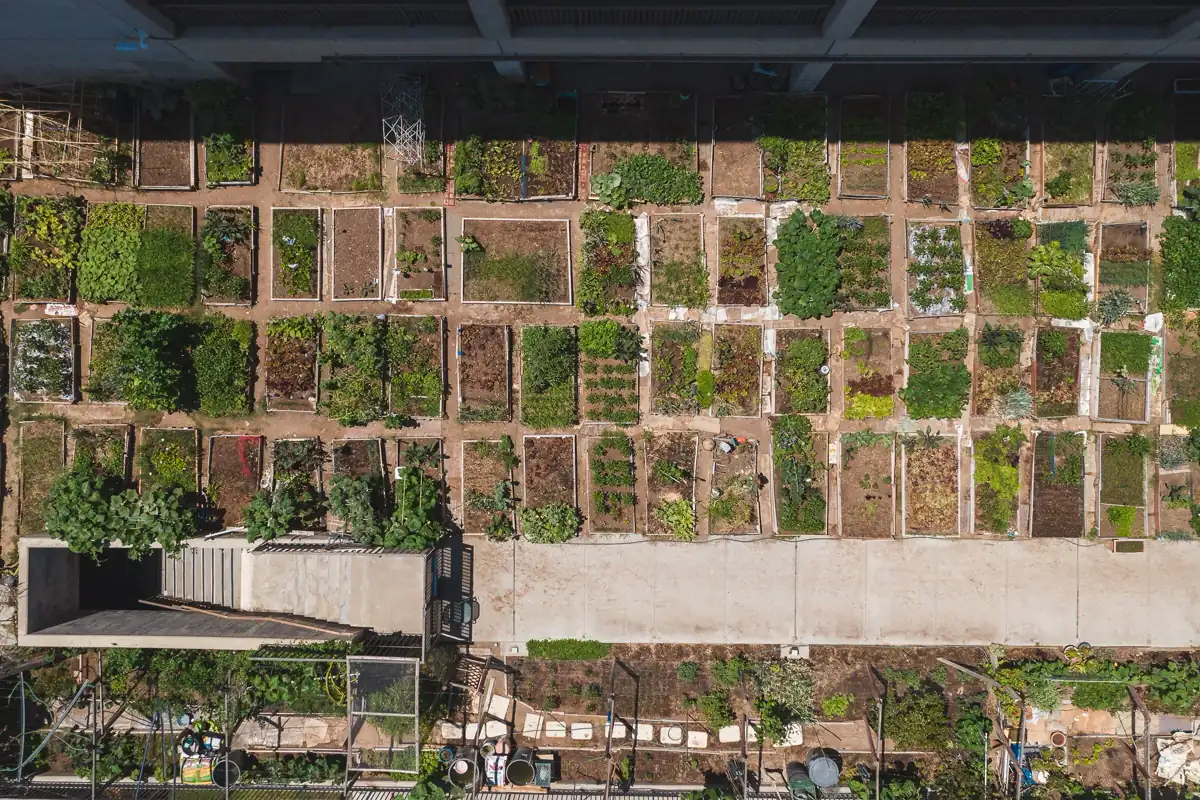 ✅ ChecklistHow to draw a garden bed map you'll actually use next yearMeasure the beds, pick a scale like 1 square = 1 foot, and mark what went where and when. Next spring the map tells you where each crop family goes.Read the guide
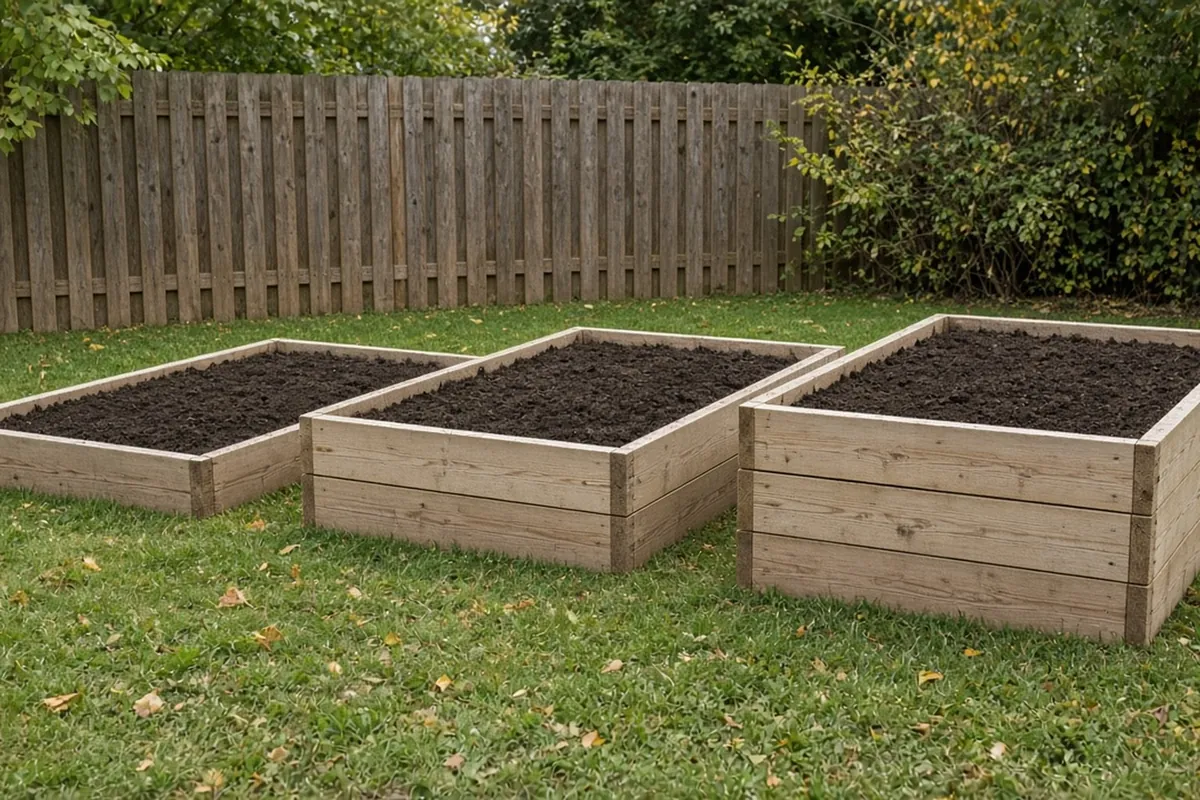 📘 Know-howHow tall to build a raised bed: real board heights and the depths extension pages giveTwo 2x6 boards make an 11 inch bed, enough on open ground for most crops. When to go to 16 1/2 or 24 inches, and what each extra board costs in lumber and soil.Read the guide
 📘 Know-howNominal vs actual lumber sizes: what a 2x6 really is when you build a bedA 2x6 is 1 1/2 by 5 1/2 inches. The real size of every 2x board under the federal lumber standard, what it does to bed height and end cuts, and a lumber list.Read the guide
Sources
- Crop Rotation in the Vegetable Garden, Iowa State University Extension and Outreach, Yard and Garden, published April 1, 2025. Checked October 22, 2026.
- 4-H Gardening Project Record, University of Vermont Extension (4-H), published April 15, 2014. Checked October 22, 2026.
- Garden Journal (template with instructions), N.C. Cooperative Extension, Forsyth County Center. Checked October 22, 2026.
- Vegetable Gardens: Planting Guide, Mississippi State University Extension Service. Checked October 21, 2026.
Planning guide, not a guarantee. See every source on the site on the sources page. Spotted an error? Tell us.