✅ ChecklistBeds4 min read
How to weigh and log your garden harvest without it becoming a chore
Quick answer
Keep a kitchen scale and one sheet by the door. Zero the empty basket, weigh each pick as it comes in, and write the pounds under that day's date in the crop's row. A scale in ounces works too: 16 ounces make a pound, so six bean picks of 176 oz come to 11 lb. Add each row at the end of the season.
Source: N.C. Cooperative Extension Forsyth County, Garden Journal template, checked October 22, 2026; NIST Handbook 44 (2026), Appendix C, General Tables of Units of Measurement, checked October 22, 2026.

The problem
Why most harvest logs stop in July
A harvest log usually starts well. The first beans get weighed, the first tomatoes too. Then picks pile up, the scale is in a kitchen drawer, the notebook is somewhere else, and by August the log has a gap that never gets filled. At the end of the season you're left guessing.
The fix is to make weighing take seconds. University of Illinois Extension's youth garden journal lists weighing the harvest as a way to record your progress. N.C. Cooperative Extension in Forsyth County keeps it to one page: crops down the side, a date at the top of each column, pounds in the boxes and a total at the end.
Source: Illinois Extension, Garden Journal (youth gardening), checked October 22, 2026; N.C. Cooperative Extension Forsyth County, Garden Journal template, checked October 22, 2026.
Set it up once
A scale, a basket and one sheet
Rule the sheet the Forsyth County way. Put the bed number and crop on each row, leave space for a date at the top of each column, and keep the last column for the total. Write weights in pounds. Each column gets its date on picking day, so one sheet covers several weeks. Start a fresh sheet when it fills.
Source: N.C. Cooperative Extension Forsyth County, Garden Journal template, checked October 22, 2026.
Park the scale by the door
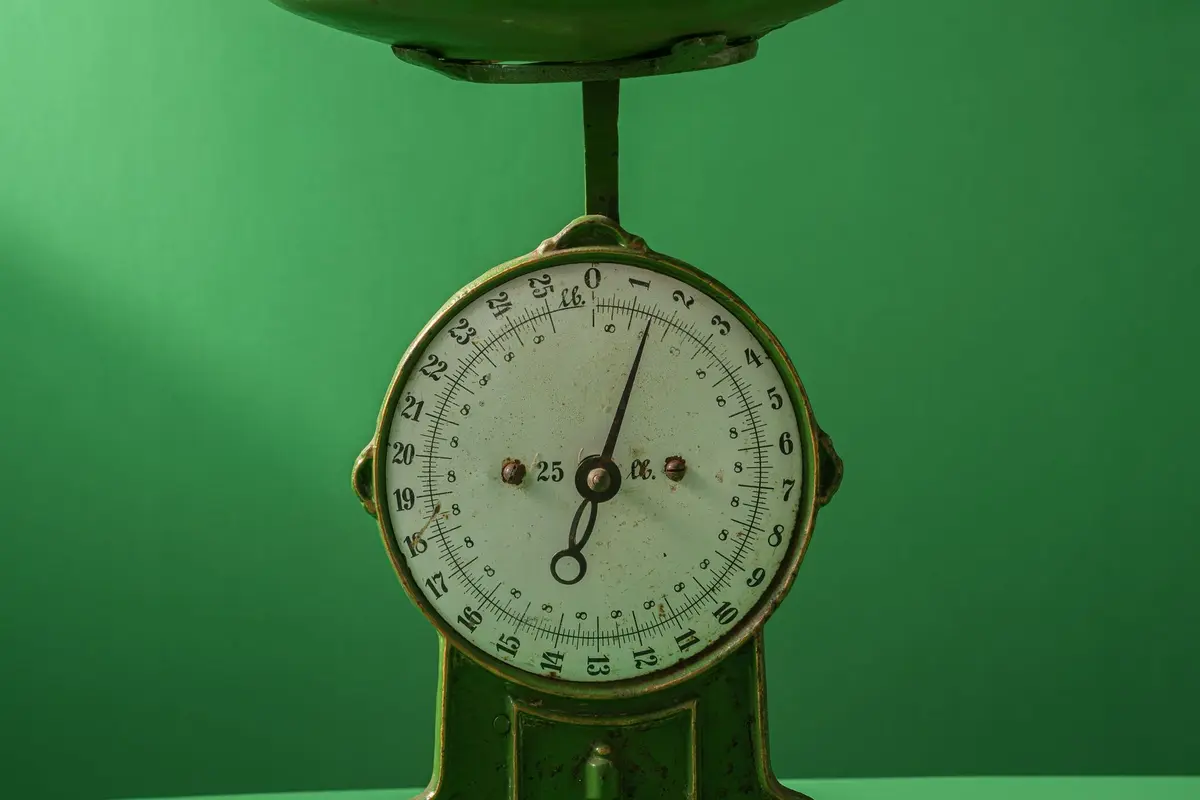
A kitchen scale on a shelf by the back door gets used. Tape the log sheet and a pencil next to it.
Zero the basket
Set the empty basket on the scale and press tare. The screen then shows the produce only, pick after pick.
Weigh before you trim
Weigh each pick as it comes in, before washing or trimming. Doing it the same way all season keeps the numbers comparable.
Write it under the date
Write the weight in the crop's row under today's date. If you miss a pick, write your best guess and a question mark.
Add up each row
When a crop is done, total its row and note the first and last pick dates. Forsyth County's journal records both.
Source: N.C. Cooperative Extension Forsyth County, Garden Journal template, checked October 22, 2026.
The arithmetic
Ounces, pounds and big hauls
Many kitchen scales read in ounces or switch between units. NIST Handbook 44 sets 16 ounces to the pound, so divide ounces by 16. Six bean picks of 24, 36, 40, 32, 28 and 16 oz add up to 176 oz, which is 11 lb.
Source: NIST Handbook 44 (2026), Appendix C, General Tables of Units of Measurement, checked October 22, 2026.
- 16 ozmake 1 lbNIST Handbook 44 (2026), Appendix C, General Tables of Units of Measurement, October 22, 2026
- 176 ozof beans = 11 lb for the seasonArithmetic
- 6.88 lbper 10 ft from 16 ft of rowArithmetic
- 60 lbper 100 ft, bush snap bean averageMississippi State Extension, vegetable planting guide, October 21, 2026
Squash, potatoes and pumpkins can be too heavy for a kitchen scale. Use a bathroom scale instead: weigh yourself, then weigh yourself holding the full bin, and subtract. Weigh the empty bin the same way once and take that off too. For a 20 lb haul it's close enough to plan from.
Season's end
Grade each crop before you clear the bed
When the last pick is in, finish the record. The University of Vermont Extension 4-H record grades each crop's yield as poor, good or super, with a yes or no for planting it again. Add those two marks beside each row total and the log is ready for next year's plan.
Source: UVM Extension, 4-H Gardening Project Record, checked October 22, 2026.
Print it, tick it off
Harvest log checklist
Set it up before the first pick and check it once a month.
- Scale on a shelf by the door where the harvest comes in
- Log sheet and pencil taped next to the scale
- Rows ruled: bed, crop, a column per date, total
- Empty basket zeroed (tare) before each pick
- Weights written in pounds (ounces ÷ 16)
- Missed picks written as a guess with a ?
- First and last pick dates noted for each crop
- Row totals, grade and plant-again mark filled in at season's end
What people learn the second year
Tips and tricks
- Weigh the bin once, write it on the bin. Mark the empty weight on the side of each harvest bin with a marker. Then you can subtract it even when the scale has no tare button.
- Round to a quarter pound. You don't need ounces of accuracy to plan rows. Quarter pounds keep the sheet quick and easy to add up.
- Keep one log for the whole yard. A sheet per bed gets lost. One sheet with the bed number on each row keeps every crop in one place.
- Photograph the sheet each month. A phone photo at the end of each month means a rained-on or lost sheet doesn't take the season with it.
Common questions
Questions
Should I weigh vegetables before or after washing?
Either is fine as long as you do it the same way every time. Weighing straight from the garden, before washing or trimming, is the easiest habit to keep.
How do I convert ounces to pounds for my harvest log?
Divide by 16, since NIST Handbook 44 sets 16 ounces to the pound. For example, 40 oz ÷ 16 = 2.5 lb.
Source: NIST Handbook 44 (2026), Appendix C, General Tables of Units of Measurement, checked October 22, 2026.
What should a harvest log include?
N.C. Cooperative Extension's Forsyth County harvest log has the bed number, the crop, a column for each picking date with the pounds, and a total. Add the first and last pick dates and a grade at the end of the season.
Source: N.C. Cooperative Extension Forsyth County, Garden Journal template, checked October 22, 2026.
How do I weigh pumpkins or a big bin of potatoes?
Use a bathroom scale. Weigh yourself, then weigh yourself holding the bin, and subtract. Take off the empty bin's weight too.
What do I do with the harvest numbers?
Divide each crop's total by its feet of row to get pounds per foot, and use that to size next year's row for the harvest you want. The harvest yield calculator does the math.
The arithmetic, done for you
Tools for this job
- 🧺 CalculatorHarvest yield calculatorAdd up a season of picks, see pounds per 10 ft of row against an extension average, and size next year's row for the harvest you want.Open the tool
- 🧺 SectionAll beds toolsPlan a wooden raised bed: how many boards to buy, where to cut them, how tall the bed ends up and how much soil it will hold.See the section
Keep reading
More guides
 📘 Know-howAre old seeds still good? How long seed keeps, and a 10-seed testHow many years vegetable seed keeps in cool, dry storage, how to sprout 10 seeds on a paper towel, and what to do with the count.Read the guide
 ✅ ChecklistHow to draw a garden bed map you'll actually use next yearMeasure the beds, pick a scale like 1 square = 1 foot, and mark what went where and when. Next spring the map tells you where each crop family goes.Read the guide
 📘 Know-howHow tall to build a raised bed: real board heights and the depths extension pages giveTwo 2x6 boards make an 11 inch bed, enough on open ground for most crops. When to go to 16 1/2 or 24 inches, and what each extra board costs in lumber and soil.Read the guide
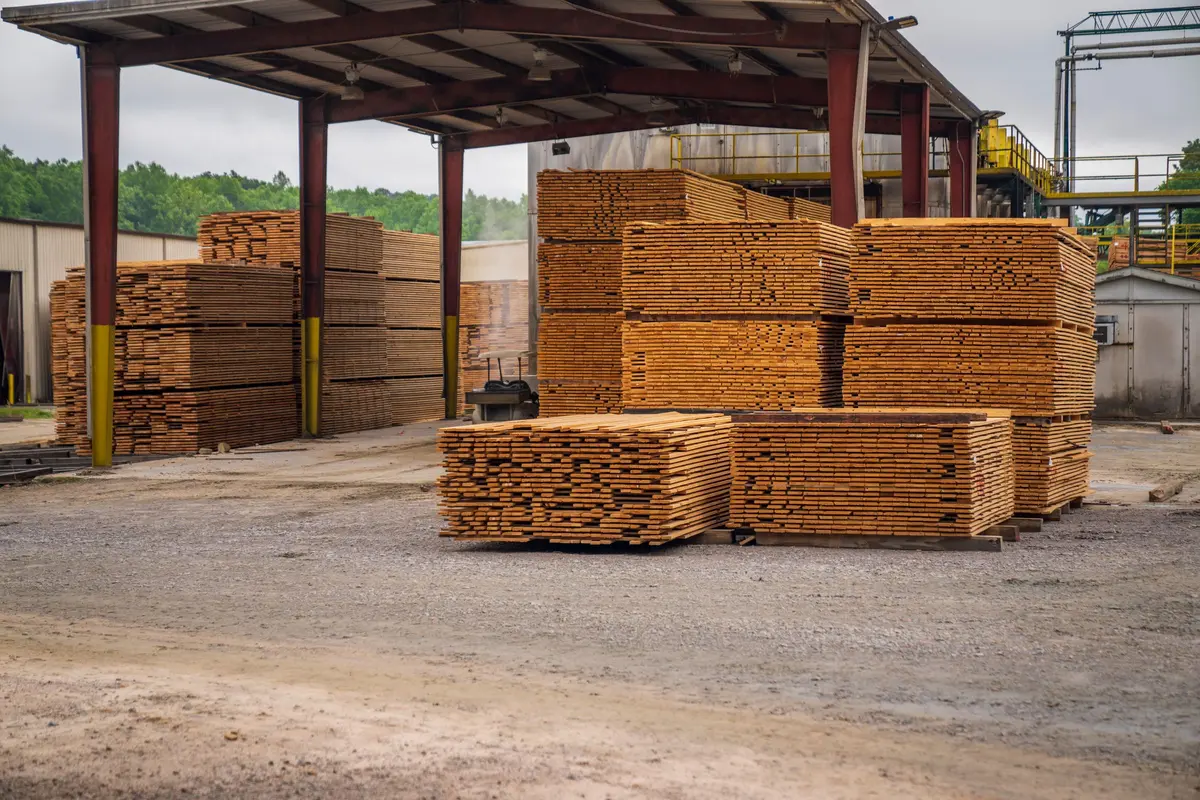 📘 Know-howNominal vs actual lumber sizes: what a 2x6 really is when you build a bedA 2x6 is 1 1/2 by 5 1/2 inches. The real size of every 2x board under the federal lumber standard, what it does to bed height and end cuts, and a lumber list.Read the guide
Sources
- Garden Journal (template with instructions), N.C. Cooperative Extension, Forsyth County Center. Checked October 22, 2026.
- Handbook 44 (2026), Appendix C. General Tables of Units of Measurement, National Institute of Standards and Technology (NIST), Office of Weights and Measures, published December 22, 2025. Checked October 22, 2026.
- Garden Journal, University of Illinois Extension. Checked October 22, 2026.
- Vegetable Gardens: Planting Guide, Mississippi State University Extension Service. Checked October 21, 2026.
- 4-H Gardening Project Record, University of Vermont Extension (4-H), published April 15, 2014. Checked October 22, 2026.
Planning guide, not a guarantee. See every source on the site on the sources page. Spotted an error? Tell us.