🧰 Problem solverBeds4 min read
Seed packet dates: what packed for, sell by and tested really mean
Quick answer
The dates are deadlines for selling the seed. They don't say when it stops growing. Packed for 2027 means the seed was sold for the 2027 season; in Minnesota that runs out on December 31, 2027. A sell by date is counted from the germination test: at most 12 months in Minnesota, 15 at retail in California. Stored cool and dry, tomato seed keeps about 3 years, so test 10 seeds before you toss a packet.
Source: Minnesota Dept. of Agriculture, home garden seed labels, checked October 20, 2026; CDFA, selling and labeling nonfarm seed (2023), checked October 20, 2026; UNL Extension G2090, seed storage and germination, checked October 14, 2026.

The problem
Good seed gets thrown out over a date
Sort a seed box in fall and you'll find packets marked with last year's season, or with a sell by date that has passed. Many people throw those out, since they look like food that has expired. A seed packet date works differently. It is a label rule for the seller, set by federal and state seed laws, and it says nothing exact about how long your seed will keep growing.
There are three dates you may see: a packed for year, a sell by or use before month, and, on weak seed only, the month and year of a germination test.
Source: Minnesota Dept. of Agriculture, home garden seed labels, checked October 20, 2026; CDFA, selling and labeling nonfarm seed (2023), checked October 20, 2026; 7 U.S.C. 1571, Federal Seed Act label rules, checked October 20, 2026.
The dates
What each date means
- Packed for. The season the seed was packed to be sold in. Minnesota's label guide says a packed for year expires on December 31 of the year stated.
- Sell by or use before. A month and year counted from the germination test. Minnesota allows at most 12 months after the test month; California allows up to 15 months at retail, and lets packets of 8 ounces or less print packed for a season instead.
- Tested, with Below Standard. Under the Federal Seed Act, vegetable seed in packets of 1 pound or less that falls below the germination standard must say Below Standard and print its germination rate and the month and year of the test.
Source: Minnesota Dept. of Agriculture, home garden seed labels, checked October 20, 2026; CDFA, selling and labeling nonfarm seed (2023), checked October 20, 2026; 7 U.S.C. 1571, Federal Seed Act label rules, checked October 20, 2026; 7 CFR 201.29, germination on small seed packets, checked October 14, 2026.
A packet with no percentage printed met the standard when it was tested: federal rules let small packets skip the rate when the seed meets the standard, which is 75% for tomato, 70% for garden beans and 55% for carrots.
Source: 7 CFR 201.29, germination on small seed packets, checked October 14, 2026; 7 CFR 201.31, vegetable seed germination standards, checked October 14, 2026.
- Dec 31when a Minnesota packed for year runs outMinnesota Dept. of Agriculture, home garden seed labels, October 20, 2026
- 12 momost a Minnesota sell by may run past the testMinnesota Dept. of Agriculture, home garden seed labels, October 20, 2026
- 15 moCalifornia retail limit after the testCDFA, selling and labeling nonfarm seed (2023), October 20, 2026
- 3 yrtomato seed, stored cool and dryUNL Extension G2090, seed storage and germination, October 14, 2026
The gap
The label runs out long before the seed
Take tomato seed tested in July 2026. Under the Federal Seed Act, it has to ship within five months of the test month, so by December 2026. A Minnesota sell by can run to July 2027 at the latest, and a California one to October 2027. Nebraska Extension's table gives tomato seed about 3 years in cool, dry storage, which takes the same seed to about July 2029.
Source: 7 U.S.C. 1571, Federal Seed Act label rules, checked October 20, 2026; Minnesota Dept. of Agriculture, home garden seed labels, checked October 20, 2026; CDFA, selling and labeling nonfarm seed (2023), checked October 20, 2026; UNL Extension G2090, seed storage and germination, checked October 14, 2026.
Step by step
Sort a seed box by its dates
Read each packet's date
Find the packed for year, the sell by month or the test date on the back, and write the year in big numbers on the front.
Look up how long the crop keeps
Nebraska Extension gives onion and parsnip about 1 year, pepper and sweet corn 2, beans, peas, carrots and tomato 3, and lettuce, cucumbers and radishes 5, all in cool, dry storage.
Source: UNL Extension G2090, seed storage and germination, checked October 14, 2026.
Mark the packets to test
Anything past its years, any Below Standard packet, and anything that sat somewhere hot goes in a test pile.
Sprout 10 seeds
Fold 10 seeds in a damp paper towel and keep it warm. Illinois Extension's line: 70 to 90% sprouted, sow a little thicker; under 70%, buy new seed.
Source: Illinois Extension, test seed viability (2017), checked October 14, 2026.
Write the result on the packet
Note the rate and the month you tested it. That's the number to type into the seed calculator when you plan the order.
Print it, tick it off
Seed box date check
One line per packet. Fill it in when you sort the box in fall or winter.
- Crop and variety
- Packed for year, sell by month or test date
- Below Standard rate, if printed
- Years the crop keeps in cool, dry storage
- Test pile: yes or no
- Towel test result and month
- Keep, sow thicker, or replace
What people learn the second year
Tips and tricks
- Write the year on the front. Dates are often small and on the back. A big year on the front saves turning every packet over.
- Below Standard is not a reject. It means the seed was sold below the federal germination standard and the real rate is printed. Plan with that rate and sow a little more. (7 U.S.C. 1571, Federal Seed Act label rules)
- Mind the short-lived crops. Onion and parsnip seed keeps about a year in cool, dry storage, so an onion packet from last season is worth testing first. (UNL Extension G2090, seed storage and germination)
- Keep the date check with the box. Fold the sheet into the seed box. Next year you only add new packets and retest the old ones.
Common questions
Questions
Can I use seeds after the packed for date?
Usually, if they were stored cool and dry. The packed for year is a selling deadline; in Minnesota it runs out on December 31 of that year. Nebraska Extension's table gives most vegetable seed 2 to 5 years in cool, dry storage. Test 10 seeds to be sure.
Source: Minnesota Dept. of Agriculture, home garden seed labels, checked October 20, 2026; UNL Extension G2090, seed storage and germination, checked October 14, 2026.
What does Below Standard mean on a seed packet?
The seed germinated below the federal standard for that crop when it was tested. The Federal Seed Act makes the packet say Below Standard and print its germination rate and the month and year of the test.
Source: 7 U.S.C. 1571, Federal Seed Act label rules, checked October 20, 2026.
Why doesn't my seed packet show a germination rate?
Federal rules let vegetable seed in packets of 1 pound or less skip the rate and test date when the seed meets the germination standard, such as 75% for tomato.
Source: 7 CFR 201.29, germination on small seed packets, checked October 14, 2026; 7 CFR 201.31, vegetable seed germination standards, checked October 14, 2026.
How is the sell by date set?
It's counted from the germination test. Minnesota allows a sell by at most 12 months after the test month; California allows up to 15 months at retail. Other states set their own limits.
Source: Minnesota Dept. of Agriculture, home garden seed labels, checked October 20, 2026; CDFA, selling and labeling nonfarm seed (2023), checked October 20, 2026.
The arithmetic, done for you
Tools for this job
- 🌱 CalculatorSeed quantity calculatorHow many seeds your rows take, how many to keep on hand once germination is allowed for, and how many packets or ounces to order.Open the tool
- 🧺 SectionAll beds toolsPlan a wooden raised bed: how many boards to buy, where to cut them, how tall the bed ends up and how much soil it will hold.See the section
Keep reading
More guides
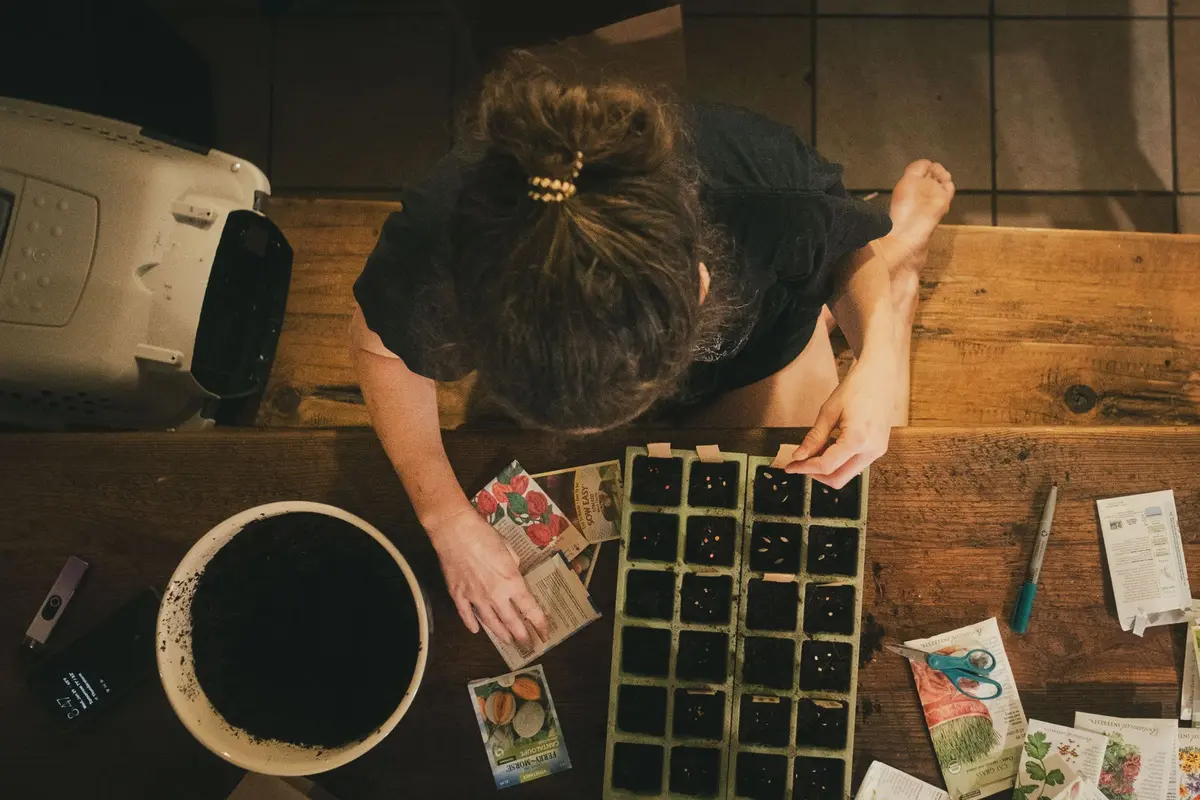
 📘 Know-howAre old seeds still good? How long seed keeps, and a 10-seed testHow many years vegetable seed keeps in cool, dry storage, how to sprout 10 seeds on a paper towel, and what to do with the count.Read the guide
 ✅ ChecklistHow to draw a garden bed map you'll actually use next yearMeasure the beds, pick a scale like 1 square = 1 foot, and mark what went where and when. Next spring the map tells you where each crop family goes.Read the guide
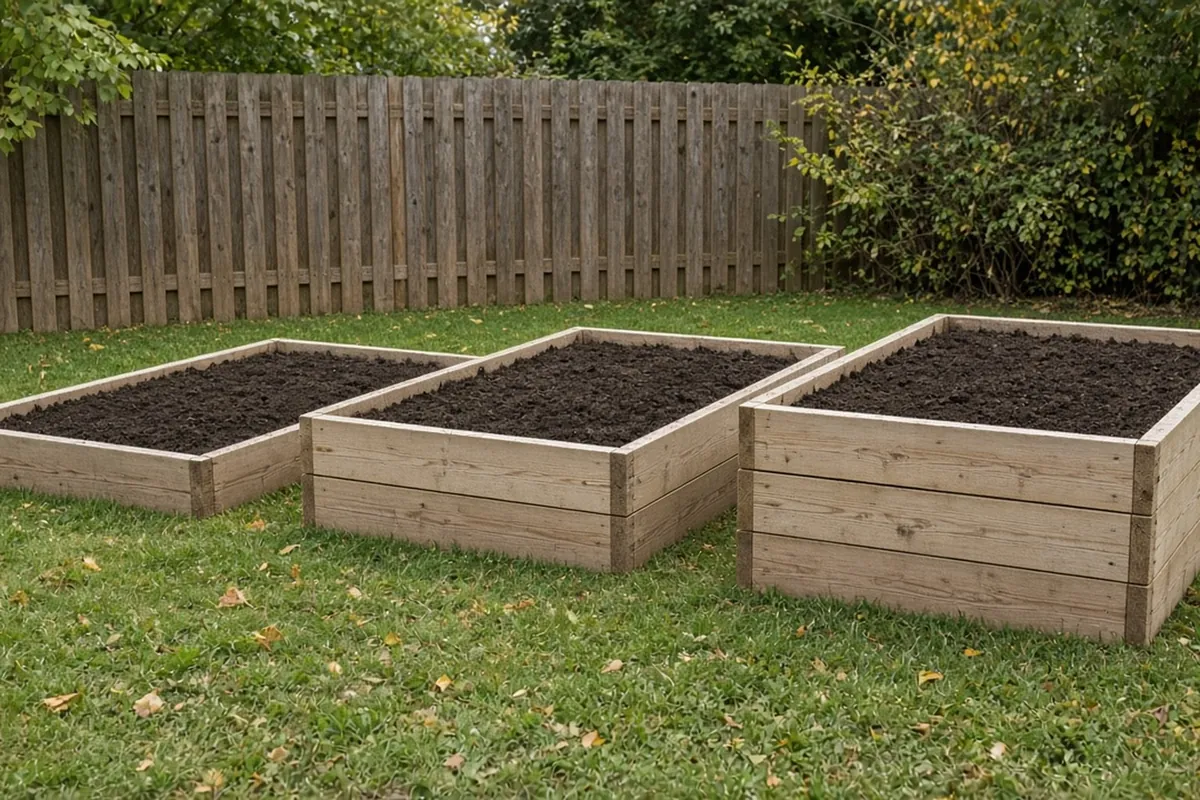 📘 Know-howHow tall to build a raised bed: real board heights and the depths extension pages giveTwo 2x6 boards make an 11 inch bed, enough on open ground for most crops. When to go to 16 1/2 or 24 inches, and what each extra board costs in lumber and soil.Read the guide
 📘 Know-howNominal vs actual lumber sizes: what a 2x6 really is when you build a bedA 2x6 is 1 1/2 by 5 1/2 inches. The real size of every 2x board under the federal lumber standard, what it does to bed height and end cuts, and a lumber list.Read the guide
Sources
- Labeling Vegetable & Flower Seed for Home Gardeners in Minnesota, Minnesota Department of Agriculture, Seed Unit, published July 21, 2017. Checked October 20, 2026.
- Selling and Labeling Seed for Nonfarm Use, California Department of Food and Agriculture, Nursery, Seed and Cotton Program, published July 1, 2023. Checked October 20, 2026.
- Vegetable Garden Seed Storage and Germination Requirements (G2090), University of Nebraska-Lincoln Extension, published June 1, 2011. Checked October 14, 2026.
- 7 U.S.C. 1571, Prohibitions relating to interstate commerce (seed labeling), US Code, Federal Seed Act (Cornell LII mirror of 7 U.S.C. 1571), published August 9, 1939. Checked October 20, 2026.
- 7 CFR 201.29, Germination of vegetable seed in containers of 1 pound or less, USDA Agricultural Marketing Service (Federal Seed Act regulations, eCFR), published July 7, 2020. Checked October 14, 2026.
- 7 CFR 201.31, Minimum germination standards for vegetable seeds in interstate commerce, USDA Agricultural Marketing Service (Federal Seed Act regulations, eCFR), published July 7, 2020. Checked October 14, 2026.
- Test seed viability (ILRiverHort blog), University of Illinois Extension, published February 3, 2017. Checked October 14, 2026.
Planning guide, not a guarantee. See every source on the site on the sources page. Spotted an error? Tell us.