🧭 Garden systemZones8 stepsFree working copy
Seed-starting countdown, zones 6 to 7: from frost date to sow day
Quick answer
In zones 6 to 7, count back from your own last frost date, not the zone. Wisconsin Extension starts tomatoes 6 to 8 weeks before the last frost. Maryland Extension starts peppers 8 to 10 weeks before planting out, and Illinois Extension starts broccoli 4 to 6 weeks before the last frost. At zip 43215 (Columbus, Ohio, zone 6b) the typical last frost is April 20, so tomatoes go in February 23 to March 9. At 63101 (St. Louis, zone 7a) it's April 1, so February 4 to 18.
Source: Wisconsin Extension Dane County, It's Time to Start Seeds, checked October 16, 2026; Maryland Extension, Starting Vegetable Seeds Indoors, checked October 16, 2026; Illinois Extension, When should I start my seeds?, checked October 16, 2026; NOAA 1991-2020 U.S. Climate Normals, annual/seasonal, checked October 7, 2026; PRISM 2023 USDA hardiness zone GIS datasets and zip-code listing, checked October 6, 2026.

Decide first
Start seeds yourself, skip it, or get help?
Do it yourself
Start them yourself
Worth it if you have a bright window or a light, a spot that stays 65 to 75°F for the trays, and a few minutes a day for 5 to 10 weeks. Maryland Extension gives those germination temperatures and keeps lights 2 to 6 inches above the plants for 14 to 16 hours a day.
Source: Maryland Extension, Starting Vegetable Seeds Indoors, checked October 16, 2026.
Skip it
Skip the trays this year
If you only want a few tomato or pepper plants, buy transplants in spring and keep just two dates from this page: the hardening-off start and the planting-out day. Crops you sow straight into the bed don't need a countdown at all.
Get help
Ask your county extension office
For which varieties do well in your county, or if seedlings look wrong, call your county Cooperative Extension office. This page covers dates and counts only, not plant problems.
- 6 to 8 wktomatoes before the last frost (Wisconsin)Wisconsin Extension Dane County, It's Time to Start Seeds, October 16, 2026
- 8 to 10 wkpeppers before planting out (Maryland)Maryland Extension, Starting Vegetable Seeds Indoors, October 16, 2026
- 19 daysbetween the typical last frosts in Columbus and St. LouisNOAA 1991-2020 U.S. Climate Normals, annual/seasonal, October 7, 2026
- 1 to 2 wkof hardening off before planting outMaryland Extension, Hardening Off Vegetable Seedlings, October 16, 2026
From a January evening to planting-out day
The steps, in order
Look up your last frost date
Type your zip code into the frost date lookup and write down two dates: the typical (50%) last frost and the 1 in 10 date. At 43215 in Columbus, Ohio, they're April 20 and May 7. At 63101 in St. Louis they're April 1 and April 18.
Have ready: Your zip code and the countdown sheet.
Source: NOAA 1991-2020 U.S. Climate Normals, annual/seasonal, checked October 7, 2026.
Pick your planting-out day
Choose the day the warm crops go into the bed and write it under the frost dates. The example uses the 1 in 10 date, May 7 in Columbus. NOAA's 50% date still has a freeze after it in about half of springs.
Have ready: The two dates from step 1.
Source: NOAA 1991-2020 annual/seasonal normals documentation, checked October 7, 2026.
Copy the weeks for each crop
List each crop with the weeks on its packet and the words around them. Illinois Extension says a packet may read "4-6 weeks before your average last frost date." Maryland's list counts from planting out instead: tomato 5 to 6 weeks, pepper 8 to 10.
Have ready: The seed packets, or your state extension's list.
Source: Illinois Extension, When should I start my seeds?, checked October 16, 2026; Maryland Extension, Starting Vegetable Seeds Indoors, checked October 16, 2026.
Count back to a sow window
Multiply each end of the range by 7 and count those days back from the date the number names. Columbus tomatoes at 6 to 8 weeks before April 20: February 23 to March 9. Peppers at 8 to 10 weeks before May 7: February 26 to March 12.
Have ready: A paper calendar for February to May.
Count seeds for each tray
Under federal seed rules, tomato seed only has to sprout at 75% and pepper at 55%. For 12 pepper plants, have 22 seeds on hand (12 ÷ 0.55). Order now if you're short.
Have ready: The packets and your plant count for each crop.
Source: 7 CFR 201.31, vegetable seed germination standards, checked October 14, 2026.
Sow on the first day of each window
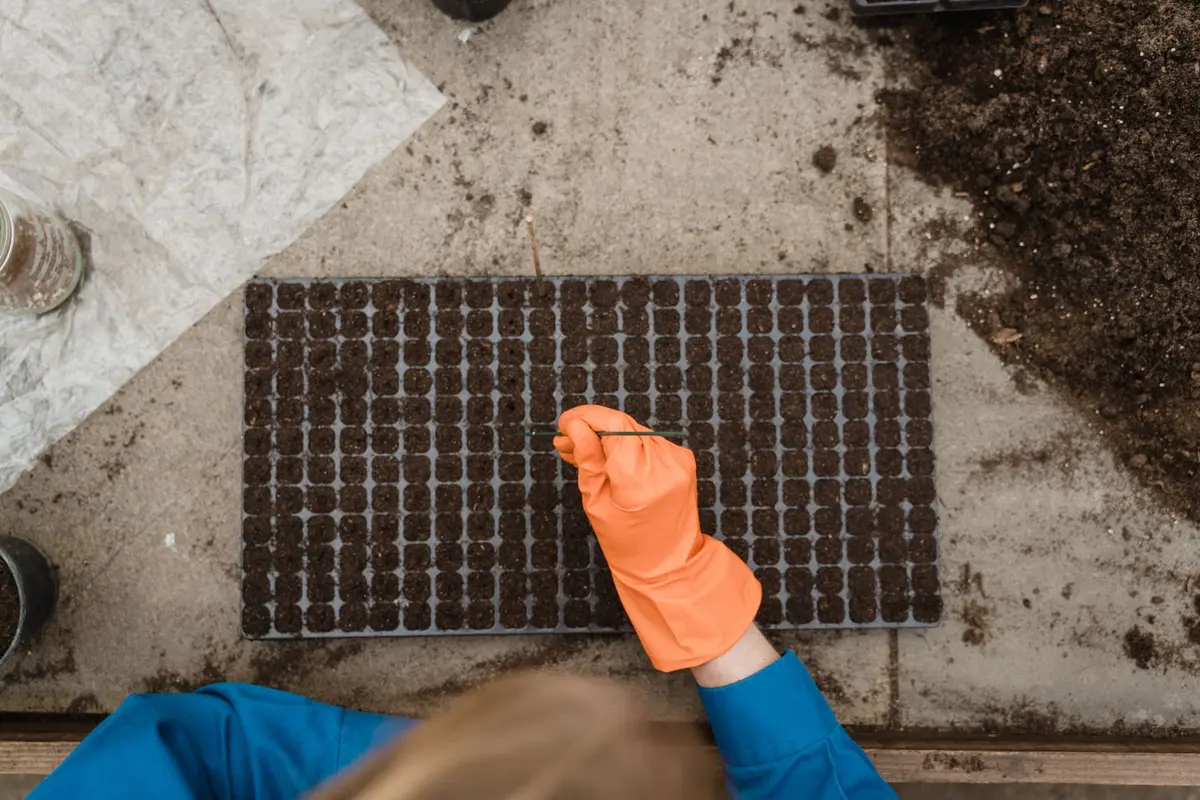
Sow when a window opens, not before. Maryland Extension keeps the mix at 65 to 75°F to sprout and the lights 2 to 6 inches above the plants, 14 to 16 hours a day. It calls sowing too early a common mistake that gives tall, root-bound plants.
Have ready: Trays, seed-starting mix, labels and a marker.
Source: Maryland Extension, Starting Vegetable Seeds Indoors, checked October 16, 2026.
Harden off for two weeks
Maryland Extension starts 1 to 2 weeks before planting out: shade first, a little more sun each day, inside at night unless it stays at 50°F or above. Skip days below 45°F or windy days. Utah State begins with an hour in the afternoon. In Columbus, start April 23.
Have ready: A sheltered, shady spot by the door.
Source: Maryland Extension, Hardening Off Vegetable Seedlings, checked October 16, 2026; Utah State Extension, Grow Your Own Transplants at Home, checked October 16, 2026.
Plant out and write it down
On planting-out day, set the plants in and note the date and how big they were next to each crop. Next winter, slide each window a week earlier or later from there.
Have ready: The countdown sheet and a pen.
Free, one page, black and white
Print the working copy
Seed-start countdown: the steps above as a checklist with a date box for each, on one US Letter page.
If a step gets skipped
What goes wrong
⚠️
Sowing too early
Maryland Extension calls this a common mistake: plants grow tall and root-bound and don't do well in the garden. When the range leaves a choice, take the later end.
Source: Maryland Extension, Starting Vegetable Seeds Indoors, checked October 16, 2026.
⚠️
Counting from the wrong date
Some numbers count from the last frost, others from planting out. For a Columbus tomato, Wisconsin's rule gives February 23 to March 9 and Maryland's gives March 26 to April 2, about 4 weeks apart. Write down which date each number counts from.
Source: Wisconsin Extension Dane County, It's Time to Start Seeds, checked October 16, 2026; Maryland Extension, Starting Vegetable Seeds Indoors, checked October 16, 2026; NOAA 1991-2020 U.S. Climate Normals, annual/seasonal, checked October 7, 2026.
⚠️
Going by the zone instead of the frost date
Columbus (6b) and St. Louis (7a) are both in this band, yet their typical last frosts are April 20 and April 1. A zone chart would sow both yards in the same week. Their frost dates put them about 3 weeks apart.
Source: NOAA 1991-2020 U.S. Climate Normals, annual/seasonal, checked October 7, 2026; PRISM 2023 USDA hardiness zone GIS datasets and zip-code listing, checked October 6, 2026.
⚠️
Counting by months
February has 28 days, so "two months before" lands on a different day than 8 weeks. Count back by 7 days at a time on a real calendar.
⚠️
Putting seedlings straight out
Plants that go from the windowsill to the bed in one day skip hardening off. Maryland Extension asks for 1 to 2 weeks of more sun each day, and Wisconsin Extension says 7 to 10 days at a minimum.
Source: Maryland Extension, Hardening Off Vegetable Seedlings, checked October 16, 2026; Wisconsin Extension Dane County, It's Time to Start Seeds, checked October 16, 2026.
When the steps change
Variants
🪴
Warm end of the band (7a, 7b)
Earlier frost dates pull everything forward. In St. Louis (April 1 typical, April 18 out), tomatoes go in February 4 to 18, peppers February 7 to 21 and broccoli February 18 to March 4, and hardening off starts April 4.
Source: NOAA 1991-2020 U.S. Climate Normals, annual/seasonal, checked October 7, 2026; Wisconsin Extension Dane County, It's Time to Start Seeds, checked October 16, 2026; Maryland Extension, Starting Vegetable Seeds Indoors, checked October 16, 2026; Illinois Extension, When should I start my seeds?, checked October 16, 2026.
🏙️
Cool end of the band (6a, 6b)
Later frost dates push everything back. In Columbus (April 20 typical, May 7 out), tomatoes go in February 23 to March 9, peppers February 26 to March 12 and broccoli March 9 to 23.
Source: NOAA 1991-2020 U.S. Climate Normals, annual/seasonal, checked October 7, 2026; Wisconsin Extension Dane County, It's Time to Start Seeds, checked October 16, 2026; Maryland Extension, Starting Vegetable Seeds Indoors, checked October 16, 2026; Illinois Extension, When should I start my seeds?, checked October 16, 2026.
❄️
Counting from planting out
If you'd rather count from the day plants go outside, use Maryland's list: tomato 5 to 6 weeks, pepper, eggplant and onion 8 to 10, cabbage family 4 to 6, cucumber, squash and melons 3 to 5. A Columbus tomato going out May 7 is sown March 26 to April 2.
Source: Maryland Extension, Starting Vegetable Seeds Indoors, checked October 16, 2026; NOAA 1991-2020 U.S. Climate Normals, annual/seasonal, checked October 7, 2026.
☀️
Buying transplants instead
Skip steps 3 to 6. Bring the plants home a little before the hardening-off start, give them the same 1 to 2 weeks outside, and plant on your planting-out day.
Source: Maryland Extension, Hardening Off Vegetable Seedlings, checked October 16, 2026.
What people learn the second year
Tips and tricks
- Do the counting in January. The earliest windows open in early February in the warm half of the band. Fill in the sheet before the first one opens so nothing is a rush.
- Group crops by sow week. Crops whose windows overlap can share a tray and a sowing session. In Columbus, tomatoes and peppers both fit the week of February 26. (Wisconsin Extension Dane County, It's Time to Start Seeds; Maryland Extension, Starting Vegetable Seeds Indoors; NOAA 1991-2020 U.S. Climate Normals, annual/seasonal)
- Mark the hardening-off day too. Write the hardening-off start on the calendar the same night as the sow dates, so it doesn't slip past.
- Label every cell row. Tomato and pepper seedlings look alike for weeks. Put the crop and the sow date on a label in each row.
- Keep the sheet for next year. The plant sizes you wrote on planting-out day tell you whether to move each window earlier or later.
The one we checked the steps against
Primary source
Starting Vegetable Seeds Indoors, University of Maryland Extension, published August 14, 2026. Checked October 16, 2026.
University of Maryland Extension writes for gardens across zones 6 to 7. Its Starting Vegetable Seeds Indoors page gives the weeks each crop spends indoors before planting out, the germination temperature, the light distance and hours, and the warning about sowing too early.
The arithmetic and the background reading
Tools and guides in this system
- ❄️ LookupFrost date lookup by zip codeFind the typical last spring and first fall frost for your zip code from NOAA 1991 to 2020 station normals, with the 1 in 10 year dates and a printable card.Open the tool
- 🌱 CalculatorSeed quantity calculatorHow many seeds your rows take, how many to keep on hand once germination is allowed for, and how many packets or ounces to order.Open the tool
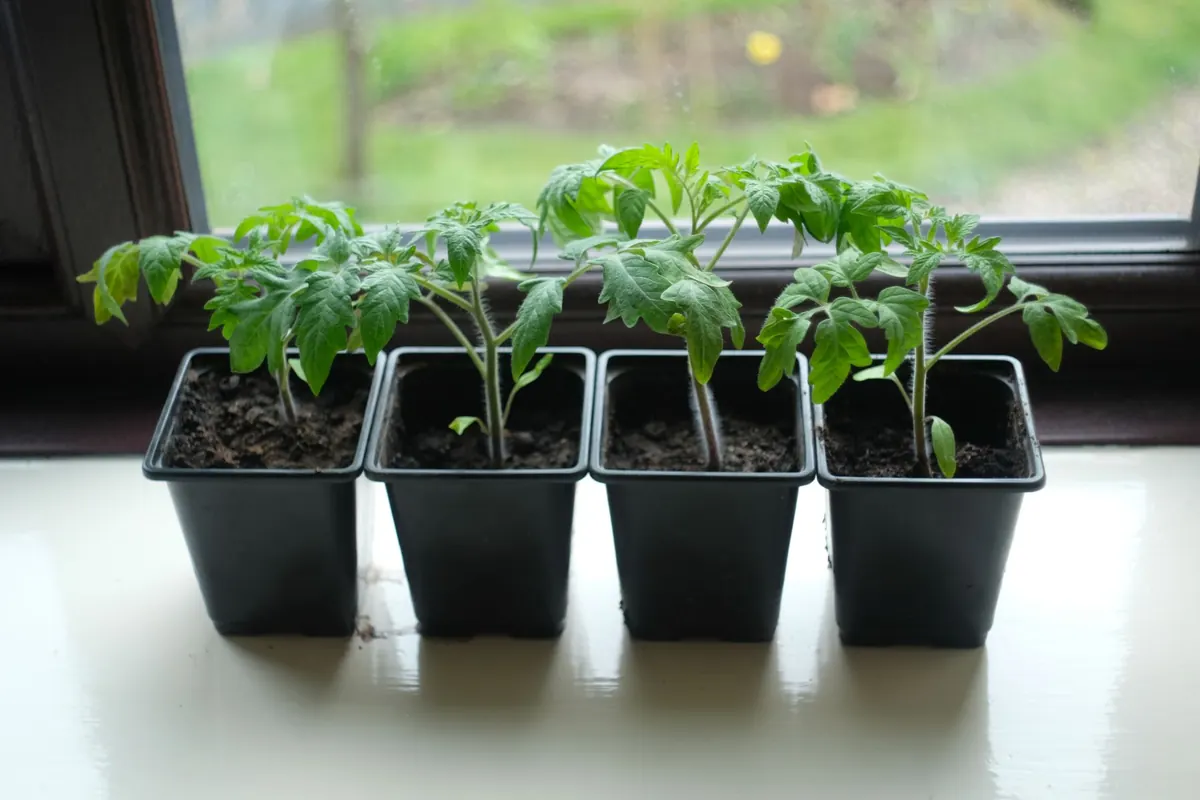 📘 Know-howHow many weeks before last frost to start seedsFind your last frost date, read the weeks on the packet, then count back on a calendar. Worked example for zone 6b: tomatoes, peppers and broccoli.Read the guide
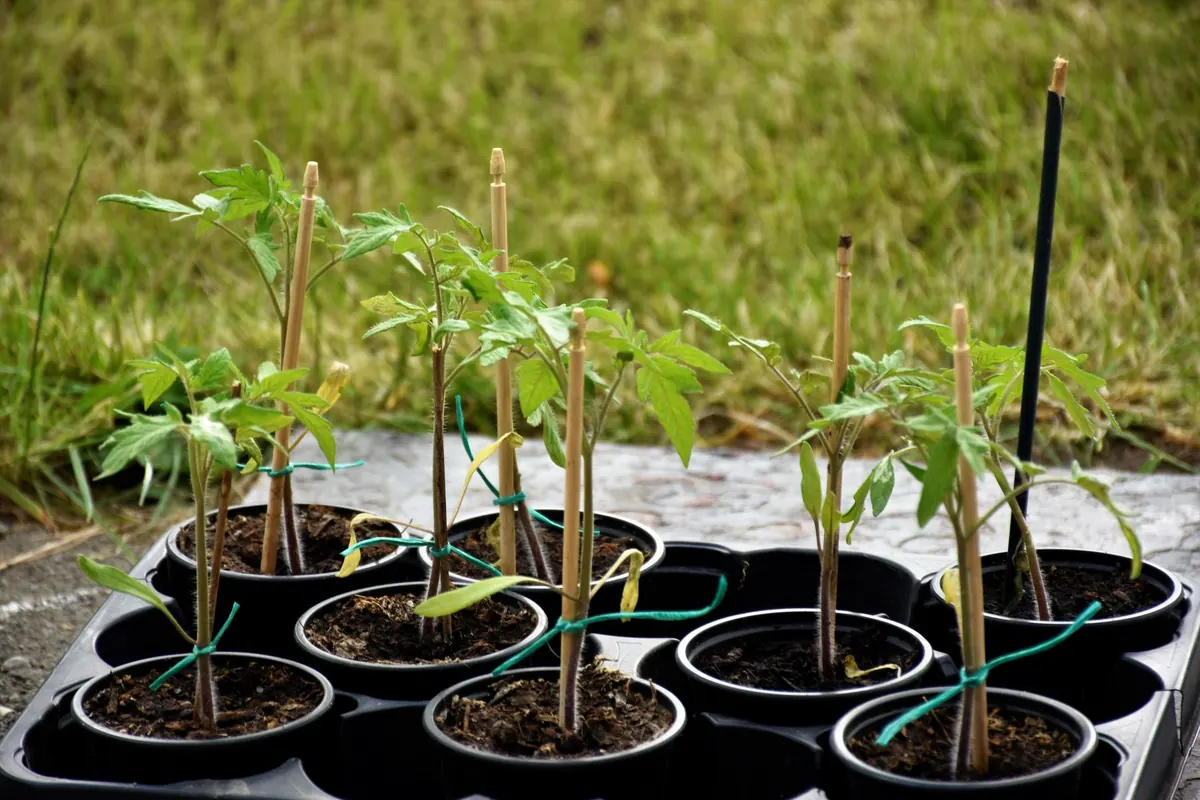 ✅ ChecklistHardening off seedlings: the two-week countdownCount back 1 to 2 weeks from planting-out day, start with an hour of shade, add sun daily, check 45°F and 50°F. Worked dates for zone 6b.Read the guide
Common questions
Questions
When do I start seeds indoors in zone 6?
Count back from your own last frost date. At zip 43215 in Columbus, zone 6b, the typical last frost is April 20, so tomatoes at 6 to 8 weeks go in February 23 to March 9. Another zone 6 yard can have a different date.
Source: NOAA 1991-2020 U.S. Climate Normals, annual/seasonal, checked October 7, 2026; Wisconsin Extension Dane County, It's Time to Start Seeds, checked October 16, 2026.
When do I start seeds indoors in zone 7?
The same way. At 63101 in St. Louis, zone 7a, the typical last frost is April 1, so tomatoes go in February 4 to 18 and broccoli February 18 to March 4.
Source: NOAA 1991-2020 U.S. Climate Normals, annual/seasonal, checked October 7, 2026; Wisconsin Extension Dane County, It's Time to Start Seeds, checked October 16, 2026; Illinois Extension, When should I start my seeds?, checked October 16, 2026.
Should I count from the last frost or from planting out?
Use the date the number names. Most packets and Wisconsin Extension count from the last frost. Maryland Extension counts from the day plants go outside, which can move a tomato about 4 weeks later.
Source: Wisconsin Extension Dane County, It's Time to Start Seeds, checked October 16, 2026; Maryland Extension, Starting Vegetable Seeds Indoors, checked October 16, 2026.
How many seeds should I sow for each plant?
Federal seed rules let tomato seed sprout at as little as 75% and pepper at 55%. Divide the plants you want by that rate: 12 pepper plants means about 22 seeds on hand.
Source: 7 CFR 201.31, vegetable seed germination standards, checked October 14, 2026.
When do I start hardening off?
Maryland Extension starts 1 to 2 weeks before planting out, and Utah State says about 2 weeks. With a May 7 planting-out day, that's April 23.
Source: Maryland Extension, Hardening Off Vegetable Seedlings, checked October 16, 2026; Utah State Extension, Grow Your Own Transplants at Home, checked October 16, 2026.
The next job on the shelf
More garden systems
 7 steps🧭 SystemRefresh border mulch: measure each bed, then buy only the gapMeasure the old layer in every bed before you order. One example yard needs 23 bags of 2 cu ft, not 45. The steps, the 3 inch limit and a free mulch record.Open the system
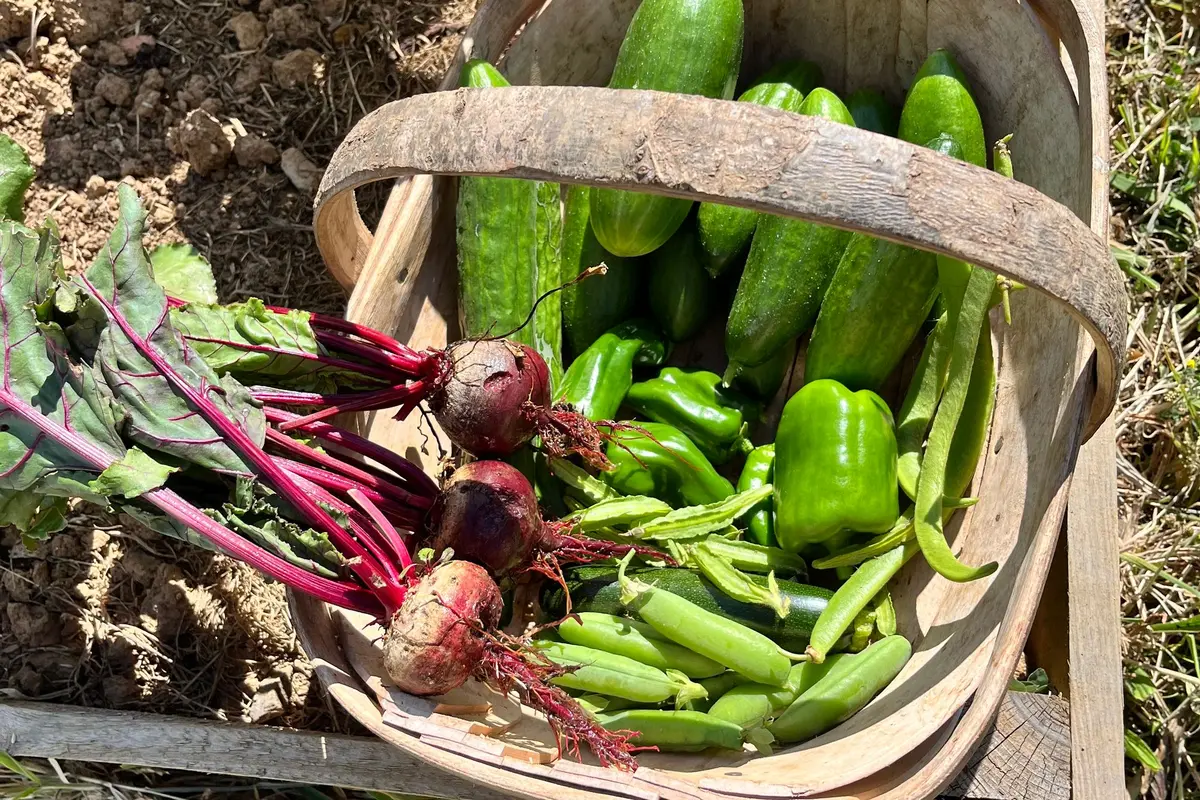 8 steps🧭 SystemEnd-of-season review: turn this year's harvest into next year's planAdd up each crop's pounds, set them beside an extension average, grade them, size next year's rows and move each family to a new bed. Free review sheet.Open the system
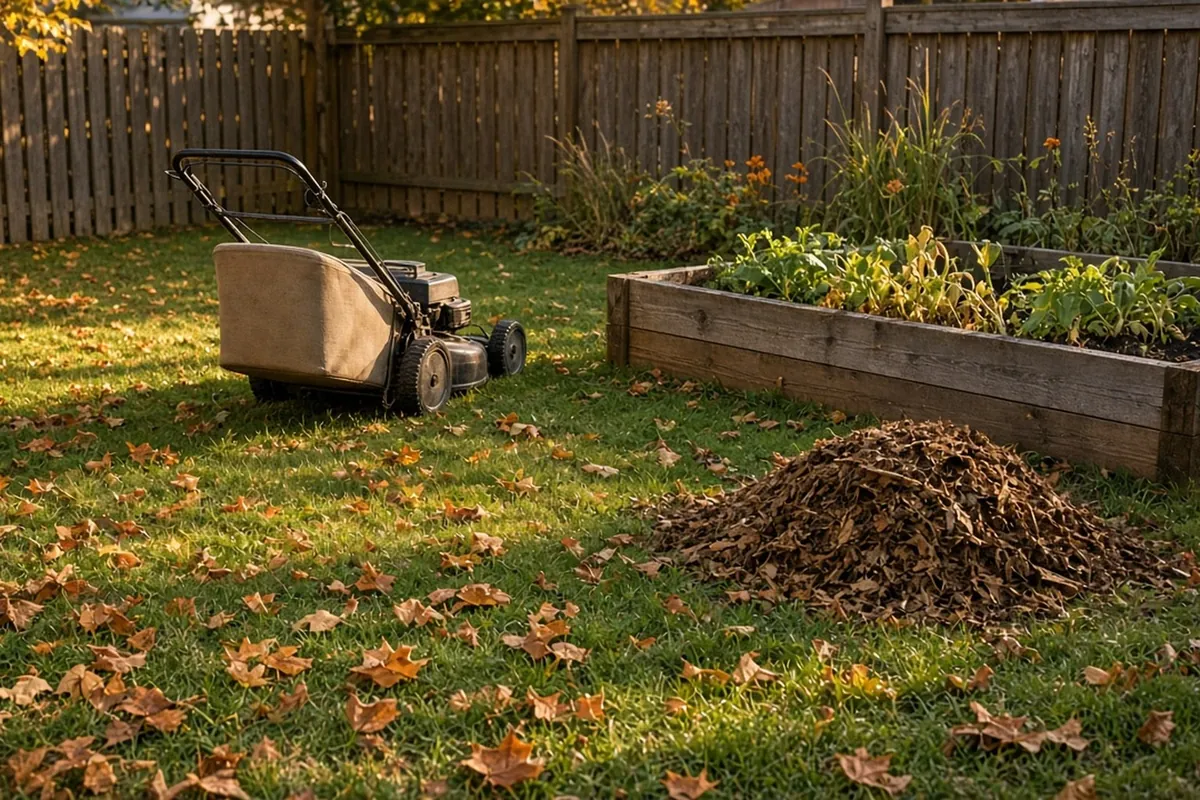 7 steps🧭 SystemTurn fall leaves into bed cover and mulch, and keep a tally of the bagsWhat to do with fall leaves: mow a thin layer into the lawn, shred the rest and spread 2 to 3 inches on beds. Free leaf haul tally to print.Open the system
Sources
- It's Time to Start Seeds, University of Wisconsin-Madison Division of Extension, Dane County, published March 12, 2024. Checked October 16, 2026.
- Starting Vegetable Seeds Indoors, University of Maryland Extension, published August 14, 2026. Checked October 16, 2026.
- When should I start my seeds?, University of Illinois Extension, published February 10, 2023. Checked October 16, 2026.
- U.S. Climate Normals (1991-2020), annual/seasonal normals by station, NOAA National Centers for Environmental Information (NCEI). Checked October 7, 2026.
- 2023 USDA Plant Hardiness Zone GIS Datasets, PRISM Group, Oregon State University (for USDA). Checked October 6, 2026.
- 1991-2020 U.S. Climate Normals documentation: Annual/Seasonal Normals, NOAA National Centers for Environmental Information (NCEI). Checked October 7, 2026.
- 7 CFR 201.31, Minimum germination standards for vegetable seeds in interstate commerce, USDA Agricultural Marketing Service (Federal Seed Act regulations, eCFR), published July 7, 2020. Checked October 14, 2026.
- Hardening Off Vegetable Seedlings for the Home Garden, University of Maryland Extension, published February 20, 2023. Checked October 16, 2026.
- Grow Your Own Transplants At Home, Utah State University Extension, published April 1, 2011. Checked October 16, 2026.
Planning guide, not a guarantee. See every source on the site on the sources page. Spotted an error? Tell us.