📘 Know-howZones5 min read
How many weeks before last frost to start seeds
Quick answer
Look up your last frost date, read the weeks on the seed packet, and count that many weeks back on a calendar. Check what the number counts from first. Wisconsin Extension says to start tomatoes and peppers 6 to 8 weeks before the last frost date. Maryland Extension counts from the day plants go outside instead: 5 to 6 weeks for tomatoes, 8 to 10 for peppers. At zip 43215 (Columbus, Ohio) the typical last frost is April 20, so 6 to 8 weeks back is February 23 to March 9.
Source: Wisconsin Extension Dane County, It's Time to Start Seeds, checked October 16, 2026; Maryland Extension, Starting Vegetable Seeds Indoors, checked October 16, 2026; NOAA 1991-2020 U.S. Climate Normals, annual/seasonal, checked October 7, 2026.

The know-how
You need two numbers and a calendar
The first number is your last frost date. NOAA publishes it for each weather station as a 30-year normal, 1991 to 2020. The date most charts call average is the 50% date, so in about half of springs a 32°F night still comes after it. Wisconsin Extension makes the same point and calls the date a median.
Source: NOAA 1991-2020 annual/seasonal normals documentation, checked October 7, 2026; Wisconsin Extension Dane County, It's Time to Start Seeds, checked October 16, 2026.
The second number is the weeks on the seed packet. Illinois Extension says to check the packet, which may read something like "4-6 weeks before your average last frost date." With both numbers, the rest is counting backward on a calendar.
Source: Illinois Extension, When should I start my seeds?, checked October 16, 2026.
In order
Count back in five steps
Look up your last frost date
Type your zip code into the frost date lookup. Write down the 50% date, plus the 1 in 10 date if you want a later, safer planting day.
Source: NOAA 1991-2020 U.S. Climate Normals, annual/seasonal, checked October 7, 2026.
Pick your planting-out day
Decide which day the plants go into the bed. Write it next to the frost date. If a number counts from planting out, this is the date you count back from.
Read the weeks on each packet
Copy the weeks and the words around them, like "before last frost" or "before transplanting." If the packet gives none, use your state extension's list.
Source: Illinois Extension, When should I start my seeds?, checked October 16, 2026.
Count back on a calendar
Multiply the weeks by 7 and count that many days back. Do it for both ends of the range, so 6 to 8 weeks gives you a window, not a single day.
Write the window on the calendar
Mark the first and last sow day for each crop. Then add a hardening-off start 1 to 2 weeks before planting out, as Maryland Extension suggests.
Source: Maryland Extension, Hardening Off Vegetable Seedlings, checked October 16, 2026.
- 6 to 8 wktomatoes and peppers before the last frost (Wisconsin)Wisconsin Extension Dane County, It's Time to Start Seeds, October 16, 2026
- 5 to 6 wktomatoes before planting out (Maryland)Maryland Extension, Starting Vegetable Seeds Indoors, October 16, 2026
- 8 to 10 wkpeppers before planting out (Maryland)Maryland Extension, Starting Vegetable Seeds Indoors, October 16, 2026
- 4 to 6 wkbroccoli before the average last frost (Illinois)Illinois Extension, When should I start my seeds?, October 16, 2026
Worked example
One zone 6b yard, four sow windows
Zip 43215 is Columbus, Ohio, in zone 6b. The nearest NOAA station gives a typical last frost of April 20 and a 1 in 10 date of May 7. Say the tomatoes and peppers go out on May 7. These dates are for spring 2027, which isn't a leap year.
Source: NOAA 1991-2020 U.S. Climate Normals, annual/seasonal, checked October 7, 2026.
| Crop | Rule | Count back from | Sow window |
|---|---|---|---|
| Tomato | 6 to 8 weeks before last frost (Wisconsin) | April 20 | February 23 to March 9 |
| Broccoli | 4 to 6 weeks before last frost (Illinois) | April 20 | March 9 to March 23 |
| Tomato | 5 to 6 weeks before planting out (Maryland) | May 7 | March 26 to April 2 |
| Pepper | 8 to 10 weeks before planting out (Maryland) | May 7 | February 26 to March 12 |
Each window is the weeks times 7, counted back from the date in the third column.
Source: NOAA 1991-2020 U.S. Climate Normals, annual/seasonal, checked October 7, 2026; Wisconsin Extension Dane County, It's Time to Start Seeds, checked October 16, 2026; Illinois Extension, When should I start my seeds?, checked October 16, 2026; Maryland Extension, Starting Vegetable Seeds Indoors, checked October 16, 2026.
The two tomato rows don't agree, and that's expected. One counts from the frost date and the other from the planting-out day. Pick one rule per crop and stick with it. The UNH Extension example works the same way: plants going out on May 27 means starting seeds between April 1 and April 15.
Source: UNH Extension, How do I know when to start seedlings indoors?, checked October 16, 2026.
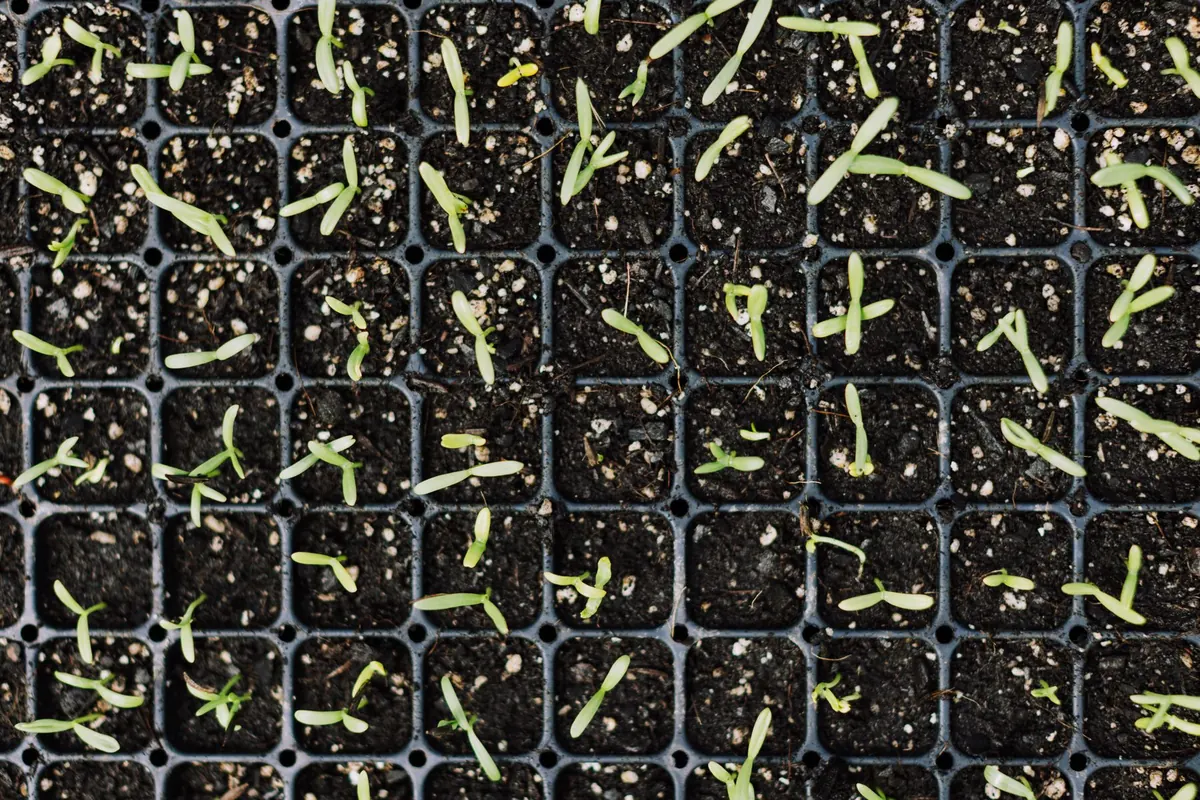
Print it, tick it off
Seed-start count sheet
One line per crop. Keep it with the seed packets.
- Zip code and last frost date (50%) from the lookup
- 1 in 10 date, if you plan around it
- Planting-out day
- Crop and the weeks on its packet
- Counts from: last frost or planting out
- First sow day (longer end of the range)
- Last sow day (shorter end of the range)
- Hardening-off start date
What people learn the second year
Tips and tricks
- Count with a real calendar. February is short, so counting by months throws the date off. Put a finger on the date and step back one week at a time.
- Group crops by sow week. Once every window is written down, crops that share a week can share a tray and a single sowing session.
- Keep last year's sheet. Note the date each crop actually went out and how big the plants were. Next year, slide the window earlier or later from there.
- Adjust across a state. Illinois Extension shifts its dates by two weeks from the middle of the state: later in the north, earlier in the south. Your own frost date does the same job.
Common questions
Questions
How many weeks before the last frost should I start tomato seeds?
Wisconsin Extension says 6 to 8 weeks before the last frost date. Maryland Extension counts 5 to 6 weeks back from the day you plan to plant them outside.
Source: Wisconsin Extension Dane County, It's Time to Start Seeds, checked October 16, 2026; Maryland Extension, Starting Vegetable Seeds Indoors, checked October 16, 2026.
When should I start pepper seeds indoors?
Maryland Extension lists 8 to 10 weeks before planting outside for peppers, eggplant and onion. A UNH Extension answer says peppers and eggplant may need at least 10 weeks indoors.
Source: Maryland Extension, Starting Vegetable Seeds Indoors, checked October 16, 2026; UNH Extension, How do I know when to start seedlings indoors?, checked October 16, 2026.
When do I start seeds in zone 6?
Go by your frost date, not the zone. At zip 43215 in zone 6b, the typical last frost is April 20, so 6 to 8 weeks back is February 23 to March 9. Another zone 6 yard can have a different date.
Source: NOAA 1991-2020 U.S. Climate Normals, annual/seasonal, checked October 7, 2026; Wisconsin Extension Dane County, It's Time to Start Seeds, checked October 16, 2026.
What happens if I start seeds too early?
Maryland Extension says early sowing gives tall, root-bound plants that don't do well in the garden.
Source: Maryland Extension, Starting Vegetable Seeds Indoors, checked October 16, 2026.
Which last frost date should I count from?
Use the date your packet or extension list names. NOAA's 50% date is the one most charts call average. Its 1 in 10 date is later, and only about 1 spring in 10 has a freeze after it.
Source: NOAA 1991-2020 annual/seasonal normals documentation, checked October 7, 2026.
The arithmetic, done for you
Tools for this job
- ❄️ LookupFrost date lookup by zip codeFind the typical last spring and first fall frost for your zip code from NOAA 1991 to 2020 station normals, with the 1 in 10 year dates and a printable card.Open the tool
- 🌱 CalculatorSeed quantity calculatorHow many seeds your rows take, how many to keep on hand once germination is allowed for, and how many packets or ounces to order.Open the tool
Keep reading
More guides
 🧰 Problem solverWill it ripen before fall frost? Count the days to maturityCount from your planting-out day to the early fall frost date, then check the days to maturity against it. Worked example at two Montana stations.Read the guide
 🧰 Problem solverWhen to start seeds for a fall garden in zones 8 to 10Fall tomatoes planted too late meet the first frost before the first pick. Count back for the sow day and forward for the harvest, with Florida examples.Read the guide
 ✅ ChecklistFirst fall frost: a job list counted back from your frost dateFind your first fall frost date by zip code, then count back: last planting day, pots in, covers ready, and how to cover plants on a frost night.Read the guide
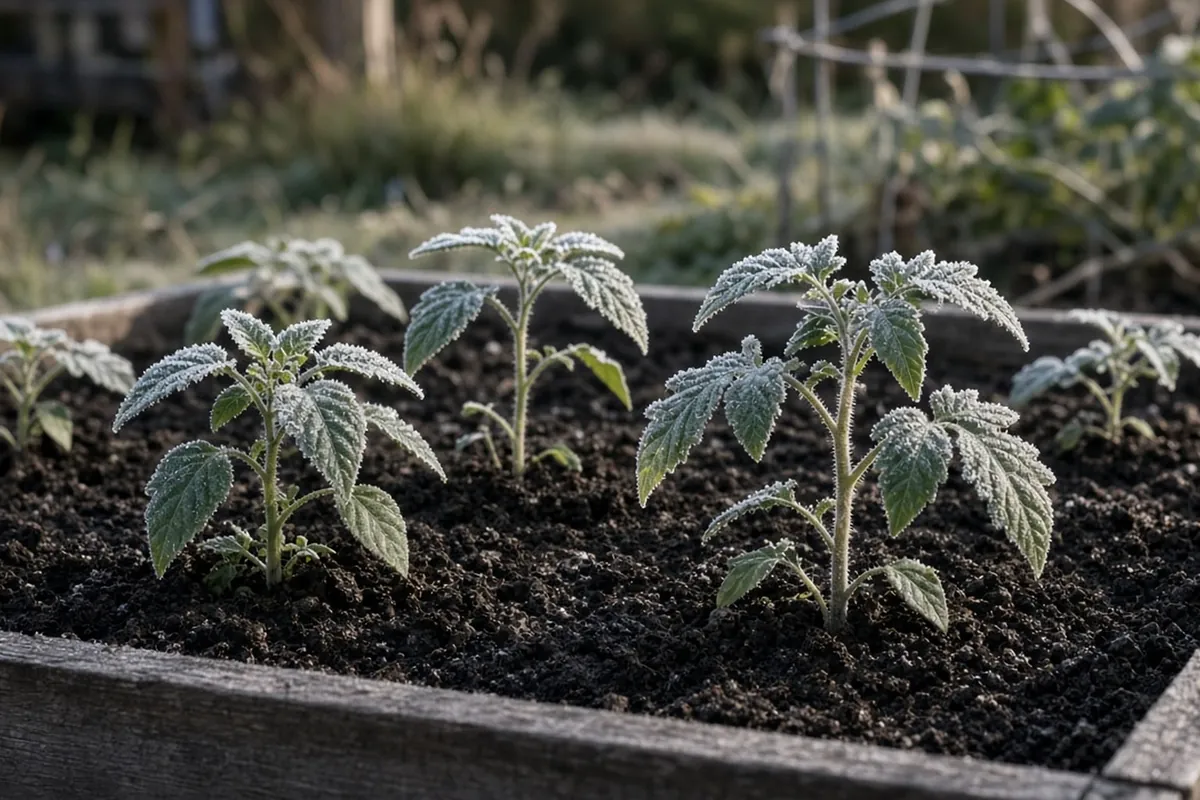 🧰 Problem solverIt froze after the last frost date: how to read the oddsA last frost date is a coin flip, not a promise. How NOAA's 50% and 1 in 10 dates work, how to pick the right station, and which date to plan around.Read the guide
Sources
- It's Time to Start Seeds, University of Wisconsin-Madison Division of Extension, Dane County, published March 12, 2024. Checked October 16, 2026.
- Starting Vegetable Seeds Indoors, University of Maryland Extension, published August 14, 2026. Checked October 16, 2026.
- U.S. Climate Normals (1991-2020), annual/seasonal normals by station, NOAA National Centers for Environmental Information (NCEI). Checked October 7, 2026.
- 1991-2020 U.S. Climate Normals documentation: Annual/Seasonal Normals, NOAA National Centers for Environmental Information (NCEI). Checked October 7, 2026.
- When should I start my seeds?, University of Illinois Extension, published February 10, 2023. Checked October 16, 2026.
- Hardening Off Vegetable Seedlings for the Home Garden, University of Maryland Extension, published February 20, 2023. Checked October 16, 2026.
- How do I know when to start seedlings indoors?, University of New Hampshire Cooperative Extension, published March 7, 2018. Checked October 16, 2026.
Planning guide, not a guarantee. See every source on the site on the sources page. Spotted an error? Tell us.